Plot Explained Spoilers guaranteed!
Plot Explained

Browse by genre

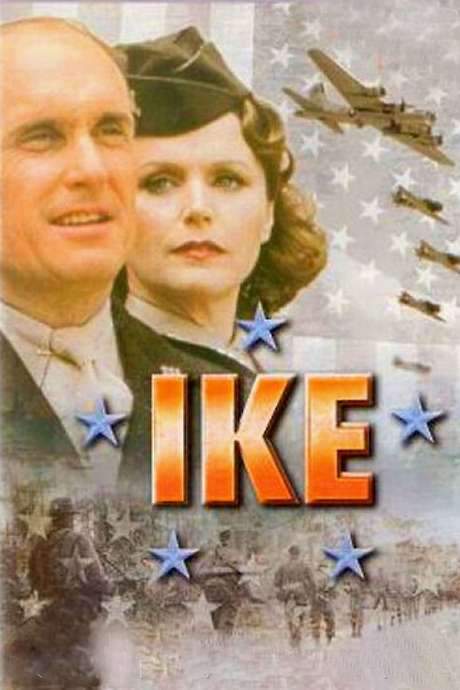
Ike: Countdown to D-Day (2004) movie poster

Timeline

Ike: Countdown to D-Day (2004) Timeline Explained – Every Event in Order

Release, runtime and language
2004 · 89 mins · English
Loading streaming availability…
Directed by
Robert Harmon
Starring
Timothy Bottoms, James Remar, Kevin J. Wilson, Tom Selleck, Gerald McRaney, Christopher James Baker

It follows the senior‑level preparations for the D‑Day invasion on June 6, 1944, beginning with Dwight D. Eisenhower’s appointment as Supreme Allied Commander in Europe, detailing the strategic planning, coordination among Allied commanders, logistical efforts, and the ultimate establishment of the Normandy beachhead.

On this page (6)
  1. 1 Where to watch
  2. 2 Events in order (14)
  3. 3 Timeline questions answered
  4. 4 Movie threads
  5. 5 Movies like Ike: Countdown to D-Day
  6. 6 Every angle
Loading streaming availability…

14 events in order · contains spoilers

Ike: Countdown to D-Day Timeline: Events in Chronological Order

Every key event of Ike: Countdown to D-Day (2004) in order, scene by scene, with when and where it takes place. Use it to untangle flashbacks, time jumps and parallel storylines, to refresh your memory before the sequel or to find the exact scene you are thinking of.

  1. Ike discusses invasion with Churchill and asserts control

    In December 1943, Eisenhower meets with Churchill to discuss the invasion of German-occupied Europe. He threatens to resign as Supreme Commander of SHAEF unless he is given total control of all operations. Churchill agrees to grant broader authority, and Ike begins shaping the invasion plan with Montgomery and Bradley.

    When
    December 1943
    Where
    London, England
  2. Ike plans the invasion with Montgomery and Bradley

    Eisenhower plans the invasion with Bernard Montgomery and Omar Bradley, coordinating ground and armored forces. They outline initial assault schemes and overall strategy for the operation. The planning sessions align command structures for the forthcoming assault.

    When
    December 1943
    Where
    England
  3. Ike reprimands Patton for press comments

    Eisenhower publicly reprimands Patton for remarks to the press that downplay the importance of Allied partners. He reminds him of the earlier slapping incidents and emphasizes unity among Allied commanders. The rebuke signals the need to maintain discipline and cooperative messaging.

    When
    December 1943
    Where
    England
  4. Ike confides to Bedell Smith about Patton

    In private, Eisenhower tells his chief of staff Walter Bedell Smith that Patton does not understand why they are fighting the war. He also notes that Patton's armor prowess will be essential once the Allies are ashore. The exchange highlights the tension between personal risk and strategic value.

    When
    December 1943
    Where
    Washington, D.C.
  5. Leigh-Mallory critiques plan; predicts high airborne casualties

    Sir Trafford Leigh-Mallory voices concern about the plan, arguing that airborne troops could suffer extraordinarily high casualties if conditions are not favourable. He urges caution and more conservative estimates. The exchange underscores Allied risk management ahead of the invasion.

    When
    December 1943
    Where
    England
  6. German E-Boats attack convoy during training; heavy losses

    During a training exercise off the English coast, German E-Boats attack a convoy. Nearly a thousand soldiers are lost along with valuable LST landing craft. The incident underscores the stakes and the fragility of the upcoming operation.

    When
    December 1943
    Where
    English coast
  7. Ghost Army deception succeeds

    Bradley reports that the Ghost Army has successfully deceived the Germans into believing the landings will occur at Pas-de-Calais under Patton's command. The deception buys critical time and complicates German defensive planning. Confidence in Allied misdirection reinforces the strategic setup.

    When
    December 1943
    Where
    England
  8. Date of invasion set for 5 June

    Believing the deception will not last, Eisenhower sets the invasion date for 5 June. He weighs weather, seas, and the plan with his senior staff. The scheduling marks a commitment to proceed despite uncertainties.

    When
    December 1943
    Where
    England
  9. Henry Miller relieved of command

    Eisenhower relieves his friend Henry Miller of command for publicly disclosing sensitive information. The action demonstrates the consequences of leaks at high levels. The decision reinforces the need for discipline within the Allied leadership.

    When
    December 1943
    Where
    England
  10. Briefing of King George VI and Queen Elizabeth

    Allied leaders brief King George VI and Queen Elizabeth about Operation Overlord. The King confides his fears about heavy losses, and Eisenhower admits that he shares those concerns. Churchill is impressed by Ike's willingness to shoulder responsibility alone.

    When
    December 1943
    Where
    London, England
  11. Redeployment debate; Bradley wins

    When Bradley and Smith report on redeploying strong German forces to American landing zones, Eisenhower is forced to mediate a heated debate between Leigh-Mallory and Bradley. Bradley's assessment wins out, and Ike remains mindful of the price they may pay. The moment reflects the tension between risk and strategic surprise.

    When
    December 1943
    Where
    England
  12. Day before landings: Ike meets de Gaulle

    The day before the landings, Eisenhower meets with Charles de Gaulle, who disagrees with AMGOT and who should address the French people by radio. The exchange highlights postwar leadership complexities and French governance questions. Ike navigates the political sensitivities ahead of the assault.

    When
    5 June 1944
    Where
    London, England
  13. Weather delays invasion by 24 hours

    A heavy rainstorm forces a 24-hour delay of the invasion, shifting the plan from 5 June to 6 June. The weather uncertainty tests the resolve of the Allied command and affects mission timing. Contingency planning remains a crucial element of the operation.

    When
    5-6 June 1944
    Where
    English Channel
  14. Final command actions as invasion unfolds

    Eisenhower gives the final order for Operation Neptune and visits American paratroopers preparing to board. He drafts a letter taking full responsibility for the possible failure to create a beachhead, to be distributed to the press if the landings fail. As reports of a successful invasion begin to arrive, Leigh-Mallory apologizes to Eisenhower for the stress his forecast had caused. Eisenhower performs a final walk through the operations room as the film fades to black.

    When
    6 June 1944
    Where
    England

Last updated: October 09, 2025 at 15:08

Was this helpful?

Timeline questions answered

Ike: Countdown to D-Day Timeline Explained: Your Questions Answered

When does it happen, and why in that order? The questions people ask about the chronology of Ike: Countdown to D-Day (2004): time jumps, flashbacks, cause and effect between scenes and the correct order of events, each answered with spoilers.

Q1

Why did Eisenhower demand total control as Supreme Commander?

Eisenhower demanded total control of all operations because he needed unified command authority to coordinate the multiple Allied nations and military branches. Without clear authority, he believed the invasion would fail due to conflicting priorities between American, British, and other Allied forces. He even threatened to resign if not granted full control over SHAEF (Supreme Headquarters Allied Expeditionary Force).

  • eisenhower
  • supreme commander
  • shaef
  • command authority
  • allied forces
Q2

Why was Patton reprimanded by Eisenhower?

Eisenhower publicly reprimanded Patton for making remarks to the press that downplayed the importance of Allied partners, particularly the British. This was especially problematic given the earlier slapping incidents involving Patton, which had already damaged relations with Allied commanders. Eisenhower needed unified messaging among all Allied leaders to maintain cohesion and morale.

Foreshadowing: Earlier incidents of Patton striking his own soldiers had already created tension among Allied leadership.

  • patton
  • eisenhower
  • reprimand
  • allied unity
  • press comments
Q3

What was the Ghost Army deception?

The Ghost Army was a unit of Allied personnel trained to simulate fake troop movements and radio transmissions, creating the illusion that the main invasion would occur at Pas-de-Calais rather than Normandy. This deception, known as Operation Bodyguard, successfully misled German forces into positioning their defenses incorrectly, buying critical time for the actual landings at Normandy.

  • ghost army
  • operation bodyguard
  • pas-de-calais
  • deception
  • normandy
Q4

Why was the D-Day invasion delayed by 24 hours?

A heavy rainstorm on June 5, 1944 forced Eisenhower to delay the invasion by 24 hours, moving the date from June 5 to June 6. The severe weather conditions would have jeopardized the landing craft operations and airborne troop deployments. Despite the forecast showing continued risk, Eisenhower ultimately decided to proceed on June 6 when conditions marginally improved.

  • d-day
  • weather delay
  • june 6 1944
  • operation overlord
  • invasion date
Q5

Why was General Henry Miller relieved of command?

Eisenhower relieved General Henry Miller of his command for publicly disclosing sensitive information about the invasion plans. As Eisenhower's friend, Miller's dismissal demonstrated that even personal relationships would not protect someone from consequences during wartime security breaches. The incident reinforced the need for strict discipline and secrecy among the Allied leadership.

  • henry miller
  • relieved of command
  • leak
  • security
  • eisenhower
Q6

What was the conflict between Leigh-Mallory and Bradley about?

Leigh-Mallory and Bradley clashed over the potential casualties from airborne operations. Leigh-Mallory warned that the airborne drops could result in catastrophic losses if weather and conditions failed, urging cancellation or reduction. Bradley defended the operations as essential for strategic surprise. Eisenhower mediated the debate, ultimately siding with Bradley's more aggressive approach while acknowledging the heavy costs they might face.

Foreshadowing: Leigh-Mallory's earlier predictions of extraordinarily high casualties set the stage for this confrontation.

  • leigh-mallory
  • bradley
  • airborne casualties
  • debate
  • eisenhower
Q7

Why did Eisenhower meet with de Gaulle before the landings?

Eisenhower met with Charles de Gaulle the day before the landings to address political tensions surrounding the invasion. De Gaulle disagreed with AMGOT (Allied Military Government for Occupied Territories) and questioned who should address the French people by radio. The meeting highlighted the fragile political alliance among Allies and the complexities of postwar French governance during the invasion itself.

  • de gaulle
  • eisenhower
  • amgot
  • political alliance
  • french government
Q8

What was the significance of Eisenhower's responsibility letter?

Before the landings, Eisenhower drafted a letter taking full responsibility for any failure of the invasion, to be released to the press if the operation failed and the beachhead was lost. This document demonstrated his willingness to accept personal blame for what was ultimately a collective Allied decision. Churchill admired this "manly choice" to shoulder the responsibility alone.

  • eisenhower responsibility letter
  • failure
  • blame
  • press
  • d-day
Q9

What was Operation Neptune?

Operation Neptune was the naval component of D-Day, referring specifically to the naval landings and support operations on the beaches of Normandy. While Operation Overlord covered the entire Allied invasion plan, Neptune focused on the actual assault across the English Channel and the establishment of the beachhead on June 6, 1944.

  • operation neptune
  • d-day
  • naval operation
  • normandy
  • overlord
Q10

Why did German E-Boats attack the training convoy?

German E-Boats attacked an Allied convoy during a training exercise off the English coast, resulting in the loss of nearly a thousand soldiers and valuable LST (Landing Ship Tank) vessels. The attack demonstrated the fragility of Allied preparations and the real risks facing the invasion force. It underscored the high stakes of the upcoming operation and the need for continued secrecy and security.

  • e-boats
  • convoy attack
  • training
  • casualties
  • lst

Movie threads

More Movies Like Ike: Countdown to D-Day, by Mood & Story

Curated lists built around what makes Ike: Countdown to D-Day tick: the same mood, the same kind of story or the same emotional payoff. Each list explains why these movies belong together.

Movies about High-Stakes Leadership like Ike: Countdown to D-Day

Stories that explore the immense burden of leadership during pivotal historical moments. If you enjoyed the tense, methodical breakdown of command in Ike: Countdown to D-Day, explore similar movies about leaders under extreme pressure. These films focus on the strategic planning and personal weight of pivotal decisions in historical, military, or political settings.

  • tense
  • pressured
  • resolute
  • serious
  • weighty
  • methodical
  • Tone: tense, serious, weighty
  • Pacing: steady, methodical
Why these movies?

The story pattern: Narratives in this thread typically follow a singular, high-stakes goal, unfolding through a steady, deliberate pace that emphasizes planning and consequence over fast-paced action. The core conflict is internal and external, pitting the leader's judgment against overwhelming odds and the potential for catastrophic failure.

Why they belong together: Movies are grouped here for their shared focus on the psychological burden of leadership, a tense and serious tone driven by high-stakes decision-making, and a methodical pacing that builds intense pressure rather than relying on chaotic action.

Tense Countdown Movies like Ike: Countdown to D-Day

Thrillers and dramas where meticulous planning unfolds under a ticking clock. Fans of the building suspense in Ike: Countdown to D-Day will enjoy these other movies centered on a methodical race against time. Discover similar stories where a steady pace and strategic focus create high-stakes tension leading to a pivotal event.

  • tense
  • anxious
  • suspenseful
  • methodical
  • pressured
  • race against time
  • Tone: tense, anxious, pressured
  • Pacing: steady build, methodical
Why these movies?

The story pattern: The narrative pattern involves a clear, impending event that serves as an unchangeable deadline. The plot structure is defined by overcoming a series of obstacles and challenges in a logical sequence, with the pacing steadily increasing the sense of urgency and consequence as the deadline approaches.

Why they belong together: These films share a core structure of a ticking clock, a steady pacing that methodically builds tension, and a focus on process and problem-solving under extreme pressure, creating a cohesive experience of anxious anticipation.

If you liked this

Movies Like Ike: Countdown to D-Day

Similar movies to Ike: Countdown to D-Day: the same genre, themes or kind of story. Each one comes with its own plot summary, timeline and ending explained.

Browse all movie summaries

Every angle

Ike: Countdown to D-Day (2004) Explained: Plot, Timeline & Characters

Everything about Ike: Countdown to D-Day in one place: what happens in the plot summary, the timeline in chronological order, the characters and meaning and a spoiler-free summary. What's After the Movie adds the cast, box office and post-credit scenes.

Coming soon on iOS and Android

The Plot Explained Movie Summary App

Plot summaries, endings explained and timelines on your phone. Catch up on any movie in minutes, save your favorites and never miss a twist again.

Be the first to know when we launch. Your email stays private, always.

Learn more about the app