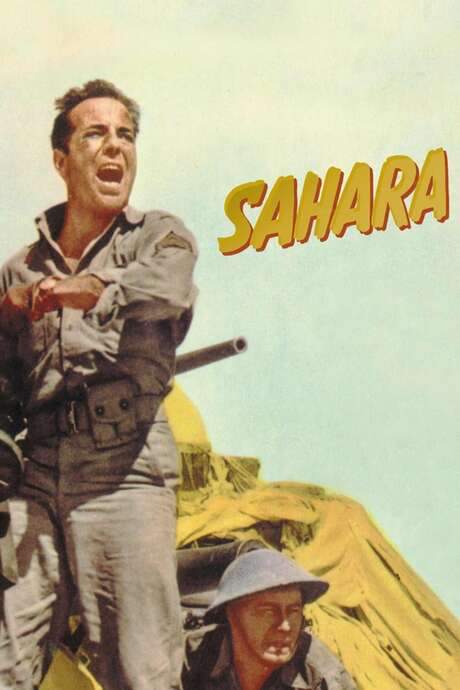
Captain Anson John Mills commands a British RASC Motor Ambulance Company in Tobruk, and he is wrestling with battle fatigue and a growing reliance on alcohol. As the Axis forces tighten their grip and Tobruk faces imminent capture, his unit is ordered to evacuate to Alexandria. The group—MSM Tom Pugh Harry Andrews, along with two nurses, Sister Diana Murdoch Sylvia Syms and Sister Denise Norton Diane Clare—is torn from the front line in an Austin K2/Y ambulance nicknamed Katy. Their escape becomes a tense test of endurance as they push eastward toward safety, hoping to stay ahead of the enemy.
Early in their journey they meet Captain van der Poel Anthony Quayle, an Afrikaner South African officer who manages to charm his way into the group’s confidence. He unfurls two bottles of gin from his pack and persuades Anson to trust him with them and to press on toward safety in Alexandria. The promise of companionship and luck against the grinding desert mood soon collides with danger: a minefield, a broken suspension spring that van der Poel helps repair, and the brutal terrain of the Qattara Depression test the crew on every step.
tragedy strikes when Sister Denise Norton is fatally wounded by a burst of gunfire from a German motorised unit. The loss hits Anson hard, and he blames himself for the danger around them. In the aftermath he resolves to abstain from alcohol until he can drink an ice-cold lager in Alex—a vow that will anchor his weary spirit.
Van der Poel’s outward confidence masks deeper questions. He claims to have learned German while working in German South West Africa, and his presence persuades the Germans at key moments to allow the convoy to continue. Yet when the group encounters German soldiers a second time, van der Poel’s true potential role appears murkier as he reveals the contents of his pack, hinting at a possible espionage connection.
Meanwhile, Pugh grows uneasy about van der Poel’s knowledge and motivations. He quietly observations, noting van der Poel’s offhand behavior and a suspicious absence of his own reliable equipment. A late-night inspection reveals a faint glint of a radio antenna, and Pugh’s suspicions begin to crystallize. During a tense moment at night, the headlights of Katy illuminate van der Poel as he blunders into quicksand, the weight of his gear threatening to drag him down. Anson and Murdoch manage to pull him free, and they discover a radio pack is indeed among his belongings. Realizing van der Poel’s potential role as a spy, they decide not to confront him directly; their priority is to keep the ambulance operational and to reach safety with the vehicle still capable of climbing the sand dunes.
The journey to Alexandria becomes a careful balancing act between trust and prudence. By the time they arrive at the Military Police checkpoint, Anson chooses to file the papers of everyone except van der Poel, reporting him as a lost German soldier who surrendered under parole. The MPs grant them a last moment of camaraderie: a farewell drink with their supposed captive before the group is separated and van der Poel is taken into custody as a prisoner of war.
In a quiet bar, Anson savors a cold beer, a simple taste of normalcy after a harrowing trek. But the moment is interrupted when a Corps of Military Police officer arrives to arrest van der Poel. The German officer finally reveals his true identity as an engineer officer, and in a symbolic twist, Pugh tears away van der Poel’s dog tags, severing that thread of false trust. As they part, the survivors claim a shared understanding of what kept them alive: their struggle against the desert, the greater enemy.
> all against the desert, the greater enemy.