






Plot Explained Spoilers guaranteed!
Plot Explained

Browse by genre

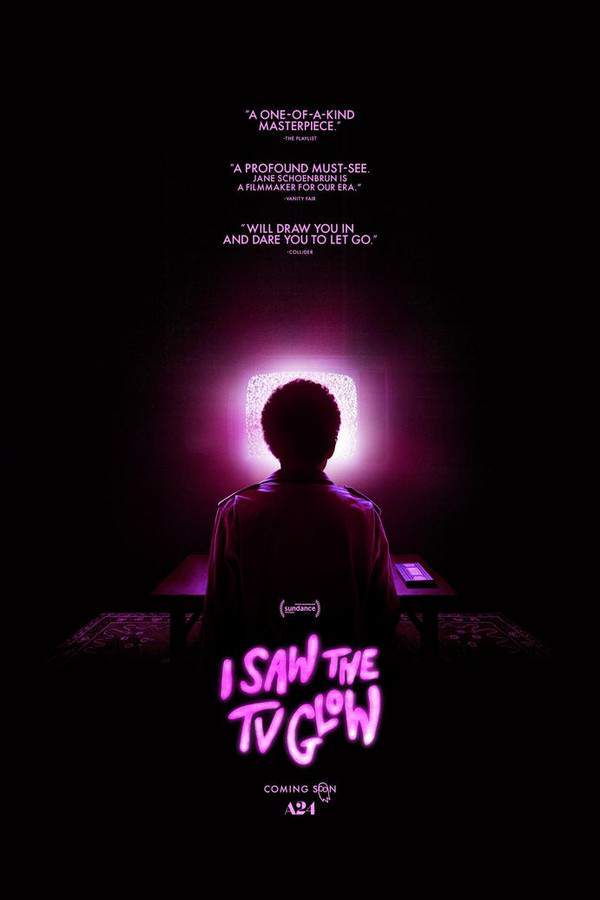
I Saw the TV Glow (2024) movie poster

Ending Explained

I Saw the TV Glow (2024) Ending Explained – Final Scene & Meaning

Release, runtime and language
2024 · 1 h 40 m · English
Echo score 70
Directed by
Jane Schoenbrun
Starring
Justice Smith, Elizabeth Scopel, Conner O'Malley, Danielle Deadwyler, Albert Birney, Helena Howard
Budget
$10M

A teenager named Owen finds his perception of reality unraveling as he becomes increasingly obsessed with a mysterious late-night television program. The show’s unsettling imagery and cryptic messages seem to bleed into his everyday life, blurring the line between the real world and a disturbing alternate reality. As Owen’s connection to the program deepens, he descends into a state of uncertainty and escalating fear.

On this page (7)
  1. 1 Where to watch
  2. 2 What happens at the end
  3. 3 Final events in order
  4. 4 Ending questions answered
  5. 5 Movie threads
  6. 6 Movies like I Saw the TV Glow
  7. 7 Every angle

Where to watch

Where to Watch I Saw the TV Glow (2024)

Where can you watch I Saw the TV Glow? Stream, rent or buy it in the US, including on Amazon Video, Apple TV Store and Fandango At Home: current JustWatch availability with up-to-date prices.

Streaming availability powered by JustWatch

Ending explained · contains spoilers

What Happens at the End of I Saw the TV Glow?

How I Saw the TV Glow (2024) ends, what the final scene means, which earlier moments set it up and how to read the ending if the film leaves it open. The full ending explained, with every spoiler.

In the surreal and dreamlike world of I Saw the TV Glow, the ending is a powerful metaphor for the journey of self-acceptance, especially for someone exploring their gender identity. Owen, who has spent years feeling trapped in a life that doesn’t reflect his true self, finally faces a moment of raw honesty when he cuts open his chest and finds a glowing TV inside him. This haunting image symbolizes that his true identity—the person he’s always been deep down—is still inside, waiting to be acknowledged. It’s a visceral reminder that his truth has never truly left; it’s just been hidden beneath societal expectations and fear.

Owen’s act of opening himself up isn’t just a literal breakdown; it’s a metaphor for the process of self-discovery and coming to terms with one’s identity. The glowing TV inside becomes a beacon of hope, suggesting that there’s still time to embrace who he truly is. Though society’s rejection and internalized shame linger, Owen’s apology to those around him signifies the ongoing struggle and the courage it takes to be authentic. The surreal imagery and ambiguous ending emphasize that the journey toward self-acceptance is ongoing, and that even in the face of despair, recognizing one’s inner truth is an essential step. Ultimately, the film leaves us with a sense of possibility—that within the darkness and confusion, there is a light waiting to be seen and illuminated.

Last updated: June 25, 2025 at 09:02

Was this helpful?

The last 4 events

How I Saw the TV Glow Ends: The Final Events in Order

The last events of I Saw the TV Glow (2024) in chronological order, the run-up to the ending explained above. The complete timeline has all 15 events, scene by scene.

Open the full timeline
  1. Discovery of 'The Pink Opaque'

    Two decades later, Owen stumbles upon 'The Pink Opaque' on a streaming platform, only to find it has been stripped down to a childish version. This discovery brings up painful memories, reminding him of the joy that has long since faded.

  2. Owen's Emotional Breakdown

    During a birthday celebration at the family entertainment center, Owen's bottled emotions erupt, revealing his lingering fears of mortality. He contemplates his existence, crying out amidst the indifference of guests who fail to understand his turmoil.

  3. Isolation in the Bathroom

    In a moment of deep despair, Owen isolates himself in the bathroom, struggling with self-harm as he confronts the abyss of his existence. A glowing TV screen within his chest symbolizes his distorted reality as he grapples with his inner demons.

  4. Emergence from Shadows

    Ultimately, Owen emerges from the bathroom, attempting to mask his pain with insincere apologies to partygoers oblivious to his struggles. The disconnection highlights his internal battle as he retreats deeper into his loneliness.

Ending questions answered

I Saw the TV Glow Ending: Your Questions Answered

The questions people ask most about the ending of I Saw the TV Glow (2024): what the final scene means, how the twist works, what happens to each character and how to read the ending. Each answer contains spoilers.

Q1

Why does Owen cut open his chest at the end?

Owen cuts open his chest as a final act of confronting the truth he's been avoiding his entire life. The physical act represents his desperate attempt to finally acknowledge and release the part of himself he's kept hidden, symbolized by the glowing television inside him. This moment represents the extreme psychological toll of repressing one's true identity, culminating in a literal breaking point where Owen can no longer contain his inner truth.

Foreshadowing: Earlier in the film, Owen experiences frequent nosebleeds and physical manifestations of his internal conflict, hinting at the pressure building inside him.

  • owen
  • chest
  • self-harm
  • truth
  • identity
Q2

What does the TV inside Owen's chest symbolize?

The television inside Owen's chest represents his authentic self, the part of him he's been forced to suppress since childhood. The glowing screen signifies that his true identity was always present, just hidden beneath layers of fear, shame, and societal expectations. It embodies the idea that what he watched on the Pink Opaque show wasn't just entertainment but a reflection of his own buried truth.

Foreshadowing: The Pink Opaque show repeatedly features characters who are 'inside' different worlds, establishing the motif of internal realities.

  • television
  • symbol
  • metaphor
  • identity
  • pink opaque
Q3

Is the ending of I Saw the TV Glow real or a hallucination?

The film deliberately leaves this ambiguous, but the meta notes describe the ending as bleak, Owen remains trapped in his monotonous life with no true escape or catharsis. This suggests the chest-opening may be metaphorical or a psychological break rather than a literal supernatural event. The blurring between reality and the TV show's mythology is central to the film's narrative structure.

Foreshadowing: Throughout the film, the distinction between Owen's real life and the Pink Opaque universe consistently dissolves, making the final scene's reality impossible to confirm.

  • ambiguous
  • hallucination
  • reality
  • pink opaque
Q4

What happens to Owen at the end of the movie?

Owen remains trapped in his stagnant life, working a dead-end job and living in isolation. The meta notes explicitly describe the ending as bleak, with Owen physically revealing a literal TV screen within his chest, symbolizing complete consumption by his obsession. Unlike a redemptive conclusion, the film offers no catharsis or escape from his circumstances.

Foreshadowing: The film's slow pacing and emphasis on Owen's stagnation throughout the decades-spanning narrative foreshadow this unchanging outcome.

  • owen
  • ending
  • fate
  • trapped
Q5

Does Owen escape his reality at the end?

No. The meta notes explicitly state there is 'no catharsis or escape' for Owen. While the ending text mentions a 'sense of possibility' and 'a light waiting to be seen,' this is presented as symbolic hope rather than actual liberation. Owen remains physically trapped in his monotonous life, and the glowing TV inside him represents the continued presence of his unexpressed truth rather than its release.

Foreshadowing: The film's melancholic tone and themes of missed opportunities throughout the narrative set up this lack of true escape.

  • escape
  • freedom
  • trapped
  • hope
Q6

Why does Owen apologize to everyone at the end?

Owen's apology represents his acknowledgment of the toll his repression has taken on both himself and those around him. By apologizing, he recognizes that his inability to live authentically has affected his relationships and caused pain to others who tried to reach him. It's a moment of accountability that signifies the ongoing struggle of coming to terms with one's identity while dealing with societal rejection and internalized shame.

Foreshadowing: Owen's history of withdrawal and emotional disconnection from family and peers provides context for this delayed acknowledgment.

  • apology
  • shame
  • relationships
  • regret
Q7

Is the ending of I Saw the TV Glow about gender identity?

Yes, the ending explanation explicitly states it serves as a metaphor for the journey of self-acceptance, particularly for someone exploring gender identity. The glowing TV inside Owen represents his true self, the person he's always been deep down, buried beneath societal expectations and fear. The visceral image of cutting open his chest to reveal this inner truth parallels the painful process of coming out and embracing one's authentic identity.

Foreshadowing: Owen's decades-long feelings of being 'trapped in a life that doesn't reflect his true self' and his connection to the gender-bending characters in Pink Opaque foreshadow this interpretation.

  • gender identity
  • metaphor
  • self-acceptance
  • trans
Q8

What does the ending imply about Owen's future?

The ending presents a deliberately ambiguous outlook. While the glowing TV offers a 'beacon of hope' suggesting it's 'still time to embrace who he truly is,' the meta notes emphasize that Owen remains trapped with no catharsis. The film suggests the journey toward self-acceptance is ongoing rather than resolved, Owen has recognized his inner truth but whether he will act on it remains uncertain.

Foreshadowing: The film's slow build toward this moment implies years of stagnation, making sudden transformation unlikely.

  • future
  • hope
  • transformation
  • uncertain
Q9

Why is the ending so ambiguous?

The ambiguity serves multiple purposes: it mirrors the psychological state of someone struggling with identity and reality dissolution, it reflects the genuine uncertainty of the self-acceptance journey, and it avoids offering false closure. The layered structure where the TV show's mythology bleeds into Owen's perception creates this interpretative relationship between both realities, leaving viewers to decide what they believe happened.

Foreshadowing: The entire film builds this ambiguity through its consistent blurring of the line between the Pink Opaque universe and Owen's everyday life.

  • ambiguous
  • open ending
  • interpretation
  • symbolism
Q10

Does the Pink Opaque show actually exist in the movie?

The film intentionally maintains uncertainty about whether Pink Opaque is a real TV show that influenced Owen's psyche or a manifestation of his internal struggle. This ambiguity is central to the narrative's psychological complexity. What matters is that Owen's connection to the show represents his connection to his buried truth, regardless of its external existence.

Foreshadowing: The show is presented through Owen's perspective with increasingly distorted memories, making its objective reality unclear from the start.

  • pink opaque
  • show
  • television
  • reality
Q11

What is Owen's final choice in the movie?

Owen's final choice is to finally acknowledge his truth rather than continue suppressing it. By cutting open his chest and revealing the glowing TV, he chooses honesty over denial, even if this recognition doesn't lead to immediate escape or transformation. The choice represents the essential first step of self-acceptance: admitting what has always been true about oneself.

Foreshadowing: Owen's earlier decision to stop watching Pink Opaque and try to live a 'normal' life shows his pattern of choosing denial, making this final choice a reversal.

  • choice
  • decision
  • acceptance
  • truth

Movie threads

More Movies Like I Saw the TV Glow, by Mood & Story

Curated lists built around what makes I Saw the TV Glow tick: the same mood, the same kind of story or the same emotional payoff. Each list explains why these movies belong together.

Movies about reality dissolving obsessions like I Saw the TV Glow

Stories where an obsession blurs the line between reality and fiction. If you liked the psychological unraveling and blurred realities in I Saw the TV Glow, explore more movies where a character's obsession leads to a breakdown of perception. These films often feature lonely protagonists, complex narratives, and a deeply disorienting, melancholic mood.

  • disorienting
  • anxious
  • obsessive
  • melancholic
  • dreamlike
  • claustrophobic
  • Tone: melancholic, disorienting, anxious
  • Pacing: slow, deliberate
Why these movies?

The story pattern: These narratives typically follow a lonely or isolated protagonist as they become consumed by an external influence—be it a TV show, a book, a person, or a belief. The story structure often mirrors the protagonist's mental state, becoming increasingly ambiguous as the boundaries between their internal world and external reality collapse, usually without a clear resolution.

Why they belong together: Movies in this thread share a core thematic focus on identity crisis and the fragility of reality, conveyed through a melancholic tone and slow pacing that allows the psychological unease to build. They connect through their exploration of obsession and the resulting profound alienation.


Bleak and melancholic LGBTQ+ themed movies like I Saw the TV Glow

Quiet, heavy dramas exploring LGBTQ+ identity through a lens of alienation. For viewers who appreciated the heavy emotional weight and queer themes of alienation in I Saw the TV Glow, this collection highlights similar movies. These films often deal with identity crises, isolation, and grief, delivering a poignant, melancholic, and ultimately bleak experience.

  • melancholic
  • lonely
  • oppressive
  • heavy
  • nostalgic
  • alienated
  • Tone: melancholic, bleak, heavy
  • Pacing: slow, contemplative
Why these movies?

The story pattern: The narrative pattern often involves a protagonist grappling with their identity in an environment that is unsupportive or hostile. Their journey is less about triumphant self-discovery and more about the quiet, painful weight of being misunderstood or unable to live authentically, frequently culminating in a bleak or ambiguous ending that underscores their enduring sense of alienation.

Why they belong together: These films are grouped by their shared focus on LGBTQ+ themes explored through a specific emotional filter: a heavy, melancholic tone, slow pacing, and a generally bleak outlook. They resonate through their authentic portrayal of the pain and loneliness associated with identity crises.

If you liked this

Movies Like I Saw the TV Glow

Similar movies to I Saw the TV Glow: the same genre, themes or kind of story. Each one comes with its own plot summary, timeline and ending explained.

Browse all movie summaries

Every angle

I Saw the TV Glow (2024) Explained: Plot, Ending, Timeline & Characters

Everything about I Saw the TV Glow in one place: what happens in the plot summary, the timeline in chronological order, the characters and meaning, the ending explained and a spoiler-free summary. What's After the Movie adds the cast, box office and post-credit scenes.

Coming soon on iOS and Android

The Plot Explained Movie Summary App

Plot summaries, endings explained and timelines on your phone. Catch up on any movie in minutes, save your favorites and never miss a twist again.

Be the first to know when we launch. Your email stays private, always.

Learn more about the app