Plot Explained Spoilers guaranteed!
Plot Explained

Browse by genre

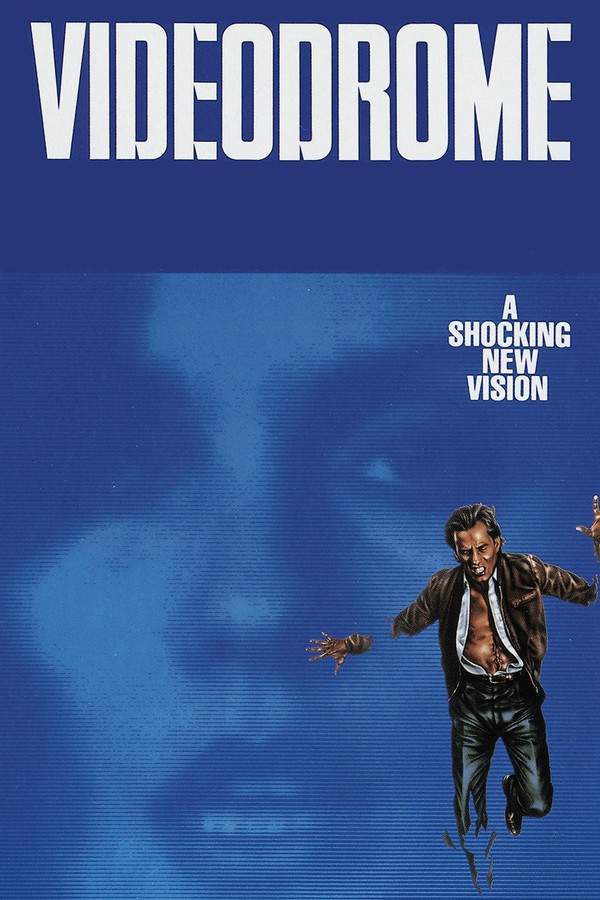
Videodrome (1983) movie poster

Plot Summary

Videodrome (1983) Plot Summary Explained

Release, runtime and language
1983 · 87 min · English
JustWatch #562 224
Directed by
David Cronenberg
Starring
James Woods, Deborah Harry

In a near-future city, a cable programmer searching for shocking content discovers a mysterious broadcast signal that seems to have a disturbing effect on those who view it. As he investigates the source of the program, the lines between reality and illusion begin to blur, leading him down a dangerous path. He confronts unsettling visions and a sinister conspiracy, forcing him to question his own sanity and the nature of what he perceives. The unsettling broadcast becomes increasingly invasive, threatening to consume his life and reshape his understanding of existence.

On this page (6)
  1. 1 Where to watch
  2. 2 What happens: full plot
  3. 3 Plot questions answered
  4. 4 Movie threads
  5. 5 Movies like Videodrome
  6. 6 Every angle

Where to watch

Where to Watch Videodrome (1983)

Where can you watch Videodrome? Stream, rent or buy it in the US, including on Amazon Prime Video, Amazon Video and Apple TV Store: current JustWatch availability with up-to-date prices.

Streaming availability powered by JustWatch

Full plot summary · contains spoilers

What Happens in Videodrome: Full Plot Summary

The whole story of Videodrome (1983) explained, from the opening scene to the final frame: every key event, every twist and what it all adds up to. Read it as a quick recap before the sequel, to check a scene you missed, or to finally understand what really happened.

Max Renn (James Woods) serves as the president of the notorious CIVIC-TV (Channel 83, Cable 12), a sleazy television station in Toronto that focuses on sensationalized content. Dissatisfied with the channel's mundane lineup—which primarily consists of softcore pornography—Renn embarks on a relentless quest for a more provocative program that will captivate a wider audience.

One fateful morning, Renn is summoned to the secretive office of Harlan (Peter Dvorsky), who manages CIVIC-TV's illicit satellite dish. Harlan reveals a groundbreaking yet disturbing show called "Videodrome," a shocking program broadcast from Malaysia featuring graphic portrayals of torture and murder set against a surreal reddish-orange backdrop. Intrigued by the potential of this snuff-style content to revolutionize television, Renn instructs Harlan to pirate the broadcast.

During an appearance on a TV talk show hosted by Rena King, Renn engages in a heated debate about his programming choices with the enigmatic Nikki Brand (Deborah Harry), a sadomasochistic psychiatrist, and the enigmatic Professor Brian O'Blivion (Jack Creley), a philosopher entrenched in pop culture. O'Blivion delivers a prophetic warning about a future where television will come to dominate reality itself.

As Renn's relationship with Nikki deepens—she becomes increasingly turned on by the violent imagery of "Videodrome"—he learns from Harlan that the signal had been misrepresented; the broadcast actually originates from Pittsburgh, not Malaysia. Eager to partake in this sensational show, Nikki rushes to Pittsburgh for an audition, only to vanish without a trace.

Concerned for her safety, Renn seeks assistance from Masha Borowski (Lynne Gorman), a pornographer with years of connections in the industry. Through Masha, he uncovers that "Videodrome" acts as the public front for a darker political agenda. Meanwhile, he discovers that Brian O'Blivion is deeply aware of this malevolent plot.

Max hunts down O'Blivion's base of operations, known as The Cathode Ray Mission. Here, he finds that the mission caters to the homeless with food and shelter while promoting continuous television viewing. Bianca (Sonja Smits), O'Blivion's daughter, runs the mission, which she hopes will fulfill her father's vision of a society overtaken by television.

Soon, Renn experiences alarming hallucinations wherein his stomach transforms into a bloody, VCR-like opening. In a particularly haunting moment, Nikki appears to him as a hooded figure, whispering, > "Come to me." The psychological effects of "Videodrome" take a toll on him, as Bianca warns that the program emits a sinister signal that can trigger fatal brain tumors in its viewers.

The ties between "Videodrome" and a conspiracy involving the Spectacular Optical Corporation become evident. Led by Barry Convex (Leslie Carlson), this corporation masquerades as an eyeglass manufacturer while secretly fostering NATO's interests in propaganda. Convex and Harlan jointly plot to manipulate Renn into broadcasting "Videodrome," aiming to purge society of undesirable elements obsessed with violence and depravity.

As Renn succumbs to the influence of the hallucinations, he is manipulated into a quest that becomes increasingly violent. In an unexpected twist, he finds himself on the receiving end of sinister programming, ultimately tasked with murdering key individuals tied to "Videodrome." When he confronts Bianca in a state of confusion, she reveals the true horrors behind the show, and using the programming against him, she instructs him to eradicate those responsible.

At the conclusion of his violent vendetta, Renn takes aim at Convex during a major event, unleashing chaos as the ambitious executive’s body succumbs to a grotesque metamorphosis. With a chilling declaration, > "Death to Videodrome! Long live the new flesh!" Renn's actions leave his legacy and the true future of television in question.

Renn seeks solace in a derelict boat, where a projector plays images of Nikki. She asserts that while he has weakened "Videodrome," obliterating it entirely will require him to transcend his former self. Reflecting on this ultimatum, the vision of his own demise drives him to pull the trigger, sealing his fate with the grim proclamation, > "Long live the New Flesh."
Last updated: November 02, 2024 at 13:26

Was this helpful?

Plot questions answered

Videodrome Plot Explained: Your Questions Answered

The questions people ask most about Videodrome (1983): what happens in the confusing scenes, why the characters do what they do, the twists, hidden details and what the ending means. Each answer contains spoilers.

Q1

Why does Max Renn become so obsessed with Videodrome?

Max becomes obsessed with Videodrome because he sees it as the breakthrough program that could finally captivate audiences and boost his failing cable station. The broadcast features graphic torture and murder, which Max believes represents the ultimate provocative content that will revolutionize television and attract a wider audience. His ambition to create sensational programming overrides any moral concerns, setting him on the path to his destruction.

Foreshadowing: During the talk show debate, Professor O'Blivion warns Max about television dominating reality, foreshadowing how deeply Max will be consumed by what he broadcasts.

  • max renn
  • obsession
  • motivation
  • cable tv
  • snuff film
Q2

What happens to Nikki after she goes to Pittsburgh?

Nikki travels to Pittsburgh for a Videodrome audition but vanishes completely without a trace. Her disappearance remains mysterious throughout the film, though later events suggest she may have been absorbed into the Videodrome conspiracy or eliminated by its operators. Max never learns her exact fate, and she later appears to him only as a hallucination guiding him toward his final destiny.

Foreshadowing: Her obsession with the violent imagery earlier in the film hints at her willingness to seek out the dangerous program directly.

  • nikki brand
  • pittsburgh
  • disappearance
  • audition
  • missing
Q3

What is the Cathode Ray Mission?

The Cathode Ray Mission is a shelter for the homeless run by Bianca O'Blivion, Professor Brian O'Blivion's daughter. While it provides food and shelter, its true purpose is to promote constant television viewing among its residents, fulfilling her father's vision of a society overtaken by television. It serves as the public front for Videodrome and a gathering point for those most susceptible to the broadcast's influence.

Foreshadowing: Bianca explains that her father believed television would become the dominant force in human consciousness, making the mission a literal manifestation of his philosophy.

  • cathode ray mission
  • bianca
  • homeless shelter
  • television brainwashing
  • o'blivion
Q4

What is the Spectacular Optical Corporation?

The Spectacular Optical Corporation is a front company masquerading as an eyeglass manufacturer while secretly serving NATO's propaganda interests. Led by Barry Convex, the corporation created Videodrome as part of a plan to use the broadcast signal to induce brain tumors in viewers obsessed with violence, effectively eliminating what they consider undesirable elements of society. The entire Videodrome operation was a conspiracy to purge violent content consumers through the fatal signal.

Foreshadowing: Bianca warns Max that Videodrome emits a sinister signal capable of triggering fatal brain tumors, revealing the murderous intent behind the seemingly random broadcast.

  • spectacular optical
  • barry convex
  • conspiracy
  • nato
  • propaganda
  • brain tumors
Q5

Why does Max develop the hallucination of a VCR in his stomach?

The VCR stomach hallucination represents the physical manifestation of Videodrome's corrupting influence on Max's mind. As the signal penetrates his brain, he begins transforming to literally embody the technology he consumed. The bloody opening in his stomach symbolizes how television has literally consumed him from within, turning his body into a receptacle for the visual content that has taken over his existence.

  • hallucination
  • vcr
  • stomach
  • metamorphosis
  • body horror
  • signal
Q6

Why does Bianca tell Max to kill the people behind Videodrome?

Bianca manipulates Max using the programming that was weaponized against him. She reveals that the entire Videodrome conspiracy was designed to use television as a tool for social engineering and elimination of undesirable populations. She turns Max's own programming against his manipulators, directing him to kill Barry Convex and others responsible, effectively making him a weapon to destroy the conspiracy from within. Her motivation is to fulfill her father's vision of transcending the old television reality through violent upheaval.

  • bianca
  • murder
  • manipulation
  • programming
  • barry convex
  • revenge
Q7

What does the 'new flesh' mean in Videodrome?

The 'new flesh' represents the next evolutionary stage of humanity where the boundaries between human body and television technology become indistinguishable. Professor O'Blivion predicted that television would eventually merge with human consciousness, creating beings that exist as pure visual information. Max's transformation and his embrace of this concept symbolize his acceptance of this merger, declaring 'Long live the new flesh' as he认同s his new hybrid identity between human and screen.

  • new flesh
  • evolution
  • television
  • technology
  • o'blivion
  • transformation
  • hybrid
Q8

Why does Max kill himself at the end?

Max commits suicide because Nikki's vision tells him that destroying Videodrome entirely requires him to transcend his current form of existence. Having already been corrupted by the signal and used as a weapon to kill, he realizes the only way to fully defeat Videodrome is to eliminate the corrupted version of himself. His final act represents the ultimate sacrifice, using his death to break the cycle of consumption between television and viewer, completing the transformation into something beyond human while declaring 'Long live the new flesh.'

  • suicide
  • death
  • nikki
  • transcendence
  • sacrifice
  • final scene
Q9

Why does the Videodrome signal actually come from Pittsburgh instead of Malaysia?

The false claim that Videodrome originated from Malaysia was part of the conspiracy to hide its true source. Harlan initially tells Max the broadcast comes from Malaysia to make it seem more exotic and dangerous, but Max later learns it actually originates from Pittsburgh. This deception keeps the true creators hidden and adds to the mysterious, underground nature of the broadcast, making it more appealing to Max while concealing the Spectacular Optical Corporation's involvement.

  • pittsburgh
  • malaysia
  • broadcast
  • source
  • signal
  • conspiracy
Q10

How does the Videodrome signal cause brain tumors?

The Spectacular Optical Corporation designed Videodrome to emit a specific frequency that triggers fatal brain tumors in viewers who watch the broadcast regularly. This was part of their eugenic conspiracy to eliminate individuals obsessed with violence and depravity. The signal acts as a weaponized technology disguised as entertainment, using the viewer's neurological vulnerability to the violent imagery as a pathway to physically destroy them.

  • signal
  • brain tumor
  • frequency
  • fatal
  • spectactular optical
  • death
Q11

What warning does Professor O'Blivion give about television?

Professor O'Blivion warns that television will eventually become indistinguishable from reality itself, ultimately dominating human consciousness. He predicts a future where the boundary between what is broadcast and what is real collapses entirely, and humanity will be unable to distinguish between mediated experience and actual existence. This philosophical warning serves as the thematic foundation of the film, as Max's journey proves O'Blivion's prophecy correct, he becomes unable to separate his hallucinations from reality.

  • o'blivion
  • television
  • reality
  • prophecy
  • warning
  • philosophy
  • dominance
Q12

Why does Harlan help manipulate Max into broadcasting Videodrome?

Harlan works with Barry Convex to manipulate Max into broadcasting Videodrome as part of the conspiracy's grand plan. Convex and Harlan need Max's channel to reach the audience of violence enthusiasts they want to eliminate. By using Max's ambition against him, they can spread the fatal signal to the target population while maintaining deniability. Harlan represents the collaborator who betrays Max by feeding him the destructive content under the guise of helping his career.

  • harlan
  • barry convex
  • manipulation
  • betrayal
  • conspiracy
  • collaborator

Movie threads

More Movies Like Videodrome, by Mood & Story

Curated lists built around what makes Videodrome tick: the same mood, the same kind of story or the same emotional payoff. Each list explains why these movies belong together.

Movies about media manipulation and psychological decay like Videodrome

Stories where technology or media erodes reality and sanity. If you liked the themes of media-induced reality collapse in Videodrome, you'll find similar explorations here. This list features movies like Videodrome that delve into psychological thrillers and sci-fi horrors where technology and broadcast signals manipulate perception, leading to paranoia and a loss of self.

  • paranoid
  • unsettling
  • dystopian
  • psychological
  • conspiracy
  • hallucinatory
  • Tone: dark, paranoid
  • Pacing: steady, deliberate
Why these movies?

The story pattern: These stories typically follow a protagonist, often a media professional or avid consumer, who discovers a disturbing new form of media. Their initial fascination turns into obsession as the media's influence becomes invasive, blurring their reality and leading them to confront a sinister conspiracy or their own mental disintegration. The journey is one of increasing paranoia and loss of control.

Why they belong together: Movies are grouped here based on their shared focus on the corrosive power of media and technology on the human psyche. They create a cohesive experience through their dark tone, complex exploration of reality versus illusion, and the heavy emotional weight of a protagonist's psychological unraveling.

Body horror and existential crisis movies like Videodrome

Films where psychological terror manifests as physical metamorphosis. Explore movies similar to Videodrome that delve into the horror of physical transformation linked to psychological decay. This list features bleak sci-fi and horror films where characters experience existential crises through grotesque bodily metamorphosis, creating a deeply unsettling and heavy viewing experience.

  • body horror
  • disturbing
  • unsettling
  • existential
  • grotesque
  • psychological
  • Tone: dark, disturbing
  • Pacing: steady
Why these movies?

The story pattern: The narrative pattern involves a character's reality or sanity fracturing, which is externalized through their body becoming a site of horror. This physical decay is inextricably linked to their mental state, often serving as a metaphor for their existential fears. The story progresses as the protagonist loses control over their own form, leading to a bleak confrontation with their transformed existence.

Why they belong together: These films are united by their use of body horror as a vehicle for exploring profound existential dread. They share a dark tone, high intensity, and a heavy emotional weight, focusing on the visceral and psychological terror of losing one's physical and mental integrity.

If you liked this

Movies Like Videodrome

Similar movies to Videodrome: the same genre, themes or kind of story. Each one comes with its own plot summary, timeline and ending explained.

Browse all movie summaries

Every angle

Videodrome (1983) Explained: Plot, Timeline & Characters

Everything about Videodrome in one place: what happens in the plot summary, the timeline in chronological order, the characters and meaning and a spoiler-free summary. What's After the Movie adds the cast, box office and post-credit scenes.

Coming soon on iOS and Android

The Plot Explained Movie Summary App

Plot summaries, endings explained and timelines on your phone. Catch up on any movie in minutes, save your favorites and never miss a twist again.

Be the first to know when we launch. Your email stays private, always.

Learn more about the app