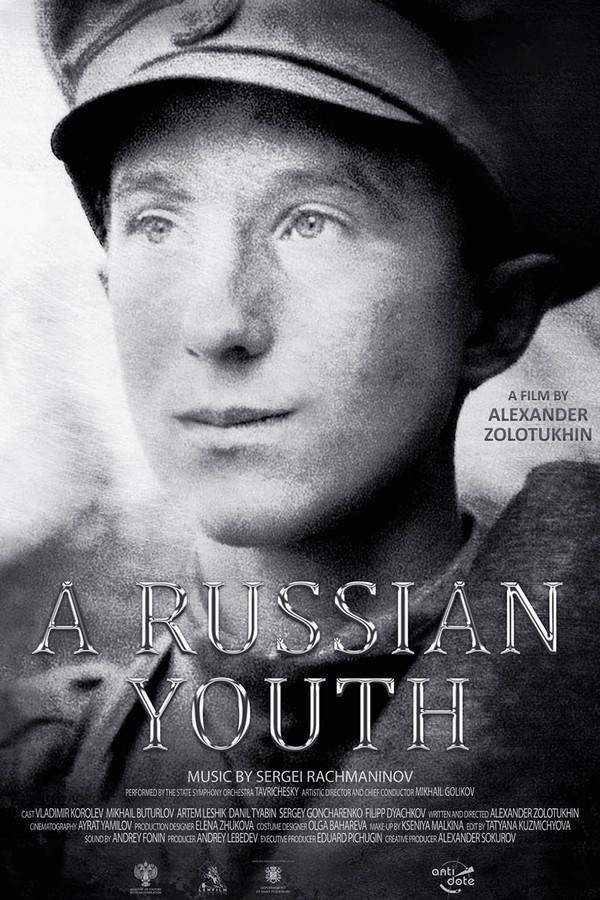
The film opens with a symbolic scene of three Red Guards from the time of the October Revolution walking down a city street. The imagery gradually shifts to the present, where a young group of city dwellers—and later, a recently discharged soldier—enter the frame. The soldier, Sergey Zhuravlev, becomes our focal point as the story follows him and his circle: Nikolai Fokin and Slava Kostikov, as they search for meaning and a place to belong in a changing world. Sergey’s father died on the front during the Great Patriotic War, and he now shares a communal apartment with his mother and sister near Zastava Ilyicha Square. The film traces how they navigate friendship, love, and the pull of a society caught between inherited memory and new possibilities.
Slava Kostikov, now married with a child, still spends most of his free time with his friends, often neglecting his family responsibilities. Nikolai Fokin, a cheerful optimist and ladies’ man, finds himself pressed at work when his boss tries to recruit him as an informant. He refuses, and later voices a rueful judgment to his friends: > A young man—and already a scoundrel.
Sergey, meanwhile, is deeply searching for purpose and for a partner who can meet his lofty ideals. During a May Day parade, he meets Anya, the daughter of wealthy parents, and their connection leads them from casual encounters to a shared night out at a poetry evening at the Polytechnic Museum. There, a powerful cadre of poets—Yevgeny Yevtushenko and Andrei Voznesensky, among others—reads their work before a captivated audience. The lineup also includes Rimma Kazakova, Robert Rozhdestvensky, Mikhail Svetlov, Bella Akhmadulina, and Bulat Okudzhava, whose presence amplifies the atmosphere of a generation voicing both memory and longing. Boris Slutsky also reads poems by his late friends Mikhail Kulchitsky and Pavel Kogan, adding a somber note to the evening.
At Anya’s birthday party, Sergey feels out of place among the “golden youth,” caught between reverence for the past and the lure of a new social scene. He then experiences a surreal encounter with his late father, who died long before he could offer guidance. The father, who perished at twenty-one, admits he cannot steer his son’s path, leaving Sergey to search for his own way among memories that seem almost like sleep. The scene swells with the chorus of wartime comrades who appear asleep in the room, a powerful reminder that history lingers in the present.
The film culminates in a stark, ceremonial image: the changing of the guards at Lenin’s Mausoleum, a quiet and haunting end that fuses personal longing with the larger currents of a nation still reconciling its revolutionary past with its future.