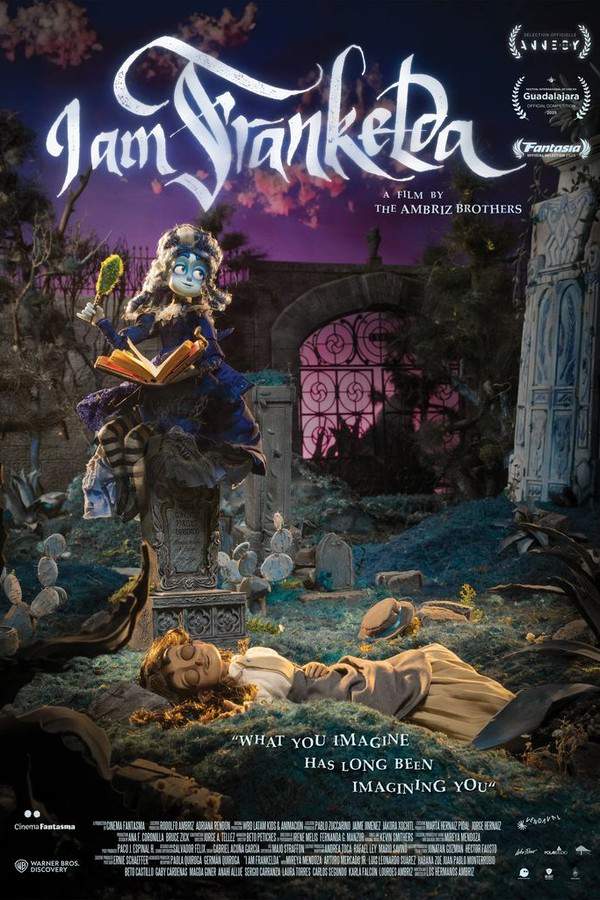
Frankelda’s counterattack takes place simultaneously in her mind, in Topus Terrenus, and in the human world where Francisca writes. Her plan is to make Procustes enter the one realm she can shape completely. Herneval pretends to betray her, places her in a nightmare state, and secretly replaces Procustes’s script on the Harpspider with a story Frankelda authored. Procustes dives into her consciousness expecting control and instead finds her waiting. The trap nearly fails when Frankelda loses focus and their physical bodies begin convulsing. Before Herneval can stabilize the plan, Mythelitas—one of the soldiers placed under Procustes’s spell—stabs the prince. Herneval’s body dies, but through a final kiss he moves his soul into Frankelda’s book; Frankelda sends her spirit into the inkpot Francisca uses. Within the mindscape, Herneval appears as the child linked to Francisca’s earliest recognition that her tales were real, and he helps put Procustes to sleep. The usurper is contained, though his vow to return prevents the victory from being permanent. Back in Topus Terrenus, the spell breaks, Ficturo and Veritena are freed, and Mythelitas asks to be executed for killing the prince. The rulers refuse and instead order him to find the exiled clan leaders as a path of repair. When they play Frankelda’s stories on the Harpspider as a memorial, the words resurrect Herneval in the human world as a living book. Frankelda rises from the inkpot and begins drawing herself across his pages. Francisca understands and resumes writing. The last return to the hilltop changes a site associated with grief into the place where their unfinished existence continues.
Procustes’s defeat follows the movie’s argument that stories die when a gatekeeper treats them as property and survive when creation passes between people. He has not simply written poor nightmares; he has deliberately starved the realm of fear, blamed the royal family for the decline, stolen authority over Frankelda’s imagination, and planned to tear down the boundary separating monsters from human life. Frankelda cannot beat that system by becoming a more benevolent solitary ruler. Her plan requires her own script, Herneval’s performance, Francisca’s hand, the Harpspider’s transmission, and eventually the king and queen’s act of remembrance. Even death does not turn Herneval or Frankelda into self-sustaining immortals. They remain present only while someone keeps writing and reading them, a dependency the ending presents as connection rather than weakness. Mythelitas’s fate carries the same principle into justice: execution would freeze him forever as the man who struck the fatal blow while enchanted, whereas the mission to recover the clans makes him contribute to rebuilding the world he helped fracture. The hilltop is hopeful because grief has become material for another story, not because loss was reversed without cost.