

Plot Explained Spoilers guaranteed!
Plot Explained

Browse by genre

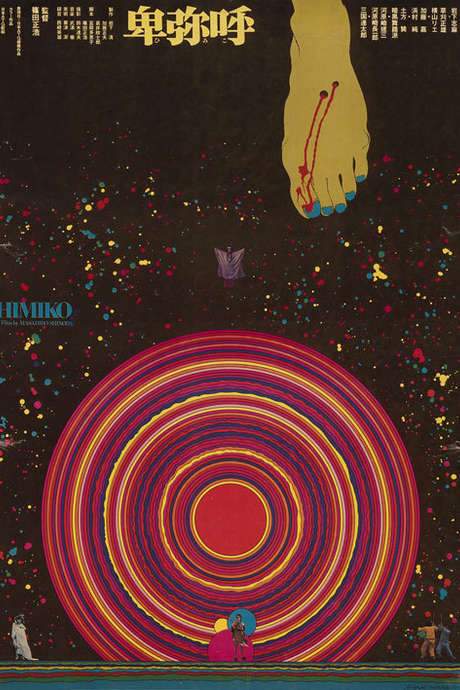
Himiko (1974) movie poster

Characters & Themes

Himiko (1974) Characters, Setting & Themes Explained

Release, runtime and language
1974 · 100 mins · Japanese
Directed by
Masahiro Shinoda
Starring
Shima Iwashita, Masao Kusakari, Rentaro Mikuni, Jun Hamamura, Kenzō Kawarasaki, Tatsumi Hijikata

The myth of the Sun Goddess who founded Japanese society is seen through the lens of a modern view of history.

On this page (7)
  1. 1 Where to watch
  2. 2 Characters explained (10)
  3. 3 Where & when it takes place
  4. 4 Themes & meaning (4)
  5. 5 Character & meaning questions
  6. 6 Movie threads
  7. 7 Every angle

Where to watch

Where to Watch Himiko (1974)

Where can you watch Himiko? Stream, rent or buy it in the US: current JustWatch availability with up-to-date prices.

Streaming availability powered by JustWatch

10 main characters · contains spoilers

Himiko Characters Explained: Who Is Who

The main characters of Himiko (1974), heroes and villains: what drives them, how they change over the course of the story and what each of them reveals about the film's bigger ideas.

  • Himiko (Shima Iwashita)

    A shaman and prophetess of the Sun God who rises to queen after Ohkimi's death. Her charisma and ritual authority command the court, yet her love for Takehiko weakens her prophetic edge and fuels her decline. Her arc blends spiritual power with personal passion, ending in a brutal downfall at the hands of those she once ruled.

    • 👑 Queen
    • 🧙 Shaman
    • ⚖️ Power
    • 💔 Love
  • Takehiko (Masao Kusakari)

    A lone traveler and Himiko’s half-brother who becomes entangled in a forbidden romance. He resists political manipulation but is captured, tortured, and ultimately killed while trying to flee the kingdom with Adahime. His defiance against the court’s machinations shapes the tragic course of events.

    • 🧭 Stranger
    • 💘 Lover
    • ⚔️ Conflict
  • Nashime (Rentaro Mikuni)

    A loyal servant who quietly orchestrates power plays. He assassinates the king, consoles Himiko, and later imprisons her, steering the realm toward Mimaki’s ascension. His guilt and complicated loyalties drive a pivotal turn in the drama as he contends with the consequences of his actions.

    • 🗝️ Advisor
    • ⚔️ Betrayal
    • 🕊️ Guilt
  • Mimaki (Chōichirō Kawarasaki)

    A scheming prince who seeks to seize the throne and reshape the realm’s religious order. He plots with Ikume, ascends to kingship, and propels the kingdom into conflict with the Land and Mountain Peoples. His rule is marked by ruthless ambition and a calculated use of prophecy to justify war.

    • 👑 Usurper
    • ⚔️ War
    • 🧭 Ambition
  • Ikume (Kenzō Kawarasaki)

    A prince who aligns with Mimaki in a bid for power. He participates in the conspiracy, but is ultimately slain in a sword duel on a ridge, illustrating the lethal stakes of succession struggles. His demise underscores the peril that accompanies factional intrigue.

    • 🛡️ Ally
    • ⚔️ Duel
    • 🔥 Conflict
  • Adahime (Rie Yokoyama)

    A ritual assistant who loves Takehiko and openly pursues him. Her loyalty to Takehiko and her pursuit of affection complicate court politics, culminating in a tense dynamic with Himiko. She reunites with Takehiko later, sharing in the harsh fate that befalls the lovers.

    • 💘 Lover
    • 🧭 Aide
    • 🌟 Loyalty
  • Ohkimi (Yoshi Katō)

    King of the Sun God People who suspects Himiko’s prophetic powers are faltering. He is assassinated by Nashime, a turning point that enables Mimaki’s ascent and sets off the ensuing upheaval. His reign marks the culmination of a ritual-king dynamic that shapes the realm’s fate.

    • 👑 King
    • ⚔️ Assassination
    • 🕯️ Prophecy
  • Toyo

    A young girl chosen to become the new prophetess who keeps the Sun God’s presence within the line of succession. She declares the Sun God alive within Himiko and orchestrates a transition that unsettles Mimaki and Nashime. Toyo embodies the continuity of ritual power across the shifting political landscape.

    • 🕊️ Prophet
    • 🌟 Revelation
  • Narrator (Jun Hamamura)

    The narrator frames the mythic forest and the unfolding drama, guiding the audience through the ritual world and the modern reveal. The narration contrasts ancient ritual with contemporary imagery, shaping the film’s tonal shift.

    • 🎤 Narration
    • 🗺️ Frame
  • Dancer (Tatsumi Hijikata)

    A dancer who embodies the ritual aesthetic of the Sun God cult, appearing as a symbolic presence within ceremonies. The dancer adds a performative layer to the mythic setting, enriching the film’s ceremonial atmosphere.

    • 🕺 Performer
    • 🎭 Ritual

Last updated: October 04, 2025 at 18:33

Was this helpful?

Setting

Where and When Does Himiko Take Place?

The setting of Himiko (1974): the year and time period, the places and locations, and how they shape the characters, the mood and the tension of the story.

Time period

Ancient mythic Japan, with contemporary epilogue

Most of the action unfolds in a mythic ancient Japan where shamans and kings wield religious authority. Visions, prophecies, assassinations, and tribal power struggles define the era. The closing sequences reveal a modern world perched atop the ancient kofun, implied by a helicopter and a urban landscape, signaling a present-day context beyond the legend.

Location

Unnamed forest in ancient Japan, Kofun burial mound site atop a ridge, Modern suburban Japan

The story begins in an unnamed forest in ancient Japan, the sacred land of the Sun God people and their neighboring tribes, the Land People and Mountain People. The forest houses ritual centers, looms, and signs of prophetic power that drive political fate. In a revelatory final shot, a kofun burial mound beneath the forest rises into a modern suburban neighborhood, bridging mythic Japan with present-day scenery.

  • 🌳 Forest
  • 🗺️ Ancient Japan
  • 🏙️ Modern Suburb

Last updated: October 04, 2025 at 18:33

Was this helpful?

4 major themes

Himiko Meaning: Themes & Message Explained

What is Himiko (1974) really about? The emotional, social and philosophical themes the film keeps returning to, its symbolism and the message beneath the surface.

  • Power

    The Sun God kingdom treats ritual authority as the source of political legitimacy. Himiko’s ascent and Mimaki’s plot illustrate how power is manufactured through prophecy, loyalty, and fear. The story exposes the brutality and fragility of rule when it is built on manipulation and conquest.

  • Love and Obsession

    Himiko’s love for Takehiko destabilizes her prophetic gifts and destabilizes the court. Personal desire bends political decisions, fueling jealousy, betrayal, and a fatal escalation of events. The romance becomes a catalyst for her downfall and the kingdom’s turmoil.

  • Ritual and Religion

    Rituals and divine visions dictate social order and punishment, from executions to royal succession. The Sun God worship is challenged by rival faiths of the Land and Mountain Gods, highlighting religion as a tool for control and rebellion. The narrative questions whether faith justifies force or masks power.

  • Conflict and Tyranny

    Inter-tribal war and internal conspiracies push the story toward brutal outcomes, including assassinations and purges. Mimaki’s usurpation, Nashime’s scheming, and the violence against lovers and dissenters illuminate the corrosive nature of tyranny. The cycle of violence drives the characters toward ruin and tragedy.

Last updated: October 04, 2025 at 18:33

Was this helpful?

Character & theme questions

Himiko Characters & Meaning: Your Questions Answered

The questions people ask about Himiko (1974): who the characters really are, their relationships, what the symbols mean, where it takes place and what the movie is really about. Each answer contains spoilers.

Q1

What is the significance of the forest setting in the film?

The forest serves as the sacred heart of the Sun God people's territory, housing ritual centers, looms, and prophetic power that determines political fate. It represents the spiritual and political core of ancient Japan where shamans and kings wield religious authority. In the film's final shot, the forest rises to reveal a modern suburban neighborhood built atop a kofun burial mound, bridging mythic Japan with present-day scenery.

Foreshadowing: Early scenes establish the forest as a place of divine prophecy, foreshadowing its enduring significance across time.

  • ancient japan
  • forest
  • sacred site
  • sun god
  • kofun
Q2

When does the story take place?

The story unfolds in mythic ancient Japan, an era when shamans and kings wielded religious authority as the source of political legitimacy. The era is defined by visions, prophecies, assassinations, and tribal power struggles. The closing sequence reveals a modern world perched atop the ancient kofun, with helicopters and urban landscapes signaling a present-day epilogue.

  • ancient japan
  • mythic era
  • historical period
  • time period
Q3

Who is Himiko and what is her role?

Himiko is a shaman and prophetess of the Sun God who rises to queen after King Ohkimi's death. Her charisma and ritual authority command the court, but her personal passions ultimately destabilize her prophetic gifts. She embodies the tension between spiritual power and human desire, leading to her tragic downfall.

  • himiko
  • shaman
  • queen
  • prophetess
  • sun god
Q4

Who is Takehiko and what happens to him?

Takehiko is Himiko's half-brother, a lone traveler who becomes entangled in a forbidden romance with her. He resists political manipulation but is captured, tortured, and killed while trying to flee the kingdom with Adahime. His defiance against the court's machinations shapes the tragic course of events.

  • takehiko
  • himiko's brother
  • prisoner
  • torture
Q5

What does the film say about power and political authority?

The film depicts how power is manufactured through prophecy, loyalty, and fear. The Sun God kingdom treats ritual authority as the source of political legitimacy, and Himiko's ascent illustrates how rulers manipulate divine authority. The story exposes the brutality and fragility of rule when built on manipulation and conquest.

  • power
  • politics
  • authority
  • prophecy
  • manipulation
Q6

How does the film portray ritual and religion?

Rituals and divine visions dictate social order and punishment, from executions to royal succession. The Sun God worship is challenged by rival faiths of the Land and Mountain Gods, highlighting religion as a tool for control and rebellion. The narrative questions whether faith justifies force or masks political power.

  • ritual
  • religion
  • sun god
  • worship
  • prophecy
Q7

What role does love play in the story?

Himiko's love for Takehiko destabilizes her prophetic gifts and the court. Personal desire bends political decisions, fueling jealousy, betrayal, and fatal escalation. The romance between Himiko and Takehiko, as well as Adahime's pursuit of Takehiko, becomes a catalyst for downfall and kingdom turmoil.

  • love
  • himiko
  • takehiko
  • obsession
  • betrayal
Q8

Who are the Sun God people?

The Sun God people are the primary tribe in the film, ruling from the sacred forest where their king Ohkimi presides. They worship the Sun God and maintain ritual authority as the basis for political legitimacy. Their kingdom faces rival tribes, the Land People and Mountain People, whose different religious practices challenge Sun God supremacy.

  • sun god
  • tribe
  • kingdom
  • land people
  • mountain people
Q9

How does the film depict conflict and tyranny?

Inter-tribal war and internal conspiracies drive the story toward brutal outcomes. Mimaki's usurpation, Nashime's scheming, and violence against lovers and dissenters illustrate tyranny's corrosive nature. The cycle of violence drives characters toward ruin, with power struggles resulting in assassinations, purges, and tragic deaths.

  • conflict
  • tyranny
  • war
  • betrayal
  • assassination
Q10

Who is Mimaki and what are his motivations?

Mimaki is a scheming prince who seeks to seize the throne and reshape the realm's religious order. He plots with Ikume, ascends to kingship, and propels the kingdom into conflict with the Land and Mountain Peoples. His rule is marked by ruthless ambition and calculated use of prophecy to justify war.

  • mimaki
  • prince
  • antagonist
  • ambition
  • throne
Q11

What role does Nashime play in the story?

Nashime is a loyal servant who quietly orchestrates power plays behind the scenes. He assassinates King Ohkimi, consoles Himiko, and later imprisons her, steering the realm toward Mimaki's ascension. His complicated loyalties and guilt drive a pivotal turn in the drama as he contends with the consequences of his political maneuvering.

  • nashime
  • servant
  • assassin
  • power broker
Q12

What does the modern kofun burial mound represent in the ending?

The final shot reveals a kofun burial mound beneath the forest rising into a modern suburban neighborhood, bridging mythic Japan with present-day scenery. This visual metaphor suggests the ancient legend's enduring legacy, historical power struggles and religious conflicts that shaped Japanese society remain embedded in the modern landscape.

  • kofun
  • burial mound
  • modern japan
  • epilogue
  • legacy

Movie threads

More Movies Like Himiko, by Mood & Story

Curated lists built around what makes Himiko tick: the same mood, the same kind of story or the same emotional payoff. Each list explains why these movies belong together.

Mythic Tragedies of Power and Fate like in Himiko

Ancient rulers and priests crushed by the sacred burdens they bear. If you were captivated by the tragic downfall of Himiko, explore more movies like it. This selection features historical epics and dramas where legendary rulers face the crushing weight of destiny, blending myth with bleak political realities for a heavy, melancholic experience.

  • tragic
  • mythic
  • somber
  • ritualistic
  • fatalistic
  • ancient
  • Tone: melancholic, tragic, bleak
  • Pacing: steady, deliberate
Why these movies?

The story pattern: These narratives typically follow a ruler or prophet whose sacred status isolates them, leading to conflicts between spiritual duty and worldly power. The journey is one of inevitable decline, often involving betrayal, madness, and a climax that underscores the tragic gap between mythic ideals and human fragility.

Why they belong together: Movies in this thread share a somber, ritualistic mood and a high emotional weight. They are united by themes of fatalism, the corruption of absolute power, and the personal tragedy of figures trapped by their legendary roles, resulting in a consistently melancholic and intense viewing experience.

Heavy Melancholic Historical Dramas like Himiko

Slow-burn journeys into the grim past, weighted by destiny and sorrow. Fans of the heavy, melancholic tone in Himiko will find more similar movies here. This collection focuses on historical dramas with a steady pace, intense emotional weight, and stories that explore dark themes like betrayal and fatalism within ancient or period settings.

  • melancholic
  • somber
  • bleak
  • reflective
  • tragic
  • historical
  • Tone: melancholic, somber, bleak
  • Pacing: steady, slow-burn
Why these movies?

The story pattern: The narrative pattern is one of gradual, inevitable decline within a richly detailed historical world. The pacing is steady, allowing the weight of themes and character fates to build powerfully. Endings are often mixed or bleak, leaving a reflective, somber impression rather than a sense of resolution.

Why they belong together: These films are grouped by their shared vibe: a consistently melancholic tone, steady and deliberate pacing, and a high degree of emotional intensity. They create a similar viewing experience—immersive, grim, and psychologically demanding—centered on historical settings and tragic human dramas.

Every angle

Himiko (1974) Explained: Plot, Timeline & Characters

Everything about Himiko in one place: what happens in the plot summary, the timeline in chronological order, the characters and meaning and a spoiler-free summary. What's After the Movie adds the cast, box office and post-credit scenes.

Coming soon on iOS and Android

The Plot Explained Movie Summary App

Plot summaries, endings explained and timelines on your phone. Catch up on any movie in minutes, save your favorites and never miss a twist again.

Be the first to know when we launch. Your email stays private, always.

Learn more about the app