Plot Explained Spoilers guaranteed!
Plot Explained

Browse by genre

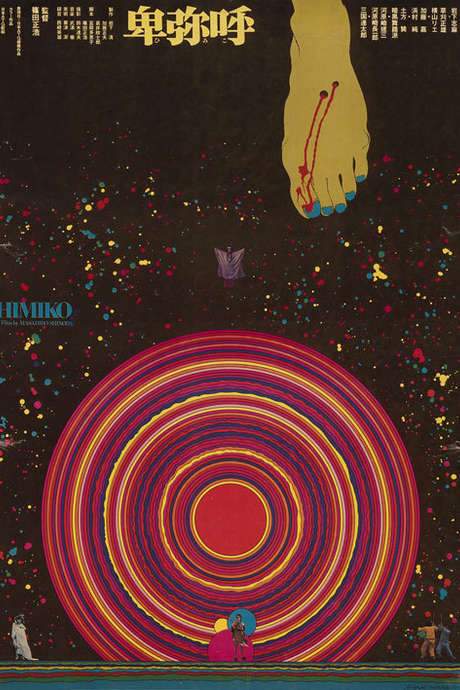
Himiko (1974) movie poster

Plot Summary

Himiko (1974) Plot Summary Explained

Release, runtime and language
1974 · 100 mins · Japanese
Directed by
Masahiro Shinoda
Starring
Shima Iwashita, Masao Kusakari, Rentaro Mikuni, Jun Hamamura, Kenzō Kawarasaki, Tatsumi Hijikata

The myth of the Sun Goddess who founded Japanese society is seen through the lens of a modern view of history.

On this page (5)
  1. 1 Where to watch
  2. 2 What happens: full plot
  3. 3 Plot questions answered
  4. 4 Movie threads
  5. 5 Every angle

Where to watch

Where to Watch Himiko (1974)

Where can you watch Himiko? Stream, rent or buy it in the US: current JustWatch availability with up-to-date prices.

Streaming availability powered by JustWatch

Full plot summary · contains spoilers

What Happens in Himiko: Full Plot Summary

The whole story of Himiko (1974) explained, from the opening scene to the final frame: every key event, every twist and what it all adds up to. Read it as a quick recap before the sequel, to check a scene you missed, or to finally understand what really happened.

In an unnamed forest in what feels like ancient Japan, a woman named Himiko Shima Iwashita serves as the shaman and prophetess of the Sun God within the ruling kingdom of the Sun God people. Nearby, two other tribes populate the land: the Land People, who honor the ground, water, and animals, and the Mountain People, a rough, mute wanderer group tied together by a rope. A lone traveler named Takehiko Masao Kusakari emerges from the far side of the mountain and steps into the forest, shifting the balance of power and belief.

Himiko spends her days at a loom, weaving cloth, and she quietly delights in the news of Takehiko’s arrival. The court hums with ritual and prophecy, and the Sun God’s visions are discussed by the king, Ohkimi Yoshi Katō himself, who contemplates whether Mimaki Chōichirō Kawarasaki might eventually ascend the throne. Nashime Rentaro Mikuni, Himiko’s devoted servant, believes that she will be the rightful successor, claiming it as a direct command from the Sun God. Yet Mimaki confides in his brother Ikume Kenzō Kawarasaki that Himiko could be losing her prophetic touch because of her growing love for Takehiko, and that the Land God and Mountain God are false deities who should be overthrown to force belief in the Sun God alone.

When night falls, Takehiko visits Himiko in her quarters and reveals a startling truth: he is her half-brother. Despite the taboo, Himiko yields to desire and they sleep together while Adahime Rie Yokoyama, one of the ritual assistants, watches from a distance. The following night, Himiko addresses the court and proclaims that the Sun God requires the people to recognize the Land God and the Mountain God as valid powers as well. King Ohkimi accuses her of having lost her prophetic powers, but the moment is interrupted when Nashime assassinates the king during a distraction in the hall. With Ohkimi dead, Himiko assumes the throne and decrees that anyone who did not accept the Sun God’s words must be buried alive in the mountains.

Takehiko resists the pull of an unorthodox, incestuous bond and tries to leave the kingdom, choosing his own path over power. Adahime follows him, confessing her love and urging him to sleep with her, which he does. Himiko is horrified by this betrayal and orders Takehiko’s arrest. He is captured and brought back to her, where she orders torture and banishment. The Mountain People carry him up the mountain, and Adahime reappears to reunite with him as the ordeal unfolds. Meanwhile, back in the Sun God Kingdom, Nashime consoles a distraught Himiko, who ultimately yields to him physically. In the tinderbox of palace politics, Mimaki and Ikume plot to strip Himiko of her power.

Nashime confines Himiko to her room, while Mimaki seizes the throne as the new king. In a twist of fate, Nashime informs Mimaki that a young girl named Toyo will take Himiko’s place as the shaman and prophet of the Sun God. War erupts as Mimaki declares hostilities against the Land and Mountain God People. Takehiko and Adahime attempt to flee the realm, but they are intercepted and killed by Mimaki’s soldiers; their bodies are presented to Himiko, who is left devastated by the loss. Nashime acknowledges that Himiko has slipped into madness born of love, and, in a grim act of mercy or desperation, frees the imprisoned Mountain God People, who torture and kill Himiko in the mountains. Overcome with guilt, Nashime calls out to her in the forest.

In the climactic struggle, Mimaki kills Ikume in a sword duel that tears through the ridge and reshapes the landscape of power. Toyo rises as the new prophetess, declaring that the Sun God still resides within Himiko and that the vast and powerful Wei will demand slaves and offerings for centuries to come, unsettling Mimaki and troubling Nashime. Time moves forward to reveal the long arc of a country defined by its ancient tombs and modern life.

Years pass, and Nashime walks alone in the forest, weighed by grief and guilt for Himiko’s fate. A helicopter appears overhead, shattering the far-off sense of isolation. The camera pans outward to reveal that the forest sits atop a kofun, an ancient keyhole-shaped burial mound, with a suburban neighborhood of offices, houses, factories, and a highway encircling it. The film closes with aerial shots of more ancient tumuli scattered across Japan—quiet reminders that the past and present are in constant, uneasy contact as the credits roll.

Last updated: October 07, 2025 at 09:43

Was this helpful?

Plot questions answered

Himiko Plot Explained: Your Questions Answered

The questions people ask most about Himiko (1974): what happens in the confusing scenes, why the characters do what they do, the twists, hidden details and what the ending means. Each answer contains spoilers.

Q1

Why does Himiko declare that the Land and Mountain Gods should be recognized?

Himiko makes this proclamation shortly after her forbidden night with Takehiko. The speech appears to be driven by her personal desire to embrace a more inclusive spiritual order, possibly influenced by her growing feelings for Takehiko who represents an outsider perspective. However, King Ohkimi interprets it as a loss of prophetic powers, leading to the confrontation that allows Nashime to assassinate him.

Foreshadowing: Earlier, Mimaki and Ikume discuss that Himiko could be losing her prophetic touch because of her growing love for Takehiko.

  • himiko
  • prophetess
  • sun god
  • land god
  • mountain god
  • king ohkimi
  • proclamation
Q2

Why does Nashime kill King Ohkimi?

Nashime assassinates King Ohkimi during the distraction of Himiko's controversial speech declaring recognition of the Land and Mountain Gods. While the immediate opportunity comes from the chaos, Nashime's deeper motivation is political, he is Himiko's devoted servant who believes she is destined to succeed. With Ohkimi questioning Himiko's prophetic powers and favoring Mimaki for succession, Nashime removes the king to clear the path for Himiko to take the throne.

Foreshadowing: Nashime earlier claims it is the Sun God's command that Himiko will be the rightful successor, showing his unwavering commitment to her destiny.

  • nashime
  • king ohkimi
  • assassination
  • sun god kingdom
  • coup
  • political murder
Q3

Why does Himiko order Takehiko's torture and banishment?

After Takehiko leaves the kingdom and sleeps with Adahime, Himiko views this as a devastating betrayal, especially given their incestuous bond. Her order for torture and banishment stems from wounded pride and jealousy rather than political necessity. The brutality of the punishment reflects her descent into madness driven by love and the psychological toll of her position.

Foreshadowing: The film establishes that Himiko is losing her prophetic abilities due to her growing love for Takehiko, suggesting emotional instability.

  • himiko
  • takehiko
  • torture
  • banishment
  • adahime
  • betrayal
  • love
  • jealousy
Q4

Why does Nashime free the Mountain People who then kill Himiko?

After Mimaki seizes power and confines Himiko to her room, Nashime makes the desperate decision to free the imprisoned Mountain People. His motivation appears to be guilt-ridden mercy, he cannot save Himiko from the political consequences of her rule, but perhaps believes death is preferable to continued imprisonment. Alternatively, it may be an act of final loyalty, freeing the people who once carried Takehiko to their mountain, potentially to reunite Himiko with them. Regardless, the Mountain People torture and kill her in the mountains.

Foreshadowing: Earlier, the Mountain People carried the banished Takehiko up the mountain, creating a symbolic connection between the mountain and death.

  • nashime
  • mountain people
  • himiko
  • death
  • prison
  • guilt
  • mercy
  • killing
Q5

Why does Takehiko reveal he's Himiko's half-brother?

Takehiko visits Himiko at night and reveals they share the same father before pursuing a physical relationship with her. The revelation seems designed to create maximum emotional chaos, he tells her the taboo truth but proceeds anyway, suggesting he wants to test boundaries, create conflict, or fully commit to the forbidden connection before anything else happens. His motives remain somewhat ambiguous, but the revelation sets in motion the film's tragic cascade of incest, betrayal, and political upheaval.

Foreshadowing: The film establishes early that Takehiko is a lone traveler entering from beyond the mountains, suggesting he carries hidden knowledge.

  • takehiko
  • himiko
  • half-brother
  • incest
  • taboo
  • reveal
  • forbidden love
Q6

Why does Mimaki kill his own brother Ikume?

Mimaki kills Ikume during a sword duel on a ridge, eliminating his brother to consolidate power after seizing the throne. The duel physically represents the brutal reshaping of the kingdom's power landscape. By killing Ikume, Mimaki removes a potential rival and any remaining claims to succession, fully consolidating his hold on the throne despite the violent cost to familial bonds.

Foreshadowing: Earlier, Ikume is Mimame's brother and shares his political doubts about Himiko, making him a natural rival for the throne Mimaki now occupies.

  • mimaki
  • ikume
  • brother
  • duel
  • killing
  • throne
  • power struggle
  • succession
Q7

Why does Toyo's prophecy unsettle Mimaki and Nashime?

When Toyo becomes the new prophetess, she declares that the Sun God still resides within Himiko and that the powerful Wei will demand slaves and offerings for centuries. This troubles Mimaki because it suggests Himiko's spiritual authority persists even in death, potentially undermining his legitimacy. For Nashime, it confirms the tragic cost of their actions, Himiko's spirit remains powerful yet inaccessible. The prophecy also hints at future political burden from Wei, creating anxiety about the kingdom's fate.

Foreshadowing: Nashime earlier tells Mimaki that Toyo will replace Himiko as shaman, establishing her as the next spiritual authority.

  • toyo
  • prophecy
  • sun god
  • himiko
  • wei
  • offerings
  • slaves
  • mimaki
  • nashime
  • spiritual authority
Q8

What is the significance of the kofun burial mound at the film's end?

The ending reveals that the ancient forest where the entire story takes place sits atop a kofun, a keyhole-shaped burial mound, with modern suburban Japan (offices, houses, factories, highways) surrounding it. This transforms the entire narrative from a purely historical story into a meditation on Japan's past and present. The ancient tombs scattered across modern Japan in the closing aerial shots suggest that history and memory persist beneath contemporary life, creating an uneasy contact between ancient traditions and modern society.

Foreshadowing: The Mountain People's rope imagery and the emphasis on burial (being buried alive, bodies taken to the mountain) foreshadow the film's obsession with death and burial sites.

  • kofun
  • burial mound
  • modern japan
  • ancient tombs
  • ending
  • aerial shot
  • historical memory
Q9

Why does Himiko become a brutal ruler after ascending the throne?

After King Ohkimi's assassination, Himiko assumes power and immediately issues brutal edicts ordering dissenters buried alive in the mountains. Her transformation stems from multiple factors: the psychological toll of her forbidden love and guilt, the need to consolidate power after a violent takeover, and perhaps a loss of spiritual authority that forces her to rule through fear rather than prophecy. Her brutality ultimately isolates her from allies and subjects, contributing to her eventual downfall.

Foreshadowing: Mimaki's earlier statement that the Land God and Mountain God are false deities who should be overthrown hints at the violent religious nationalism that will define Himiko's rule.

  • himiko
  • queen
  • brutality
  • buried alive
  • power
  • edicts
  • rule
  • fear
Q10

Why does Takehiko leave Himiko and the kingdom?

After his night with Himiko, Takehiko resists the pull of their incestuous bond and chooses to leave the kingdom. His departure suggests he recognizes the forbidden relationship is destructive and prioritizes his own path over the court's power dynamics. By leaving, he also rejects the opportunity for political power that association with Himiko would have brought, choosing autonomy over the intrigue of the Sun God Kingdom.

Foreshadowing: Takehiko enters the story as a lone traveler 'choosing his own path,' establishing his independent nature from the start.

  • takehiko
  • himiko
  • departure
  • leave kingdom
  • independence
  • incest
  • forbidden love
Q11

Why does Adahime pursue Takehiko after he leaves?

Adahime, one of the ritual assistants who watched Himiko and Takehiko's forbidden encounter, follows Takehiko out of the kingdom. She confesses her love for him and urges him to sleep with her, possibly seeking to claim him for herself or to undermine Himiko's claim on him. Her pursuit ultimately leads to Takehiko's capture and banishment, as Himiko sees the affair as betrayal. Their later reunion in the mountains ends in death at Mimaki's hands, making their relationship a tragic footnote in the power struggle.

Foreshadowing: Adahime is established as a watcher in the court, observing the forbidden love scene from the shadows, suggesting she has her own desires and motivations.

  • adahime
  • takehiko
  • love
  • pursuit
  • follow
  • betrayal
  • capture
  • death
Q12

Why does Nashime remain devoted to Himiko despite her downfall?

Nashime's loyalty to Himiko persists throughout the entire narrative, from assassinating King Ohkimi to further her succession, to consoling her after Takehiko's betrayal, to confining her for her own safety, and finally freeing the Mountain People in what may be an act of guilt-ridden mercy. His devotion appears rooted in genuine spiritual belief that she is the Sun God's chosen, combined with personal devotion that transcends political pragmatism. Even after her death, he walks the forest haunted by grief and guilt, calling out to her.

Foreshadowing: Nashime's belief that Himiko will be the rightful successor is established as a direct command from the Sun God, making his loyalty religious as well as personal.

  • nashime
  • himiko
  • loyalty
  • devotion
  • sun god
  • guilt
  • grief
  • faith

Movie threads

More Movies Like Himiko, by Mood & Story

Curated lists built around what makes Himiko tick: the same mood, the same kind of story or the same emotional payoff. Each list explains why these movies belong together.

Mythic Tragedies of Power and Fate like in Himiko

Ancient rulers and priests crushed by the sacred burdens they bear. If you were captivated by the tragic downfall of Himiko, explore more movies like it. This selection features historical epics and dramas where legendary rulers face the crushing weight of destiny, blending myth with bleak political realities for a heavy, melancholic experience.

  • tragic
  • mythic
  • somber
  • ritualistic
  • fatalistic
  • ancient
  • Tone: melancholic, tragic, bleak
  • Pacing: steady, deliberate
Why these movies?

The story pattern: These narratives typically follow a ruler or prophet whose sacred status isolates them, leading to conflicts between spiritual duty and worldly power. The journey is one of inevitable decline, often involving betrayal, madness, and a climax that underscores the tragic gap between mythic ideals and human fragility.

Why they belong together: Movies in this thread share a somber, ritualistic mood and a high emotional weight. They are united by themes of fatalism, the corruption of absolute power, and the personal tragedy of figures trapped by their legendary roles, resulting in a consistently melancholic and intense viewing experience.

Heavy Melancholic Historical Dramas like Himiko

Slow-burn journeys into the grim past, weighted by destiny and sorrow. Fans of the heavy, melancholic tone in Himiko will find more similar movies here. This collection focuses on historical dramas with a steady pace, intense emotional weight, and stories that explore dark themes like betrayal and fatalism within ancient or period settings.

  • melancholic
  • somber
  • bleak
  • reflective
  • tragic
  • historical
  • Tone: melancholic, somber, bleak
  • Pacing: steady, slow-burn
Why these movies?

The story pattern: The narrative pattern is one of gradual, inevitable decline within a richly detailed historical world. The pacing is steady, allowing the weight of themes and character fates to build powerfully. Endings are often mixed or bleak, leaving a reflective, somber impression rather than a sense of resolution.

Why they belong together: These films are grouped by their shared vibe: a consistently melancholic tone, steady and deliberate pacing, and a high degree of emotional intensity. They create a similar viewing experience—immersive, grim, and psychologically demanding—centered on historical settings and tragic human dramas.

Every angle

Himiko (1974) Explained: Plot, Timeline & Characters

Everything about Himiko in one place: what happens in the plot summary, the timeline in chronological order, the characters and meaning and a spoiler-free summary. What's After the Movie adds the cast, box office and post-credit scenes.

Coming soon on iOS and Android

The Plot Explained Movie Summary App

Plot summaries, endings explained and timelines on your phone. Catch up on any movie in minutes, save your favorites and never miss a twist again.

Be the first to know when we launch. Your email stays private, always.

Learn more about the app