Plot Explained Spoilers guaranteed!
Plot Explained

Browse by genre

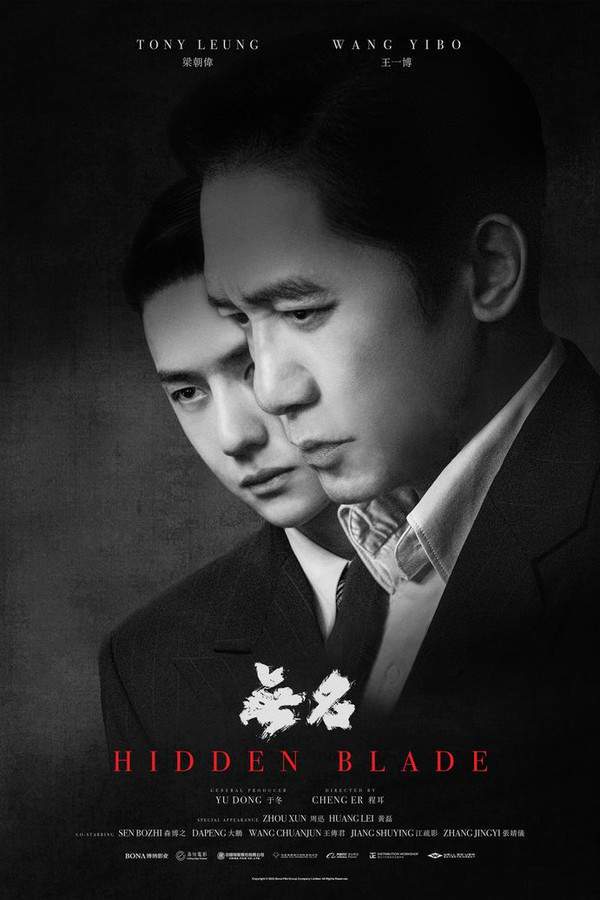
Hidden Blade (2023) movie poster

Plot Summary

Hidden Blade (2023) Plot Summary Explained

Release, runtime and language
2023 · 128 min · English
Echo score 76
Loading streaming availability…
Directed by
Er Cheng
Starring
Tony Leung Chiu Wai, Xun Zhou, Lei Huang, Chengpeng Dong, Chuanjun Wang, Hiroyuki Mori

During wartime China, a covert team of agents undertakes dangerous missions to thwart the Japanese occupation. Operating undercover, they skillfully gather vital intelligence from within enemy lines. Their actions fuel a growing resistance movement, demanding immense courage and sacrifice as they work to alter the course of the conflict and fight for their nation’s freedom.

On this page (5)
  1. 1 Where to watch
  2. 2 What happens: full plot
  3. 3 Plot questions answered
  4. 4 Movie threads
  5. 5 Every angle
Loading streaming availability…

Full plot summary · contains spoilers

What Happens in Hidden Blade: Full Plot Summary

The whole story of Hidden Blade (2023) explained, from the opening scene to the final frame: every key event, every twist and what it all adds up to. Read it as a quick recap before the sequel, to check a scene you missed, or to finally understand what really happened.

As a haunting flashback unfolds, we encounter a young He, portrayed by Tony Leung Chiu Wai, huddled in a makeshift mine alongside fellow survivors, witnessing the tragic end of Guangzhou's fate in 1938. This formative event would propel him toward a formidable career, culminating in his role as the director of Shanghai's Political Security Department—a counterespionage division overseen by Officer Watanabe.

In the lead-up to the fateful bombing of Pearl Harbor in 1941, Director He consolidates his position within the regime, all while secretly collaborating with the Chinese Communist Party, alongside his wife, Ms. Chen, played by Xun Zhou. Their covert partnership revolves around providing vital intelligence to the underground network, ultimately aimed at dismantling Japanese occupation through espionage. Ms. Chen's guidance under her husband's watchful eye is symbolized through the pastries she discreetly sends him from a local bakery.

While Director He masquerades as a loyal agent of the Wang Jingwei regime, he diligently carries out assassinations, interrogations, and torture to garner the trust of Officer Watanabe. Watanabe's circle includes Minister Tang, played by Lei Huang, Captain Wang, and young officer Mr. Ye, depicted by Yibo Wang. Officer Watanabe, driven by ambition, believes that climbing the ranks of the puppet government is his ticket to power, yet he is always cautious of the true intentions of those around him.

Director He’s determination deepens when he covertly saves Ms. Jiang played by Shuying Jiang, a communist spy, from certain doom after her failed assassination attempt on Minister Tang. This action grants him access to invaluable intelligence about crucial Japanese figures, including a Japanese prince in military service. The repercussions of this knowledge will echo throughout his story.

The initial intent to negotiate peace between Japan and the Chiang regime suggests a redeployment of Japanese forces against the Soviet Union. This plan would inadvertently allow the Chiang regime to continue its battle against the Chinese Communist Party, effectively ceding control of Manchuria. Armed with newfound intelligence, the Chinese Communist Party launches a surprise strike, obliterating the Japanese prince and his aides during their final mission. This devastating turn of events not only disrupts negotiations but also fatally tarnishes Officer Watanabe's reputation.

Amid these crumbling alliances, the relationship between Mr. Ye and his dancer lover, Ms. Fang, played by Jingyi Zhang, faces a brutal severance due to Captain Wang’s treachery. The chilling news of Ms. Fang's murder by ideological adversaries shakes Mr. Ye's already fragile psyche, pushing him toward a blind fury against unsuspecting Japanese soldiers.

Officer Watanabe's growing suspicion regarding Director He’s true loyalties intensifies after discovering his tie to Minister Tang. This doubt leads Watanabe to manipulate Mr. Ye into becoming a pawn in his political tug-of-war.

The declaration of war against Great Britain and the United States following Pearl Harbor sends tremors of upheaval through Shanghai, now under Japanese military occupation. In this hostile environment, Mr. Ye finds himself increasingly entwined with Watanabe, who seeks to propel his own ambitions through Mr. Ye's unsuspecting assistance.

Mr. Zhang's desperate bid for freedom with Ms. Chen is thwarted after learning of her concealed marital ties. This shocking realization forces him to reevaluate his motivations, ultimately choosing to turn himself in to the Shanghai Political Security Department, unwittingly betraying the Chinese Communist Party. However, this act of betrayal would come back to haunt him at the hands of Director He.

In a stunning twist, Watanabe instructs Mr. Ye to eliminate the elusive Director He, culminating in a harrowing confrontation at Ms. Chen's apartment. In the aftermath, a bruised Mr. Ye presents himself to Watanabe with a report claiming that Director He has been apprehended and that Ms. Chen has paid with her life. This act earns him a promotion to Watanabe's secretary, along with crucial schematics detailing Japan's occupation of China through Manchuria.

As the narrative progresses, Mr. Ye and Watanabe shift their focus toward Manchuria, eager to explore new frontiers in both the political and military arenas, forever altering their paths.

As Director He inadvertently steps out of prison, cloaked in the guise of a political detainee, an unexpected sight greets him: Officer Watanabe and Mr. Ye, now constrained by the same fate as fellow inmates in a prison truck. The tension is thick as the two engage in a verbal sparring match, their animosity simmering just beneath the surface. In a cramped washroom, Watanabe expresses a crisis of confidence regarding the war, contemplating the possibility of a simpler life as a farmer, suggesting they could both seek absolution for their pasts. However, Mr. Ye silences him with a chilling stare, insinuating that Watanabe’s fate should rightfully be execution due to his role in the war.

Hidden behind this fragile façade, Mr. Ye's true alliances come to light; he has been serving as a double agent on behalf of the Chinese Communist Party under the guidance of Director He. The information provided by Watanabe turns out to be instrumental in ensuring the downfall of Manchuria. When the moment of treachery arises, Mr. Ye successfully dispatches Watanabe using Director He’s own weapon, an act that underscores the calculated nature of their subterfuge.

The film then leaps to 1946 Hong Kong, unveiling that Ms. Chen is indeed alive, living a quiet life alongside Director He and Mr. Ye. The trio seamlessly blends into the crowd, their pasts discarded like old secrets. Mr. Ye momentarily slips away, buying a cup of coffee for Ms. Chen at a charming café before visiting Captain Wang's family restaurant, where tales of escape and hope for their missing son linger in the air. Mr. Ye vanishes into the throng once again, all while visiting a nearby temple where Director He is found in prayer. Upon his return to Shanghai, Director He encounters the familiar sight of his wife’s bakery, a poignant reminder of the life they once had.

As the intricate narrative unfolds, it returns to Captain Wang, presenting an intimate moment with Mr. Ye that reveals shocking truths regarding Ms. Fang's death. Initially, Captain Wang's skepticism prompts him to raise his weapon toward Mr. Ye, a futile effort stemming from desperation to assert control. However, as he gazes down the barrel, he realizes that all bullets have been stealthily removed by Mr. Ye, rendering his defensive stance harmless.

This crucial shift in power dynamics exposes Captain Wang's vulnerability, as Mr. Ye's true commitment to the Chinese Communist Party emerges. The heartbreaking consequences of this revelation unfold swiftly, allowing Mr. Ye to exploit Captain Wang's moment of distraction and deliver the ultimate blow, leaving his fate enveloped in uncertainty.

In this pivotal segment, the film artfully orchestrates a series of events that meticulously unveil the ominous features of their treacherous world while highlighting the merciless pragmatism embodied by Mr. Ye. His calculating nature proves capable of extinguishing even the most resilient foes. This grisly outcome serves as a potent reminder that, in such a cutthroat landscape, perceived strength can dissolve rapidly in the presence of cunning and strategy.
Last updated: November 22, 2024 at 16:22

Was this helpful?

Plot questions answered

Hidden Blade Plot Explained: Your Questions Answered

The questions people ask most about Hidden Blade (2023): what happens in the confusing scenes, why the characters do what they do, the twists, hidden details and what the ending means. Each answer contains spoilers.

Q1

Why does Director He work for the Japanese if he's secretly a communist?

Director He operates as a double agent within the Wang Jingwei regime's Political Security Department. After witnessing Guangzhou's destruction in 1938, he joined the counterespionage division specifically to gather intelligence for the Chinese Communist Party. He carries out assassinations and interrogations to maintain Watanabe's trust while secretly feeding information to the underground resistance network.

Foreshadowing: His traumatic experience in the 1938 Guangzhou mine sets the foundation for his later dual life.

  • director he
  • double agent
  • chinese communist party
  • watanabe
  • espionage
Q2

Is Mr. Ye really working for Watanabe or is he a double agent?

Mr. Ye is actually a double agent working for the Chinese Communist Party under Director He's guidance. He pretended to cooperate with Watanabe while secretly serving the CCP. His calculated performance included eliminating Watanabe using Director He's own weapon, which was part of their coordinated plan to bring down Japanese occupation in Manchuria.

Foreshadowing: Watanabe's manipulation of Mr. Ye into confronting Director He was actually part of the CCP's deeper strategy.

  • mr ye
  • double agent
  • chinese communist party
  • watanabe
  • betrayal
Q3

Does Ms. Chen die in Hidden Blade?

No, Ms. Chen survives the film. In the ending set in 1946 Hong Kong, she is shown alive living quietly with Director He and Mr. Ye. Earlier, Mr. Ye reported her death to Watanabe as part of their cover operation, but this was a ruse to protect her.

Foreshadowing: Mr. Ye's report to Watanabe about Ms. Chen's death was deliberately false, serving the double agent operation.

  • ms chen
  • survival
  • ending
  • 1946 hong kong
Q4

Who actually killed Ms. Fang in Hidden Blade?

Ms. Fang was killed by ideological adversaries, not by Captain Wang as initially believed. When Mr. Ye confronts Captain Wang in the final act, Captain Wang reveals he had nothing to do with her death, though he had previously used her as leverage against Mr. Ye. The true perpetrators remain ambiguous but are framed as communist or nationalist faction members.

Foreshadowing: Captain Wang's earlier threat to kill Ms. Fang was a manipulation tactic, not the actual execution.

  • ms fang
  • death
  • captain wang
  • mr ye
  • dancer
Q5

Why does Mr. Ye kill Watanabe at the end?

Mr. Ye kills Watanabe because he is a CCP double agent completing his mission. When Watanabe expresses doubt about the war and suggests they both flee to become farmers, Mr. Ye sees an opportunity. Using Director He's weapon, he eliminates Watanabe, ensuring the intelligence Watanabe provided about Manchuria leads to the region's downfall while removing a key Japanese collaborator.

Foreshadowing: Watanabe's growing suspicion of Director He and his manipulation of Mr. Ye created the exact situation the CCP needed.

  • mr ye
  • watanabe
  • assassination
  • double agent
  • manchuria
Q6

What was the significance of the Japanese prince assassination?

The assassination of the Japanese prince was a major intelligence victory for the CCP. Director He saved Ms. Jiang to gain information about Japanese officials, including a prince in military service. This intelligence enabled the CCP to execute a surprise strike that killed the prince and his aides during their final mission, destroying peace negotiations between Japan and the Chiang regime and ruining Watanabe's reputation.

Foreshadowing: Director He's risky decision to save Ms. Jiang directly enabled this crucial intelligence operation.

  • japanese prince
  • assassination
  • intelligence
  • peace negotiations
  • ms jiang
Q7

Why did Mr. Ye turn in Ms. Chen to the authorities?

Mr. Ye turned in Ms. Chen believing she was secretly married to Director He, which he viewed as a betrayal of the CCP. When Mr. Zhang attempted to flee with Ms. Chen, Mr. Zhang discovered her marital status and turned himself in, inadvertently revealing the network. Believing Ms. Chen had concealed this connection, Mr. Ye reported her. This was later revealed to be part of the larger operation, and she was actually protected rather than harmed.

Foreshadowing: The revelation that Ms. Chen was Director He's wife was kept hidden even from other CCP operatives for operational security.

  • mr ye
  • ms chen
  • betrayal
  • arrest
  • chinese communist party
Q8

Why does Officer Watanabe suspect Director He of being a communist?

Watanabe becomes suspicious of Director He after discovering his connection to Minister Tang, whom Director He had approached regarding the failed assassination. This link raises Watanabe's doubts about He's true loyalties, leading him to manipulate Mr. Ye into becoming a pawn to test Director He and ultimately order He's elimination.

Foreshadowing: Director He's covert operation to save Ms. Jiang and gather intelligence on Japanese officials planted the seeds of suspicion.

  • watanabe
  • director he
  • suspicion
  • minister tang
  • communist
Q9

How does Mr. Ye get promoted to Watanabe's secretary?

Mr. Ye earns his promotion by reporting that he successfully apprehended Director He and that Ms. Chen was killed during the confrontation at her apartment. This false report satisfies Watanabe, who promotes Ye to secretary and shares crucial schematics about Japan's Manchurian occupation plans, intelligence that Mr. Ye subsequently passes to the CCP.

Foreshadowing: The confrontation at Ms. Chen's apartment was staged as part of the double agent operation.

  • mr ye
  • promotion
  • watanabe secretary
  • schematics
  • manchuria
Q10

What happens in the final scene of Hidden Blade?

The film jumps to 1946 Hong Kong, showing that Director He, Ms. Chen, and Mr. Ye have survived and are living quietly together. Mr. Ye buys coffee for Ms. Chen at a café, they visit Captain Wang's family restaurant hoping for news of their missing son, and Director He returns to Shanghai to see Ms. Chen's bakery, suggesting a hopeful new beginning despite their past roles in the conflict.

Foreshadowing: The entire narrative structure builds toward this 1946 resolution, revealing which characters truly survived.

  • final scene
  • 1946 hong kong
  • shanghai bakery
  • captain wang family
Q11

What happens to Captain Wang at the end of Hidden Blade?

Captain Wang is killed by Mr. Ye in the final confrontation. When Captain Wang discovers Mr. Ye's true CCP allegiance, he attempts to shoot him but finds his bullets have been removed, Mr. Ye had anticipated the confrontation. Taking advantage of Captain Wang's moment of vulnerability, Mr. Ye delivers a lethal blow, leaving his fate uncertain but strongly implied to be death.

Foreshadowing: Mr. Ye's calculated removal of the bullets earlier demonstrated his preparation for this exact moment.

  • captain wang
  • mr ye
  • death
  • final confrontation
  • bullets removed

Movie threads

More Movies Like Hidden Blade, by Mood & Story

Curated lists built around what makes Hidden Blade tick: the same mood, the same kind of story or the same emotional payoff. Each list explains why these movies belong together.

Tense wartime spy movies like Hidden Blade

Stories of covert agents navigating a web of deception and difficult choices. If you liked the high-stakes subterfuge and moral ambiguity of Hidden Blade, explore these other gripping espionage thrillers. These movies share a tense, calculated tone, complex narratives of betrayal, and a heavy emotional weight stemming from the sacrifices made in the shadow war.

  • suspenseful
  • paranoid
  • secretive
  • gripping
  • calculating
  • brooding
  • Tone: tense, bleak, morally ambiguous
  • Pacing: steady, methodical
Why these movies?

The story pattern: Narratives in this thread typically follow agents or informants embedded within a hostile power. The plot revolves around covert missions, the constant threat of exposure, and the intricate dance of maintaining a false identity. Character arcs often involve profound moral erosion and psychological strain, culminating in victories that feel pyrrhic due to the immense personal and ethical cost.

Why they belong together: These films are grouped by their shared focus on the espionage experience during wartime, characterized by a tense, paranoid mood, a steady, methodical pacing that builds suspense, and a morally complex worldview. They explore the grey areas of loyalty and survival, resulting in emotionally heavy and often bittersweet conclusions.

Historical dramas with bittersweet endings like Hidden Blade

Stories where hard-won triumphs are shadowed by profound sacrifice. Movies like Hidden Blade, where the narrative drive leads to a pivotal success that feels tempered by sacrifice. These stories are set against grim historical backdrops and explore the heavy emotional weight of achieving a goal in the face of overwhelming adversity and personal cost.

  • melancholic
  • gripping
  • brooding
  • somber
  • resolute
  • heartbreaking
  • Tone: grim, bittersweet, melancholic
  • Pacing: steady, deliberate
Why these movies?

The story pattern: The narrative pattern involves a long, arduous struggle against a powerful antagonist, whether a regime, an army, or a systemic injustice. The central conflict demands immense sacrifice from the protagonists. The climax delivers a strategic or symbolic victory, but the resolution is muted, focusing on the scars, losses, and ambiguous future left in the wake of the struggle.

Why they belong together: These films are united by their emotionally complex conclusions that blend hope with sorrow. They share a heavy emotional weight, a steady or slow pacing that allows the stakes and sacrifices to resonate, and a tone that is both gripping and melancholic. The experience is defined by its realistic portrayal of triumph within tragedy.

Every angle

Hidden Blade (2023) Explained: Plot, Timeline & Characters

Everything about Hidden Blade in one place: what happens in the plot summary, the timeline in chronological order, the characters and meaning and a spoiler-free summary. What's After the Movie adds the cast, box office and post-credit scenes.

Coming soon on iOS and Android

The Plot Explained Movie Summary App

Plot summaries, endings explained and timelines on your phone. Catch up on any movie in minutes, save your favorites and never miss a twist again.

Be the first to know when we launch. Your email stays private, always.

Learn more about the app