










Plot Explained Spoilers guaranteed!
Plot Explained

Browse by genre

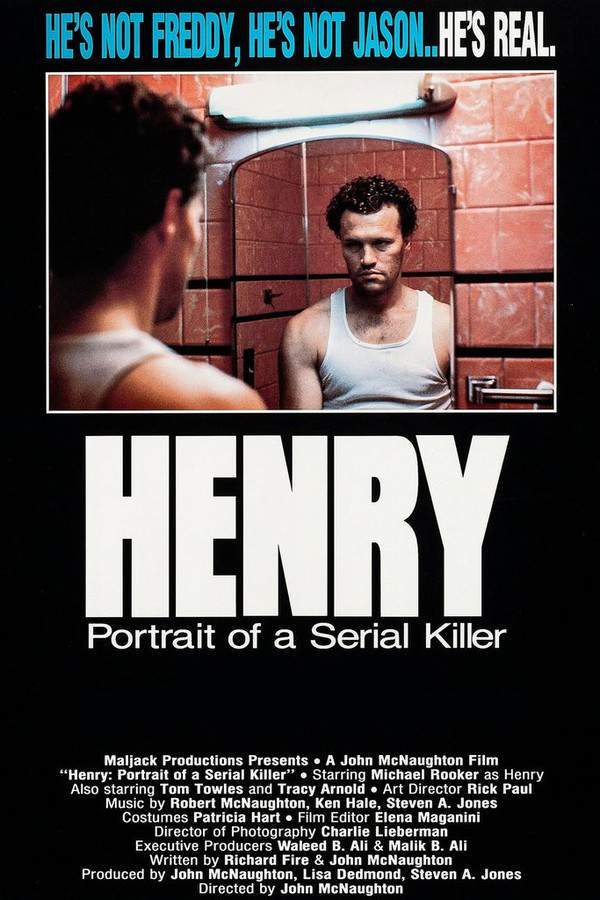
Henry: Portrait of a Serial Killer (1986) movie poster

Timeline

Henry: Portrait of a Serial Killer (1986) Timeline Explained – Every Event in Order

Release, runtime and language
1986 · 83 mins · English
JustWatch #2,005 34
Directed by
John McNaughton
Starring
Michael Rooker, Tom Towles, Tracy Arnold, Brian Graham, Peter Van Wagner, David Katz

Unlike Freddy Krueger or Jason Voorhees, Henry is a real serial killer. He arrives in Chicago and takes up residence with his former‑con acquaintance Otis, using the chance to teach him the methods and mindset of a true murderer, turning their partnership into a chilling apprenticeship.

On this page (6)
  1. 1 Where to watch
  2. 2 Events in order (12)
  3. 3 Timeline questions answered
  4. 4 Movie threads
  5. 5 Movies like Henry: Portrait of a Serial Killer
  6. 6 Every angle

Where to watch

Where to Watch Henry: Portrait of a Serial Killer (1986)

Where can you watch Henry: Portrait of a Serial Killer? Stream, rent or buy it in the US, including on Amazon Prime Video, Amazon Prime Video Free and Cineverse: current JustWatch availability with up-to-date prices.

Streaming availability powered by JustWatch

12 events in order · contains spoilers

Henry: Portrait of a Serial Killer Timeline: Events in Chronological Order

Every key event of Henry: Portrait of a Serial Killer (1986) in order, scene by scene, with when and where it takes place. Use it to untangle flashbacks, time jumps and parallel storylines, to refresh your memory before the sequel or to find the exact scene you are thinking of.

  1. Henry's violent past and imprisonment

    Henry is a psychopathic drifter whose history hints at a long pattern of brutality. The story notes that he killed his own mother, a crime that lands him in prison and establishes the type of violence he will repeat across America.

  2. Moves to Chicago and begins his killing spree

    Henry migrates to Chicago and stops at a diner to eat. He quickly escalates to murder, killing the elderly liquor-store proprietors and several women. This brutal spree establishes his indiscriminate violence and sets the tone for the film.

    Where
    Chicago
  3. Becky arrives; Henry's past revealed; protective bond forms

    Otis picks up Becky at O'Hare and brings her to the apartment where Henry lives. Becky questions Henry about his mother's murder, and he confesses stabbing her, revealing a coy mix of truth and self-justification. Becky then reveals her own history of sexual abuse by her father. Henry forms a protective bond with Becky, while Otis makes an unwanted pass and Henry violently warns him off.

    When
    Night
    Where
    Otis & Henry's apartment
  4. Becky starts a salon job; Henry and Otis murder two prostitutes

    Becky takes a job at a local salon. That night, Henry and Otis lure two prostitutes and murder them by breaking their necks. The killings show the duo's growing confidence and Henry's insistence that murder can be a shared philosophy.

    When
    Night
    Where
    Chicago streets / salon locale
  5. Fence encounter and the TV heist

    Otis vents his frustration by destroying an old TV. The men confront a rude fence owner, and Henry stabs him with a soldering iron while Otis chokes him with a cord, then Henry smashes a TV onto the man’s head. They steal a high-end TV and a camcorder and return home undetected.

    When
    Evening
    Where
    Fence shop and apartment
  6. Teen assault attempt thwarted; new spree begins

    Otis is punched by a teenage boy when he tries to assault him, and Henry talks him down to avoid drawing police attention. Bolstered by their previous murders, the pair embark on a broader spree, planning kills to misdirect investigators, including a trap for drivers on Lower Wacker Drive and varying their methods so no single killer can be linked to all crimes.

    When
    Late night
    Where
    Lower Wacker Drive / various
  7. Viewing a home invasion; Otis desecrates a corpse

    The two watch a recording of a home invasion in which they murdered a suburban family, a moment that reveals Otis's growing cruelty as he begins to molest the mother's corpse until Henry objects. The scene underscores the escalating depravity of their crimes.

    When
    After dark
    Where
    Apartment
  8. Becky quits work; tension builds after camera is destroyed

    Becky quits her job to return home to her daughter after learning her ex-husband has been jailed for murder. Otis and Henry argue after their camera is destroyed while Otis films pedestrians, heightening the strain between them.

    When
    Evening
    Where
    Apartment
  9. Becky and Henry dine out; near murder and near seduction

    Becky and Henry go out for a steak dinner, and Becky attempts to seduce him, but they are interrupted by Otis. Henry leaves to buy cigarettes and later encounters a woman walking her dog, briefly tempted to murder her but restrains himself.

    When
    Evening
    Where
    City streets and steak restaurant
  10. Otis attacks Becky; Henry intervenes and Otis is killed

    When Otis attempts to rape and strangle Becky, Henry fights him. Otis gains the upper hand, but Becky stabs Otis in the eye with a comb. Henry then overpowers Otis and brutally dismembers him in the bathtub.

    When
    Night
    Where
    Apartment
  11. The duo disposes of Otis and heads for California

    Becky and Henry dump Otis's body parts into the river and leave town, planning to head to a ranch in San Bernardino, California. Becky tells Henry she loves him, and he replies with a guarded acknowledgment, deepening the unsettling bond between them.

    When
    Next day
    Where
    On the road toward California
  12. Motel stop and Henry's betrayal

    They book a motel room for the night, and in the morning Henry leaves Becky behind, driving away after dumping Becky's blood-stained suitcase in a ditch. The act leaves Becky presumed dead or abandoned as he continues alone down the road.

    When
    Morning
    Where
    Motel / roadside

Last updated: October 09, 2025 at 14:39

Was this helpful?

Timeline questions answered

Henry: Portrait of a Serial Killer Timeline Explained: Your Questions Answered

When does it happen, and why in that order? The questions people ask about the chronology of Henry: Portrait of a Serial Killer (1986): time jumps, flashbacks, cause and effect between scenes and the correct order of events, each answered with spoilers.

Q1

Why does Henry protect Becky from Otis?

Henry forms a protective bond with Becky after she reveals she was sexually abused by her father. Unlike Otis, Henry explicitly states he has no taste for sexual violence against women. When Otis makes an incestuous advance toward Becky, Henry threatens him violently and demands he never pursue it again, showing a rare code of conduct even within his brutal worldview.

Foreshadowing: This protective instinct echoes Henry's earlier statement that he distaste for sexual violence against women.

  • henry
  • becky
  • otis
  • protection
  • sexual abuse
Q2

Why does Henry kill his mother?

Henry claims he killed his mother as retribution for childhood abuse and humiliation, though he presents contradictory accounts, sometimes saying he stabbed her, other times claiming he shot her or killed her with a bat. The inconsistencies suggest Henry may fabricate or embellish his backstory to justify his actions, though the core trauma appears to be genuine abuse.

  • henry
  • mother
  • murder
  • childhood abuse
  • backstory
Q3

What happens between Henry and Becky at the end?

Henry and Becky leave Chicago together after killing Otis, planning to head to Henry's sister's ranch in California. However, at a motel, Henry leaves alone the next morning. He discards Becky's blood-stained suitcase in a roadside ditch, strongly implying he killed her and disposed of her body, continuing his pattern of abandoning anyone who becomes a liability or loses his interest.

Foreshadowing: Earlier, Henry tells Otis they must stay mobile because police will eventually close in, his mantra about movement foreshadows his abandonment of Becky.

  • henry
  • becky
  • ending
  • betrayal
  • california
  • motel
Q4

Why does Henry spare the woman walking her dog?

This is one of the few moments Henry shows restraint. After leaving the steak dinner and buying cigarettes, he encounters a woman walking her dog and briefly contemplates killing her but decides against it. The exact reason remains ambiguous, possibly fatigue, momentary disinterest, or an unrecognized human instinct. This scene highlights the randomness of his violence rather than any moral line.

  • henry
  • woman
  • dog
  • restraint
  • near murder
Q5

Why does Henry kill Otis after Becky stabs him?

When Otis attempts to rape and strangle Becky, Henry fights to protect her. After Becky blinds Otis by stabbing his eye with a comb, Henry seizes the weapon and murders Otis, then dismembers his body. Henry likely kills Otis because Otis crossed his one clear boundary, sexual violence against women, and because Otis had become a liability and a witness to Henry's methods. The killing is methodical and practical, matching Henry's cold efficiency.

Foreshadowing: Henry had warned Otis never to pursue Becky sexually, establishing this as an unforgivable transgression.

  • henry
  • otis
  • becky
  • murder
  • dismemberment
  • betrayal
Q6

What is Henry's philosophy on murder?

Henry espouses a relativistic view of killing, arguing that murder is neither right nor wrong, it's simply a matter of perspective and personal choice. He tries to recruit Otis into this mindset, presenting murder as a philosophical freedom rather than a crime. This nihilistic philosophy allows Henry to kill without guilt, treating human life as worthless and his own impulses as the only moral compass.

  • henry
  • philosophy
  • murder
  • nihilism
  • relativism
Q7

Why does Henry tell Otis to vary their murder methods?

Henry advises Otis to change their killing techniques for each murder so authorities cannot link the crimes to a single killer. By varying methods, shooting one victim, strangling another, stabbing another, each case appears to involve different perpetrators. This practical strategy demonstrates Henry's calculated intelligence and awareness of forensic investigation, showing he plans murders as a system rather than impulsive acts.

  • henry
  • otis
  • methods
  • police
  • investigation
  • strategy
Q8

Why does Henry object when Otis molests the corpse?

While Henry has no issue committing murder, he draws a line at desecrating dead bodies, objecting when Otis begins molesting the mother's corpse during their home invasion tape viewing. This suggests Henry maintains some twisted sense of dignity or propriety, even if his moral framework is fundamentally broken. His objection may also reflect pragmatic concerns, corpse abuse increases forensic evidence and risks getting caught.

  • henry
  • otis
  • corpse
  • molestation
  • boundary
Q9

Why is Becky attracted to Henry despite knowing what he is?

Becky develops feelings for Henry after he protects her from Otis and reveals his own traumatic past. Having suffered sexual abuse from her father, Becky may be drawn to Henry's protective nature and his explicit rejection of sexual violence, a stark contrast to the men who harmed her. Her attraction represents a tragic vulnerability, confusing safety with danger and mistaking Henry's predatory restraint for genuine care.

  • becky
  • henry
  • attraction
  • trauma
  • vulnerability
  • protection
Q10

Why does Henry decide to leave Chicago?

Henry announces he must leave Chicago because their murders have attracted too much police attention. His philosophy emphasizes staying mobile, by the time investigators connect the crimes, Henry believes they should have already moved on. This constant movement is central to his survival strategy, allowing him to kill across different locations without being apprehended.

  • henry
  • chicago
  • police
  • escape
  • movement
  • leaving

Movie threads

More Movies Like Henry: Portrait of a Serial Killer, by Mood & Story

Curated lists built around what makes Henry: Portrait of a Serial Killer tick: the same mood, the same kind of story or the same emotional payoff. Each list explains why these movies belong together.

Unflinching Portraits of Real-World Evil like in Henry: Portrait of a Serial Killer

Grim and detached explorations of the psychology behind monstrous acts. For viewers who appreciated the raw, unblinking realism of Henry: Portrait of a Serial Killer, this list collects movies like it that explore the dark psychology of crime without sensationalism. These similar stories offer a grim and sobering look at true evil.

  • grim
  • unsettling
  • brutal
  • cold
  • detached
  • sobering
  • Tone: dark, grim, detached
  • Pacing: steady, observational
Why these movies?

The story pattern: Narratives in this thread often follow a character study format, observing the protagonist's actions with a cold, objective eye. There is rarely a traditional heroic arc; instead, the story documents a descent or a sustained state of pathology, challenging the viewer with its uncompromising bleakness.

Why they belong together: Movies are grouped here for their shared commitment to a realistic, non-exploitative depiction of dark subject matter. They connect through a sober tone, a heavy emotional weight, and a focus on character psychology over conventional plot thrills.

Bleak Crime Partnerships like the one in Henry: Portrait of a Serial Killer

Stories of dangerous partnerships where loyalty leads to moral collapse. If the chilling dynamic between Henry and Otis captivated you, this selection features movies with similar toxic alliances. Discover other films about dangerous partnerships and crime duos that spiral into bleak and unforgiving territory.

  • claustrophobic
  • tense
  • brutal
  • unsettling
  • grim
  • betrayal
  • Tone: dark, tense, nihilistic
  • Pacing: steady, character-driven
Why these movies?

The story pattern: The narrative pattern typically involves an initiation, where one character introduces another to a life of crime, followed by a tense period of collaboration. The partnership is often strained by betrayal, power struggles, or the revelation of deeper depravity, culminating in a violent and tragic end for one or both parties.

Why they belong together: These films are connected by their central focus on a corrosive relationship built around crime. They share a dark tone, high intensity from interpersonal tension, and a bleak outlook on human nature, making the partnership itself the source of dread.

If you liked this

Movies Like Henry: Portrait of a Serial Killer

Similar movies to Henry: Portrait of a Serial Killer: the same genre, themes or kind of story. Each one comes with its own plot summary, timeline and ending explained.

Browse all movie summaries

Every angle

Henry: Portrait of a Serial Killer (1986) Explained: Plot, Timeline & Characters

Everything about Henry: Portrait of a Serial Killer in one place: what happens in the plot summary, the timeline in chronological order, the characters and meaning and a spoiler-free summary. What's After the Movie adds the cast, box office and post-credit scenes.

Coming soon on iOS and Android

The Plot Explained Movie Summary App

Plot summaries, endings explained and timelines on your phone. Catch up on any movie in minutes, save your favorites and never miss a twist again.

Be the first to know when we launch. Your email stays private, always.

Learn more about the app