










Plot Explained Spoilers guaranteed!
Plot Explained

Browse by genre

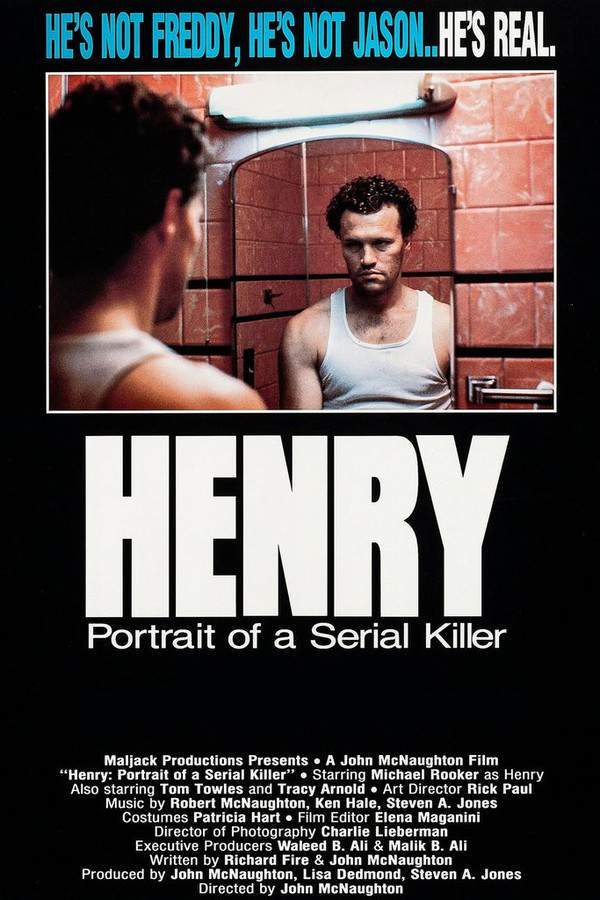
Henry: Portrait of a Serial Killer (1986) movie poster

Characters & Themes

Henry: Portrait of a Serial Killer (1986) Characters, Setting & Themes Explained

Release, runtime and language
1986 · 83 mins · English
JustWatch #2,005 34
Directed by
John McNaughton
Starring
Michael Rooker, Tom Towles, Tracy Arnold, Brian Graham, Peter Van Wagner, David Katz

Unlike Freddy Krueger or Jason Voorhees, Henry is a real serial killer. He arrives in Chicago and takes up residence with his former‑con acquaintance Otis, using the chance to teach him the methods and mindset of a true murderer, turning their partnership into a chilling apprenticeship.

On this page (8)
  1. 1 Where to watch
  2. 2 Characters explained (5)
  3. 3 Where & when it takes place
  4. 4 Themes & meaning (4)
  5. 5 Character & meaning questions
  6. 6 Movie threads
  7. 7 Movies like Henry: Portrait of a Serial Killer
  8. 8 Every angle

Where to watch

Where to Watch Henry: Portrait of a Serial Killer (1986)

Where can you watch Henry: Portrait of a Serial Killer? Stream, rent or buy it in the US, including on Amazon Prime Video, Amazon Prime Video Free and Cineverse: current JustWatch availability with up-to-date prices.

Streaming availability powered by JustWatch

5 main characters · contains spoilers

Henry: Portrait of a Serial Killer Characters Explained: Who Is Who

The main characters of Henry: Portrait of a Serial Killer (1986), heroes and villains: what drives them, how they change over the course of the story and what each of them reveals about the film's bigger ideas.

  • Henry (Michael Rooker)

    A psychopathic drifter who travels across America, murdering scores of people and maintaining a unsettling calm. He articulates a relativistic philosophy of killing and seeks to form a bond with Becky, while exercising control over Otis.

    • 🧠 Psychopathic
    • 🔪 Violent
    • ♟️ Calculating
  • Otis (Tom Towles)

    Henry's prison friend who becomes his partner in crime. He is shocked by the killings, swayed by Henry's philosophy, and gradually participates in the spree before facing a brutal demise at Henry's hands.

    • 🤝 Complicity
    • 🗡️ Violent
    • 🧭 Manipulable
  • Becky (Tracy Arnold)

    Otis's sister who forms a volatile bond with Henry. She flirts with Henry and participates in the tense dynamic that unfolds in their apartment. In the climax, she stabs Otis in the eye during a confrontation, after which Henry murders Otis, and her fate remains implied.

    • 💔 Complex relationship
    • 🗝️ Complicity
    • 🧭 Ambiguous fate
  • Husband (Bruce Quist)

    One half of a suburban family targeted during a home invasion; represents ordinary victims within the killers' spree.

    • 🧭 Victim
    • 🏠 Suburban setting
  • Wife (Elizabeth Kaden)

    The other half of the suburban family murdered during a home invasion, underscoring the indiscriminate nature of the violence.

    • 🧭 Victim
    • 🏠 Suburban setting

Last updated: October 04, 2025 at 13:21

Was this helpful?

Setting

Where and When Does Henry: Portrait of a Serial Killer Take Place?

The setting of Henry: Portrait of a Serial Killer (1986): the year and time period, the places and locations, and how they shape the characters, the mood and the tension of the story.

Time period

Location

Chicago, O'Hare International Airport, Lower Wacker Drive, San Bernardino, California

The film unfolds through the gritty urban landscape of Chicago, using locations like diners, liquor stores, and the ominous Lower Wacker Drive to frame a brutal murder spree. Henry and Otis traverse the city, echoing a sense of menace that spills from urban core to suburban outskirts. The journey culminates with a planned move toward San Bernardino, California, hinting at an escape from the city.

  • 🏙️ Urban
  • 🗡️ Crime
  • 🧠 Psychological

Last updated: October 04, 2025 at 13:21

Was this helpful?

4 major themes

Henry: Portrait of a Serial Killer Meaning: Themes & Message Explained

What is Henry: Portrait of a Serial Killer (1986) really about? The emotional, social and philosophical themes the film keeps returning to, its symbolism and the message beneath the surface.

  • Violence

    The summary centers on Henry's indiscriminate killings of men, women, and even a child, presenting violence as an ongoing, normalized behavior. It shows a chilling routine of murder, bravado, and procedural detachment that follows the killers from city to city. The brutality is depicted as a compulsive pattern rather than an isolated incident.

  • Moral Relativism

    Henry attempts to argue that killing is morally fluid, persuading Otis to adopt a personal philosophy of murder. The narrative explores how relativism erodes conventional ethics when violence is reframed as a means of control or thrill. This theme exposes the danger of seeing harm as permissible under a flexible moral code.

  • Family Trauma

    The backstory reveals abuse that shapes Henry's violent impulses and Becky’s trauma, adding a context of damaged family dynamics to the violence. Becky’s revelation about her father’s rape and Henry’s own childhood abuse illustrate how personal history feeds the killers’ worldview. The film ties private wounds to public brutality, suggesting that trauma informs behavior.

  • Complicity & Influence

    Otis becomes drawn into Henry's worldview, moving from reluctant participant to an active accomplice under Henry's manipulation. The dynamic showcases how charisma and authority can mold another's actions, blurring lines between curiosity, fear, and criminal behavior. The relationship underscores the theme that collaboration in crime compounds the moral cost.

Last updated: October 04, 2025 at 13:21

Was this helpful?

Character & theme questions

Henry: Portrait of a Serial Killer Characters & Meaning: Your Questions Answered

The questions people ask about Henry: Portrait of a Serial Killer (1986): who the characters really are, their relationships, what the symbols mean, where it takes place and what the movie is really about. Each answer contains spoilers.

Q1

Where is Henry: Portrait of a Serial Killer set?

The film is set primarily in Chicago, Illinois. It uses gritty urban locations like diners, liquor stores, and Lower Wacker Drive to create a menacing atmosphere. The story also includes a brief mention of San Bernardino, California, as a planned destination for the killers.

  • chicago
  • setting
  • lower wacker drive
  • locations
  • urban
Q2

What are the main themes in Henry: Portrait of a Serial Killer?

The film explores several interconnected themes including indiscriminate violence presented as normalized behavior, moral relativism through Henry's philosophy that killing is morally fluid, family trauma stemming from childhood abuse that shapes the killers' psychology, and complicity showing how Henry draws Otis into his worldview through manipulation.

  • themes
  • violence
  • moral relativism
  • family trauma
  • complicity
Q3

Who is Henry in the film?

Henry is a psychopathic drifter who travels across America committing numerous murders while maintaining an unsettling calm. He articulates a relativistic philosophy about killing and seeks to form bonds with others, exercising controlling authority over Otis while attempting to connect with Becky.

  • henry
  • main character
  • serial killer
  • psychopathy
Q4

What is Otis's role in the story?

Otis is Henry's prison friend who becomes his partner in crime. Initially shocked by the killings, he is gradually swayed by Henry's philosophy and participates in the murder spree before ultimately facing a brutal death at Henry's hands.

  • otis
  • character role
  • accomplice
  • partner
Q5

Who is Becky and what is her relationship to the other characters?

Becky is Otis's sister who becomes entangled in the dangerous dynamic between Henry and Otis. She forms a volatile bond with Henry, flirts with him, and participates in the tense situation in their shared apartment. Her fate becomes increasingly dire as the story progresses.

  • becky
  • otis sister
  • relationship
  • dynamic
Q6

What does the film say about moral relativism?

Henry attempts to persuade Otis that killing is morally fluid, presenting murder as a personal philosophy and means of control. The narrative explores how relativistic thinking erodes conventional ethics when harm is reframed as permissible, ultimately exposing the danger of a flexible moral code.

  • moral relativism
  • philosophy
  • ethics
  • killing
  • persuasion
Q7

How does the movie depict violence?

The film presents violence as an ongoing, normalized behavior rather than isolated incidents. It shows a chilling routine of murder, bravado, and procedural detachment, depicting killings as compulsive patterns that follow the characters from city to city with methodical consistency.

  • violence
  • murder
  • brutality
  • killing spree
Q8

What is the relationship between Henry and Otis?

Henry and Otis have a prison friendship that evolves into a criminal partnership. Henry acts as a mentor, teaching Otis his methods and philosophy of murder. The dynamic showcases Henry's charisma and manipulative authority as he molds Otis from a reluctant observer into an active accomplice.

  • henry
  • otis
  • relationship
  • mentorship
  • manipulation
Q9

How does family trauma factor into the story?

The backstory reveals that abuse shapes both Henry's violent impulses and Becky's trauma. Becky's revelation about her father's rape and Henry's own childhood abuse illustrate how personal history feeds the killers' worldview, tying private wounds to public brutality and suggesting trauma informs behavior.

  • family trauma
  • childhood abuse
  • backstory
  • psychology
Q10

What is the overall tone and message of the film?

The film has an overwhelmingly dark, nihilistic tone with no moral center or hope. It presents a bleak examination of human nature, suggesting that some pathologies are permanent and untreatable. The relentless, brutal depiction of violence leaves viewers with virtually no respite or counterbalancing elements.

  • tone
  • message
  • nihilism
  • darkness
  • themes

Movie threads

More Movies Like Henry: Portrait of a Serial Killer, by Mood & Story

Curated lists built around what makes Henry: Portrait of a Serial Killer tick: the same mood, the same kind of story or the same emotional payoff. Each list explains why these movies belong together.

Unflinching Portraits of Real-World Evil like in Henry: Portrait of a Serial Killer

Grim and detached explorations of the psychology behind monstrous acts. For viewers who appreciated the raw, unblinking realism of Henry: Portrait of a Serial Killer, this list collects movies like it that explore the dark psychology of crime without sensationalism. These similar stories offer a grim and sobering look at true evil.

  • grim
  • unsettling
  • brutal
  • cold
  • detached
  • sobering
  • Tone: dark, grim, detached
  • Pacing: steady, observational
Why these movies?

The story pattern: Narratives in this thread often follow a character study format, observing the protagonist's actions with a cold, objective eye. There is rarely a traditional heroic arc; instead, the story documents a descent or a sustained state of pathology, challenging the viewer with its uncompromising bleakness.

Why they belong together: Movies are grouped here for their shared commitment to a realistic, non-exploitative depiction of dark subject matter. They connect through a sober tone, a heavy emotional weight, and a focus on character psychology over conventional plot thrills.

Bleak Crime Partnerships like the one in Henry: Portrait of a Serial Killer

Stories of dangerous partnerships where loyalty leads to moral collapse. If the chilling dynamic between Henry and Otis captivated you, this selection features movies with similar toxic alliances. Discover other films about dangerous partnerships and crime duos that spiral into bleak and unforgiving territory.

  • claustrophobic
  • tense
  • brutal
  • unsettling
  • grim
  • betrayal
  • Tone: dark, tense, nihilistic
  • Pacing: steady, character-driven
Why these movies?

The story pattern: The narrative pattern typically involves an initiation, where one character introduces another to a life of crime, followed by a tense period of collaboration. The partnership is often strained by betrayal, power struggles, or the revelation of deeper depravity, culminating in a violent and tragic end for one or both parties.

Why they belong together: These films are connected by their central focus on a corrosive relationship built around crime. They share a dark tone, high intensity from interpersonal tension, and a bleak outlook on human nature, making the partnership itself the source of dread.

If you liked this

Movies Like Henry: Portrait of a Serial Killer

Similar movies to Henry: Portrait of a Serial Killer: the same genre, themes or kind of story. Each one comes with its own plot summary, timeline and ending explained.

Browse all movie summaries

Every angle

Henry: Portrait of a Serial Killer (1986) Explained: Plot, Timeline & Characters

Everything about Henry: Portrait of a Serial Killer in one place: what happens in the plot summary, the timeline in chronological order, the characters and meaning and a spoiler-free summary. What's After the Movie adds the cast, box office and post-credit scenes.

Coming soon on iOS and Android

The Plot Explained Movie Summary App

Plot summaries, endings explained and timelines on your phone. Catch up on any movie in minutes, save your favorites and never miss a twist again.

Be the first to know when we launch. Your email stays private, always.

Learn more about the app