Plot Explained Spoilers guaranteed!
Plot Explained

Browse by genre

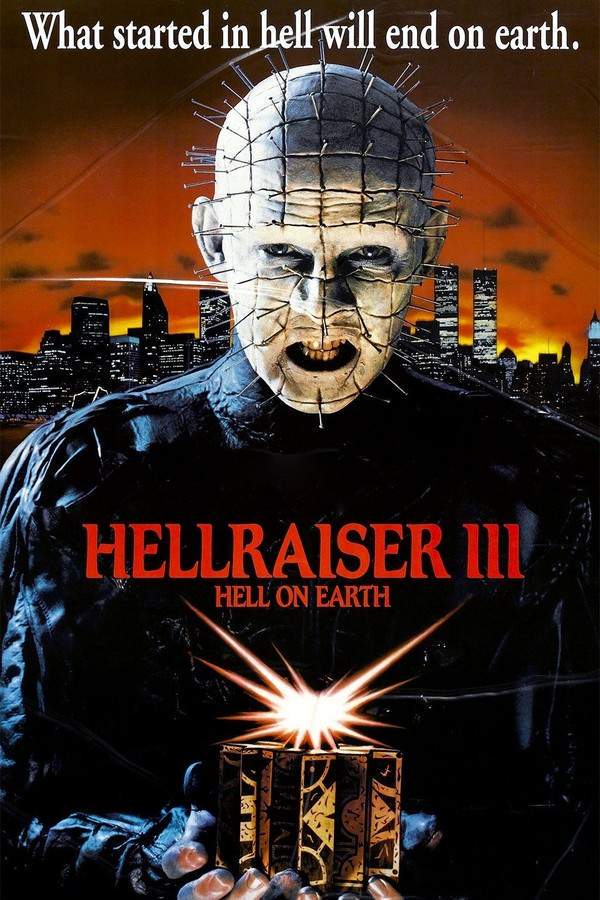
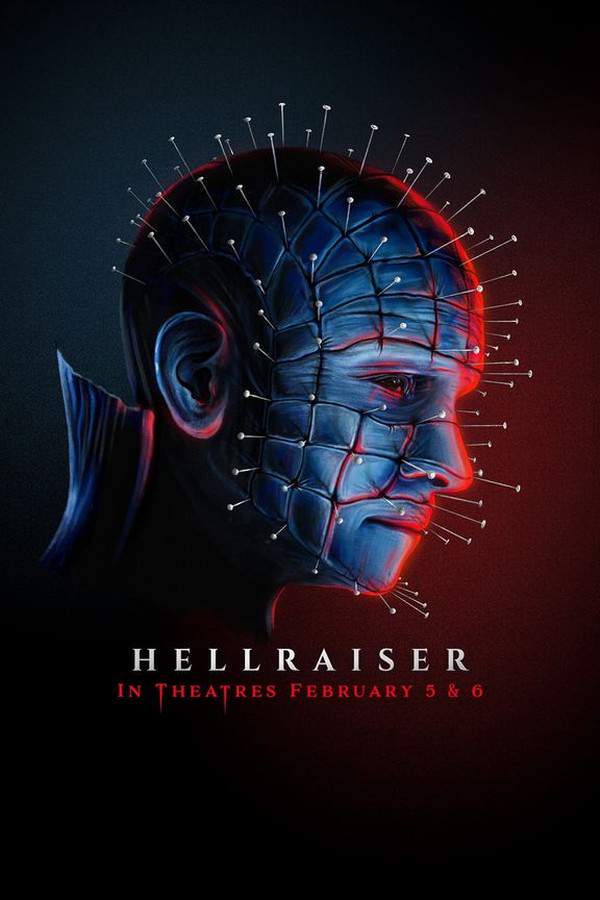
Hellraiser (1987) movie poster

Plot Summary

Hellraiser (1987) Plot Summary Explained

Release, runtime and language
1987 · 94 min · English
JustWatch #88 1
Directed by
Clive Barker
Starring
Michael Cassidy, Andrew Robinson, Ashley Laurence, Clare Higgins, Frank Baker, Anthony Allen

A grieving woman's obsession leads her to attempt to resurrect her brother-in-law, inadvertently unleashing a series of malevolent, chained demons. As she delves deeper into the dark ritual, she becomes entangled in a horrifying realm of pain and pleasure, pursued by the Cenobites who seek to claim him and those around him. The line between reality and nightmare blurs as she struggles to understand the forces she has unleashed and the price of her desperate attempt to bring someone back from the dead.

On this page (7)
  1. 1 Where to watch
  2. 2 What happens: full plot
  3. 3 Plot questions answered
  4. 4 The book behind the movie
  5. 5 Movie threads
  6. 6 Movies like Hellraiser
  7. 7 Every angle

Where to watch

Where to Watch Hellraiser (1987)

Where can you watch Hellraiser? Stream, rent or buy it in the US, including on Amazon Prime Video, fuboTV and Amazon MX Player: current JustWatch availability with up-to-date prices.

Streaming availability powered by JustWatch

Full plot summary · contains spoilers

What Happens in Hellraiser: Full Plot Summary

The whole story of Hellraiser (1987) explained, from the opening scene to the final frame: every key event, every twist and what it all adds up to. Read it as a quick recap before the sequel, to check a scene you missed, or to finally understand what really happened.

Somewhere in North Africa, Frank Cotton, portrayed by Sean Chapman, acquires a mysterious antique puzzle box from a dealer who inquires, "What's your pleasure, Sir?" Once back in his English home, Frank attempts to solve the puzzle, triggering a horrifying sequence where chains shoot out from the box, ripping into his flesh. This gruesome act summons the Cenobites, demonic entities from another realm, led by the terrifying Pinhead (played by Doug Bradley). They inspect the remnants of Frank's body, reassembling his disfigured face and returning the puzzle box to its original state, leaving the room untouched as if the horror never occurred.

Soon after, Frank's brother, Larry Cotton, portrayed by Andrew Robinson, relocates to the same abandoned house he shared with Frank during childhood, accompanied by his second wife, Julia Cotton, played by Clare Higgins. Unbeknownst to Larry, Julia harbors a dark secret—an extramarital affair with Frank. The state of the house is deplorable, with spoiled food littering the kitchen, leading them to believe Frank is merely away on another escapade. Larry's teenage daughter, Kirsty Cotton, played by Ashley Laurence, opts to live independently rather than with her stepmother.

A disturbing incident occurs when Larry injures himself on a nail while moving a mattress, causing him to feel faint at the sight of his own blood. Drawing curiosity, he proceeds to the attic where Julia waits in the very room where Frank met his demise. As Larry's blood drips onto the floor, it seeps into the hidden remains of Frank, nourishing him back to life. Awakened and in agonizing pain, the resurrected Frank emits a horrifying shriek.

Julia soon discovers Frank—now a grotesque and partially reformed creature—alone in the attic. Disturbed by his hideous appearance, she initially hesitates, but Frank's plea, reminding her of her promises during their affair, ultimately compels her to assist him. Julia indulges Frank's dark desires, luring unsuspecting men to the attic where he can drain their blood to further restore himself. With each victim, Frank grows stronger, expressing to Julia how he has broken his pact with the Cenobites and plans to escape with her before they can find him.

Meanwhile, Kirsty becomes increasingly wary of Julia's actions and witnesses her bringing an unfamiliar man home. Driven by curiosity, she stealthily investigates, but in the attic, she inadvertently stumbles upon Julia incapacitating the man for Frank to feast upon. Just as Frank is about to seize Kirsty, she snatches up the puzzle box—a potential weapon—and, understanding its importance to Frank, throws it out the window during her escape.

After an unsettling experience, Kirsty wakes up in the hospital, dismissing the events as a nightmare—until a doctor presents her with the puzzle box. As she toys with it, she accidentally solves it, revealing a portal to a sinister dimension teeming with horrors, and narrowly escapes a monstrous chase. The Cenobites soon find her, leading with their authoritarian figure, Pinhead, who informs her that she has unwittingly summoned them and must now face their world of pleasure and pain. She frantically barters for her freedom, promising to lead them to Frank.

Rushing back to her father's home, Kirsty is informed by Larry that they have taken care of Frank, although his demeanor raises suspicions. As she investigates further, she stumbles upon a horrific sight in the attic—a skinned corpse. Realizing the danger, she rushes to warn Larry. Yet, the truth dawns on her: Frank has murdered her father and now wears his skin like a grotesque disguise to deceive her. Confronted by Frank, who inadvertently fatally injures Julia in a fit of rage, a deadly standoff ensues, ending with Frank's chilling revelation that "your father was dead inside anyway."

At this point, the Cenobites make their final appearance, intent on reclaiming Frank, but he attempts to retaliate against Kirsty for exposing him. However, chains spring forth, restraining him, and in a final, anguished moment, he cries out, "Jesus wept," before being torn apart by the Cenobite's chains. Kirsty flees as the Cenobites, not to be left behind, chase her down, prompting her to retrieve the puzzle box from Julia's corpse and reverse it to send them away.

As Kirsty prepares to flee with her boyfriend Steve, they are attacked again when the box morphs, unveiling the same creature from the hospital. Yet, she manages to banish it once more. In the aftermath, Kirsty attempts to extinguish the cursed puzzle box in a fire; however, a mysterious vagrant emerges from the ashes and takes hold of it. As he is consumed by the flames, he transforms into a skeletal winged demon that vanishes into the night. The chilling tale concludes with the box in the hands of the merchant who originally sold it to Frank, posing the same ominous question, "What's your pleasure, Sir?"
Last updated: October 27, 2024 at 22:50

Was this helpful?

Plot questions answered

Hellraiser Plot Explained: Your Questions Answered

The questions people ask most about Hellraiser (1987): what happens in the confusing scenes, why the characters do what they do, the twists, hidden details and what the ending means. Each answer contains spoilers.

Q1

How does Frank come back to life in Hellraiser?

Frank is resurrected when Larry Cotton's blood drips onto the attic floor where Frank's remains are hidden. The blood nourishs the remains, allowing Frank to regenerate into a grotesque, partially restored creature. This happens because Frank's disembodied remains retained some life force from the Cenobite ritual, and blood acts as the catalyst for his rebirth.

Foreshadowing: The earlier scene showing Frank's dismemberment by the Cenobites leaves his remains in the attic, waiting for the right conditions to revive.

  • frank cotton resurrection
  • blood ritual
  • attic
  • regeneration
Q2

Why does Julia help Frank after he resurrects?

Julia helps Frank because they had a secret extramarital affair before his death. Despite his horrific, partially reformed appearance, Julia feels compelled by their past promises and her dark desires. She lures men to the attic so Frank can drain their blood to restore his strength, and he promises to escape with her before the Cenobites find him.

Foreshadowing: Julia's secret affair is established early when she and Larry move into the house, with Julia knowing Frank's whereabouts.

  • julia cotton
  • affair
  • helping frank
  • motivation
Q3

What does the puzzle box actually do?

The puzzle box, called Lemarchand's Box, is a portal device that summons the Cenobites when solved incorrectly. The chains that emerge tear open the solver and transport them to a dimension of pleasure and pain. When solved in reverse, it can banish the Cenobites back to their realm.

Foreshadowing: The dealer's ominous question "What's your pleasure, Sir?" hints at the box's ability to grant dark desires.

  • puzzle box
  • lemarchands box
  • summoning
  • cenobites
  • portal
Q4

How does Kirsty escape the Cenobites?

Kirsty bargains with Pinhead, promising to lead them to Frank in exchange for her freedom. She then returns home to find and stop Frank. Later, she discovers that reversing the puzzle box's solution closes the portal and sends the Cenobites back to their dimension.

Foreshadowing: Kirsty initially grabs the box in the attic, showing she recognizes its importance before understanding its full power.

  • kirsty cotton
  • escape
  • pinhead
  • bargaining
  • reverse solution
Q5

How does Frank steal his brother's body?

After Frank is fully restored through feeding on Julia's victims, he kills Larry Cotton and wears his skin like a disguise to move freely among the living. This allows him to trick Kirsty and avoid suspicion. Julia discovers the skinned corpse in the attic, realizing the truth too late.

Foreshadowing: Frank's statement that he has "broken his pact" with the Cenobites and plans to escape suggests he is willing to do whatever it takes to survive.

  • frank cotton
  • larry cotton
  • skin disguise
  • killing
  • impersonation
Q6

What happens to Julia in Hellraiser?

Julia is killed when Frank, in a fit of rage during the confrontation with Kirsty, inadvertently fatally injures her. She dies in the attic, and later Kirsty takes the puzzle box from her corpse to banish the Cenobites.

Foreshadowing: Julia's deepening involvement with Frank and willingness to lure victims suggests she is headed for a tragic end.

  • julia cotton
  • death
  • attic
  • killed by frank
Q7

What does the ending of Hellraiser mean?

The ending shows the curse is cyclical and inescapable. Kirsty tries to burn the puzzle box, but a vagrant emerges from the flames and takes it. The box then returns to the original merchant, who asks another victim "What's your pleasure, Sir?", the cycle begins again with a new owner.

Foreshadowing: The merchant's repeated question throughout the film establishes the box's cursed legacy.

  • ending
  • cycle
  • vagrant
  • merchant
  • cursed box
Q8

Why does Frank say "your father was dead inside anyway"?

Frank tells Kirsty that her father Larry was "dead inside anyway" to justify his murder and skin theft. This reflects Frank's nihilistic worldview, he views people as already dead or worthless if they lack the will to truly live or pursue pleasure, a twisted philosophy shaped by his experiences in the Cenobite realm.

Foreshadowing: Frank's obsession with the puzzle box and his pursuit of extreme experiences established him as someone who views conventional morality as meaningless.

  • frank quote
  • dead inside
  • justification
  • larry cotton
Q9

Who is the vagrant at the end of Hellraiser?

The vagrant is never explicitly identified. He appears when Kirsty burns the puzzle box, seemingly rising from the ashes to claim it. He transforms into a skeletal winged demon and flies away, suggesting the box chose or created a new guardian to continue the cycle of corruption.

Foreshadowing: The box's mysterious properties and the Cenobites' ability to transcend dimensions hint at supernatural forces beyond human understanding.

  • vagrant
  • demon
  • transformation
  • ashes
  • box guardian
Q10

What is the significance of "Jesus wept" in Hellraiser?

"Jesus wept" is the shortest verse in the Bible (John 11:35), and Frank's use of it as his final words is darkly ironic. It is both a genuine cry of despair and a reference to biblical sorrow over death, fitting for a man being torn apart by demons he summoned. The phrase underscores the film's themes of damnation and the price of seeking forbidden pleasures.

Foreshadowing: Frank's initial summoning of the Cenobites was driven by his desire for new experiences, making his tragic end a fitting consequence.

  • jesus wept
  • final words
  • bible quote
  • irony
  • damned

Movie threads

More Movies Like Hellraiser, by Mood & Story

Curated lists built around what makes Hellraiser tick: the same mood, the same kind of story or the same emotional payoff. Each list explains why these movies belong together.

Movies about the price of forbidden desire like Hellraiser

Characters unleash catastrophic forces by pursuing a dark obsession. If the dark obsession and catastrophic consequences in Hellraiser captivated you, these movies deliver similar tales. They feature characters who, driven by addiction or ambition, unleash supernatural or psychological horrors, exploring the heavy cost of pursuing forbidden knowledge and power.

  • unsettling
  • merciless
  • obsessive
  • gruesome
  • nightmarish
  • suspenseful
  • Tone: dark, bleak, merciless
  • Pacing: steady, relentless
Why these movies?

The story pattern: The narrative follows a clear cause-and-effect chain: a character's selfish obsession leads them to activate a supernatural artifact or ritual, which then unleashes an uncontrollable and malevolent force. The story focuses on their desperate attempts to contain or survive the horror they've unleashed, often resulting in a bleak outcome where the evil persists beyond their own demise.

Why they belong together: Movies in this thread are grouped by their shared thematic core of exploring the catastrophic fallout from trespassing into the forbidden. They share a dark tone, high intensity, and a focus on the moral and physical decay that follows the pursuit of ultimate, selfish desires.

Body horror movies with grotesque transformations like Hellraiser

Horror that turns the human body into a site of visceral terror and psychological collapse. Fans of Hellraiser's visceral, body-focused terror will find more chilling experiences here. These films prioritize grotesque physical transformation and graphic body horror as central to the plot, creating a deeply unsettling and claustrophobic mood where the human form becomes the nightmare.

  • body horror
  • gruesome
  • claustrophobic
  • unsettling
  • visceral
  • grotesque
  • Tone: dark, gruesome, unsettling
  • Pacing: steady, methodical
Why these movies?

The story pattern: The narrative often revolves around a character's loss of bodily autonomy, whether through infection, mutation, or supernatural intervention. The plot is driven by the physical unraveling of the protagonist or those around them, leading to a climax that is as psychologically devastating as it is physically grotesque. The journey is one of inevitable physical and mental decay.

Why they belong together: These films are unified by their emphasis on body horror as a primary vehicle for fear. They share a gruesome and claustrophobic mood, high intensity from graphic visuals, and a dark tone that explores themes of identity loss through physical violation.

If you liked this

Movies Like Hellraiser

Similar movies to Hellraiser: the same genre, themes or kind of story. Each one comes with its own plot summary, timeline and ending explained.

Browse all movie summaries

Every angle

Hellraiser (1987) Explained: Plot, Timeline & Characters

Everything about Hellraiser in one place: what happens in the plot summary, the timeline in chronological order, the characters and meaning and a spoiler-free summary. What's After the Movie adds the cast, box office and post-credit scenes.

Coming soon on iOS and Android

The Plot Explained Movie Summary App

Plot summaries, endings explained and timelines on your phone. Catch up on any movie in minutes, save your favorites and never miss a twist again.

Be the first to know when we launch. Your email stays private, always.

Learn more about the app