Plot Explained Spoilers guaranteed!
Plot Explained

Browse by genre

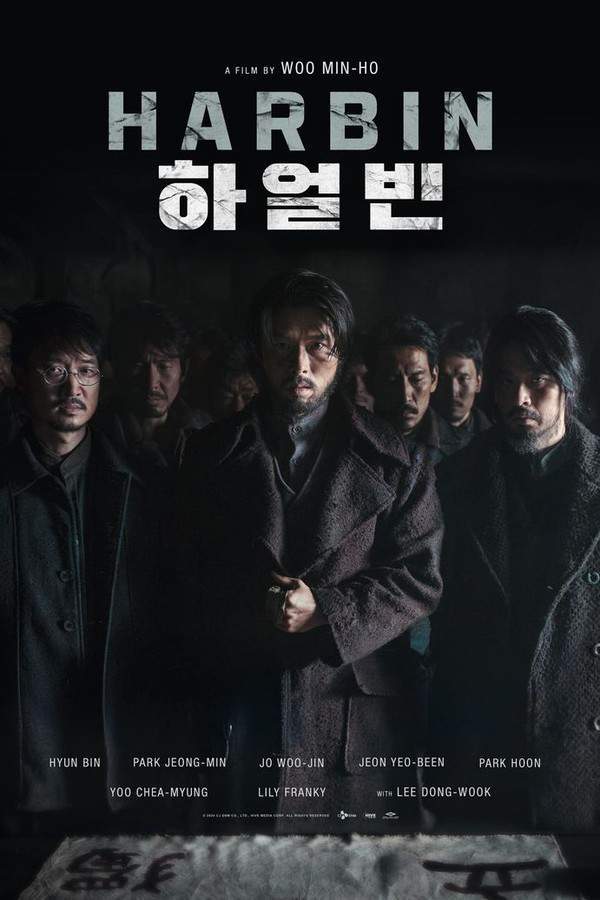
Harbin (2024) movie poster

Timeline

Harbin (2024) Timeline Explained – Every Event in Order

Release, runtime and language
2024 · 1 h 48 m · Korean
Echo score 70
Loading streaming availability…
Starring
Yoo Jae-myung, Hyun Bin, Ego Mikitas, Jeon Yeo-been, Jeong Min Park

Following Korea's forced colonization by Japan in 1909, a group of freedom fighters conspires to assassinate the Japanese prime minister in a bold attempt to reclaim their independence.

On this page (6)
  1. 1 Where to watch
  2. 2 Events in order (15)
  3. 3 Timeline questions answered
  4. 4 Movie threads
  5. 5 Movies like Harbin
  6. 6 Every angle
Loading streaming availability…

15 events in order · contains spoilers

Harbin Timeline: Events in Chronological Order

Every key event of Harbin (2024) in order, scene by scene, with when and where it takes place. Use it to untangle flashbacks, time jumps and parallel storylines, to refresh your memory before the sequel or to find the exact scene you are thinking of.

  1. Ahn crosses the frozen Tumen River

    In 1909, Ahn Jung-geun struggles across the frozen Tumen River while his fellow resistance fighters question his allegiance. The brutal conditions test his resolve and his leadership is scrutinized. The tension sets the stage for a deeper internal and external conflict within the movement.

    When
    1909
    Where
    Tumen River
  2. Leadership questioned after the recent attack

    Ahn's leadership is challenged because many of the fighters under him perished in a recent attack. He had refused to execute prisoners of war and freed them, including officer Tatsuo Mori, a decision that fuels distrust among some of his squad. The rift foreshadows the difficulties he will face in coordinating future missions.

    When
    1909
  3. Mori closes in and annihilates the group

    Mori tracks down Ahn's group and slaughters them with cannon fire, decimating many of the resistance fighters. The massacre leaves Ahn and his remaining allies in a precarious position, heightening the sense of looming failure. The losses deepen Ahn's resolve to take decisive action.

    When
    1909
  4. Ahn vows to redeem himself by assassinating Itō

    Ahn decides redemption lies in the assassination of Itō Hirobumi, the Japanese Prime Minister. Itō is travelling by train from China to Harbin to meet with Kokovtsov to discuss Korea's future, giving Ahn a concrete target and a narrow window of opportunity. The plan moves from aspiration to a clandestine mission.

    When
    1909
    Where
    Harbin (train route from China)
  5. The Vladivostok mission begins and a brawl erupts

    Ahn leads a team by train toward Vladivostok, hoping to secure the means to strike Itō. The conductor overhears Korean voices and alerts Japanese soldiers, triggering a chaotic brawl. Kim is knocked from the train window, and Ahn narrowly escapes, forcing the mission to reset.

    When
    1909
    Where
    Train to Vladivostok
  6. Safehouse regroup and leadership disputed

    Ahn reaches a safehouse in Vladivostok where reinforcements from Korea arrive. The newcomers question Ahn's leadership, and they usurp his authority as Woo Deok-sun reconnects with the group. The team regroups but remains divided on the path forward.

    When
    1909
    Where
    Vladivostok
  7. Itō refuses to cancel the Harbin reception

    Itō Hirobumi is briefed about the assassination plot but refuses to cancel the public reception at the Harbin railway station. This decision increases the risk to Itō and raises the stakes for Ahn's operation. The clock ticks as plans tighten around the event.

    When
    1909
    Where
    Harbin (railway station planning)
  8. Gong secures explosives through Jilin

    The team seeks explosives from Gong, an arms smuggler. Vladivostok proves too slow, so Gong arranges the materials via her brother-in-law in Jilin, enabling a potential strike. The delays push the mission closer to the critical window for action.

    When
    1909
    Where
    Jilin
  9. Ambush and warning signs of a mole

    With time running out, the team cannot hit Itō in Changchun and moves to China. They are ambushed outside their safe house by Russian and Japanese troops led by Mori, and the explosives are destroyed. The squad begins to suspect a mole within their ranks.

    When
    1909
    Where
    Outside their safe house / Changchun region
  10. Sting operation reveals Kim's betrayal

    On the train to Harbin, the team uses a sting operation to lure Itō into a trap, feigning a strike at a railway station. The ruse exposes Kim as the traitor, fracturing the remaining trust within the group. The traitor's identity accelerates the tension toward a final confrontation.

    When
    1909
    Where
    Train to Harbin
  11. Change station confrontation and flashback of torture

    Woo and Kim reach the change station where Mori's troops await. Woo confronts Kim about his betrayal, and a flashback reveals Kim's capture and Mori's gas torture that brought him to a critical breaking point. Mori realizes the mission's true destination lies in Harbin.

    When
    1909
    Where
    Change station
  12. Assassination at Harbin railway station

    At Harbin railway station, Ahn stalks the dignitaries through the crowd after a briefing. Mori closes in, but Gong assaults Mori, allowing Ahn to shoot Itō repeatedly while shouting for Korea. Ahn is then detained, marking a dramatic turn in the mission and in his personal sacrifice.

    When
    1909
    Where
    Harbin railway station
  13. Ahn is hanged for the act

    News of Itō's assassination spreads quickly, and Ahn Jung-geun is hanged in March 1910. The execution closes his direct involvement in the plot but cements his legacy as a symbol of resistance. The price paid for independence is loudly proclaimed by his death.

    When
    March 1910
  14. Mori is killed by Kim and the circle closes

    Mori meets with Kim to infiltrate Kim Ku's independence movement, but Kim stabs him to death and rejoins Gong and Woo. This act represents a personal victory and a strategic reorganization for the resistance. The group recommits to the struggle under a new dynamic.

    When
    Post-assassination
  15. Ending reflection on the road ahead

    The film returns to the frozen Tumen River where Ahn reflects on the ongoing fight for Korean independence. Ahn's last thoughts affirm the need to persevere despite bleak prospects. The narrative closes with a resolve to continue the resistance.

    When
    Ending
    Where
    Tumen River

Last updated: October 09, 2025 at 16:11

Was this helpful?

Timeline questions answered

Harbin Timeline Explained: Your Questions Answered

When does it happen, and why in that order? The questions people ask about the chronology of Harbin (2024): time jumps, flashbacks, cause and effect between scenes and the correct order of events, each answered with spoilers.

Q1

Why was Ahn Jung-geun's leadership questioned by the resistance fighters?

Ahn's leadership was challenged because many fighters under his command died in a recent audacious attack against Japanese forces. Additionally, Ahn had refused to execute prisoners of war, including Japanese officer Tatsuo Mori, and freed them instead. This decision angered his comrades who saw it as weakness or tactical error, since Mori later returned with cannon fire and slaughtered much of the group.

Foreshadowing: Earlier tension at the Tumen River already hinted at growing distrust among the resistance fighters regarding Ahn's whereabouts and decisions.

  • ahn jung-geun
  • resistance leadership
  • tatsuo mori
  • prisoners of war
Q2

Why did Ahn free the Japanese prisoners of war instead of executing them?

Ahn refused to commit war crimes, maintaining his moral principles even in the context of armed resistance. His decision to free the prisoners, particularly officer Tatsuo Mori, stemmed from his conviction that killing unarmed prisoners would make the resistance no better than their oppressors. This principled stance later haunted him when Mori used that mercy to track down and destroy Ahn's group.

  • ahn jung-geun
  • tatsuo mori
  • prisoners of war
  • moral principles
Q3

What motivated Ahn Jung-geun to target Itō Hirobumi specifically?

After Mori annihilated most of Ahn's resistance fighters with cannon fire, Ahn sought redemption through a bold act that could shift the balance of power. Itō Hirobumi was the Japanese Prime Minister and former Resident General of Korea, the architect of Korea's colonization. Targeting him was both a strategic blow against Japanese leadership and a symbolic act of resistance that could galvanize the independence movement.

  • itō hirobumi
  • assassination
  • redemption
  • korean independence
Q4

Why did the assassination plan shift from Changchun to Harbin?

The team initially planned to attack Itō's train at Changchun, but delays in obtaining explosives forced them to change plans. Gong secured the explosives through her brother-in-law in Jilin, which took too long. By the time they had the materials, it became impossible to reach Changchun in time, so the operation shifted to Harbin where Itō was scheduled to arrive for a public reception.

Foreshadowing: The ambush outside their safe house and loss of explosives created the time pressure that made Changchun impossible.

  • changchun
  • harbin
  • itō hirobumi
  • explosives
  • train
Q5

How did the resistance discover that Kim Sang-hyun was the traitor?

The team launched a sting operation on the train to Harbin, using false information about where they would strike to lure out the traitor. They pretended Itō would be targeted at a railway station where he would switch trains. When Kim acted on this information, exposing the plan to the Japanese, his betrayal was exposed. The operation was designed specifically to flush out whoever was feeding information to Mori.

  • kim sang-hyun
  • traitor
  • mole
  • sting operation
  • japanese
Q6

Why did Kim Sang-hyun betray the resistance to the Japanese?

Kim was captured by Mori and subjected to brutal torture, including exposure to gas, during interrogation about Ahn's whereabouts. The torture broke Kim psychologically, forcing him to become a double agent. A flashback reveals Mori used the gas torture to completely break Kim's resistance, making him reveal information under duress. When Woo confronted Kim at the change station, Kim's breakdown confirmed the psychological destruction Mori had inflicted.

Foreshadowing: The ambush outside their safe house, where the explosives were destroyed, was the first sign that someone had betrayed their location.

  • kim sang-hyun
  • torture
  • mori
  • gas
  • betrayal
Q7

How did the assassination at Harbin railway station unfold?

After receiving a briefing from Gong, Ahn entered the crowded Harbin railway station and stalked the dignitaries moving through the platform. As Mori closed in on Ahn's position, Gong intervened by knocking Mori aside, creating a crucial opening. Ahn then approached Itō and shot him repeatedly, shouting "Long live Korea!" in Russian before being detained by authorities. The assassination succeeded despite the overwhelming enemy presence.

  • harbin railway station
  • assassination
  • itō hirobumi
  • gong
Q8

What happened to Ahn Jung-geun after the assassination?

Ahn Jung-geun was arrested immediately following the assassination. News of the killing reverberated throughout the region and cemented Ahn's status as a martyr of the Korean independence movement. He was hanged in March 1910, becoming a symbol of resistance against Japanese colonization. His sacrifice, though it came at the cost of his own life, galvanized the independence cause.

  • ahn jung-geun
  • execution
  • hanged
  • martyr
  • korean independence
Q9

How did Tatsuo Mori die in the film?

After Itō's assassination, Mori attempted to use Kim Sang-hyun to infiltrate Kim Ku's independence movement. However, Kim overcame his psychological trauma and turned the tables on Mori, he killed Mori with a knife and then rejoined Gong and the recently released Woo. This marked both a personal victory for Kim, redeeming his betrayal, and a strategic shift for the resistance movement.

  • tatsuo mori
  • kim sang-hyun
  • death
  • kim ku
Q10

What is the significance of the frozen Tumen River in the film's ending?

The film closes with Ahn back at the frozen Tumen River, the same location where he began his journey. This circular structure represents the ongoing, unending nature of Korea's struggle for independence. Despite the assassination's success and his subsequent execution, the landscape, white, bleak, and encased, echoes the harsh conditions faced by those fighting for freedom. The ending affirms that resistance must continue across time and space, regardless of personal cost.

Foreshadowing: The opening scene established the Tumen River as a symbol of the harsh border between Korea and the resistance's constant struggle.

  • tumen river
  • ending
  • resistance
  • korea
  • independence

Movie threads

More Movies Like Harbin, by Mood & Story

Curated lists built around what makes Harbin tick: the same mood, the same kind of story or the same emotional payoff. Each list explains why these movies belong together.

Historical Resistance Missions like Harbin

High-stakes missions where characters risk everything to defy a powerful oppressor. If you enjoyed the tense, high-stakes assassination plot in Harbin, explore more movies like it. This collection features historical thrillers and dramas centered on desperate resistance efforts, espionage, and acts of defiance that changed the course of history.

  • tense
  • gripping
  • desperate
  • somber
  • urgent
  • melancholic
  • Tone: tense, somber, desperate
  • Pacing: fast, urgent
Why these movies?

The story pattern: The narrative follows a clear, high-stakes objective—often an assassination, sabotage, or rescue—set against a backdrop of historical oppression. The plot is driven by a race against time, involving careful planning, sudden betrayals, and the constant threat of capture, culminating in an operation whose success is measured in collective hope rather than personal survival.

Why they belong together: They are grouped by their shared foundation in real historical struggles, their tense and urgent pacing, and their heavy emotional focus on the moral cost and ultimate necessity of sacrifice for a greater cause. The experience is one of gripping tension and somber reflection.

Movies with Bittersweet Victories like Harbin

Stories where a strategic win is achieved, but at a profound personal cost. For viewers who appreciated the poignant ending of Harbin, this list features movies like it where a hard-won triumph is shadowed by significant sacrifice. These stories explore the complex emotional landscape of victories that are both successful and sorrowful.

  • bittersweet
  • poignant
  • somber
  • melancholic
  • heavy
  • triumphant
  • Tone: bittersweet, melancholic, poignant
  • Pacing: steady, building to a climax
Why these movies?

The story pattern: The narrative builds towards a crucial goal that is achieved, often at great cost to the protagonist or their allies. The ending doesn't provide simple celebration; instead, it lingers on the price of victory, creating a powerful, reflective atmosphere that honors the sacrifice while acknowledging the loss.

Why they belong together: They share a specific emotional arc and conclusion: the achievement of a larger objective is coupled with irrevocable personal loss. This creates a unified viewing experience defined by a heavy, contemplative mood and a tone that is neither purely tragic nor celebratory, but a resonant blend of both.

If you liked this

Movies Like Harbin

Similar movies to Harbin: the same genre, themes or kind of story. Each one comes with its own plot summary, timeline and ending explained.

Browse all movie summaries

Every angle

Harbin (2024) Explained: Plot, Ending, Timeline & Characters

Everything about Harbin in one place: what happens in the plot summary, the timeline in chronological order, the characters and meaning, the ending explained and a spoiler-free summary. What's After the Movie adds the cast, box office and post-credit scenes.

Coming soon on iOS and Android

The Plot Explained Movie Summary App

Plot summaries, endings explained and timelines on your phone. Catch up on any movie in minutes, save your favorites and never miss a twist again.

Be the first to know when we launch. Your email stays private, always.

Learn more about the app