Plot Explained Spoilers guaranteed!
Plot Explained

Browse by genre

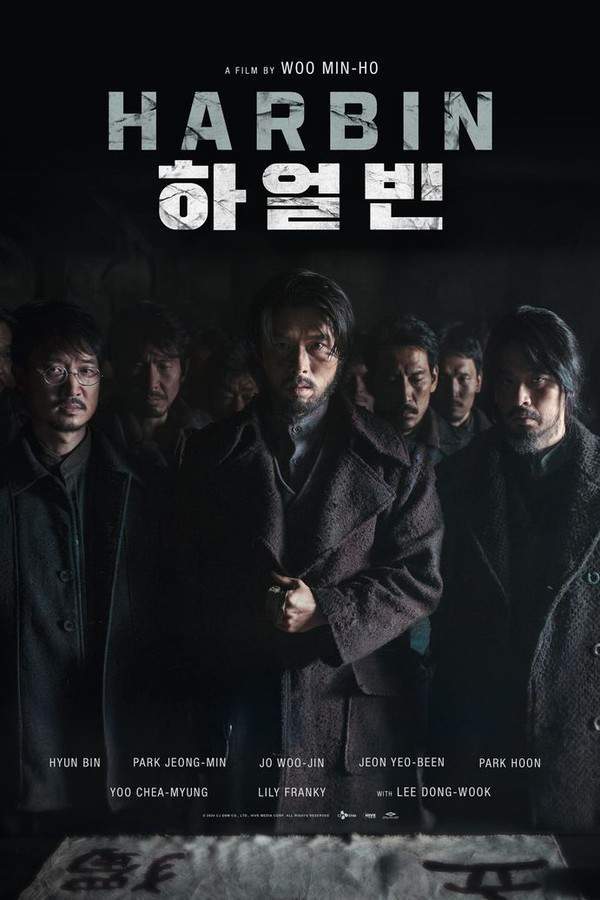
Harbin (2024) movie poster

Plot Summary

Harbin (2024) Plot Summary & Ending Explained

Release, runtime and language
2024 · 1 h 48 m · Korean
Echo score 70
JustWatch #3,914 1
Starring
Yoo Jae-myung, Hyun Bin, Ego Mikitas, Jeon Yeo-been, Jeong Min Park

Following Korea's forced colonization by Japan in 1909, a group of freedom fighters conspires to assassinate the Japanese prime minister in a bold attempt to reclaim their independence.

On this page (7)
  1. 1 Where to watch
  2. 2 What happens: full plot
  3. 3 Plot questions answered
  4. 4 How it ends
  5. 5 Movie threads
  6. 6 Movies like Harbin
  7. 7 Every angle

Where to watch

Where to Watch Harbin (2024)

Where can you watch Harbin? Stream, rent or buy it in the US, including on Amazon Prime Video, Hulu and Fawesome: current JustWatch availability with up-to-date prices.

Streaming availability powered by JustWatch

Full plot summary · contains spoilers

What Happens in Harbin: Full Plot Summary

The whole story of Harbin (2024) explained, from the opening scene to the final frame: every key event, every twist and what it all adds up to. Read it as a quick recap before the sequel, to check a scene you missed, or to finally understand what really happened.

In 1909, Ahn Jung-geun, Hyun Bin, a steadfast resistance fighter opposing Korea’s subjugation by Japan, endures the brutal chill of the Tumen River as he presses toward a bold, dangerous plan. The journey is only the beginning of a larger test of loyalty and strategy, because his comrades in the resistance begin to doubt his whereabouts and his intentions. When Ahn finally returns, his authority is questioned; many of the fighters who once followed him have fallen in a recent, audacious strike against Japanese forces, leaving the group raw and uncertain about its leadership.

Ahn’s most principled stance—his refusal to commit war crimes by executing prisoners of war, including the officer Tatsuo Mori, and his decision to free them—haunts the present danger, and Mori relentlessly tracks the group, closing the circle with a brutal, cannon-blasted defeat. This brutal memory of past choices drives Ahn to seek a form of redemption through action that could shift the balance of power: assassinate Itō Hirobumi, the Prime Minister of Japan and a former Resident General of Korea. Itō is moving toward Harbin, traveling by train from China to Russian-controlled Harbin, where he plans to meet with Vladimir Kokovtsov, the Russian Finance Minister, to discuss Korea’s future in a tense regional balance of power. Here, Ahn’s mission intersects with a larger geopolitical chess game.

The mission rises in complexity as a small, determined team forms around him. Ahn leads a group that includes Woo Deok-soon, and Kim Sang-hyun, toward Vladivostok by train, hoping to intercept Itō before he can reach Harbin. A safety check at a first-class carriage becomes a spark for disaster: a brawl erupts after the conductor overhears their Korean conversation, and Kim is knocked out of the train window while Ahn escapes, setting off a chain of regroupings and relay arrivals at a Vladivostok safehouse. There, the team gathers with reinforcements from Korea, only to see a shift in leadership as new voices push forward, with Woo arriving last to join the renewed group.

The search for explosive devices grows urgent, and the team turns to Ms. Gong, a former associate in the independence movement who has become an arms smuggler. Gong, [Jeon Yeo-been], tries to provide the needed explosives, but the clock runs short; when an expedient is found, Gong secures them from her connections in Jilin through her brother-in-law, a former Korean independence fighter-turned bandit. The delay complicates plans, making it unlikely that Itō’s train carriage can be attacked at Changchun as originally hoped, forcing the operation to shift toward a broader theater in China.

The window to act narrows further as Mori and Japanese troops close in, aided by Russian forces, and the team fears a mole among their ranks. On the train toward Harbin, a sting operation is launched with false information to probe whether Itō would be targeted at a railway station where he would switch trains. The operation exposes a betrayal: Kim Sang-hyun is the traitor.

As the altered plan unfolds, Woo and Kim converge at the change station, only to be met by Mori’s troops. A confrontation erupts, and Kim breaks down under the pressure before Woo can act. A flashback reveals Kim’s capture and torture by Mori, including exposure to gas, and Mori’s relentless interrogation about Ahn’s whereabouts. The pursuit continues, and Mori realigns his focus, realizing that Harbin is now the likely focal point of the conspiracy.

At Harbin’s railway station, Ahn receives a briefing from Gong and then stalks the dignitaries as they move through a crowded platform. Mori closes in, yet Gong interrupts the pursuit by knocking him aside, creating an opening for Ahn. In a decisive moment, Ahn shoots Itō repeatedly, shouting a defiant declaration in Russian—Long live Korea!—before being detained by authorities.

The news of Itō’s assassination reverberates through the region, sealing Ahn’s fate as a martyr of the independence cause by March 1910 when he is hanged. In the aftermath, Mori seeks to use Kim to infiltrate Kim Ku’s independence movement, but Kim defeats him, rejoining Gong and a recently released Woo. A pivotal flashback hints that Ahn had urged Woo to give Kim a second chance, underscoring the complexities of trust and redemption in a struggle marked by sacrifice and hard-won courage.

The film closes with Ahn back on the frozen Tumen River, reflecting on the stubborn, unyielding need to keep fighting for Korea’s freedom, even when the outlook seems bleak. The landscape—white and encasing—echoes a life spent in the margins of larger powers, where acts of resistance must endure across time, space, and the ever-present threat of betrayal and loss.
Last updated: October 09, 2025 at 16:11

Was this helpful?

Plot questions answered

Harbin Plot Explained: Your Questions Answered

The questions people ask most about Harbin (2024): what happens in the confusing scenes, why the characters do what they do, the twists, hidden details and what the ending means. Each answer contains spoilers.

Q1

Why was Ahn Jung-geun's leadership questioned by the resistance fighters?

Ahn's leadership was challenged because many fighters under his command died in a recent audacious attack against Japanese forces. Additionally, Ahn had refused to execute prisoners of war, including Japanese officer Tatsuo Mori, and freed them instead. This decision angered his comrades who saw it as weakness or tactical error, since Mori later returned with cannon fire and slaughtered much of the group.

Foreshadowing: Earlier tension at the Tumen River already hinted at growing distrust among the resistance fighters regarding Ahn's whereabouts and decisions.

  • ahn jung-geun
  • resistance leadership
  • tatsuo mori
  • prisoners of war
Q2

Why did Ahn free the Japanese prisoners of war instead of executing them?

Ahn refused to commit war crimes, maintaining his moral principles even in the context of armed resistance. His decision to free the prisoners, particularly officer Tatsuo Mori, stemmed from his conviction that killing unarmed prisoners would make the resistance no better than their oppressors. This principled stance later haunted him when Mori used that mercy to track down and destroy Ahn's group.

  • ahn jung-geun
  • tatsuo mori
  • prisoners of war
  • moral principles
Q3

What motivated Ahn Jung-geun to target Itō Hirobumi specifically?

After Mori annihilated most of Ahn's resistance fighters with cannon fire, Ahn sought redemption through a bold act that could shift the balance of power. Itō Hirobumi was the Japanese Prime Minister and former Resident General of Korea, the architect of Korea's colonization. Targeting him was both a strategic blow against Japanese leadership and a symbolic act of resistance that could galvanize the independence movement.

  • itō hirobumi
  • assassination
  • redemption
  • korean independence
Q4

Why did the assassination plan shift from Changchun to Harbin?

The team initially planned to attack Itō's train at Changchun, but delays in obtaining explosives forced them to change plans. Gong secured the explosives through her brother-in-law in Jilin, which took too long. By the time they had the materials, it became impossible to reach Changchun in time, so the operation shifted to Harbin where Itō was scheduled to arrive for a public reception.

Foreshadowing: The ambush outside their safe house and loss of explosives created the time pressure that made Changchun impossible.

  • changchun
  • harbin
  • itō hirobumi
  • explosives
  • train
Q5

How did the resistance discover that Kim Sang-hyun was the traitor?

The team launched a sting operation on the train to Harbin, using false information about where they would strike to lure out the traitor. They pretended Itō would be targeted at a railway station where he would switch trains. When Kim acted on this information, exposing the plan to the Japanese, his betrayal was exposed. The operation was designed specifically to flush out whoever was feeding information to Mori.

  • kim sang-hyun
  • traitor
  • mole
  • sting operation
  • japanese
Q6

Why did Kim Sang-hyun betray the resistance to the Japanese?

Kim was captured by Mori and subjected to brutal torture, including exposure to gas, during interrogation about Ahn's whereabouts. The torture broke Kim psychologically, forcing him to become a double agent. A flashback reveals Mori used the gas torture to completely break Kim's resistance, making him reveal information under duress. When Woo confronted Kim at the change station, Kim's breakdown confirmed the psychological destruction Mori had inflicted.

Foreshadowing: The ambush outside their safe house, where the explosives were destroyed, was the first sign that someone had betrayed their location.

  • kim sang-hyun
  • torture
  • mori
  • gas
  • betrayal
Q7

How did the assassination at Harbin railway station unfold?

After receiving a briefing from Gong, Ahn entered the crowded Harbin railway station and stalked the dignitaries moving through the platform. As Mori closed in on Ahn's position, Gong intervened by knocking Mori aside, creating a crucial opening. Ahn then approached Itō and shot him repeatedly, shouting "Long live Korea!" in Russian before being detained by authorities. The assassination succeeded despite the overwhelming enemy presence.

  • harbin railway station
  • assassination
  • itō hirobumi
  • gong
Q8

What happened to Ahn Jung-geun after the assassination?

Ahn Jung-geun was arrested immediately following the assassination. News of the killing reverberated throughout the region and cemented Ahn's status as a martyr of the Korean independence movement. He was hanged in March 1910, becoming a symbol of resistance against Japanese colonization. His sacrifice, though it came at the cost of his own life, galvanized the independence cause.

  • ahn jung-geun
  • execution
  • hanged
  • martyr
  • korean independence
Q9

How did Tatsuo Mori die in the film?

After Itō's assassination, Mori attempted to use Kim Sang-hyun to infiltrate Kim Ku's independence movement. However, Kim overcame his psychological trauma and turned the tables on Mori, he killed Mori with a knife and then rejoined Gong and the recently released Woo. This marked both a personal victory for Kim, redeeming his betrayal, and a strategic shift for the resistance movement.

  • tatsuo mori
  • kim sang-hyun
  • death
  • kim ku
Q10

What is the significance of the frozen Tumen River in the film's ending?

The film closes with Ahn back at the frozen Tumen River, the same location where he began his journey. This circular structure represents the ongoing, unending nature of Korea's struggle for independence. Despite the assassination's success and his subsequent execution, the landscape, white, bleak, and encased, echoes the harsh conditions faced by those fighting for freedom. The ending affirms that resistance must continue across time and space, regardless of personal cost.

Foreshadowing: The opening scene established the Tumen River as a symbol of the harsh border between Korea and the resistance's constant struggle.

  • tumen river
  • ending
  • resistance
  • korea
  • independence

Ending explained

What Happens at the End of Harbin?

How Harbin (2024) ends, in short: the final scene, the last twist and what it means for the characters. The full ending explained, with every spoiler, lives on its own page.

Read the full ending explained

During the climactic scene, Ahn Jung-geun successfully assassinates Japanese Prime Minister Ito Hirobumi at Hanbin station, shouting a declaration of his homeland in Russian, "Korya Ula," in a powerful gesture meant to inspire his fellow Koreans and demonstrate their ongoing resistance. This act becomes a pivotal moment in Korea's fight for independence, symbolizing the courage and sacrifice of those who fought against Japanese colonial rule. However, Ahn is captured immediately afterward and faces execution a year later, when he is hanged by the Japanese colonial authorities. His death underscores the high cost of his rebellion but also cements his status as a national hero. The assassination's impact extends beyond immediate repercussions; it ignited a strong wave of patriotism among Koreans, fueling their resolve to resist colonial oppression. Although Japan tightened its grip after Hirobumi's death, the act inspired many Koreans to continue striving for independence. In the long term, Ahn Jung-geun's sacrifice became a symbol of resistance, inspiring future generations to fight for their country’s freedom. The movie concludes with the remaining freedom fighters, including Kim Sang-hyun, Ms. Gong, and Woo Duk-soon, continuing the struggle in Ahn's memory, emphasizing that his act of defiance and patriotism laid the foundation for Korea's eventual liberation in 1945. The film portrays the assassination not only as a daring act of rebellion but as a catalyst that revitalized the Korean independence movement and kept the flame of resistance alive against the imperial power.

Harbin ending explained in full

Movie threads

More Movies Like Harbin, by Mood & Story

Curated lists built around what makes Harbin tick: the same mood, the same kind of story or the same emotional payoff. Each list explains why these movies belong together.

Historical Resistance Missions like Harbin

High-stakes missions where characters risk everything to defy a powerful oppressor. If you enjoyed the tense, high-stakes assassination plot in Harbin, explore more movies like it. This collection features historical thrillers and dramas centered on desperate resistance efforts, espionage, and acts of defiance that changed the course of history.

  • tense
  • gripping
  • desperate
  • somber
  • urgent
  • melancholic
  • Tone: tense, somber, desperate
  • Pacing: fast, urgent
Why these movies?

The story pattern: The narrative follows a clear, high-stakes objective—often an assassination, sabotage, or rescue—set against a backdrop of historical oppression. The plot is driven by a race against time, involving careful planning, sudden betrayals, and the constant threat of capture, culminating in an operation whose success is measured in collective hope rather than personal survival.

Why they belong together: They are grouped by their shared foundation in real historical struggles, their tense and urgent pacing, and their heavy emotional focus on the moral cost and ultimate necessity of sacrifice for a greater cause. The experience is one of gripping tension and somber reflection.

Movies with Bittersweet Victories like Harbin

Stories where a strategic win is achieved, but at a profound personal cost. For viewers who appreciated the poignant ending of Harbin, this list features movies like it where a hard-won triumph is shadowed by significant sacrifice. These stories explore the complex emotional landscape of victories that are both successful and sorrowful.

  • bittersweet
  • poignant
  • somber
  • melancholic
  • heavy
  • triumphant
  • Tone: bittersweet, melancholic, poignant
  • Pacing: steady, building to a climax
Why these movies?

The story pattern: The narrative builds towards a crucial goal that is achieved, often at great cost to the protagonist or their allies. The ending doesn't provide simple celebration; instead, it lingers on the price of victory, creating a powerful, reflective atmosphere that honors the sacrifice while acknowledging the loss.

Why they belong together: They share a specific emotional arc and conclusion: the achievement of a larger objective is coupled with irrevocable personal loss. This creates a unified viewing experience defined by a heavy, contemplative mood and a tone that is neither purely tragic nor celebratory, but a resonant blend of both.

If you liked this

Movies Like Harbin

Similar movies to Harbin: the same genre, themes or kind of story. Each one comes with its own plot summary, timeline and ending explained.

Browse all movie summaries

Every angle

Harbin (2024) Explained: Plot, Ending, Timeline & Characters

Everything about Harbin in one place: what happens in the plot summary, the timeline in chronological order, the characters and meaning, the ending explained and a spoiler-free summary. What's After the Movie adds the cast, box office and post-credit scenes.

Coming soon on iOS and Android

The Plot Explained Movie Summary App

Plot summaries, endings explained and timelines on your phone. Catch up on any movie in minutes, save your favorites and never miss a twist again.
Be the first to know when we launch. Your email stays private, always.

Learn more about the app