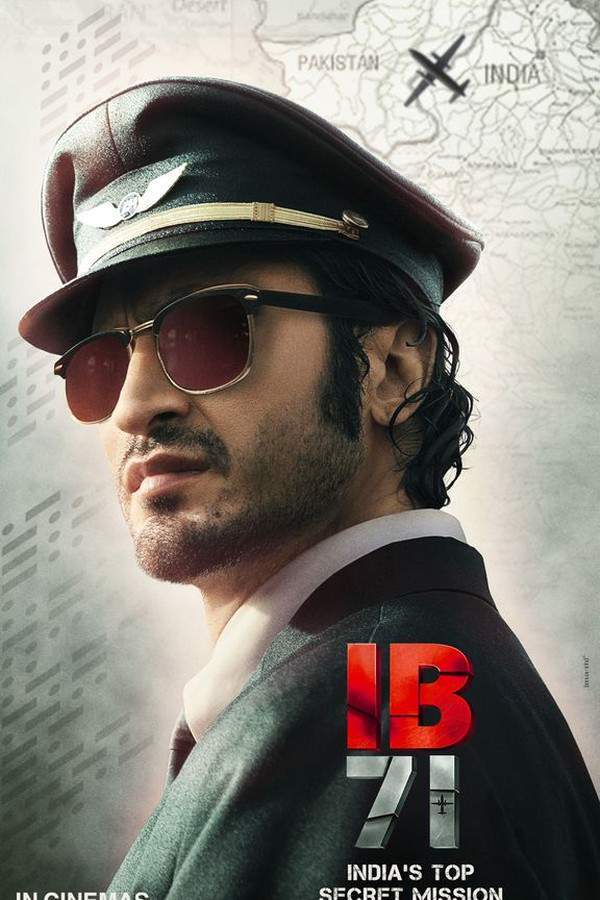
In 1984, Indian Airlines Flight 691 is hijacked—the seventh such assault in five years—repeating a pattern where the hijackers’ demands for money and the release of other terrorists are met. During a high-stakes briefing, Indira Gandhi expresses frustration with the slow response and authorizes a RAW officer, Anshul Malhotra, code-named “Bell Bottom,” to take charge. Seen by many officials as a mere clerk, this man’s keen powers of deduction soon set him apart as he argues that the so-called masterminds, a Khalistan group named “Azaadi Dal,” may actually be a front for Pakistan’s ISI—a claim that is initially dismissed in the tense political climate.
Backstory unfolds from 1979, when the polymath Anshul Malhotra lives with his wife Radhika Malhotra and his asthmatic mother Raavi. Raavi’s flight is hijacked decades earlier, and although Morarji Desai and Pakistani President Muhammad Zia-ul-Haq negotiate for hostages’ release, Raavi dies—an event later tied to the hijackers' deliberate withholding of her inhaler, a detail RAW later uncovers during its investigation. This personal history fuels Anshul’s commitment: after recovering from that trauma, he joins RAW, accepts the code name Bell Bottom, and conceals his new cover as an embassy officer. He trains hard, sharpening a remarkable memory and upgrading his physical prowess, and is posted to the hijacking desk, where his expertise grows sharper with each assignment.
In 1983, while visiting his brother in London, Anshul locates one of the hijackers and, with fellow RAW agents, raids a residence to arrest three suspects; the fourth, Daljeet Singh—also known as Doddy—escapes in disguise, leaving the operation unfinished but laying the groundwork for future counteractions. Return to the present, as the plane again takes off from Amritsar, Gandhi orders Anshul back, but he persuades her to bend the script and refuses to let the Pakistanis send a negotiating team or refuel the aircraft. In response, the Pakistani authorities task a minister to oversee the ordeal, while in Lahore the hijackers substitute Doddy Singh for the original group and arm themselves for a cross-border push toward the Middle East, exploiting regional naiveté about aerial terrorism.
Anshul plans on several fronts: a covert entry to disarm the hijackers, a direct assault with Indian forces, and a negotiation route. All options stumble—Dubai’s humanitarian posture complicates entry, and a symbolic standoff hints that diplomacy alone won’t solve this crisis. With no easy path, Anshul enlists Adeela Rehman, Adeela Rehman, as a contact in Dubai’s airport and moves to a bold, subterranean tactic. After a tense ruse to observe the operation, he reveals Adeela’s betrayal and binds her before the pair, disguised as airport workers, uses a desert sandstorm as cover to slip into the field, free the VIPs, and subdue the terrorists. They hijack the chartered flight and redirect it to India, where the Emir of Dubai hesitantly grants takeoff clearance once Anshul frames their method as consistent with Dubai’s humanitarian ethos.
In Delhi, the hijackers are booked, the ISI’s scheming exposed, and the flight returns to its homeland with every passenger safe. The film closes with a final twist of fate: Radhika Malhotra, Anshul’s wife, is revealed to have been working for RAW all along, feeding them insights into her husband’s extraordinary abilities and background from the very beginning. The operation’s success hinges on a mix of daring, improvisation, and the subtle power of personal loyalties transformed into national service, leaving audiences with a nuanced portrait of courage, calculation, and the shadows that bind private lives to public duty.