Plot Explained Spoilers guaranteed!
Plot Explained

Browse by genre

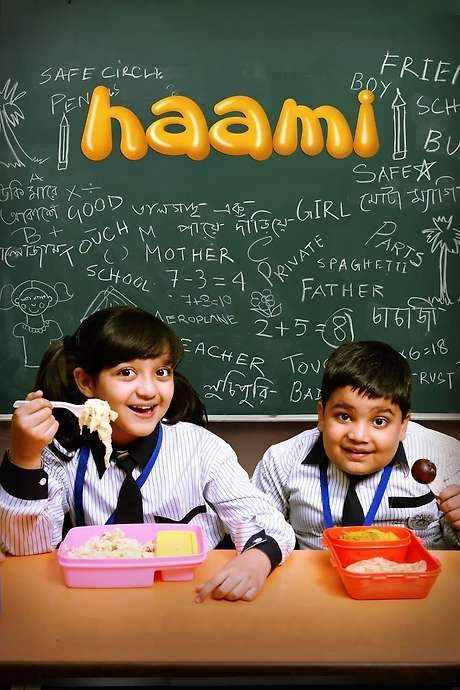
Haami (2018) movie poster

Timeline

Haami (2018) Timeline Explained – Every Event in Order

Release, runtime and language
2018 · 133 mins · Bengali, Bangla
Loading streaming availability…
Directed by
Nandita Roy
Starring
Masood Akhtar, Kharaj Mukherjee, Aparajita Adhya, Churni Ganguly, Tanusree Shankar, Koneenica Banerjee

Bhutu and Chini are close friends whose innocent bond unexpectedly becomes a source of controversy. A kiss between the two children sparks a major scandal, prompting questions about responsibility and the impact of societal pressures on young people. The film explores the consequences of this situation and examines how society can fail those it is meant to protect.

On this page (5)
  1. 1 Where to watch
  2. 2 Events in order (13)
  3. 3 Timeline questions answered
  4. 4 Movie threads
  5. 5 Every angle
Loading streaming availability…

13 events in order · contains spoilers

Haami Timeline: Events in Chronological Order

Every key event of Haami (2018) in order, scene by scene, with when and where it takes place. Use it to untangle flashbacks, time jumps and parallel storylines, to refresh your memory before the sequel or to find the exact scene you are thinking of.

  1. Bhutu befriends Chini at a top Kolkata school

    Bhutu studies at a prestigious Kolkata school and meets Chini, a new classmate from an upper-class background. They quickly strike a friendship despite their different upbringings. The school becomes the setting where their bond starts to grow.

    When
    beginning of term
    Where
    Kolkata
  2. A classroom scuffle sparks parental conflict

    Bhutu's antics lead to a scuffle with Ajatshotru, triggering a brawl between Bhutu's mother Mitali and Shyamoli, the wife of the local councillor. The incident fuels tensions between the two families and sets a charged tone for their interactions. The school becomes the arena where adult rivalries surface.

    When
    early incident
    Where
    School
  3. Bhutu's innocent gesture leads to trouble

    Bhutu gives Chini a peck on the cheek out of pure friendship. Chini tells the class teacher what happened, which puts the adults on alert. The incident becomes a flashpoint for misinterpretation and school intervention.

    When
    playtime
    Where
    School
  4. School calls for both sets of parents

    The school summons both Chini's and Bhutu's parents to discuss the incident and the growing tensions. The confrontation reveals underlying class prejudices and reputations that color their judgments. The adults start to shape the narrative more than the children did.

    When
    shortly after the incident
    Where
    School
  5. Chini is kept away from Bhutu

    Driven by classist attitudes and Mitali's tarnished reputation, Chini is kept away from Bhutu and Bhutu is discouraged from speaking to her. The pair lose daily contact, and Chini feels the absence of their friendship. The school environment reflects adult biases more than the children's needs.

    When
    following the confrontation
    Where
    School
  6. Section changes to separate the children

    Following parental pressure, Bhutu and Chini's sections are rearranged, effectively ending their daily proximity. The division mirrors social prejudice more than personal dislike. This move deepens the sense of separation between the two families.

    When
    soon after the separation
    Where
    School
  7. Bhutu fantasizes a wedding and acts on playtime

    Inspired by a television wedding, Bhutu decides to marry Chini and places sindoor on her during playtime. The gesture is childish but charged with emotional significance for their bond. The moment triggers surprise and confusion among the onlookers.

    When
    playtime
    Where
    School playground
  8. Ajatshotru reports the sindoor incident

    Ajatshotru witnesses Bhutu's sindoor gesture and reports it to the class teacher. The teacher and principal reopen the discussion, bringing the parents back into the debate. The episode rekindles tensions about boundaries and innocence.

    When
    immediately after playtime
    Where
    School
  9. A climate of mistrust intensifies rumors

    The school faces a backdrop of mistrust following a false alarm about a student being sexually assaulted by a non-teaching staff member, which colors the teachers' and parents' perceptions. Gossip fuels the misinterpretation of Bhutu's actions as harassment. The atmosphere sets the stage for a new round of accusations.

    When
    rumor period
    Where
    School
  10. Parents demand Bhutu's expulsion

    Chini's parents and the school principal demand Bhutu be expelled, while Mitali accuses Chini of seducing Bhutu. The confrontation centers on protecting reputations rather than understanding the children's friendship. The fault lines of class and fear of scandal dominate the debate.

    When
    during confrontation
    Where
    School
  11. The families quarrel with the principal

    The two families clash with the principal, who tries to mediate. The quarrel reveals adult biases and social prejudices rather than the children's innocence. The school becomes a battleground for adults' anxieties.

    When
    during the confrontation
    Where
    School
  12. Realization of innocence and reconciliation

    Eventually, the parents realize Bhutu and Chini's bond is innocent and pure. They understand they judged the children from an adult perspective and begin to reconcile. The children's friendship is restored as trust slowly returns.

    When
    end of the arc
    Where
    School
  13. Resolution and return to normalcy

    With reconciliation, Bhutu and Chini are allowed back into each other's lives and the school environment regains balance. The story closes on the theme that children can blur social boundaries when adults choose empathy. Timeframe: end of term.

    When
    end of term
    Where
    School

Last updated: October 01, 2025 at 13:05

Was this helpful?

Timeline questions answered

Haami Timeline Explained: Your Questions Answered

When does it happen, and why in that order? The questions people ask about the chronology of Haami (2018): time jumps, flashbacks, cause and effect between scenes and the correct order of events, each answered with spoilers.

Q1

Why did the school take the peck on the cheek so seriously?

The school overreacted because the incident occurred during a period of heightened sensitivity following a false alarm about a student being sexually assaulted by a non-teaching staff member. This created a climate of mistrust where teachers and parents were primed to interpret any physical contact between children as inappropriate. The adults projected adult concerns onto what was genuinely an innocent childhood gesture.

Foreshadowing: Earlier, a false alarm about assault had created suspicion around any child-adult interaction.

  • peck on cheek
  • school reaction
  • innocence
  • child incident
Q2

Why was Chini kept away from Bhutu after the incident?

Chini's parents, who were from an upper-class background, decided to keep her away from Bhutu due to classist attitudes and concerns about their reputation. Bhutu's mother Mitali had a tarnished reputation in the community, which made the other family view the friendship as inappropriate. The school complied with these parental demands, separating the children despite their innocent bond.

Foreshadowing: The earlier scuffle between Bhutu and Ajatshotru had already fueled tensions between the two families.

  • class difference
  • separation
  • parental pressure
  • social class
Q3

Why did the parents demand Bhutu's expulsion after the sindoor incident?

Chini's parents and the school principal demanded Bhutu's expulsion primarily to protect their reputation and maintain social standing. The sindoor gesture, while childish, was misconstrued through the lens of adult interpretations of appropriateness. Mitali's counter-accusation that Chini seduced Bhutu further escalated the conflict, turning the situation into a battle over whose child was more respectable.

Foreshadowing: The earlier peck on the cheek and the classroom scuffle had already established tension between the families.

  • expulsion
  • sindoor
  • parental conflict
  • reputation
Q4

What was the false alarm about and how did it affect the situation?

Earlier in the school year, there had been a false alarm about a student being sexually assaulted by a non-teaching staff member. This incident created a pervasive atmosphere of mistrust among teachers and parents. When Bhutu's innocent gestures came to light, this climate of suspicion made the adults more likely to interpret them as inappropriate behavior rather than childhood innocence.

  • false alarm
  • assault accusation
  • mistrust
  • school atmosphere
Q5

Why did Bhutu put sindoor on Chini during playtime?

Bhutu was inspired by a television wedding he saw and decided he wanted to marry Chini. The gesture was entirely childish and came from a place of pure affection and friendship, not adult romantic understanding. Placing sindoor on Chini was his way of expressing that he wanted to formalize their friendship in the same way he saw adults do on TV.

  • sindoor
  • wedding
  • childhood marriage
  • innocent gesture
Q6

Why did Mitali accuse Chini of seducing Bhutu?

During the confrontation with Chini's parents and the principal, Mitali accused Chini of seducing Bhutu as a defensive reaction. This accusation was driven by her own tarnished reputation and the need to protect her son's character. Rather than accepting blame, she shifted the narrative to suggest Chini was the aggressor, reflecting the adults' tendency to project adult motives onto children's innocent actions.

Foreshadowing: Mitali's reputation had already been established as tarnished in the community.

  • Mitali
  • accusation
  • seduction
  • defensive reaction
Q7

How did the parents realize the children's bond was innocent?

The parents eventually came to understand that Bhutu and Chini's friendship was genuinely innocent and pure. They recognized that they had been viewing the children's actions through an adult lens, projecting inappropriate motives onto what were actually harmless childhood interactions. This realization allowed them to move beyond their prejudices and reconcile.

  • reconciliation
  • innocence
  • understanding
  • parents
Q8

Why did Ajatshotru report the sindoor incident?

Ajatshotru witnessed Bhutu placing sindoor on Chini during playtime and reported it to the class teacher. His motivation appeared to be the ongoing rivalry between him and Bhutu, which had started with the earlier classroom scuffle. He likely saw the incident as another opportunity to get Bhutu in trouble with the authorities.

Foreshadowing: The earlier scuffle between Bhutu and Ajatshotru had created personal enmity.

  • Ajatshotru
  • report
  • rivalry
  • witness
Q9

What caused the families to quarrel with the principal?

The two families quarreled with the principal because each side was more concerned with protecting their reputation and proving their child was not at fault. The principal attempted to mediate, but the confrontation revealed deep-seated class biases and social prejudices. Rather than focusing on the children's wellbeing, the adults used the school as a battleground to settle their own social grievances.

  • principal
  • class prejudice
  • family quarrel
  • mediation
Q10

How was Bhutu and Chini's friendship finally restored?

After the parents realized their mistake in judging the children from an adult perspective, they began to reconcile. The reconciliation allowed Bhutu and Chini to be back in each other's lives by the end of the term. The story concludes with the theme that children can blur social boundaries when adults choose empathy over prejudice.

  • friendship restored
  • reconciliation
  • empathy
  • social boundaries

Movie threads

More Movies Like Haami, by Mood & Story

Curated lists built around what makes Haami tick: the same mood, the same kind of story or the same emotional payoff. Each list explains why these movies belong together.

Movies about the shattering of innocence like Haami

Where a single event irrevocably destroys a child's safe world. If you were moved by Haami's exploration of a child's world crumbling, these movies like Haami tell similar stories. This collection features dramas where a childhood incident sparks a major fallout, focusing on the heavy emotional toll and tragic consequences for the young protagonists.

  • tragic
  • somber
  • morally questioning
  • childhood trauma
  • reflective
  • anxious
  • Tone: somber, tragic, morally questioning
  • Pacing: steady, deliberate
Why these movies?

The story pattern: Stories in this thread typically begin with a moment of pure, childish behavior that is misinterpreted or blown out of proportion by the adult world. This triggers a chain reaction of blame, scandal, and alienation, charting the child's emotional descent from safety into confusion, fear, and trauma.

Why they belong together: These movies are grouped by their shared focus on the fragility of childhood and the profound damage caused when adults project their own fears and complexities onto children. They create a somber, reflective, and often tragic mood, leaving the viewer with a sense of moral outrage and deep sadness.

Movies about moral panic and social failure like Haami

Stories where community hysteria destroys individual lives. For viewers who appreciated Haami's critique of societal pressures, these similar movies explore the theme of moral panic. Discover dramas where a community's overreaction and rush to judgment create a scandal, highlighting themes of social responsibility and the devastating impact of groupthink.

  • moral questioning
  • anxious
  • oppressive
  • societal scandal
  • consequences
  • somber
  • Tone: dark, oppressive, anxious
  • Pacing: steady, character-driven
Why these movies?

The story pattern: The narrative pattern involves a catalyst event that challenges a community's norms. Instead of reasoned discussion, fear and outrage take over, creating villains out of ordinary people or children. The story unfolds as a steady, oppressive examination of how mob mentality and social anxiety can cause more harm than the original incident.

Why they belong together: These films are united by their critical look at how societies scapegoat and fail their members. They share an anxious, oppressive mood and a bleak tone, using a straightforward narrative to powerfully demonstrate the destructive power of rumor, fear, and a refusal to understand nuance.

Every angle

Haami (2018) Explained: Plot, Timeline & Characters

Everything about Haami in one place: what happens in the plot summary, the timeline in chronological order, the characters and meaning and a spoiler-free summary. What's After the Movie adds the cast, box office and post-credit scenes.

Coming soon on iOS and Android

The Plot Explained Movie Summary App

Plot summaries, endings explained and timelines on your phone. Catch up on any movie in minutes, save your favorites and never miss a twist again.

Be the first to know when we launch. Your email stays private, always.

Learn more about the app