Plot Explained Spoilers guaranteed!
Plot Explained

Browse by genre

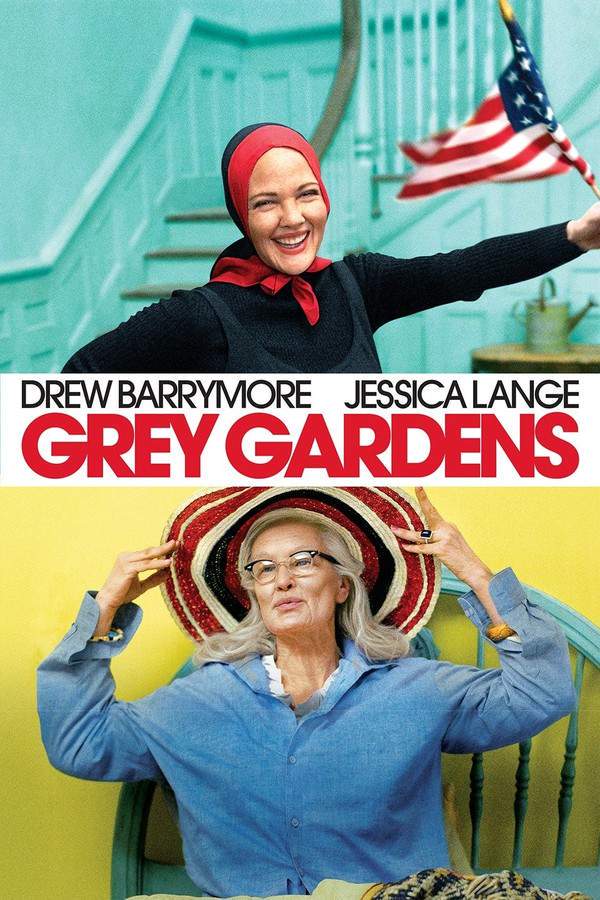
Grey Gardens (2009) movie poster

Characters & Themes

Grey Gardens (2009) Characters, Setting & Themes Explained

Release, runtime and language
2009 · 104 mins · English
Loading streaming availability…
Directed by
Michael Sucsy
Starring
Drew Barrymore, Marcia Bennett, Jessica Lange, Jeanne Tripplehorn, Tamsen McDonough, Louis Ferreira

True glamour never fades. Based on the life stories of the eccentric aunt and first cousin of Jackie Onassis, raised as Park Avenue debutantes, the film follows their withdrawal from New York society to the secluded Long Island estate Grey Gardens. As their wealth and outside contact diminish, their grip on reality unravels.

On this page (9)
  1. 1 Where to watch
  2. 2 Characters explained (8)
  3. 3 Where & when it takes place
  4. 4 Themes & meaning (3)
  5. 5 Character & meaning questions
  6. 6 Movie threads
  7. 7 Movies like Grey Gardens
  8. 8 Categories
  9. 9 Every angle
Loading streaming availability…

8 main characters · contains spoilers

Grey Gardens Characters Explained: Who Is Who

The main characters of Grey Gardens (2009), heroes and villains: what drives them, how they change over the course of the story and what each of them reveals about the film's bigger ideas.

  • Little Edie Beale

    played by Drew Barrymore

    Edith Bouvier Beale's daughter, a restless dreamer who travels to New York to seek acting work and romance. She yearns for a life beyond Grey Gardens but is pulled back by familial duty and limited means. Her wit and style stand out amid the stagnation, yet she remains bound to her mother and the mansion. Her arc culminates in a decision to pursue her art while navigating personal constraints.

    • 👗 fashion
    • 🎭 performance
    • 🧭 ambition
  • Big Edie Beale

    played by Jessica Lange

    Edith Bouvier Beale, Big Edie, a proud matriarch who once moved in high society circles. She resists leaving Grey Gardens, clinging to status and control, even as the house decays around her. Her charisma and stubborn pride mask vulnerability and a fear of letting go. She ultimately shows a moment of reconciliation with her daughter before the story closes.

    • 👑 status
    • 🧵 stubbornness
    • 🐾 care
  • Jacqueline Kennedy

    played by Jeanne Tripplehorn

    Jackie visits Grey Gardens and is shocked by its condition, but she also lends support to the cleanup effort. Her presence underscores the fall from grace of a once-elite family and adds a real-world connection to history. Her interactions reveal a mix of compassion and distance toward the Beales' eccentric world.

    • 🌟 influence
    • 🏛️ society
    • 🧹 support
  • Phelan Beale

    played by Ken Howard

    Husband to Big Edie and father to Little Edie, Phelan Beale represents a patriarchal figure who ultimately divorces, fueling financial strain on the family. His departure marks a turning point that accelerates the Beales' withdrawal from public life. His role frames the collapse of the family’s finances and stability.

    • 💼 finance
    • 💔 divorce
    • 🧭 legacy
  • Julius 'Cap' Krug

    played by Daniel Baldwin

    A married man who becomes involved with Little Edie, representing a fickle romance that highlights the personal costs of ambition and desire. The relationship underscores the tension between longing and social propriety. It also reinforces Little Edie's sense of constrained possibility.

    • 💘 romance
    • 🕰️ longing
    • 🎭 society
  • Albert Maysles

    played by Arye Gross

    One of the documentary filmmakers (with his brother) who decides to film Big and Little Edie, turning their lives into Grey Gardens. He frames their world with curiosity and respect, while the camera gradually reveals the limits and dignity of their situation. His perspective shapes how the audience understands the Beales’ story.

    • 🎬 director
    • 🧭 perspective
    • 📽️ cinema
  • David Maysles

    played by Louis Ferreira

    Co-director and producer of the Grey Gardens project, he collaborates closely with Albert to document the Beales. His work captures intimate moments and the evolving relationship between mother and daughter. Through his lens, the Beales' life becomes a historic cinematic artifact.

    • 🎬 collaborator
    • 🧭 lens
    • 🕯️ documentary
  • Lee Radziwill

    played by Catherine Marie Thomas

    Jackie Kennedy's sister, who steps in to help fund cleanup and restoration after visiting Grey Gardens. Her involvement marks a significant intervention from New York's social circle. She embodies a link between the Beales' past prominence and the effort to salvage their legacy.

    • 🤝 influence
    • 🏛️ society
    • 💪 intervention

Last updated: October 04, 2025 at 18:27

Was this helpful?

Setting

Where and When Does Grey Gardens Take Place?

The setting of Grey Gardens (2009): the year and time period, the places and locations, and how they shape the characters, the mood and the tension of the story.

Time period

1940s–1970s

The narrative unfolds across several decades of the mid-20th century, tracing how wealth and status fade while the family clings to Grey Gardens. It details shifts in lifestyle, money pressures, and the eventual intervention to salvage what remains. The events culminate around the 1970s when outside professionals document and attempt to restore the estate.

Location

Grey Gardens estate, Long Island, New York

Grey Gardens sits on a derelict Long Island estate, once part of New York City's high society, now renowned for its neglected condition. The mansion is crowded with stray animals and mountains of clutter, embodying the decline of its former glamour. The location itself becomes a central character, shaping the Beale women's isolation and daily life.

  • 🏚️ Decay
  • 🏰 Estate
  • 🐾 Animals
  • 🗺️ Suffolk County

Last updated: October 04, 2025 at 18:27

Was this helpful?

3 major themes

Grey Gardens Meaning: Themes & Message Explained

What is Grey Gardens (2009) really about? The emotional, social and philosophical themes the film keeps returning to, its symbolism and the message beneath the surface.

  • Decline

    The Beales' once-glamorous life collapses into a decaying reality. The film portrays how wealth, status, and a bustling social world can erode when confronted with time, neglect, and financial strain. The mansion's physical deterioration mirrors the erosion of a high-society era. In this decline, quirks and resilience emerge, redefining what remains valuable.

  • Mother-Daughter

    Big Edie and Little Edie share a complex, intimate bond defined by dependence and control. Little Edie longs for independence and a life beyond Grey Gardens, while Big Edie clings to her status and to her daughter as a companion. Their dynamics swing between friction and fierce loyalty, culminating in a poignant realization about choices and freedom. The relationship anchors the film's emotional core.

  • Documentary

    The film documents the lives of the Beales through the lens of Albert and David Maysles, turning their private world into cinema. The making of Grey Gardens reveals how documentary truth can illuminate, complicate, or romanticize its subjects. As the camera captures intimate details, the Beales become both subjects and commentators of their own story. The meta-story adds a layer about art influencing memory.

Last updated: October 04, 2025 at 18:27

Was this helpful?

Character & theme questions

Grey Gardens Characters & Meaning: Your Questions Answered

The questions people ask about Grey Gardens (2009): who the characters really are, their relationships, what the symbols mean, where it takes place and what the movie is really about. Each answer contains spoilers.

Q1

Where is Grey Gardens located and why is it significant?

Grey Gardens is located on a derelict Long Island estate in Suffolk County, once part of New York City's high society world. The mansion, once a symbol of glamour and status, has become filled with clutter and stray animals, physically embodying the decline of the Beale family's fortunes and the erosion of a bygone era.

Foreshadowing: The estate's deterioration mirrors the gradual collapse of the Beales' financial and social standing throughout the film.

  • long island estate
  • grey gardens mansion
  • setting
  • new york high society
  • decay
Q2

What time period does Grey Gardens cover?

The film spans several decades of the mid-20th century, from the 1940s through the 1970s. It traces the Beale women's withdrawal from New York society and the gradual decline of their wealth and status, culminating around the 1970s when documentary filmmakers document their lives.

Foreshadowing: The story's multigenerational timeline allows viewers to witness the full arc of the Beales' transformation from society figures to isolated recluses.

  • 1940s
  • 1970s
  • mid-20th century
  • time period
  • decades
Q3

What does the theme of decline represent in Grey Gardens?

The theme of decline portrays how wealth, status, and social standing can erode over time through neglect and financial strain. The mansion's physical deterioration mirrors the collapse of a high-society era, while the Beales' quirks and resilience reveal how people adapt when material success fades, redefining what they consider valuable.

Foreshadowing: Early scenes showing the mansion's grandeur contrast sharply with its later decay, establishing the central metaphor of decline.

  • decline
  • wealth
  • status
  • decay
  • loss
  • social class
Q4

What defines the relationship between Big Edie and Little Edie?

Big Edie and Little Edie share a complex, intimate bond defined by dependence and control. Little Edie yearns for independence and a life beyond Grey Gardens, while Big Edie clings to her remaining status and to her daughter as a companion. Their relationship swings between friction and fierce loyalty, culminating in a poignant moment of reconciliation.

Foreshadowing: Early scenes establish their codependent dynamic, with Little Edie serving as both caregiver and captive audience to her mother's needs.

  • mother-daughter
  • big edie
  • little edie
  • relationship
  • dependence
  • family bonds
Q5

How does the documentary style shape Grey Gardens?

The film uses documentary footage captured by Albert and David Maysles, turning the Beales' private world into cinema. This approach creates a meta-narrative about how documentary truth can both illuminate and romanticize its subjects. The Beales become active commentators on their own lives, adding layers about how art influences memory and perception.

Foreshadowing: The presence of the camera from the start establishes that the Beales are aware of being filmed, creating a unique performative dimension to their behavior.

  • documentary
  • albert maysles
  • david maysles
  • filmmaking
  • camera
  • truth
Q6

Who is Little Edie Beale and what does she want?

Little Edie Beale is Edith Bouvier Beale's daughter, a restless dreamer who traveled to New York seeking acting work and romance. She yearns for independence and a life beyond Grey Gardens but remains pulled back by familial duty and limited means. Her wit and style stand out amid the stagnation, yet she stays bound to her mother and the decaying mansion.

Foreshadowing: Her repeated references to leaving and her performative moments hint at a deeper desire to escape and reinvent herself.

  • little edie
  • edie beale
  • ambition
  • independence
  • acting
  • dreams
Q7

Who is Big Edie Beale and what drives her?

Big Edie Beale is the proud matriarch who once moved in high society circles. She resists leaving Grey Gardens, clinging to her remaining status and control, even as the house decays around her. Her charisma and stubborn pride mask vulnerability and a deep fear of letting go of her past identity.

Foreshadowing: Her insistence on maintaining social appearances despite worsening conditions reveals her refusal to accept diminished circumstances.

  • big edie
  • matriarch
  • pride
  • status
  • control
  • fear of letting go
Q8

What is Jackie Kennedy's role in Grey Gardens?

Jackie Kennedy visits Grey Gardens and is shocked by its deteriorating condition, but she lends support to the cleanup effort. Her presence underscores the fall from grace of a once-elite family connected to her own. Her interactions reveal a mix of compassion and distance toward the Beales' eccentric world.

Foreshadowing: Jackie's visit represents the final intersection between the Beales' faded elite status and the broader world of high society.

  • jackie kennedy
  • jacqueline kennedy
  • onassis
  • social circle
  • restoration
  • help
Q9

What does the Grey Gardens estate symbolize?

The Grey Gardens estate functions as a central character and symbol of the film. It represents the physical manifestation of the Beales' decline, from glamorous society home to chaotic, isolated sanctuary. The mansion embodies themes of memory, loss, and the stubborn persistence of the past against the pressures of change.

Foreshadowing: The estate's transformation mirrors the Beales' own psychological journey throughout the film.

  • estate
  • mansion
  • symbol
  • decay
  • memory
  • isolation
  • long island
Q10

What makes Grey Gardens different from typical documentaries?

Grey Gardens stands apart because its subjects, the Beales, are aware of the camera and actively perform for it. This creates a documentary that is both intimate and staged. The film also blends present-day footage with reflective flashbacks, adding narrative complexity typical of documentary filmmaking mixed with personal memory.

Foreshadowing: The Maysles brothers' decision to film over multiple years creates an evolving document that captures the Beales' changing circumstances.

  • documentary
  • unique
  • filmmaking
  • maysles
  • performance
  • subjects

Movie threads

More Movies Like Grey Gardens, by Mood & Story

Curated lists built around what makes Grey Gardens tick: the same mood, the same kind of story or the same emotional payoff. Each list explains why these movies belong together.

Movies about decaying grandeur and eccentric isolation like Grey Gardens

Stories of eccentric characters isolated within their crumbling, once-great worlds. If you liked the intimate portrayal of faded aristocracy in Grey Gardens, you'll appreciate these movies. They feature similar stories of eccentric characters in isolated, decaying settings, exploring themes of memory, social decline, and the strange beauty of lives lived outside the mainstream.

  • claustrophobic
  • nostalgic
  • eccentric
  • decaying
  • intimate
  • quiet
  • Tone: melancholic, reflective, defiant
  • Pacing: slow, observational
Why these movies?

The story pattern: The narrative often unfolds in a contained setting, observing the daily rituals and strained relationships of characters who are trapped by their past or their environment. The drama arises from the subtle tensions between memory and reality, and the quiet struggle to maintain dignity in the face of inevitable decline.

Why they belong together: These movies are grouped together because they share a specific atmospheric quality. They combine a melancholic tone with a slow, observational pace, focusing on character quirks and the symbolic power of a decaying setting to evoke feelings of nostalgia, sadness, and a peculiar kind of resilience.

Movies with complex mother-daughter relationships like Grey Gardens

Explorations of fiercely loyal yet deeply fraught relationships between mothers and daughters. Fans of the intricate and defiant bond between Big and Little Edie in Grey Gardens will find more moving stories here. These films explore similar themes of co-dependent mother-daughter relationships, family loyalty, and the emotional strain of living in a world of their own making.

  • intimate
  • emotional
  • complex
  • strained
  • co-dependent
  • defiant
  • Tone: melancholic, intense, intimate
  • Pacing: slow, character-driven
Why these movies?

The story pattern: The narrative focuses on the push and pull between two central characters, a mother and daughter. The story examines how their identities are intertwined, exploring themes of sacrifice, control, and the difficulty of separating oneself from a powerful family bond, often within a confined or pressurized environment.

Why they belong together: These films are connected by their central focus on a psychologically complex and emotionally weighty mother-daughter relationship. They share a similar intensity derived from relational strain rather than external plot, and often feature a bittersweet or melancholic tone as they examine love, obligation, and inherited trauma.

If you liked this

Movies Like Grey Gardens

Similar movies to Grey Gardens: the same genre, themes or kind of story. Each one comes with its own plot summary, timeline and ending explained.

Browse all movie summaries

Categories

Movie Lists Featuring Grey Gardens

Grey Gardens appears in these hand-built movie categories. Each one groups movies by a specific mood, theme or story type, with their plot summaries and endings explained.

View all movie categories

Every angle

Grey Gardens (2009) Explained: Plot, Timeline & Characters

Everything about Grey Gardens in one place: what happens in the plot summary, the timeline in chronological order, the characters and meaning and a spoiler-free summary. What's After the Movie adds the cast, box office and post-credit scenes.

Coming soon on iOS and Android

The Plot Explained Movie Summary App

Plot summaries, endings explained and timelines on your phone. Catch up on any movie in minutes, save your favorites and never miss a twist again.

Be the first to know when we launch. Your email stays private, always.

Learn more about the app