Plot Explained Spoilers guaranteed!
Plot Explained

Browse by genre

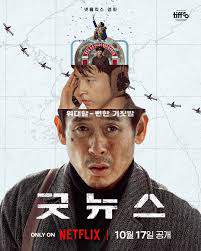
Good News (2025) movie poster

Plot Summary

Good News (2025) Plot Summary & Ending Explained

Release, runtime and language
2025 · 2 h 16 m
Directed by
Sung-hyun Byun
Starring
Takayuki Yamada, Derek Chouinard, Hong Kyung, Kim Seung-o, Lewis Hooper, Sol Kyung-gu

In 1970, a Japanese communist faction hijacks a commercial airliner, forcing it to fly to Pyongyang, North Korea. The enigmatic operative known only as “Nobody,” whose identity is unknown, is tasked by Park Sang‑hyeon, director of the Korean Central Intelligence Agency, to orchestrate a clandestine mission that ultimately secures a safe landing for the aircraft at a designated location.

On this page (6)
  1. 1 What happens: full plot
  2. 2 Plot questions answered
  3. 3 How it ends
  4. 4 Movie threads
  5. 5 Movies like Good News
  6. 6 Every angle

Full plot summary · contains spoilers

What Happens in Good News: Full Plot Summary

The whole story of Good News (2025) explained, from the opening scene to the final frame: every key event, every twist and what it all adds up to. Read it as a quick recap before the sequel, to check a scene you missed, or to finally understand what really happened.

In 1970, soon after taking off from Tokyo’s Haneda Airport toward Itazuke, the passenger plane Japanese Ride 351 is hijacked by members of Japan’s Red Army Faction, armed with guns, blades, and a bomb vest. The hijackers, who call themselves Ashita no Joe, demand to be flown to Pyongyang in North Korea so they can organize other Japanese dissidents into a revolutionary force aimed at toppling the Japanese government. Captain Takehiro Kubo notes that he and his copilot don’t know Pyongyang’s location or the air traffic control frequency, and he misleads the hijackers about how much fuel remains, claiming it isn’t enough to reach Pyongyang. The hijackers permit a landing at Itazuke for refueling and to obtain a map, but Japanese authorities hesitate to act for fear of endangering the hostages. A Japan Air Self-Defense Force fighter jet stalls for time, the elderly and vulnerable are released, and yet the plane is allowed to depart for Pyongyang with 106 Japanese hostages aboard.

Meanwhile, Nobody, the KCIA’s best fixer, is pulled into the crisis with a mission to secure the hostages and earn South Korea international credit. He recruits Lt. Seo Go-myung of the ROK Air Force, one of the few personnel trained in the RAPCON system, to pose as a North Korean air traffic controller and guide the hijacked plane toward Seoul. Seo and a North Korean Air Force counterpart race to use an emergency public frequency, but Seo is quicker, and the pilots switch to the South Korean frequency, steering the plane to Gimpo International Airport.

On the ground, Nobody arranges for Gimpo to be disguised as Pyongyang International Airport and brings in propaganda film actors to play soldiers and dancers for a North Korean welcome party. When Japanese Ride 351 lands, the hijackers quickly spot inconsistencies—a real American airliner among the hangars, an African-American officer at a window, and Louis Armstrong’s music on the radio—and the ruse falls apart, trapping the plane in a tense stand-off.

That night, Seo boards the plane to hear the hijackers’ demands. One hijacker wounds the lead hijacker to prove their resolve, explaining that if the flight does not resume to Pyongyang before noon the next day, the bomb vest will be detonated. Seeing officials scrambling to avoid responsibility by offering a Pyongyang option, Director Park Sang-hyeon weighs a delicate negotiation to secure the hostages’ release, while the hijackers dismiss the gesture as yet another ruse.

As the deadline draws near and the government braces for political backlash, Nobody convinces Japanese Deputy Minister Shinichi Ishida to volunteer as a hostage in exchange for the passengers’ freedom. The hijackers accept, and Japanese Ride 351 lifts off toward North Korea. In a later reckoning, Nobody tells Seo that the minister and pilots were returned safely and that the hijackers’ weapons were bogus, revealing that the Red Army Faction effectively hoodwinked both Tokyo and Seoul. South Korea’s leadership wants to veil the full extent of government involvement, leaving Seo without public recognition. Yet Nobody’s work is not in vain: he gains South Korean citizenship and a new name of his choosing—Choi Go-myung.
Last updated: January 28, 2026 at 12:46

Was this helpful?

Plot questions answered

Good News Plot Explained: Your Questions Answered

The questions people ask most about Good News (2025): what happens in the confusing scenes, why the characters do what they do, the twists, hidden details and what the ending means. Each answer contains spoilers.

Q1

Why did the Red Army Faction hijackers want to go to Pyongyang?

The hijackers were members of Japan's Red Army Faction, a communist militant group. They demanded to be flown to Pyongyang so they could organize Japanese dissidents into a revolutionary force aimed at toppling the Japanese government. North Korea provided a safe haven for communist militants during this era.

Foreshadowing: Early in the film, the hijackers identify themselves as *Ashita no Joe*, signaling their ideological motivations.

  • red army faction
  • pyongyang
  • north korea
  • hijacking
  • revolutionaries
Q2

How did Nobody trick the hijackers into landing at Gimpo instead of Pyongyang?

Nobody recruited Lt. Seo Go-myung to pose as a North Korean air traffic controller. Seo used an emergency public frequency to contact the pilots and guided them to believe they were flying toward Pyongyang. Meanwhile, Nobody disguised Gimpo International Airport to look like Pyongyang International Airport by staging propaganda actors, soldiers, and dancers for a fake welcome party.

Foreshadowing: The KCIA's involvement begins immediately after the hijacking, showing their prepared contingency for such crises.

  • nobody
  • gimpo
  • air traffic controller
  • deception
  • pyongyang disguise
Q3

Why was Seo Go-myung chosen for the secret controller mission?

Seo was one of the few ROK Air Force personnel trained in the RAPCON system (Radar Approach Control), which gave him the technical expertise to communicate with the pilots and guide them effectively. His training made him the most qualified person to impersonate a North Korean air traffic controller during the covert operation.

Foreshadowing: Nobody specifically seeks out personnel with specialized air traffic control skills, indicating the technical nature of the plan.

  • seo go-myung
  • rapcon
  • air force
  • controller
  • kcia
Q4

How did the hijackers discover the Gimpo deception?

After landing, the hijackers quickly noticed several inconsistencies that exposed the ruse: they saw an American airliner among the hangars, spotted an African-American officer eating at a window, and heard Louis Armstrong's music playing on the radio. These elements were completely out of place at a supposed North Korean airport, leading them to realize they had been tricked.

Foreshadowing: The rushed nature of the disguise operation means the details are not fully convincing, hinted at by the tension during setup.

  • gimpo
  • deception exposed
  • american airliner
  • louis armstrong
  • hijackers
Q5

Why did Nobody convince Deputy Minister Shinichi Ishida to become a hostage?

With the noon deadline approaching and the hijackers threatening to detonate the bomb vest, Nobody needed a way to secure the release of the 106 Japanese hostages without the plane actually reaching North Korea. By convincing the Deputy Minister to volunteer as a hostage, the hijackers accepted the swap, allowing the passengers to go free while the minister took their place on the doomed flight.

Foreshadowing: Nobody's earlier sabotage with false news about a Korean hostage shows his willingness to manipulate public pressure for the mission.

  • shinichi ishida
  • hostage swap
  • deputy minister
  • bomb vest
  • deadline
Q6

Were the hijackers' guns and bomb vest actually real?

No. Nobody later reveals that the hijackers' weapons were completely bogus, they were never real. The guns were props and the bomb vest was a fake. The Red Army Faction used the threat of violence to manipulate both Japanese and South Korean authorities, treating the entire crisis as a propaganda stunt to gain publicity and leverage without any intention of harming hostages.

Foreshadowing: The hijackers' willingness to wound their own leader to prove resolve appears reckless but becomes clearer when their weapons are revealed as fake.

  • bomb vest
  • weapons fake
  • red army faction
  • bluff
  • hostages
Q7

Why didn't Seo Go-myung receive official recognition for his role in the operation?

South Korea's leadership wanted to conceal the full extent of government involvement in the crisis. The operation was kept classified, and Seo was denied public recognition despite his critical contribution. He received only a personal consolation gift, a presidential watch, while the truth remained a public secret.

Foreshadowing: The political cover-up is hinted at early when the KCIA prioritizes international credit over public acknowledgment.

  • seo recognition
  • cover-up
  • political
  • presidential watch
  • kcia
Q8

What happened to Deputy Minister Shinichi Ishida after the plane departed for North Korea?

Despite the plane taking off bound for North Korea with the Deputy Minister aboard, Nobody later reveals that both the minister and the pilots were returned safely. The crisis was staged to appear as a failure, but in reality, the hijackers never reached North Korea and the hostages were all recovered.

Foreshadowing: The celebration after the plane departs hints that the outcome was more successful than it appears.

  • shinichi ishida
  • safe return
  • hostage
  • resolution
Q9

Why did Nobody receive South Korean citizenship as a reward?

Nobody was an undocumented North Korean defector working for the KCIA. After successfully orchestrating the complex operation that secured the hostages' release and earned South Korea international goodwill, he was rewarded with legal South Korean citizenship and a new name of his choosing, Choi Go-myung, as compensation for his risky covert work.

Foreshadowing: Nobody's undocumented status is mentioned early, setting up the payoff for his cooperation with the KCIA.

  • nobody citizenship
  • choi go-myung
  • defector
  • kcia reward
  • new identity
Q10

Why was the KCIA so determined to resolve the hijacking?

Director Park Sang-hyeon assigned Nobody to the mission primarily to secure the hostages and earn South Korea international credit. By successfully resolving a crisis involving Japanese citizens, South Korea could gain diplomatic leverage and improve its standing with Japan, which was valuable during the politically tense Cold War era.

Foreshadowing: The KCIA's immediate involvement and strategic planning suggest the operation served larger diplomatic goals.

  • kcia
  • international credit
  • diplomacy
  • park sang-hyeon
  • cold war
Q11

How was the hijacked plane redirected from its course to Pyongyang?

Seo Go-myung and a North Korean Air Force counterpart both attempted to contact the hijacked plane via emergency frequencies. Seo was quicker to reach the pilots on the South Korean frequency, causing them to switch from the hijackers' communications. This allowed Seo to guide the plane toward Seoul's Gimpo Airport while the hijackers believed they were being routed to Pyongyang.

Foreshadowing: The race to establish radio contact is shown as a tense competition between North and South Korean forces.

  • radio frequency
  • seoul
  • gimpo
  • flight path
  • emergency frequency
Q12

Why did the hijackers allow the plane to land at Itazuke for refueling?

Captain Takehiro Kubo lied to the hijackers, claiming there wasn't enough fuel to reach Pyongyang. The hijackers, needing the fuel to complete their journey, agreed to land at Itazuke Air Base to refuel and also to obtain a map since neither the pilots nor controllers knew Pyongyang's location. This stop gave the authorities time to plan their response.

Foreshadowing: The pilots' strategic lying about fuel is established early as a key survival tactic.

  • itazuke
  • refueling
  • fuel
  • captain kubo
  • map

Ending explained

What Happens at the End of Good News?

How Good News (2025) ends, in short: the final scene, the last twist and what it means for the characters. The full ending explained, with every spoiler, lives on its own page.

Read the full ending explained

In the climax the hijacked Flight 351 sits on the tarmac of Gimpo, a bomb ticking down to noon. The Red Army fighters have already wounded their own leader, using his injury as a deadline: if the plane is not allowed to leave for Pyongyang, they will blow it up, killing everyone on board. Lieutenant Seo Go‑myung, the only air‑force officer still willing to approach the aircraft, decides to walk toward the cabin alone, showing the hijackers that at least one man is prepared to die for the passengers.

At the same moment Deputy Transport Minister Shinichi Ishida, urged by the scheming advisor “Nobody,” steps forward and offers himself as a hostage in exchange for the 100‑plus civilians. His unexpected surrender convinces the radicals that a representative of the Japanese government is actually siding with the people rather than the corporate elite.

Continue reading the ending (2 more paragraphs)

Moved by the two gestures, the hijackers release the hostages, board the plane with Ishida and the two pilots, and depart for Pyongyang. The aircraft lands safely, and Ishida, along with the crew, is later returned to Japan. Subsequent revelations show that the weapons the Red Army carried were mostly dummy – the only real threat was a pair of katanas – so a catastrophe was narrowly averted.

The ending therefore hinges on personal sacrifice: Seo’s willingness to face certain death and Ishida’s self‑offering force the militants to choose negotiation over annihilation, allowing the passengers to survive and the political crisis to be defused.

Good News ending explained in full

Movie threads

More Movies Like Good News, by Mood & Story

Curated lists built around what makes Good News tick: the same mood, the same kind of story or the same emotional payoff. Each list explains why these movies belong together.

Political deception thrillers like Good News

Espionage tales where elaborate conspiracies and secret missions create constant tension. Discover movies similar to Good News that explore tense political plots and intelligence operations. If you enjoyed the high-stakes deception and clandestine mission in Good News, you'll find more gripping stories of government intrigue and espionage here.

  • tense
  • suspenseful
  • cunning
  • political
  • clandestine
  • deceptive
  • Tone: tense, suspenseful, cunning
  • Pacing: fast, methodical
Why these movies?

The story pattern: Stories in this thread typically follow agents, operatives, or insiders tasked with unraveling or executing a complex political scheme. The plot hinges on secrets, double-crosses, and the constant risk of exposure, building suspense through a cat-and-mouse game where the true motives of institutions and individuals are constantly in question.

Why they belong together: These films are grouped by their shared focus on political conspiracies, the tense atmosphere generated by clandestine operations, and the intellectual challenge of following a web of lies. They offer a specific kind of suspense rooted in institutional power and hidden agendas.

Movies with bittersweet endings like Good News

Thrillers where success is achieved, but at a personal or moral cost. Find films with endings similar to Good News, where tense situations conclude with a successful but morally complicated resolution. If you liked the bittersweet feel of Good News, explore more thrillers and dramas where victory comes with a cost.

  • bittersweet
  • tense
  • thought-provoking
  • climactic
  • poignant
  • suspenseful
  • Tone: tense, bittersweet, thoughtful
  • Pacing: fast, climactic
Why these movies?

The story pattern: The narrative pattern involves a race against time to solve a critical problem, such as a hostage situation or a looming disaster. While the immediate threat is neutralized, the conclusion reveals a hidden truth—such as the futility of the conflict or an unseen sacrifice—that casts the entire effort in a new, more melancholic light.

Why they belong together: These films share a specific emotional arc: they build high tension but resolve with a poignant, contemplative ending that emphasizes the gray areas of conflict. They are united by their ability to deliver a thrilling ride while also leaving a lasting, thought-provoking impression.

If you liked this

Movies Like Good News

Similar movies to Good News: the same genre, themes or kind of story. Each one comes with its own plot summary, timeline and ending explained.

Browse all movie summaries

Every angle

Good News (2025) Explained: Plot, Ending, Timeline & Characters

Everything about Good News in one place: what happens in the plot summary, the timeline in chronological order, the characters and meaning, the ending explained and a spoiler-free summary. What's After the Movie adds the cast, box office and post-credit scenes.

Coming soon on iOS and Android

The Plot Explained Movie Summary App

Plot summaries, endings explained and timelines on your phone. Catch up on any movie in minutes, save your favorites and never miss a twist again.

Be the first to know when we launch. Your email stays private, always.

Learn more about the app