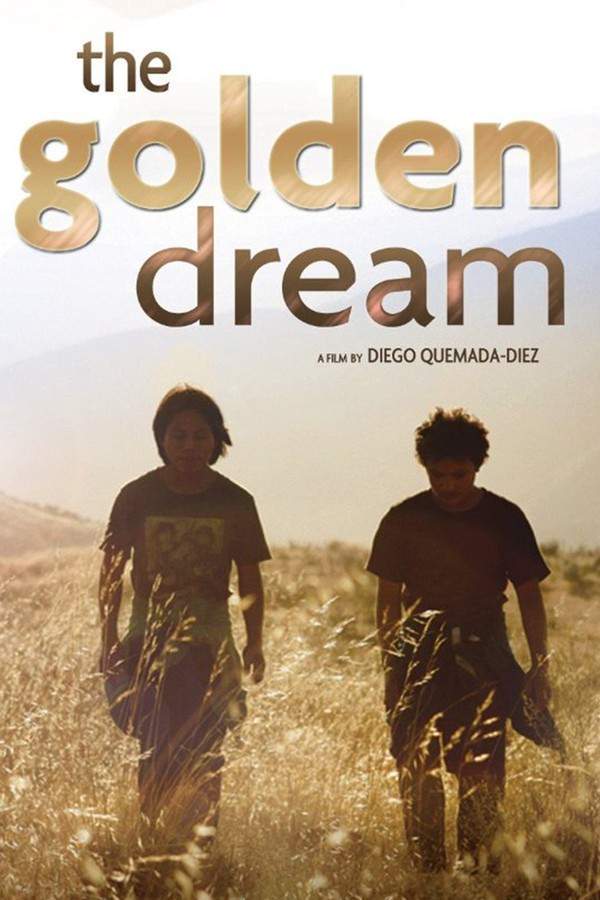
The film opens by tracing the hardships and hopes of the Mancuso family from a small, mountain-bound village in Sicily as the 20th century begins. The family is led by their widowed father, Salvatore Mancuso (played by Vincenzo Amato), who dreams of a vastly different life for his kin. Joined by his two sons and his aging mother, Fortunata, a village healer deeply steeped in mysticism, they decide to emigrate to the United States after interpreting a sign from God—American postcards that promise giant vegetables, milk that flows like rivers, and coins falling from the sky. This dream of a bountiful land of opportunity illuminates the tension between hopeful fantasy and the harsher realities that await them, making the audience question how much of the American dream is shared by newcomers and how much is a product of imagination.
As the family prepares to leave, the film widens its lens to the journey itself. The boat trip becomes a powerful visual metaphor: a crowded deck on one side and a sea of strangers on the other, symbolizing the old world they are leaving behind and the uncharted world they hope to enter. The voyage introduces a vivid counterpoint to their plans—the new world is not simply a blank slate; it is a place where class, status, and personal hopes collide in unpredictable ways.
On the ship, a striking presence stands out: Lucy, a red-headed British woman who travels alone. Lucy embodies both allure and independence, drawing the attention of the men with her beauty and prompting curiosity and sometimes judgment from the women aboard. Salvatore finds himself immediately drawn to her, his fascination marking the early, uneasy start of a complicated relationship. Lucy’s motives, rooted in practical concerns about entry to the United States, add a layer of complexity to their bond, underscoring a broader truth about the immigrant experience: access to a new life often hinges on compromises and social expectations that can feel incongruent with personal desire.
When the Mancuso family finally reaches Ellis Island, a third segment unfolds—the once private world of the voyage gives way to public examination. Immigrants endure a blunt, humiliating process of physical and psychological testing and questioning, a rite of passage that strips away status and background to reveal each person’s place in the new society. The hopeful transport of the ship’s earlier conversations gives way to an anxious scrutiny where merit, intellect, and even health are put under the microscope. The film emphasizes that, in this borderland, the equalizing pressure of official procedures can erase the differences that carried them across the ocean.
In this final act, the family’s dynamics undergo a quiet recalibration. A surprising transfer of power surfaces between Fortunata, the matriarch who holds generations of wisdom, and Pietro, one of Salvatore’s sons, revealing how authority can shift in a place where old loyalties and new hopes collide. Pietro conveys to Salvatore that Fortunata wishes to return home, a moment that reframes the journey not as a straightforward ascent into a brighter future, but as a question about belonging, duty, and what the family is willing to sacrifice for survival. The film leaves Salvatore facing a stark choice: stay and pursue the dream in a land that has tested his family at every turn, or honor a rooted sense of home by returning to the life they left behind.
Throughout the narrative, the film balances intimate family drama with broader social commentary. The contrast between the idealized visions of America and the often unforgiving realities immigrants faced is explored with restraint and nuance, inviting viewers to reflect on the costs of hope and the resilience required to navigate a new world. The story also probes how gender, class, and immigration laws shape personal decisions, illustrating how each character negotiates autonomy, safety, and identity in a landscape where every milestone—departure, voyage, and arrival—tests the limits of faith and perseverance.
By the end, the audience is left with a thoughtful ambiguity. The outcome is not a simple verdict of success or failure, but a meditation on what it means to reinvent life in a foreign land while honoring the ties that bind a family to its origins. The film’s quiet, contemplative tone invites viewers to weigh the allure of opportunity against the price of change, and to consider what a family sacrifices, preserves, and ultimately chooses to carry forward into a new world.