











Plot Explained Spoilers guaranteed!
Plot Explained

Browse by genre

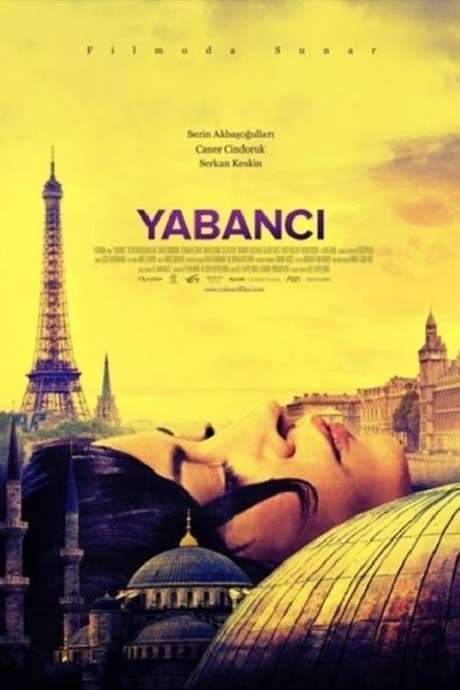
Yabancı (2012) movie poster

Plot Summary

Yabancı (2012) Plot Summary Explained

Release, runtime and language
2012 · 96 mins · Turkish
JustWatch #10,616 12
Directed by
Filiz Alpgezmen
Starring
Serkan Keskin, Caner Cindoruk, Selen Uçer, Guzide Balcı, Ozan Uygun, Rafi Emeksiz

After her father's death, Ozgur, a young woman raised in Paris as the daughter of Turkish refugees, returns to Istanbul to fulfill his final wish: to be buried in his homeland. However, due to the political circumstances surrounding the September 12 military coup, her father’s citizenship is in question, creating an unexpected challenge. Ozgur’s journey to honor his memory leads her to encounter relatives and strangers, and a significant connection with Ferhat, forcing her to confront her heritage and modern-day Turkey.

On this page (5)
  1. 1 Where to watch
  2. 2 What happens: full plot
  3. 3 Plot questions answered
  4. 4 Movie threads
  5. 5 Every angle

Where to watch

Where to Watch Yabancı (2012)

Where can you watch Yabancı? Stream, rent or buy it in the US, including on Amazon Prime Video, Amazon MX Player and Amazon Prime Video Free: current JustWatch availability with up-to-date prices.

Streaming availability powered by JustWatch

Full plot summary · contains spoilers

What Happens in Yabancı: Full Plot Summary

The whole story of Yabancı (2012) explained, from the opening scene to the final frame: every key event, every twist and what it all adds up to. Read it as a quick recap before the sequel, to check a scene you missed, or to finally understand what really happened.

Özgür, Sezin Akbaşoğulları is the daughter of parents who, after a revolutionary struggle, took refuge in France following the 1980 coup. Born and raised in Paris, she has never visited Turkey. Her mother died when she was a child, and she was raised by her father. The film opens with Hüseyin's death, Özgür's father, in Paris, and a letter from him that deeply moves her. She travels to Istanbul with her father's body.

In Istanbul, she learns that burying her father there is not straightforward—because he is not a Turkish citizen after the coup, she must overcome almost insurmountable bureaucratic obstacles. Her first step is to reach out to her mother’s relatives, an open-minded and humble family who had helped revolutionaries before the coup; they wish they could help, but they are unable to.

Through these people in the slums, Özgür meets a young man named Ferhat, Caner Cindoruk, who is also a product of the same lost generation born from the upheaval of the era. He is deeply touched by Özgür's story and wants to help, and as they spend time together, a connection begins to form. The two set out to explore every possible avenue to bury her father in Turkey, but every path proves unsuccessful.

Eventually, Özgür considers giving up on the idea of burying her father in Turkey, yet Ferhat does not give up. He proposes one last option: turning to her father’s relatives for help, a step she initially resists because they are strangers with no direct ties to her father. Still, desperation nudges her toward this final possibility, and she agrees.

The day they visit the relatives coincides with a grand religious circumcision ceremony hosted by her uncle for all his grandsons, a scene that underscores the family’s complex ties and traditions. A further surprise awaits: her half-mad grandmother has protected her father’s house, preserving it exactly as it stood when he fled in 1980. This act adds a layer of memory and resilience to the already tangled journey, and from this moment, everything unfolds in unexpected ways for both of them.

Last updated: January 08, 2026 at 08:32

Was this helpful?

Plot questions answered

Yabancı Plot Explained: Your Questions Answered

The questions people ask most about Yabancı (2012): what happens in the confusing scenes, why the characters do what they do, the twists, hidden details and what the ending means. Each answer contains spoilers.

Q1

Why does Özgür face bureaucratic obstacles when burying her father in Turkey?

Özgür's father Hüseyin lost his Turkish citizenship after the 1980 military coup. Since he fled Turkey as a revolutionary refugee and never regained citizenship, the Turkish government does not recognize him as a citizen. This legal status means Özgür cannot bury him in Turkey without navigating almost insurmountable bureaucratic hurdles.

  • citizenship
  • burial
  • 1980 coup
  • bureaucracy
  • turkish citizenship
Q2

Why does Ferhat feel compelled to help Özgür with her father's burial?

Ferhat belongs to the same lost generation that emerged from the political upheaval of the 1980 coup. He deeply relates to Özgür's story because they share the same generational trauma, children of revolutionaries who were displaced and whose families were fractured by political persecution. This shared background creates an emotional connection that drives his commitment to help her.

Foreshadowing: Earlier, the film establishes that both Özgür and Ferhat are products of the same lost generation born from the coup's chaos.

  • ferhat
  • helping
  • 1980 coup
  • generational trauma
  • connection
Q3

Why has Özgür's grandmother kept her father's house intact since 1980?

Özgür's grandmother, described as half-mad, has protected Hüseyin's house ever since he fled Turkey in 1980. She preserved everything exactly as it was when he left, acting as a living memory of her son. This act represents the family's enduring hope that he might one day return, and it becomes a powerful symbol of unresolved loss and waiting.

  • grandmother
  • house
  • preserved
  • 1980
  • hüseyin
Q4

Why is Özgür reluctant to contact her father's relatives for help?

Özgür initially resists reaching out to her father's relatives because they are strangers to her, she has no direct connection or relationship with them. Since she was raised in Paris and never visited Turkey, her father's side of the family is completely unknown to her. Only her desperation to fulfill her father's final wish eventually pushes her toward this last resort.

  • relatives
  • father's family
  • resistance
  • unknown family
Q5

What does the letter from Özgür's father reveal that moves her so deeply?

The letter from Hüseyin profoundly affects Özgür by hinting at unresolved family ties and perhaps revealing emotions or truths he never expressed during his lifetime. This letter serves as the catalyst for her journey to Istanbul, suggesting that he harbored deep feelings about his homeland and perhaps regrets about his separation from Turkey and family.

  • letter
  • father
  • hüseyin
  • emotional revelation
Q6

What is the significance of the circumcision ceremony that Özgür attends with her father's relatives?

The circumcision ceremony is a traditional Turkish family event hosted by Özgür's uncle for all his grandsons. This grand religious ceremony underscores the family's deep-rooted traditions and cultural identity, everything Özgür was separated from when her parents fled. The ceremony also marks a turning point in how the relatives respond to her request, as the visit coincides with this important family gathering.

  • circumcision ceremony
  • traditions
  • family gathering
  • uncle
Q7

Why does Özgür feel like a foreigner in her father's own country?

Özgür feels like a foreigner because she was born and raised in Paris and has never visited Turkey before her father's death. She speaks the language imperfectly, has no understanding of Turkish bureaucracy, and is completely unfamiliar with her own family. Despite being Turkish by heritage, she is a stranger to the culture, the system, and even her own relatives, making her truly "yabancı" (foreigner) in every sense.

  • foreigner
  • identity
  • paris
  • istanbul
  • cultural displacement
Q8

Why can't Özgür's mother's relatives help with the burial despite wanting to assist?

Özgür's mother's relatives are an open-minded, humble family in the Istanbul slums who had helped revolutionaries before the 1980 coup. Although they genuinely wish to help Özgür, they are unable to navigate or influence the bureaucratic system that blocks Hüseyin's burial. They face the same barriers as everyone else, unable to broker a solution through the same impenetrable administrative processes.

  • mother's relatives
  • slums
  • cant help
  • bureaucracy
Q9

How does Özgür's relationship with Ferhat develop throughout the film?

As Özgür and Ferhat spend weeks together exploring every possible avenue to bury Hüseyin, a quiet bond forms between them. Ferhat's persistence in helping her, even when she wants to give up, creates a deep connection. Their shared generational trauma and mutual dedication to honoring her father's memory transforms their initial encounter into a significant emotional relationship.

  • ferhat
  • relationship
  • growing bond
  • emotional connection
Q10

What changes after Özgür discovers her grandmother has preserved her father's house?

The discovery that her grandmother protected Hüseyin's house exactly as it stood since 1980 becomes a turning point in the story. This revelation reframes Özgür's understanding of her father's past and the family's endurance. It opens unexpected possibilities for both her and Ferhat, creating a new pathway toward closure that goes beyond the bureaucratic struggle to bury the body.

  • grandmother
  • house
  • turning point
  • closure
  • revelation

Movie threads

More Movies Like Yabancı, by Mood & Story

Curated lists built around what makes Yabancı tick: the same mood, the same kind of story or the same emotional payoff. Each list explains why these movies belong together.

Movies about heritage and bureaucracy like Yabancı

Personal quests for identity collide with impersonal systems. If you liked Yabancı, explore more films about characters navigating complex bureaucracies and rediscovering their cultural heritage. These movies often feature a slow, contemplative pace and bittersweet emotions, centered on themes of identity and family legacy.

  • bureaucratic frustration
  • contemplative
  • rootless
  • solemn
  • emotionally resonant
  • introspective
  • Tone: melancholic, contemplative
  • Pacing: slow, deliberate
Why these movies?

The story pattern: The narrative follows a protagonist, often an outsider or returnee, who must navigate a complex and frustrating bureaucratic system to achieve a personal goal, frequently related to family or identity. This external struggle mirrors and intensifies their internal journey of self-discovery, forcing confrontations with history, culture, and personal grief.

Why they belong together: These films are grouped by their shared focus on the intersection of the deeply personal (grief, identity) with the impersonally systemic (government, legalities). They share a melancholic, contemplative mood, a slow pacing that allows for reflection, and a tone that balances frustration with moments of human connection.
Bittersweet homecoming dramas like Yabancı

Journeys home are fraught with grief, memory, and unexpected connections. Find movies similar to Yabancı that explore the heavy emotional weight of returning home after a loss. These films share a melancholic tone, slow pacing, and a bittersweet ending, focusing on grief, legacy, and reconnecting with one's roots.

  • grief and loss
  • introspective
  • melancholic
  • solemn
  • hopeful
  • emotionally resonant
  • Tone: melancholic, bittersweet
  • Pacing: slow, reflective
Why these movies?

The story pattern: The plot revolves around a physical and emotional return, triggered by a death or crisis. The protagonist, often isolated, navigates complex family dynamics and grapples with intergenerational trauma. The pace is slow, allowing for deep reflection, and the resolution typically offers a mix of closure and lingering sadness, acknowledging the pain of the past while finding a fragile hope in new connections.

Why they belong together: This thread connects films through their specific emotional palette: a heavy, melancholic tone, a slow-burn narrative focused on internal conflict, and a conclusively bittersweet feeling. They prioritize emotional resonance and contemplative character studies over fast-paced action.

Every angle

Yabancı (2012) Explained: Plot, Timeline & Characters

Everything about Yabancı in one place: what happens in the plot summary, the timeline in chronological order, the characters and meaning and a spoiler-free summary. What's After the Movie adds the cast, box office and post-credit scenes.

Coming soon on iOS and Android

The Plot Explained Movie Summary App

Plot summaries, endings explained and timelines on your phone. Catch up on any movie in minutes, save your favorites and never miss a twist again.

Be the first to know when we launch. Your email stays private, always.

Learn more about the app