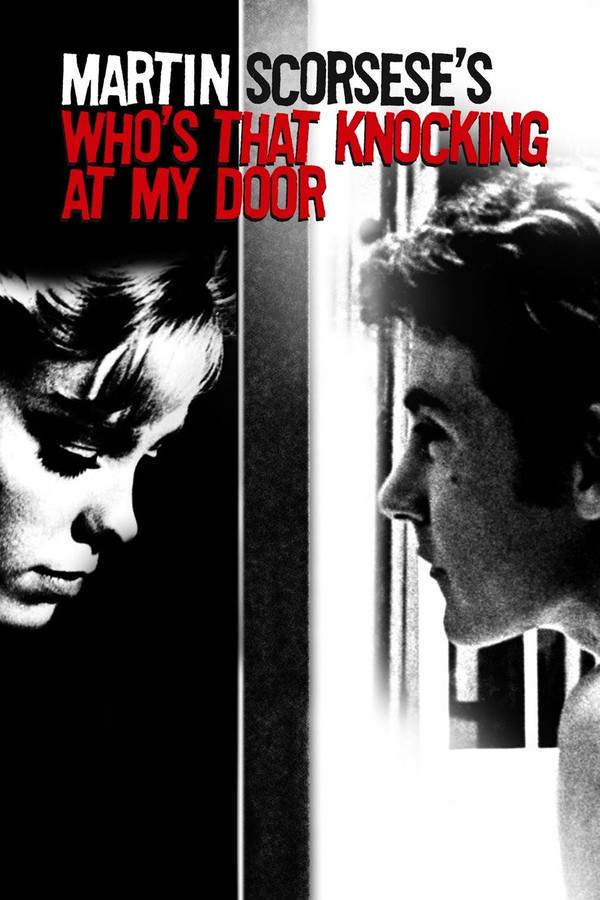
Who's That Knocking at My Door?

Who's That Knocking at My Door?

JustWatch#1,36331

Year: 1968

Runtime: 90 min

Language: Korean

Director: Martin Scorsese

DramaRomance

Living in New York City, J.R., a young Italian-American man, unexpectedly finds himself falling for a woman with a complicated history. As their relationship deepens, his strong Catholic beliefs and sense of morality are challenged, creating an internal conflict that threatens to consume him and jeopardize their chance at happiness. He must confront his values and make difficult choices.

Where to Watch Who's That Knocking at My Door??

Find where to stream, rent, or buy Who's That Knocking at My Door? (1968) in the US with current JustWatch availability, up-to-date pricing, and platform listings for subscription, rental, and digital purchase options.

Warning: spoilers below!

Haven’t seen Who's That Knocking at My Door? yet? This summary contains major spoilers. Bookmark the page, watch the movie, and come back for the full breakdown. If you're ready, scroll on and relive the story!

Who's That Knocking at My Door? (1968) – Full Plot Summary & Ending Explained

Read the complete plot breakdown of Who's That Knocking at My Door? (1968), including all key story events, major twists, and the ending explained in detail. Discover what really happened, and what it all means.

In the bustling urban landscape of New York City, J.R., portrayed by Harvey Keitel, embodies the essence of a traditional Catholic Italian-American youth. He thrives within a closely-knit group of friends, engaging in spirited revelry and camaraderie. As the allure of adulthood beckons him, J.R.’s world shifts dramatically when he encounters a mesmerizing local girl on the Staten Island Ferry. This chance meeting ignites an unexpected longing for stability and a desire to start a family. His affection for her deepens, prompting him to make a profound decision to abstain from intimacy, believing she is untouched by past tribulations.

However, J.R.’s idyllic vision shatters when his girlfriend reveals a harrowing truth—she was once a victim of a previous partner’s brutality. Overwhelmed by this revelation, J.R. initially recoils, seeking refuge in the familiar chaos of nightlife with his buddies. Yet, after an especially wild night out, he confronts the consequences of his actions and feels an uncontrollable pull towards his girlfriend’s apartment as dawn breaks.

In a moment laced with both awkwardness and sincerity, J.R. declares his forgiveness and reaffirms his desire to marry her, despite the shadows of her past lingering overhead. Unfortunately, his heartfelt words do not resonate as he hoped; his girlfriend, played by Anne Collette, cautions him that their love cannot truly thrive if he remains shackled by her history. Furious and overwhelmed by his emotions, J.R. momentarily succumbs to anger, harshly labeling her a “whore,” only to quickly retract his words, recognizing the internal chaos he faces.

Sensing his turmoil, she urges him to leave, leading J.R. to seek solace within the confines of the Catholic church. However, upon entering those sacred halls, he finds himself grappling with an unsettling absence of peace, wrestling with the complex emotions that threaten to consume him.

Last updated: November 22, 2024 at 11:52

Was this helpful?

Who's That Knocking at My Door? (1968) Plot Questions Answered – Summary FAQ

Explore frequently asked questions about Who's That Knocking at My Door? (1968) with spoiler-rich answers covering the full plot summary, major story beats, character motivations, hidden details, and ending meaning. This movie summary FAQ helps explain confusing scenes, plot twists, and narrative decisions in clear, searchable detail.

Q1

Why does J.R. decide to abstain from intimacy with his girlfriend?

A.

J.R. decides to abstain from intimacy because he believes his girlfriend is "untouched" by past relationships. This decision stems from his traditional Catholic values and his idealized vision of her. He wants to honor what he perceives as her purity, viewing abstinence as a way to demonstrate respect and commitment before marriage. However, this choice is built on a false assumption, since she later reveals she was previously abused by a partner.

His decision to abstain early in the relationship sets up the devastating irony when he learns the truth and cannot reconcile his idealized image with reality.

abstinencecatholic valuespurityj.r. motivationsrelationships
Q2

Why is J.R. so conflicted about his girlfriend's past trauma?

A.

J.R.'s conflict stems from the clash between his strict Catholic moral beliefs and the reality of his girlfriend's history. His upbringing has taught him that sexual purity is essential, and learning about her past traumatic experience shakes his entire worldview. He cannot reconcile the woman he loves with the "impure" image his religious conditioning has imposed on her, even though she was a victim of violence, not someone who chose to sin.

The intensity of his reaction reveals how deeply his Catholic guilt has shaped his identity, making him incapable of separating sin from victimhood.

catholic guiltreligious conflictpast traumaforgivenessj.r. character
Q3

What does J.R.'s girlfriend mean when she says their love cannot thrive if he remains shackled by her history?

A.

J.R.'s girlfriend recognizes that even if he physically forgives her, his deep-rooted Catholic guilt will always create emotional distance between them. She understands that staying in a relationship where he secretly judges her or carries shame about her past would prevent genuine intimacy and happiness. Her warning acknowledges that forgiveness must be complete and internal, not just spoken, for the relationship to truly work.

This moment foreshadows the inevitable collapse of their relationship despite J.R.'s attempted forgiveness.

relationship barriersemotional distanceforgivenessacceptanceshame
Q4

Why does J.R. call his girlfriend a "whore" during their argument?

A.

J.R. calls his girlfriend a "whore" in a moment of Rage and self-loathing. Unable to process his own conflicted emotions and feeling trapped between his love for her and his religious conditioning, he lashes out with the harshest word his upbringing has taught him to use against women who are not "pure." The word reflects his internal chaos more than his true feelings for her, and he immediately recognizes the cruelty of his words.

This outburst reveals the depth of his internal conflict and the destructive power of the Catholic guilt that controls his worldview.

ragecatholic guiltverbal abusej.r. breakdownemotional turmoil
Q5

Why does J.R. go to the church at the end of the movie?

A.

J.R. goes to the church seeking spiritual refuge and peace, hoping that his faith will provide answers and relief from his emotional turmoil. After his relationship collapses and he is unable to reconcile his Catholic beliefs with his love for this woman, he turns to religion as his traditional source of moral guidance. However, the film deliberately shows that he finds no peace there, suggesting that his rigid religious framework has failed him and cannot resolve the conflict between his faith and human complexity.

The earlier scene where he decides to abstain from intimacy based on religious principles directly leads to this moment of religious failure.

churchreligious crisisspiritual peacecatholicismj.r. search for answers
Q6

Why does J.R. find no peace inside the church?

A.

J.R. finds no peace because his religious beliefs are precisely what created his internal conflict in the first place. The Catholic doctrine that taught him to value purity and judge those who have "sinned" is the same framework that prevents him from accepting his girlfriend despite wanting to love her. He cannot find clarity within a system that offers no nuanced answer to his problem, his faith provides rules, not compassion for human complexity. The absence of peace signifies the collapse of his worldview.

His earlier rigid adherence to Catholic values about purity and his inability to separate victimhood from sin directly cause this spiritual emptiness.

religious crisisfaith failurecatholic guiltspiritual emptinessinternal conflict
Q7

Why can't J.R. forgive his girlfriend despite wanting to?

A.

J.R. cannot truly forgive his girlfriend because his forgiveness is intellectual, not emotional. While he verbally declares forgiveness and the desire to marry her, his deep Catholic conditioning has already branded her as "impure" in his subconscious. He cannot separate his religious concept of sin from the reality that she was a victim of violence. His faith provides no framework for accepting human complexity, so despite his conscious intentions, he remains emotionally burdened by her past.

The moment he recoils upon learning the truth, seeking refuge in nightlife, foreshadows his inability to fully process and overcome this revelation.

forgiveness failurecatholic conditioningemotional blocksunresolved guiltinternal struggle
Q8

Why does J.R. feel compelled to visit his girlfriend's apartment after a wild night out?

A.

After a night of seeking refuge in the chaos of nightlife with his friends, J.R. feels an uncontrollable pull toward his girlfriend's apartment because he cannot outrun his emotions. The wild night was an attempt to escape his pain, but it only amplifies his realization that his love for her is genuine and that he must face the situation directly. This visit marks his attempt to take responsibility for their relationship and confront his feelings head-on.

This moment of returning demonstrates his genuine love for her, making his later failure to fully accept her past all the more tragic.

emotional awakeningresponsibilitylove vs escapeconfrontationj.r. growth
Q9

What causes J.R.'s idealized vision of his girlfriend to shatter?

A.

J.R.'s idealized vision shatters when his girlfriend reveals that she was previously victimized by a partner's brutality. This revelation destroys the "pure" image he had constructed in his mind, the image that motivated his decision to abstain from intimacy. Learning that she was not "untouched" as he believed triggers his internal crisis, as he can no longer reconcile the woman he loves with the moral framework his Catholicism has instilled in him.

The contrast between his idealizing gaze on the ferry and this devastating revelation creates the film's central tragic irony.

idealizationreality shockpast trauma revelationbroken expectationsj.r. worldview
Q10

What is the significance of J.R. meeting his girlfriend on the Staten Island Ferry?

A.

The Staten Island Ferry meeting represents a threshold moment in J.R.'s life, a literal crossing that symbolizes his transition from the carefree bachelor life to the desire for adult commitment and family. The ferry, which constantly moves between Manhattan and Staten Island, mirrors J.R.'s own state of being caught between two worlds: his traditional Catholic upbringing and his growing awareness of human complexity. The "ferry" setting visually establishes the liminal nature of his journey.

This initial crossing establishes the film's theme of being caught between worlds, foreshadowing J.R.'s inability to fully commit to either his old beliefs or a more compassionate understanding of love.

ferry crossingthreshold momentnew beginningtransitionSymbolism
Mobile App Preview

Coming soon on iOS and Android

The Plot Explained Mobile App

From blockbusters to hidden gems - dive into movie stories anytime, anywhere. Save your favorites, discover plots faster, and never miss a twist again.

Sign up to be the first to know when we launch. Your email stays private, always.

Explore Movie Threads

Discover curated groups of movies connected by mood, themes, and story style. Browse collections built around emotion, atmosphere, and narrative focus to easily find films that match what you feel like watching right now.

Movies about crisis of faith and forbidden love like Who's That Knocking at My Door?

Stories where religious devotion clashes with human desire and complexity.Explore movies like 'Who's That Knocking at My Door?' where characters grapple with the conflict between religious morality and romantic love. These similar dramas feature internal turmoil, Catholic guilt, and bittersweet endings, capturing the pain of choosing between faith and human connection.

catholic guiltinternal conflictromantic turmoilmoral dilemmacrisis of faithmelancholicangst-ridden

Narrative Summary

These narratives typically follow a linear, character-driven arc where a protagonist's worldview is challenged by an outside influence, usually a love interest with a contrasting past or perspective. The plot revolves around the internal struggle rather than external action, building towards a climax where the character must confront their values, often resulting in a bittersweet or tragic resolution.

Why These Movies?

Movies in this thread are grouped by their shared thematic focus on the intense internal conflict caused by the collision of strict belief systems with complex romantic entanglements. They share a melancholic tone, medium emotional weight, and a contemplative pace that allows for deep character exploration.

Movies about urban loneliness and male angst like Who's That Knocking at My Door?

Quiet, somber portraits of young men grappling with identity in the city.Find movies similar to 'Who's That Knocking at My Door?' that explore urban loneliness and male angst. These straightforward, melancholic dramas focus on young men in the city dealing with internal conflict, romantic turmoil, and a search for identity, creating a deeply contemplative vibe.

urban lonelinessmale angstcontemplativemelancholiccoming of ageinternal conflictromantic turmoil

Narrative Summary

The narrative pattern is less about a complex plot and more about a mood piece following a protagonist's daily life and internal state. Conflict arises from the character's inability to reconcile his own expectations with the reality around him, leading to a sense of stasis or a unresolved, poignant ending that emphasizes his continued alienation.

Why These Movies?

These films are united by their atmospheric focus on the experience of urban isolation, particularly from a young male perspective. They share a slow, melancholic vibe, a straightforward narrative approach, and a central theme of navigating romantic and personal turmoil within a specific cultural or city setting.

Unlock the Full Story of Who's That Knocking at My Door?

Don't stop at just watching - explore Who's That Knocking at My Door? in full detail. From the complete plot summary and scene-by-scene timeline to character breakdowns, thematic analysis, and a deep dive into the ending - every page helps you truly understand what Who's That Knocking at My Door? is all about. Plus, discover what's next after the movie.

Who's That Knocking at My Door? Timeline

Track the full timeline of Who's That Knocking at My Door? with every major event arranged chronologically. Perfect for decoding non-linear storytelling, flashbacks, or parallel narratives with a clear scene-by-scene breakdown.

Who's That Knocking at My Door? Timeline

Characters, Settings & Themes in Who's That Knocking at My Door?

Discover the characters, locations, and core themes that shape Who's That Knocking at My Door?. Get insights into symbolic elements, setting significance, and deeper narrative meaning - ideal for thematic analysis and movie breakdowns.

Characters, Settings & Themes in Who's That Knocking at My Door?

Who's That Knocking at My Door? Spoiler-Free Summary

Get a quick, spoiler-free overview of Who's That Knocking at My Door? that covers the main plot points and key details without revealing any major twists or spoilers. Perfect for those who want to know what to expect before diving in.

Who's That Knocking at My Door? Spoiler-Free Summary

More About Who's That Knocking at My Door?

Visit What's After the Movie to explore more about Who's That Knocking at My Door?: box office results, cast and crew info, production details, post-credit scenes, and external links - all in one place for movie fans and researchers.

More About Who's That Knocking at My Door?

Similar Movies to Who's That Knocking at My Door?

Discover movies like Who's That Knocking at My Door? that share similar genres, themes, and storytelling elements. Whether you’re drawn to the atmosphere, character arcs, or plot structure, these curated recommendations will help you explore more films you’ll love.