Plot Explained Spoilers guaranteed!
Plot Explained

Browse by genre

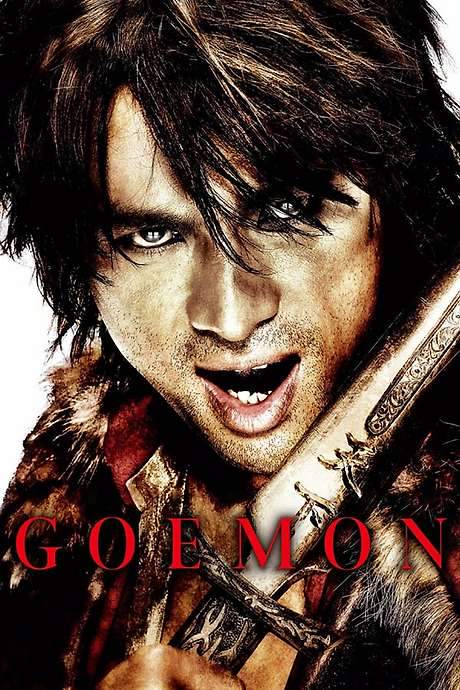
Goemon (2009) movie poster

Plot Summary

Goemon (2009) Plot Summary Explained

Release, runtime and language
2009 · 128 mins · Japanese
Loading streaming availability…
Directed by
Kazuaki Kiriya
Starring
Ryoko Hirosue, Jun Kaname, Erika Toda, Masatô Ibu, Takeru Satoh, Eriko Sato

The film follows the legendary ninja thief Ishikawa Goemon, portrayed by Yosuke Eguchi, as he mounts a daring raid on the Nanban—Southern Barbarians—seeking treasure. Amid the loot he discovers a secret grave that holds a mysterious box, an ancient relic whose forgotten powers could alter his destiny.

On this page (6)
  1. 1 Where to watch
  2. 2 What happens: full plot
  3. 3 Plot questions answered
  4. 4 Movie threads
  5. 5 Movies like Goemon
  6. 6 Every angle
Loading streaming availability…

Full plot summary · contains spoilers

What Happens in Goemon: Full Plot Summary

The whole story of Goemon (2009) explained, from the opening scene to the final frame: every key event, every twist and what it all adds up to. Read it as a quick recap before the sequel, to check a scene you missed, or to finally understand what really happened.

During the bloody and turbulent Sengoku era, Goemon Ishikawa [Yosuke Eguchi] grows up in a world where politics force violence, and a single raid shatters his family forever. After a desperate escape with his caretaker, a bandit ambush nearly ends his life, but fate intervenes when the warlord Oda Nobunaga takes him in. Under Nobunaga’s wing, Goemon trains with the famed ninja Hattori Hanzo, and alongside Kirigakure Saizō [Takao Osawa], he learns the deadly arts of stealth, speed, and loyalty. His new role soon centers on protecting Nobunaga’s young niece, Chacha [Ryoko Hirosue], a relationship that slowly deepens into something warmer and more complicated as she grows fond of him. In gratitude for his protection, Nobunaga gifts Goemon a double-bladed sword, and Chacha returns his loyalty with a cherished fan, a keepsake that seals their bond.

The tides of power shift when Nobunaga is betrayed and murdered by his own generals, Toyotomi Hideyoshi and Akechi Mitsuhide. In the chaos that follows, Hideyoshi rises as the nation’s new ruler, and Mitsuhide’s defection is soon followed by a brutal counterstrike that seems to seal Nobunaga’s fate. Goemon and Saizō drift apart: Saizō remains with the Oda clan in a bid for status, while Goemon chooses a life of freedom beyond the formal oaths of a samurai. As a parting gesture, the two split the weapon that connected them, each keeping a half of the original double-bladed sword.

Years later, Goemon becomes a notorious outlaw in league with Sarutobi Sasuke, a fearless bounty hunter who has the misfortune of chasing him. In the glow of a festival, Goemon steals a mysterious treasure repository known to outsiders as Pandora’s Box. Ishida Mitsunari, a high-ranking samurai in Hideyoshi’s service, arrives to destroy the box, but Goemon escapes with it. The box proves to be empty, and Goemon discards it, unaware of its true significance. A young pickpocket named Koheita later finds the box, and the next day Goemon discovers its real value and returns to the city to retrieve it. In the slums, Goemon saves Koheita and resurrects his chance at the box’s secret by defeating a grim threat.

Back in the city, Saizo’s ninja squad closes in, pressing Goemon to surrender the box. A fierce duel erupts between Goemon and Saizō, but Hattori Hanzo returns to intervene, forcing Saizō to withdraw. Goemon brings the box to a ruined temple, where a hidden contract reveals the signatures of Hideyoshi and Mitsuhide, exposing Hideyoshi’s involvement in Nobunaga’s death. Hanzo reappears, tempting Goemon with wealth in exchange for the contract, but Goemon advances with a thirst for vengeance and a sense of duty to Nobunaga’s memory.

Infiltrating Hideyoshi’s palace, Goemon eliminates the tyrant he once served by striking a fatal blow, and he briefly reunites with Chacha. Yet the victory is fragile; Hideyoshi’s death is not as simple as it seems, and a dangerous game of power ensues. Chacha, bound by a difficult choice, agrees to become Hideyoshi’s concubine after a poignant farewell with Goemon. The political chessboard shifts again when Tokugawa Ieyasu arrives and tasks Goemon with one final mission: to assassinate Hideyoshi to save the realm from further bloodshed.

Meanwhile, Mitsunari presses Saizo for the ultimate prize—samurai status in exchange for killing Hideyoshi. The wedding of Hideyoshi and Chacha becomes a battleground as Goemon moves to finish his mark on the tyrant. Explosives destroy Hideyoshi’s escort ships, and the assassination appears to succeed, but Mitsunari’s betrayal emerges as he shoots Saizo. Hideyoshi and Saizo survive, and Goemon’s world risks collapse as Saizo is captured, his wife killed, and his infant child taken. Saizo is executed in boiling water after a false confession that he is Goemon, a brutal trap in the greater struggle for balance and peace.

With the aid of Saizo’s surviving team, Goemon attacks the palace and brings Hideyoshi’s rule to an end, freeing Chacha from danger. The death of Hideyoshi triggers a new power struggle between Tokugawa and Mitsunari, and Goemon, weary of endless bloodshed, steps back into the fray to push for peace. Clad in Nobunaga’s armor and carrying the repaired blade, he charges into the fray, striking fear into both sides as if Nobunaga himself had returned. He pursues Mitsunari, killing him during a solar eclipse, and then turns his attention to Tokugawa, only to be stopped by Hanzo’s intervention.

In a final, tragic moment, Goemon’s fate hangs in the balance as Sasuke’s strike mortally wounds him while he clutches only Chacha’s fan. The act is a painful reminder that his true aim was never conquest but peace. With Tokugawa’s promise of lasting peace secured, Goemon’s body succumbs to his wounds as he gazes upon the night’s fireflies, content that his sacrifice may bring the country a measure of quiet—an ending that honors Nobunaga’s memory and the fragile peace he had fought to defend.
Last updated: October 09, 2025 at 09:19

Was this helpful?

Plot questions answered

Goemon Plot Explained: Your Questions Answered

The questions people ask most about Goemon (2009): what happens in the confusing scenes, why the characters do what they do, the twists, hidden details and what the ending means. Each answer contains spoilers.

Q1

Why did Oda Nobunaga take in Goemon after his family was killed?

Nobunaga rescued Goemon during a bandit ambush after Goemon's family was assassinated for political reasons during the Sengoku era. Nobunaga took the orphaned boy under his protective wing, seeing potential in the child. This act of rescue established the bond of loyalty that would drive Goemon's vengeance decades later when Nobunaga was murdered.

Foreshadowing: The opening scene establishes Goemon's deep loyalty to Nobunaga, which later motivates his entire revenge arc.

  • oda nobunaga
  • goemon rescue
  • loyalty
  • betrayal
  • sengoku era
Q2

Why did Goemon and Saizo split the double-bladed sword?

When Goemon and Saizo part ways after Nobunaga's death, Saizo staying with the Oda clan while Goemon chooses freedom, they split the double-bladed sword as a parting gift. Each keeps one half, symbolizing their shared history and the bond formed during their training under Hattori Hanzo. The sword later gets repaired and reunited in the final battle.

Foreshadowing: The split sword foreshadows their eventual reconciliation and joint fight for peace.

  • double-bladed sword
  • saizo
  • parting
  • gift
  • symbolism
Q3

What was inside Pandora's Box that made it so valuable?

The box itself contained nothing when Goemon initially opened it, leading him to discard it. However, it was actually a container for a hidden contract signed by Hideyoshi and Mitsuhide that proved their involvement in Nobunaga's murder. The real value lay in this secret document, not in treasure.

Foreshadowing: Goemon discards the empty box early on, not realizing its true significance until later.

  • pandora's box
  • contract
  • hideyoshi
  • mitsuhide
  • nobunaga death
Q4

What did the hidden contract reveal about Nobunaga's death?

The hidden contract, discovered at a ruined Buddhist temple, bore the signatures of both Toyotomi Hideyoshi and Akechi Mitsuhide. This document exposed that Hideyoshi and Mitsuhide had conspired to murder Nobunaga, revealing the true architects of the betrayal that set all subsequent events in motion.

Foreshadowing: The contract serves as the key piece of evidence that fuels Goemon's vengeance against Hideyoshi.

  • hidden contract
  • nobunaga murder
  • hideyoshi
  • mitsuhide
  • conspiracy
Q5

Why did Chacha agree to become Hideyoshi's concubine?

After Goemon kills Hideyoshi in his first assassination attempt, Chacha makes a difficult choice to become Hideyoshi's concubine as part of a political arrangement. She bids Goemon a poignant farewell, understanding this sacrifice is necessary for survival in the politically volatile court. Her choice reflects the limited power women held during this era.

Foreshadowing: Chacha's fan, which she gave Goemon earlier, becomes his treasured keepsake until his death.

  • chacha
  • hideyoshi
  • concubine
  • sacrifice
  • political marriage
Q6

Why was Saizo executed instead of Goemon?

After the failed assassination attempt during the wedding, Mitsunari betrays Saizo by shooting him. Saizo is then captured, his wife is killed, and his infant child is taken. The enemies force him to make a false confession claiming he is Goemon, leading to his brutal execution in boiling water. This allows the real Goemon to survive and continue his mission.

Foreshadowing: Saizo's sacrifice enables Goemon to complete his final assault on the palace.

  • saizo execution
  • false confession
  • captured
  • boiling water
  • mitsunari betrayal
Q7

Why did Goemon wear Nobunaga's armor in the final battle?

In the climactic battle during the solar eclipse, Goemon dons Nobunaga's armor and wields his repaired double-bladed sword. This symbolic act serves multiple purposes: it rallies both warring sides as they believe Nobunaga himself has returned, it honors his fallen lord's memory, and it represents Goemon carrying on Nobunaga's legacy as he fights for the peace his mentor envisioned.

Foreshadowing: Goemon's earlier loyalty to Nobunaga culminates in this symbolic rebirth of his lord's spirit.

  • nobunaga armor
  • solar eclipse
  • symbolism
  • legacy
  • final battle
Q8

Why did Sasuke kill Goemon at the end?

Foreshadowing: The tragic irony highlights that Goemon's death comes from an unexpected source despite his peaceful intentions.

  • sasuke
  • kill
  • death
  • fan
  • tragic ending
Q9

What was the significance of the solar eclipse during the final battle?

The solar eclipse occurs during Goemon's climactic battle as he defeats Mitsunari and charges toward Tokugawa. This celestial event serves as a dramatic backdrop that heightens the film's mythological tone, marking the moment when Goemon finally confronts the surviving power players. The darkness of the eclipse contrasts with Goemon's goal of bringing light and peace to Japan.

Foreshadowing: The eclipse marks the turning point where Goemon's vengeance reaches its peak before his death.

  • solar eclipse
  • battle
  • mitsunari
  • tokugawa
  • climactic
Q10

Why did Tokugawa Ieyasu ask Goemon to assassinate Hideyoshi?

After Hideyoshi's apparent death in the botched assassination attempt and subsequent survival, Tokugawa Ieyasu emerges as a new power player. He tasks Goemon with killing Hideyoshi, framing it as a way to save the realm from further bloodshed. This sets up the final phase of Goemon's revenge, though ultimately Ieyasu becomes the next ruler in the power struggle that follows Hideyoshi's death.

Foreshadowing: Ieyasu's involvement sets up the ultimate political transition in Japanese history.

  • tokugawa ieyasu
  • hideyoshi
  • assassination
  • save realm
  • political
Q11

How did Hideyoshi and Mitsuhide consolidate power after killing Nobunaga?

After murdering Nobunaga, Hideyoshi and Mitsuhide both sought to seize control. However, Hideyoshi quickly betrayed and killed Mitsuhide in a brutal counterstrike, eliminating his co-conspirator and consolidating all power for himself. This ruthless move allowed Hideyoshi to become the new ruler of Japan, setting the stage for Goemon's long vengeance quest.

Foreshadowing: This betrayal establishes Hideyoshi as the primary villain and the architect of Nobunaga's death.

  • hideyoshi
  • mitsuhide
  • power
  • consolidate
  • betrayal
  • nobunaga

Movie threads

More Movies Like Goemon, by Mood & Story

Curated lists built around what makes Goemon tick: the same mood, the same kind of story or the same emotional payoff. Each list explains why these movies belong together.

Tragic Hero Action Epics like Goemon

High-stakes action stories where heroes sacrifice everything for a noble cause. Discover movies like Goemon, featuring legendary warriors and heroes whose noble quests are shadowed by personal tragedy. These action-packed epics share a bittersweet tone, heavy emotional weight, and fast pacing, perfect for viewers who enjoy stories of sacrifice and honor.

  • tragic
  • heroic
  • action-packed
  • melancholic
  • epic
  • dramatic
  • Tone: bittersweet, tragic, heroic
  • Pacing: fast, action-driven
Why these movies?

The story pattern: The narrative follows a larger-than-life hero on a grand quest, often for vengeance or justice, set against a backdrop of political turmoil. Their journey is marked by intense action, profound personal loss, and unwavering loyalty, ultimately culminating in a sacrificial ending that achieves a greater good at immense personal cost.

Why they belong together: Movies in this thread are united by their fusion of spectacular action with a tragic, character-driven story. They share a high-intensity, fast-paced feel, a bittersweet emotional tone, and a focus on a hero whose destiny is intertwined with sacrifice, creating a powerful and resonant viewing experience.

Bleak Historical Action and Political Betrayal like Goemon

Gritty historical dramas where violence and treachery shape destinies. If you liked the political intrigue and war-torn setting of Goemon, explore these similar historical action movies. They feature warriors and ninjas navigating webs of betrayal, with high intensity, fast pacing, and a dark, dramatic tone focused on honor and destiny.

  • atmospheric
  • dramatic
  • action-packed
  • bleak
  • political
  • betrayal
  • Tone: dark, bleak, dramatic
  • Pacing: fast, tense
Why these movies?

The story pattern: The plot typically revolves around a skilled warrior or operative caught in a web of political deception. The narrative is driven by shifting alliances, shocking betrayals, and violent confrontations, leading characters to question their loyalties and confront the bleak nature of their world. The journey is often one of disillusionment set against an atmospheric historical backdrop.

Why they belong together: These films are grouped by their shared setting in a gritty historical period, a focus on political machinations and betrayal, and a consistently high-intensity, dramatic tone. They deliver a specific vibe of atmospheric dread and fatalistic action, appealing to fans of complex, morally gray historical narratives.

If you liked this

Movies Like Goemon

Similar movies to Goemon: the same genre, themes or kind of story. Each one comes with its own plot summary, timeline and ending explained.

Browse all movie summaries

Every angle

Goemon (2009) Explained: Plot, Timeline & Characters

Everything about Goemon in one place: what happens in the plot summary, the timeline in chronological order, the characters and meaning and a spoiler-free summary. What's After the Movie adds the cast, box office and post-credit scenes.

Coming soon on iOS and Android

The Plot Explained Movie Summary App

Plot summaries, endings explained and timelines on your phone. Catch up on any movie in minutes, save your favorites and never miss a twist again.

Be the first to know when we launch. Your email stays private, always.

Learn more about the app