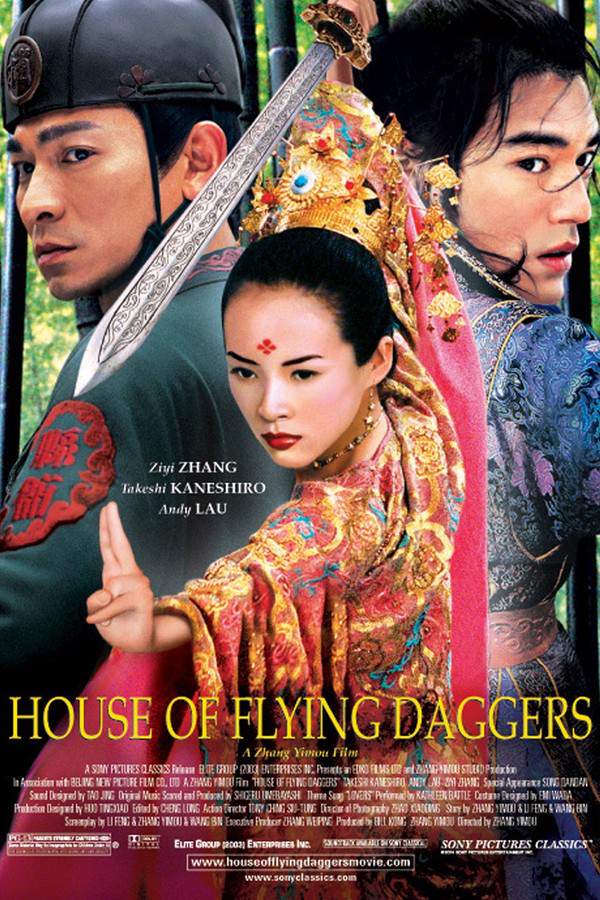
In 1895, after Taiwan is ceded to Japan, the patriotic Black Flag faction refuses to surrender their fight. Their steadfast leader, the famed martial artist known as Wang Wu, goes into hiding following a string of hard-won defeats. The story then leaps forward to 1899, when reformers Master Tan Szu-tung and his resolute sidekick Nine Catties traverse northeast China toward Beijing, hoping to persuade the Emperor to enact sweeping changes. Their mission collides with a violent clash between bandits and Imperial guardsmen led by the ambitious Yuan Shi-kai, a confrontation that puts them in direct contact with a powerful blacksmith marked by a Black Flag tattoo — a figure soon revealed to be Wang Wu himself.
With this revelation, Wang Wu embraces a renewed sense of purpose and opens a martial arts school in the town, a move that signals a shift from rebellion to organized skill and influence. Yuan Shi-kai complements his gesture with a broadsword, presented as a gift to Wang Wu, a token that marks the merging of old loyalties with emerging power. As events unfold, Wang Wu lends his aid to a noblewoman in distress on a troublesome voyage, and in gratitude she presents him with a red umbrella when they arrive at Lord Yee’s palace.
Within Lord Yee’s grounds, a martial arts tournament unfolds. Wang Wu rises to the challenge, besting Master Po Ting’s son and then facing Po Ting himself in a display of precision and prowess. The city’s appetite for training draws in various students, including Siu-Chuen, who seeks instruction, and many other youths who look to Wang Wu as a mentor figure. Lord Yee’s interest grows, and he proposes forming a Sino-Japanese martial arts club, inviting the Japanese champion Kenja to join. Wang Wu, however, declines the arrangement, sparking a rift that leads to his arrest by Lord Yee for disobedience and for clashing with the visiting competitor.
Rescue soon follows when the noblewoman intervenes alongside Tan Szu-tung and Nine Catties, pulling Wang Wu from captivity. Yet the trouble doesn’t end there: Ngo Pai, the kung-fu instructor at Lord Yee’s school, murders a student and steals critical papers, complicating the power dynamics at play. Wang Wu and Tan Szu-tung press Yuan Shi-kai for support against the Empress Dowager so that the Emperor can reclaim authority, but the plan falters when Tan Szu-tung is captured and branded a traitor.
In the ensuing confrontations, Wang Wu faces the fierce prison guard Yu Man-san and wins, yet Tan Szu-tung makes a principled choice to die a martyr rather than be saved. Borrowing a sword from Yu Man-san, Wang Wu disguises himself as one of Lord Yee’s men and executes Tan Szu-tung in a public ceremony, a brutal display meant to cement his resolve and send a message about loyalty and reform.
The climactic clash with Yuan Shi-kai intensifies as Nine Catties, Siu-chuen, and Wang Wu’s smithy apprentice Chung Sang arrive to assist. Ngo Pai and Po Ting ride to Yuan Shi-kai’s aid, and the battle proves costly: Siu-chuen loses his life, and Ngo Pai is slain by Wang Wu. Realizing the need to safeguard the reformers’ spirit, Wang Wu tells Chung Sang to escape. Tragedy deepens as Nine Catties is killed by an explosion during the fight between Wang Wu and Yuan Shi-kai. Lord Yee’s soldiers finally intervene and kill Wang Wu, leaving Chung Sang to witness the aftermath from a rooftop.
In the film’s closing beat, the noblewoman returns to Wang Wu’s grave and leaves a red umbrella, a quiet emblem of the enduring memory of his rebellion, leadership, and the reforms he stood for.