Plot Explained Spoilers guaranteed!
Plot Explained

Browse by genre

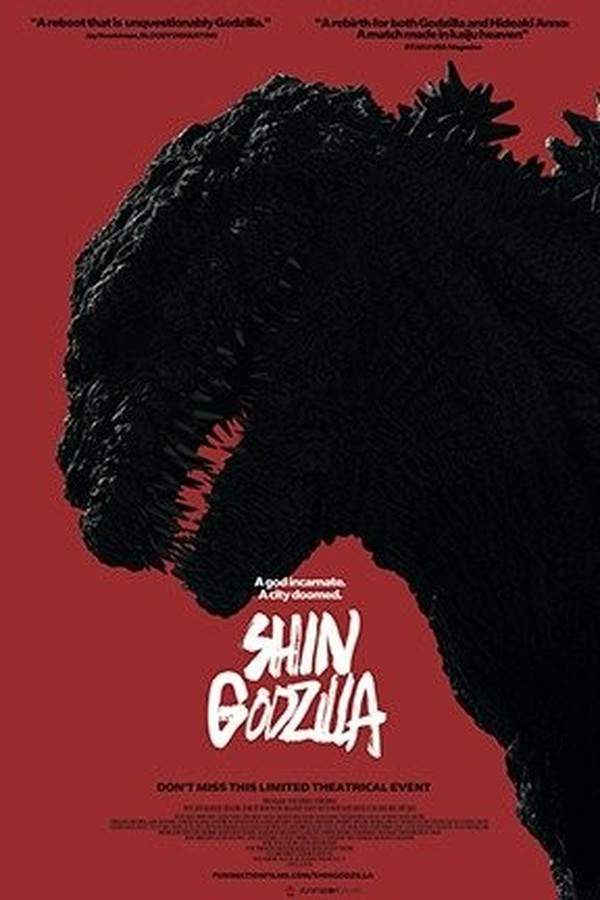
Shin Godzilla (Godzilla Resurgence) (2016) movie poster

Plot Summary

Shin Godzilla (Godzilla Resurgence) (2016) Plot Summary Explained

Release, runtime and language
2016 · 120 min · Japanese
JustWatch #4,644 26
Directed by
Shinji Higuchi, Hideaki Anno

A mysterious geyser erupts in Tokyo Bay, prompting concerns about a potential disaster. An executive investigates, suspecting a more significant threat than a natural occurrence. His fears are realized when a massive, aquatic creature emerges, unleashing destruction upon the city. As the monster evolves and adapts, Japan struggles to contain the unprecedented crisis and protect its capital from the evolving behemoth.

On this page (6)
  1. 1 Where to watch
  2. 2 What happens: full plot
  3. 3 Plot questions answered
  4. 4 Movie threads
  5. 5 Movies like Shin Godzilla (Godzilla Resurgence)
  6. 6 Every angle

Where to watch

Where to Watch Shin Godzilla (Godzilla Resurgence) (2016)

Where can you watch Shin Godzilla (Godzilla Resurgence)? Stream, rent or buy it in the US, including on HBO Max, Amazon Video and Apple TV Store: current JustWatch availability with up-to-date prices.

Streaming availability powered by JustWatch

Full plot summary · contains spoilers

What Happens in Shin Godzilla (Godzilla Resurgence): Full Plot Summary

The whole story of Shin Godzilla (Godzilla Resurgence) (2016) explained, from the opening scene to the final frame: every key event, every twist and what it all adds up to. Read it as a quick recap before the sequel, to check a scene you missed, or to finally understand what really happened.

In 2016, the investigation by the Japan Coast Guard begins when an abandoned yacht is found in Tokyo Bay, marked by the destruction of its boat and a chilling scene where blood floods the Aqua-Line. After Deputy Chief Cabinet Secretary Rando Yaguchi views a disturbing viral video of the event, he suspects that a living creature is responsible for the chaos, a theory soon validated as news reports surface, showcasing the creature’s tail emerging ominously from the ocean. As panic ensues, the creature begins its deadly advance inland, crawling through the bustling districts of Kamata and Shinagawa, devastating everything in its path during a tumultuous evacuation.

As the creature undergoes rapid evolution, transforming into a bipedal form, it becomes overheated and retreats back into the sea. In response to the mounting crisis, government officials prioritize military strategy and civilian safety, appointing Yaguchi to lead a special task force dedicated to investigating this terrifying new entity. The task force soon discovers alarming radiation levels along the creature's path, signaling its energy source as nuclear fission. An unexpected collaboration arises when the U.S. sends envoy Kayoco Anne Patterson, who reveals crucial information about Goro Maki, a once-disgraced anti-nuclear zoology professor. Maki’s groundbreaking research on mutations stemming from radioactive exposure had predicted this creature's emergence, but was disregarded by both American and Japanese scientific communities. Furthermore, it is uncovered that Maki had left behind his research notes, cryptically encoded, on his abandoned yacht before vanishing.

Re-emerging in its formidable fourth form, Godzilla—named after Maki's studies—lands near Kamakura, prompting a swift mobilization of the Japan Self-Defense Forces. Unfortunately, despite their efforts, they find themselves outmatched as Godzilla breaks through their defenses and storms into Tokyo. In an attempt to quell the rampage, the U.S. devises a destructive airstrike plan, forcing the evacuation of civilians alongside governmental officials. Armed with fortifying MOP "bunker-buster" bombs, Godzilla is temporarily incapacitated but retaliates fiercely, unleashing its atomic breath, resulting in catastrophic destruction—including the demise of a helicopter carrying the prime minister and other key leaders—consuming vast portions of Tokyo. Ultimately, weakened and drained, Godzilla retreats into a state of hibernation.

Yaguchi's diligent team uncovers that the creature's plates and blood serve as a natural cooling system and postulates that a coagulant could be deployed to freeze Godzilla. While examining samples of its tissue, they learn that Godzilla possesses the ability to evolve continuously and even reproduce asexually. Alarmed by this development, the United Nations cautions Japan that thermonuclear weapons will be employed against Godzilla if it’s not subdued promptly; hence, mass evacuations are ordered across several prefectures. Amidst the rising tensions, Patterson appeals to her political contacts to buy time for Yaguchi’s team, which has seen dwindling support from their interim government.

Utilizing origami, Yaguchi's team finally decodes Maki's research, which helps refine their strategy to implement an international deep-freeze initiative. Just hours prior to the anticipated nuclear strike, Japan enacts its plan. Godzilla is incited into using its atomic breath against the attacking Predator and Reaper drones. Yaguchi's team orchestrates urban explosions and reroutes unmanned trains laden with explosives towards Godzilla’s feet, managing to subdue it briefly, facilitating the injection of coagulant through its mouth. Many lives are lost during this risky operation, yet ultimately, Godzilla is rendered solidly frozen.

The aftermath reveals that Godzilla’s isotopic composition possesses a half-life of 20 days, suggesting a pathway for Tokyo’s eventual restoration. The international community agrees to retract the nuclear attack with the condition that should Godzilla ever awaken again, an immediate thermonuclear response will follow. In a haunting twist, frozen humanoid figures are discovered emerging from Godzilla’s tail, hinting at more challenges to come.
Last updated: November 15, 2024 at 19:48

Was this helpful?

Plot questions answered

Shin Godzilla (Godzilla Resurgence) Plot Explained: Your Questions Answered

The questions people ask most about Shin Godzilla (Godzilla Resurgence) (2016): what happens in the confusing scenes, why the characters do what they do, the twists, hidden details and what the ending means. Each answer contains spoilers.

Q1

Why did Yaguchi suspect a living creature was responsible for the Tokyo Bay disaster?

Yaguchi viewed a disturbing viral video showing chaotic scenes at the yacht site in Tokyo Bay. The destruction pattern, particularly the blood flooding the Aqua-Line and the damaged vessel, didn't match any natural disaster or accident. His suspicion was proven correct when news reports confirmed a creature's tail was emerging from the ocean.

  • yaguchi
  • toyko bay
  • creature
  • discovery
  • investigation
Q2

What was Goro Maki's research and why did it matter?

Goro Maki was an anti-nuclear zoology professor whose research focused on mutations caused by radioactive exposure. He had actually predicted the emergence of a creature like Godzilla, but his theories were disregarded by both American and Japanese scientific communities as fringe. His abandoned yacht contained encoded research notes that would later prove crucial to understanding and defeating Godzilla.

  • goro maki
  • research
  • nuclear
  • mutation
  • prediction
Q3

How did Yaguchi's team decode Maki's research notes?

Yaguchi's team used origami, the Japanese art of paper folding, to decode Maki's cryptically encoded research notes. The method was unconventional but effective, revealing the critical information needed to understand Godzilla's biology and develop a strategy to freeze the creature.

  • origami
  • decoding
  • research
  • maki
  • notes
Q4

How did scientists plan to freeze Godzilla?

Yaguchi's team discovered that Godzilla's dorsal plates and blood function as a natural cooling system, allowing it to regulate its internal temperature during extreme activity. Understanding this biological mechanism led them to hypothesize that a coagulant could disrupt this cooling process and freeze Godzilla from the inside out.

  • cooling system
  • coagulant
  • freeze
  • plates
  • blood
Q5

Why did Godzilla retreat and enter hibernation after the U.S. airstrike?

After unleashing its atomic breath to destroy the attacking aircraft and devastate Tokyo, Godzilla became severely overheated and drained of energy. The creature retreated into the ocean and entered a state of hibernation to recover its depleted nuclear reserves.

  • hibernation
  • overheated
  • atomic breath
  • retreat
  • energy
Q6

Why was the United Nations planning a nuclear strike against Godzilla?

The United Nations warned Japan that if Godzilla was not subdued, they would authorize a thermonuclear strike on Tokyo to prevent the creature from causing even greater devastation. This looming nuclear threat created an urgent deadline for Yaguchi's team to develop an alternative solution.

  • united nations
  • nuclear strike
  • threat
  • thermonuclear
  • deadline
Q7

How did the freezing operation successfully neutralize Godzilla?

Yaguchi's team provoked Godzilla into using its atomic breath against incoming Predator and Reaper drones while simultaneously orchestrating urban explosions and rerouting unmanned trains laden with explosives toward Godzilla's feet. This combination managed to momentarily subdue the creature, allowing teams to inject coagulant directly into its mouth. The coagulant froze Godzilla solid, though many lives were lost in the risky operation.

  • coagulant
  • injection
  • drones
  • operation
  • freezing
Q8

What do the frozen humanoid figures emerging from Godzilla's tail mean?

In the final moments of the movie, frozen humanoid figures are discovered emerging from Godzilla's tail. This ominous twist suggests that Godzilla may have the ability to reproduce asexually, creating new threats even after being frozen. It implies the crisis may not truly be over.

Foreshadowing: The movie earlier revealed that Godzilla can reproduce asexually.

  • humanoid figures
  • tail
  • reproduction
  • ending
  • sequel hint
Q9

What powers Godzilla and why is it radioactive?

The task force discovered alarming radiation levels along Godzilla's path, determining that its energy source is nuclear fission. This explains both its immense power and destructive capabilities. The creature essentially runs on nuclear energy, which is why it emits radiation and possesses such devastating atomic breath.

  • radiation
  • nuclear fission
  • energy source
  • atomic breath
Q10

Why did the U.S. airstrike fail to destroy Godzilla?

The U.S. deployed MOP "bunker-buster" bombs against Godzilla, which initially seemed to incapacitate the creature. However, Godzilla quickly recovered and retaliated with its atomic breath, destroying the attacking forces and causing catastrophic damage to Tokyo, including destroying a helicopter carrying the prime minister and other key leaders.

  • airstrike
  • bunker-buster
  • failure
  • military
  • attack
Q11

How did Godzilla evolve so rapidly throughout the movie?

Godzilla undergoes rapid evolution multiple times, transitioning from an aquatic form to a bipedal creature. The movie reveals that Godzilla possesses the ability to continuously evolve as a survival mechanism. This evolutionary capability made it increasingly difficult for military forces to contain, as each form was more formidable than the last.

  • evolution
  • forms
  • adaptation
  • rapid evolution
  • biology
Q12

Why did the U.S. envoy Patterson help Japan instead of just launching the nuclear strike?

Kayoco Anne Patterson, the U.S. envoy, provided crucial information about Goro Maki's research to assist Japan. Later, she appealed to her political contacts to buy time for Yaguchi's team when their support was dwindling from the interim government. Her assistance helped delay the nuclear strike and allowed Japan's alternative plan to be executed.

  • patterson
  • us envoy
  • political help
  • delay
  • support
Q13

What does the 20-day half-life of Godzilla's isotopes mean for Tokyo's future?

After Godzilla was frozen, analysis revealed that its isotopic composition has a half-life of just 20 days. This relatively short half-life means the radioactive contamination left by Godzilla will gradually decay, allowing for the eventual restoration of Tokyo rather than permanent nuclear wasteland.

  • half-life
  • isotope
  • tokyo recovery
  • contamination
  • cleanup

Movie threads

More Movies Like Shin Godzilla (Godzilla Resurgence), by Mood & Story

Curated lists built around what makes Shin Godzilla (Godzilla Resurgence) tick: the same mood, the same kind of story or the same emotional payoff. Each list explains why these movies belong together.

Bureaucratic Crisis Movies like Shin Godzilla (Godzilla Resurgence)

Stories where procedure and politics collide with an escalating, catastrophic threat. If you enjoyed the tense, procedural drama of Shin Godzilla, explore more movies like it. These films focus on high-stakes decision-making, political maneuvering, and the bureaucratic struggle against disasters, offering a similar feel of a system pushed to its breaking point.

  • bureaucratic
  • tense
  • high-stakes
  • procedural
  • anxious
  • chaotic
  • Tone: tense, anxious
  • Pacing: fast, procedural
Why these movies?

The story pattern: Narratives in this thread typically follow an institutional perspective, charting the course of a disaster from initial detection to full-scale crisis. The plot is driven by logistical challenges, ethical debates, and the race against time, often highlighting the gap between theoretical protocols and chaotic reality.

Why they belong together: Movies are grouped here for their shared focus on the systemic response to catastrophe. They share a tense, anxious mood, a fast or steady pacing driven by escalating events, and a heavy emotional weight stemming from the high cost of failure.

Movies with Unstoppable Monsters like Shin Godzilla (Godzilla Resurgence)

Confrontations with ancient or evolved beings that defy human comprehension and power. For viewers who liked the overwhelming threat of Godzilla in Shin Godzilla, this section features similar movies with unstoppable forces. These films explore themes of survival, scientific hubris, and nuclear fear, delivering a heavy, tense experience with destructive spectacle.

  • destructive
  • apocalyptic
  • tense
  • hopeless
  • high-stakes
  • sci-fi horror
  • Tone: tense, bleak, destructive
  • Pacing: fast, relentless
Why these movies?

The story pattern: The narrative pattern involves the sudden appearance or awakening of a devastating force that rapidly escalates its threat. Human efforts, whether military, scientific, or diplomatic, are initially ineffective, forcing characters to adapt or find unconventional solutions, often at a great cost. The endings are frequently bittersweet or bleak, emphasizing the enduring nature of the threat.

Why they belong together: These films are united by their central antagonist: an apocalyptic-scale entity that represents an existential crisis. They share a high intensity, a tense and often bleak tone, and explore deep-seated fears about the limits of human control over nature, technology, or the cosmos.

If you liked this

Movies Like Shin Godzilla (Godzilla Resurgence)

Similar movies to Shin Godzilla (Godzilla Resurgence): the same genre, themes or kind of story. Each one comes with its own plot summary, timeline and ending explained.

Browse all movie summaries

Every angle

Shin Godzilla (Godzilla Resurgence) (2016) Explained: Plot, Timeline & Characters

Everything about Shin Godzilla (Godzilla Resurgence) in one place: what happens in the plot summary, the timeline in chronological order, the characters and meaning and a spoiler-free summary. What's After the Movie adds the cast, box office and post-credit scenes.

Coming soon on iOS and Android

The Plot Explained Movie Summary App

Plot summaries, endings explained and timelines on your phone. Catch up on any movie in minutes, save your favorites and never miss a twist again.

Be the first to know when we launch. Your email stays private, always.

Learn more about the app