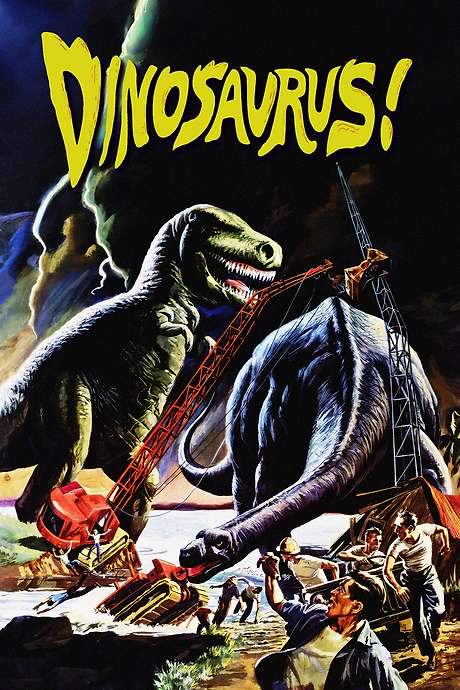
Year: 1953
Runtime: 80 mins
Language: English
Director: Eugène Lourié
You’ll see it tear a city apart! The controlled explosion of an atomic bomb in the Arctic Circle awakens a frozen dinosaur that will wreak havoc in New York City.
Find where to stream, rent, or buy The Beast from 20,000 Fathoms (1953) in the US with current JustWatch availability, up-to-date pricing, and platform listings for subscription, rental, and digital purchase options.
Warning: spoilers below!
Haven’t seen The Beast from 20,000 Fathoms yet? This summary contains major spoilers. Bookmark the page, watch the movie, and come back for the full breakdown. If you're ready, scroll on and relive the story!
Read the complete plot breakdown of The Beast from 20,000 Fathoms (1953), including all key story events, major twists, and the ending explained in detail. Discover what really happened, and what it all means.
Far north of the Arctic Circle, a nuclear bomb test named Operation Experiment is detonated, and the blast triggers a chilling prophecy about the unknown consequences of atomics. The physicist on watch, Thomas Nesbitt (the first time this character is mentioned, his name is accompanied by the linked actor) quietly wonders aloud what the cumulative effects of all these explosions and tests will be, and his question is captured in the film as a stark reminder that science can outpace comprehension. The moment of detonation awakens a colossal predator that has slept for millions of years beneath the ice—a Rhedosaurus measuring about 200 feet in length. Nesbitt is the sole witness to the creature’s awakening and, after that moment, is dismissed by many as delirious or fanciful, a skeptic in a world that refuses to take the danger seriously. Yet he remains convinced that what he saw is real, driven by a warning no one else dares to accept.
The creature’s emergence is nothing short of catastrophic. The Rhedosaurus begins a grim northward crawl along the Atlantic seaboard, leaving destruction in its wake as it travels from the Grand Banks to the Great Lakes region and onward to the northeastern United States. It sinks a fishing ketch off the Grand Banks, destroys another vessel near Marquette, Michigan, wrecks a lighthouse in Maine, and devastates structures in Massachusetts. The path of chaos is relentless, and Nesbitt’s early insistence that the threat is real gains momentum only when a surviving fisherman helps connect the sightings to a single, enormous creature. In time, the evidence lines up on a map, and the paleontologist Thurgood Elson [Cecil Kellaway] and his young assistant Lee Hunter [Paula Raymond] become key allies, translating sightings into a credible warning. The two scientists work with Nesbitt to track the beast, and their collaboration marks a crucial pivot from rumor to a recognized threat.
The investigation leads to a troubling hypothesis: the Rhedosaurus seems to be marching toward the Hudson River area, where fossils of its species were first found. A dramatic undersea expedition—conducted in a diving bell within the Hudson River Canyon—brings the team close to the creature’s lair. The encounter turns deadly when the bell is swallowed by the beast, and Professor Elson is killed in the resulting crisis. The tragedy confirms Nesbitt’s worst fears and signals a shift from observation to urgent action as the monster makes landfall in Manhattan. The city trembles as the Rhedosaurus devastates the urban landscape, devouring a police officer, totaling cars, toppling buildings, and triggering a citywide panic. News reports tally the human toll and the staggering economic damage: 180 known dead, 1500 injured, with damage estimates reaching around $300 million.
In response, military forces move to contain the threat. Commanded by Col. Evans [Kenneth Tobey], troops attempt to seal off the area with an electrified barricade and later strike at the creature with a bazooka aimed at its throat. The plan, however, stalls when the beast bleeds onto the streets, releasing a volatile prehistoric contagion that threatens to spread faster than any conventional weapon could contain. The contagion’s danger makes it clear that simple destruction would only spread the infection further, forcing commanders to rethink their approach. The new plan calls for neutralizing both the creature and the threat it carries, a dual objective that would require a nuclear-assisted solution. The uneasy choice is made to inject the beast’s neck wound with a radioactive isotope, a method intended to burn the creature from within while simultaneously stopping the contagion at its source.
The Rhedosaurus advances to Coney Island, bringing the military and the city to a fever pitch of fear and determination. On the desolate carnival grounds, Corporal Stone [Lee Van Cleef] takes aim with a rifle grenade loaded with the radioactive isotope, and Nesbitt accompanies him in a perilous ascent aboard the iconic Cyclone roller coaster. Reaching eye level with the monstrous animal, they fire the isotope into the open neck wound. The impact sends sparks through the coaster as it shudders and collapses, and the park is quickly enshrouded in flames as the ride and surrounding structures ignite. Stone and Nesbitt descend through the chaos, stepping away from the burning midway as rescue teams scramble and the creature begins to falter. The isotope’s radiation poisoning proves fatal to the Rhedosaurus, and the beast collapses in its final act of defiance before dying in the flames and wreckage of the amusement park.
The film closes with the grim aftermath of a city and a world forever altered by the encounter with a creature ancient and terrible. The narrative unfolds with a steady, documentary cadence that emphasizes the costs of hubris and the fragile line between scientific curiosity and existential danger. The story remains grounded in the human angles—the witnesses who refuse to abandon what they know, the soldiers who push forward despite overwhelming odds, and the civilians who face the terrifying spectacle of a prehistoric nightmare in a modern city. In the end, the Rhedosaurus’ rampage is halted not by brute force alone but by a fusion of science, courage, and the grim logic of necessity, leaving the audience with a lasting sense of awe and caution about the powers that lie beneath the ice and within the atom.
“What the cumulative effects of all these atomic explosions and tests will be, only time will tell.”
Last updated: October 09, 2025 at 10:48
Explore frequently asked questions about The Beast from 20,000 Fathoms (1953) with spoiler-rich answers covering the full plot summary, major story beats, character motivations, hidden details, and ending meaning. This movie summary FAQ helps explain confusing scenes, plot twists, and narrative decisions in clear, searchable detail.
The atomic blast at Operation Experiment melts the permafrost that has frozen the Rhedosaurus for millions of years. The explosion generates enough heat to thaw the creature from its suspended animation state, causing it to awaken and begin its journey toward the surface world.
Nesbitt's question about the cumulative effects of atomic tests foreshadows the unintended consequences of detonating nuclear weapons in the Arctic.
Nesbitt is the sole witness to the dinosaur's awakening in an isolated Arctic location, and his account describes a 200-foot prehistoric creature, a claim that seems impossible to authorities. Without corroborating evidence, officials assume he is suffering from exposure or hallucinations, and his warnings are attributed to delirium rather than verified observation.
Paleontologist Thurgood Elson hypothesizes that the dinosaur is instinctively drawn to the Hudson River region because that is where fossils of its own species were first discovered. The creature appears to be following an ancient migratory instinct, returning to the location where its kind once lived.
Elson's early hypothesis about the creature's destination becomes the basis for the team's tracking strategy.
Professor Elson enters the Hudson River Canyon in a diving bell to locate the creature. The Rhedosaurus ambushes the bell and swallows it whole, killing Elson in the attack. This fatal encounter confirms the creature's existence but leaves the team without their lead scientist.
When the military bazooka strikes the creature's throat, it bleeds onto the streets, releasing a volatile prehistoric pathogen. Officials realize that incinerating or exploding the body would spread the contagion throughout the city, potentially causing an epidemic. This forces them to abandon conventional destruction methods and develop an alternative approach.
The isotope serves a dual purpose: it burns the creature from the inside out while simultaneously neutralizing the contagion in its bloodstream. This method allows them to kill the monster without splitting open its body and releasing the dangerous pathogen across New York City.
The attack requires reaching the creature at eye level to inject the isotope directly into its open neck wound. The Cyclone roller coaster provides the necessary height and positioning, allowing Stone and Nesbitt to get close enough to the monster while using the structure for cover and mobility.
The film's logic suggests the Rhedosaurus is drawn to the Hudson River area because prehistoric fossils of its species were discovered there. This creates a thematic link between the creature's ancient past and its destructive return, suggesting the dinosaur is following an instinctual drive to return to its original habitat.
The film presents a grim irony: the atomic blast that awakened the dinosaur is also the tool used to destroy it. The radioactive isotope is essentially a controlled nuclear solution to a nuclear-caused problem, emphasizing the film's cautionary message about the unpredictable and potentially self-destructive consequences of atomic experimentation.
Nesbitt's early question about the cumulative effects of atomic tests echoes throughout the narrative.
The attack results in 180 known deaths and 1,500 injuries, with estimated property damage reaching $300 million. The creature devours a police officer, destroys numerous vehicles and buildings, and triggers widespread panic across Manhattan before being stopped at Coney Island.
Discover curated groups of movies connected by mood, themes, and story style. Browse collections built around emotion, atmosphere, and narrative focus to easily find films that match what you feel like watching right now.
Stories where scientific ambition unleashes a catastrophe beyond human control.If you enjoyed the cautionary tale of The Beast from 20,000 Fathoms, you'll find similar movies here. These films explore the terrifying consequences of scientific hubris, often involving nuclear age anxieties and unstoppable forces wreaking havoc on modern society.
The narrative follows a clear, cause-and-effect structure: a scientific or military act (often atomic) inadvertently unleashes a primal or uncontrollable force. The story then methodically escalates the threat as society scrambles to contain the consequences, leading to massive destruction and a sobering, bittersweet resolution that questions the wisdom of the initial action.
These films are united by their shared thematic focus on the dangers of unchecked scientific ambition, a tense and heavy tone, and the visceral experience of witnessing a disaster unfold with methodical, catastrophic inevitability.
Where a giant threat methodically dismantles civilization, inviting awe and terror.Fans of The Beast from 20,000 Fathoms will appreciate these movies that feature a similar vibe of a giant monster siege. Look for films with a steady pace, high-stakes urban destruction, and a tense, awe-inspiring mood as humanity fights a desperate battle for survival.
The plot is straightforward: a giant creature emerges and begins a relentless, destructive path through populated areas, typically a city. The narrative structure is linear, focusing on the discovery of the threat, the escalation of its attacks, and the final confrontation. The human journey is one of desperation, cooperation, and survival against an overwhelming force.
They share a specific vibe defined by a steady, escalating pace, high intensity from large-scale destruction, a tense and solemn tone, and the central experience of awe and terror in the face of a monumental, prehistoric, or otherworldly threat.
Don't stop at just watching - explore The Beast from 20,000 Fathoms in full detail. From the complete plot summary and scene-by-scene timeline to character breakdowns, thematic analysis, and a deep dive into the ending - every page helps you truly understand what The Beast from 20,000 Fathoms is all about. Plus, discover what's next after the movie.
Track the full timeline of The Beast from 20,000 Fathoms with every major event arranged chronologically. Perfect for decoding non-linear storytelling, flashbacks, or parallel narratives with a clear scene-by-scene breakdown.
Discover the characters, locations, and core themes that shape The Beast from 20,000 Fathoms. Get insights into symbolic elements, setting significance, and deeper narrative meaning - ideal for thematic analysis and movie breakdowns.
Discover movies like The Beast from 20,000 Fathoms that share similar genres, themes, and storytelling elements. Whether you’re drawn to the atmosphere, character arcs, or plot structure, these curated recommendations will help you explore more films you’ll love.
The Beast from 20,000 Fathoms (1953) Scene-by-Scene Movie Timeline
The Beast from 20,000 Fathoms (1953) Movie Characters, Themes & Settings
The Beast from 20,000 Fathoms (1953) Spoiler-Free Summary & Key Flow
Movies Like The Beast from 20,000 Fathoms – Similar Titles You’ll Enjoy
Monster Island (2019) Complete Plot Breakdown
Attack of the Beast Creatures (1985) Detailed Story Recap
Monsters of War (2021) Spoiler-Packed Plot Recap
Monster from the Ocean Floor (1954) Movie Recap & Themes
Dinosaurus! (1960) Detailed Story Recap
The Giant Claw (1957) Ending Explained & Film Insights
King Dinosaur (1955) Movie Recap & Themes
The Beast of Hollow Mountain (1956) Movie Recap & Themes
The Giant Behemoth (1959) Detailed Story Recap
The Atomic Submarine (1959) Detailed Story Recap
It Came from Beneath the Sea (1955) Complete Plot Breakdown
The Crater Lake Monster (1977) Full Summary & Key Details
The Monster That Challenged the World (1957) Plot Summary & Ending Explained
Giant from the Unknown (1958) Complete Plot Breakdown
The Beast (1000) Plot Summary & Ending Explained