










Plot Explained Spoilers guaranteed!
Plot Explained

Browse by genre

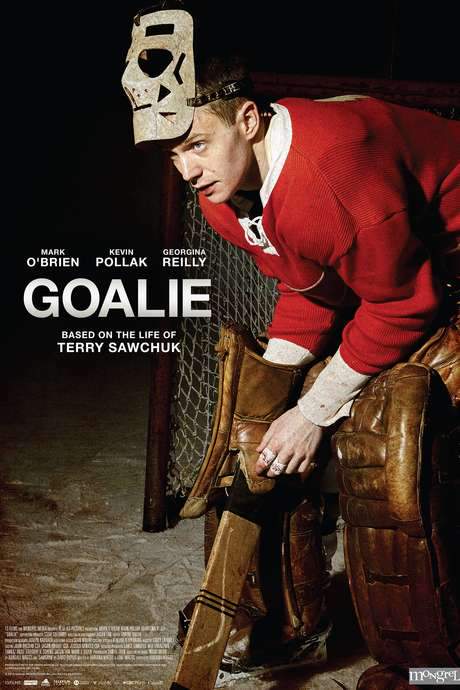
Goalie (2019) movie poster

Timeline

Goalie (2019) Timeline Explained – Every Event in Order

Release, runtime and language
2019 · 119 mins · English
Echo score 79
Directed by
Adriana Maggs
Starring
Thomas Mitchell, Dalmar Abuzeid, Sergio Di Zio, Mark O'Brien, Billy MacLellan, Kate Corbett
Budget
$5.1M

The story follows legendary hockey goaltender Terry Sawchuk, revealing the harsh realities behind his celebrated career. Each game brought not only victories but also painful injuries, with Sawchuk famously foregoing a mask, resulting in hundreds of stitches across his face. Driven by a need to numb the constant pain, he battled personal demons while achieving remarkable feats, including 103 shutouts, demonstrating the sacrifices and struggles of a man deeply committed to the sport.

On this page (5)
  1. 1 Where to watch
  2. 2 Events in order (12)
  3. 3 Timeline questions answered
  4. 4 Movie threads
  5. 5 Every angle

Where to watch

Where to Watch Goalie (2019)

Where can you watch Goalie? Stream, rent or buy it in the US, including on Fawesome, Fandango at Home Free and Pluto TV: current JustWatch availability with up-to-date prices.

Streaming availability powered by JustWatch

12 events in order · contains spoilers

Goalie Timeline: Events in Chronological Order

Every key event of Goalie (2019) in order, scene by scene, with when and where it takes place. Use it to untangle flashbacks, time jumps and parallel storylines, to refresh your memory before the sequel or to find the exact scene you are thinking of.

  1. Childhood in Winnipeg

    Sawchuk grows up in a lower-middle-class family in Winnipeg. He follows his older brothers into pond hockey and discovers a natural talent for goaltending. The early years establish his drive to pursue hockey at the highest level.

    When
    1930s–1940s
    Where
    Winnipeg, Manitoba, Canada
  2. Drafted to Detroit by Trader Jack Adams

    Trader Jack Adams spots Sawchuk and drafts him to replace an injured Detroit Red Wings goalie. Sawchuk quickly proves his reflexes and tenacity, earning his place on a team hungry for strength in net. This moment marks his entry into the NHL and the legends to come.

    When
    late 1940s
    Where
    Detroit, Michigan
  3. Maskless era and on-ice danger

    In an era when goalies played without masks, Sawchuk faces blistering shots as he guards the net. Pucks collide with his face, testing his resilience while he helps Detroit secure victories. The era’s fearless style cements his reputation as a formidable keeper.

    When
    1950s
    Where
    Detroit, Michigan
  4. Marriage and family in Detroit; move to Boston

    Sawchuk marries a Detroit woman and starts a family, balancing family life with a demanding hockey schedule. He is later traded to the Boston Bruins, prompting a move to Boston with his wife and children. The relocation marks a turning point as his career continues to unfold.

    When
    1950s–early 1960s
    Where
    Detroit, Michigan / Boston, Massachusetts
  5. Alcoholism and divorce

    As his career progresses, Sawchuk struggles with alcoholism and personal turmoil, becoming abusive and a philanderer. The mounting tensions lead to divorce from his spouse. The film portrays the toll such behavior takes on his life and career.

    When
    late 1950s–1960s
    Where
    Boston, Massachusetts
  6. Mask-wearing era and multi-goalie teams

    Going from team to team, Sawchuk witnesses the NHL transition to mask-wearing and rosters with more than one goalie per club. These changes redefine the role of the goaltender and alter the dynamics of team strategy. Sawchuk's career runs parallel to this evolution in hockey gear and management.

    When
    1960s
    Where
    NHL (Canada/USA)
  7. A visit with mentor Trader Jack Adams

    Sawchuk reconnects with his mentor Trader Jack Adams, who cautions him to retire and enjoy life. Adams teases him for having been gullible, suggesting that belonging once defined his heroics. The scene juxtaposes career pressures with the desire for a simpler life.

    When
    late career
  8. End of career and death with the Rangers

    Sawchuk's career culminates with the New York Rangers, where he is employed as a goalie when a seemingly minor injury leads to his death after a drunken argument. The incident underscores the fragile line between a legendary athlete and a brutal fate. The tragedy becomes a focal point of the film's narrative.

    When
    1969–1970
    Where
    New York City, New York
  9. Autopsy and bodily injury cataloging

    Interwoven with on-ice action, the film presents an autopsy and cataloging of Sawchuk's bodily injuries. The sequence highlights the wear and tear of a life spent guarding the goal. The medical examination frames his career as a chronicle of physical cost.

    When
    film epilogue
  10. End credits: Overscreen text of accomplishments

    The film ends with overscreen text tallying Sawchuk's accomplishments and recognizing him as a standout goalie from hockey's Original Six era. The closing still of Sawchuk reinforces his enduring legacy. It cements his place alongside the greats of the time.

    When
    epilogue
  11. Legacy as one of the Original Six era's greats

    Throughout the narrative, Sawchuk is presented as among the greatest goaltenders of the Original Six era. The film situates his career within the broader history of hockey's golden age. It emphasizes how his style and stamina defined an era.

    When
    1940s–1960s
    Where
    Original Six era
  12. Final reflection on life and career

    The film closes with a reflective look at Sawchuk's life beyond the crease. It hints at the human cost of chasing athletic greatness, balancing triumphs with personal struggles. The overall arc leaves viewers with a nuanced portrait of a legendary goalie.

    When
    film ending

Last updated: February 24, 2026 at 13:58

Was this helpful?

Timeline questions answered

Goalie Timeline Explained: Your Questions Answered

When does it happen, and why in that order? The questions people ask about the chronology of Goalie (2019): time jumps, flashbacks, cause and effect between scenes and the correct order of events, each answered with spoilers.

Q1

Why did Terry Sawchuk play without a mask?

Sawchuk played during the early era of NHL hockey when masks were not yet standard equipment for goaltenders. The sport's pace and culture at the time valued fearlessness, and Sawchuk became known for his reckless, aggressive style. His refusal to wear a mask became both a signature trait and a source of severe facial injuries, with hundreds of stitches accumulated over his career.

Foreshadowing: The film establishes early in his childhood that Sawchuk's drive and toughness were central to his identity, setting the stage for his maskless playing style.

  • maskless goalie
  • nhl history
  • facial injuries
  • hockey equipment
Q2

How did Terry Sawchuk die?

Sawchuk died from an injury sustained during a drunken argument in 1970. While working as a goalie for the New York Rangers, he was involved in an altercation with a teammate that resulted in a seemingly minor injury. Due to his intoxication and pre-existing health issues from years of physical trauma, the injury proved fatal, underscoring the tragic end to his life.

Foreshadowing: The film foreshadows this tragedy through his increasing alcoholism, temper, and the mounting toll of his career-long injuries.

  • death cause
  • tragic death
  • new york rangers
  • alcohol related death
Q3

Why did Terry Sawchuk struggle with alcoholism?

Sawchuk's alcoholism stemmed from multiple factors: the constant pain from hundreds of facial injuries and physical trauma, the pressures of maintaining a legendary career, the grind of constant travel and trades, and the emotional toll of a failing marriage. The film portrays his drinking as a coping mechanism that escalated over time, eventually contributing to his abusive behavior and ultimately his death.

Foreshadowing: His early competitiveness and drive, while initially positive, hint at the obsessive nature that would later manifest as self-destructive behavior.

  • alcoholism
  • addiction
  • pain management
  • personal struggles
Q4

Why was Terry Sawchuk traded so many times?

Sawchuk was traded frequently due to a combination of factors: his volatile personality and drinking problems, the NHL's evolving practice of carrying multiple goalies per team, and his declining performance in later years. Teams valued his legendary skills but grew concerned about his reliability. His career spanned the transition from single-goalie teams to the multi-goalie system, making him a frequent commodity in a changing league.

Foreshadowing: The film shows his early trade to Detroit as a lucky break, establishing the pattern of movement that would define his career.

  • nhl trades
  • boston bruins
  • detroit red wings
  • new york rangers
Q5

What caused Terry Sawchuk's marriage to fail?

Sawchuk's marriage collapsed primarily due to his escalating alcoholism, temper, and infidelity. The film depicts him becoming abusive and philandering as his drinking worsened, creating an unbearable situation for his wife Molly. The pressures of his demanding career, constant relocations, and the emotional toll of professional hockey combined with his personal demons to destroy the relationship.

Foreshadowing: Early scenes show the strain of his schedule on family life, with the move to Boston representing a turning point in the marriage's deterioration.

  • marriage
  • molly
  • divorce
  • family breakdown
Q6

What was the purpose of the autopsy scene in the film?

The autopsy scene serves as the film's structural device to catalog the累计 physical toll of Sawchuk's career. Intercut with on-ice action, it visually presents the hundreds of injuries he sustained, particularly to his face, framing his legacy as one of immense physical cost. The medical examination reinforces the film's theme about the price of athletic greatness.

Foreshadowing: The recurring imagery of puck impacts to his face throughout the film builds toward this unflinching examination of his damaged body.

  • autopsy
  • injuries
  • facial injuries
  • physical toll
Q7

How many NHL teams did Terry Sawchuk play for?

Sawchuk played for multiple teams throughout his career, most notably the Detroit Red Wings, Boston Bruins, and New York Rangers. His journeyman career included several stints with different organizations as the NHL evolved from the Original Six era into a league with more flexible rosters and multiple goaltenders per team.

Foreshadowing: His initial drafting by Detroit under Trader Jack Adams establishes the pattern of team changes that would characterize his career.

  • detroit red wings
  • boston bruins
  • new york rangers
  • original six
Q8

Who was Trader Jack Adams to Terry Sawchuk?

Trader Jack Adams was the legendary Detroit Red Wings general manager who discovered and drafted Sawchuk. He served as Sawchuk's initial mentor, bringing him to the NHL to replace an injured goalie. In a late-career scene, Adams visits Sawchuk and urges him to retire, teasing him about being gullible and suggesting that his sense of belonging drove his heroic performances. Their relationship represents the mentor-protégé bond that shaped Sawchuk's early success.

Foreshadowing: Adams's early discovery of Sawchuk in Winnipeg establishes the crucial relationship that launched his professional career.

  • trader jack adams
  • mentor
  • detroit red wings
  • general manager
Q9

What injuries did Terry Sawchuk sustain during his career?

Sawchuk sustained hundreds of facial injuries from playing without a mask, resulting in extensive facial reconstructive surgery and hundreds of stitches. The film catalogs these injuries through the autopsy sequence, revealing the cumulative damage to his face, body, and overall health. Beyond facial injuries, he endured the constant physical punishment of blocking shots at the highest level of professional hockey for decades.

Foreshadowing: The maskless era sequences throughout the film show pucks repeatedly striking his face, building the cumulative impact of these injuries.

  • facial injuries
  • stitches
  • hockey injuries
  • physical punishment
Q10

What was Terry Sawchuk's legacy in hockey?

Sawchuk is remembered as one of the greatest goaltenders of the NHL's Original Six era, accumulating 103 shutouts, a record at the time. He won four Stanley Cups with Detroit and became the defining image of the maskless goalie who sacrificed his body for the sport. His legacy includes both revolutionizing the position and embodying the physical and psychological toll of professional hockey. The film honors his enduring impact while honestly acknowledging the personal cost of his devotion to the game.

Foreshadowing: The film frames his early talent in Winnipeg pond hockey as the beginning of a legacy that would define an era of hockey.

  • 103 shutouts
  • stanley cup
  • original six
  • greatest goalie
Q11

What happened to Terry Sawchuk's children?

Sawchuk had children with his wife Molly during his time in Detroit and Boston. The film shows the family dynamic early in his career, but as his alcoholism and abusive behavior escalated, his marriage deteriorated and ultimately ended in divorce. The film focuses more on his professional trajectory and personal struggles rather than detailing the specific fates of his children.

Foreshadowing: The initial happiness of his marriage and family establishment contrasts sharply with the later depiction of his personal collapse.

  • family
  • children
  • molly
  • divorce
Q12

Did Terry Sawchuk ever wear a mask during his career?

Sawchuk famously played without a mask throughout most of his career during the maskless era of NHL hockey. He was one of the last prominent goalies to resist wearing protective equipment, continuing his maskless style even as the league transitioned to requiring masks in the 1970s. His refusal symbolized his fearless approach to the position, though it came at tremendous physical cost to his face and health.

Foreshadowing: The film's juxtaposition of his maskless era with the later mask-wearing era highlights his stubborn commitment to his original style.

  • goalie mask
  • nhl evolution
  • hockey equipment
  • safety

Movie threads

More Movies Like Goalie, by Mood & Story

Curated lists built around what makes Goalie tick: the same mood, the same kind of story or the same emotional payoff. Each list explains why these movies belong together.

Bleak Sports Biographies Like Goalie

Stories exploring the brutal physical and mental price of sporting obsession. Movies like Goalie that examine the dark side of athletic fame. If you were gripped by the harrowing portrayal of Terry Sawchuk's career, you'll find similar films about the physical and emotional toll of sporting obsession here.

  • grim
  • tragic
  • painful
  • melancholic
  • oppressive
  • tense
  • Tone: dark, tragic, melancholic
  • Pacing: steady, character-driven
Why these movies?

The story pattern: These narratives typically follow a chronological arc, tracing a figure's rise to fame while simultaneously documenting their physical decline and psychological struggles. The focus is less on the triumph of victory and more on the slow, steady accumulation of pain and trauma that ultimately leads to a tragic or somber conclusion.

Why they belong together: Movies are grouped here because they share a commitment to realism over romanticism in sports storytelling. They possess a consistently dark tone, heavy emotional weight, and a steadfast refusal to shy away from the painful consequences of a life dedicated to competition.


Tragic Character Studies Like Goalie

Intimate portraits of celebrated figures crumbling under internal and external pressure. If you appreciated the deep dive into Terry Sawchuk's personal struggles in Goalie, explore these similar movies about flawed icons. These films focus on the painful disconnect between public achievement and private turmoil, often ending in tragedy.

  • tragic
  • painful
  • melancholic
  • oppressive
  • tense
  • psychological
  • Tone: dark, painful, oppressive
  • Pacing: steady, linear descent
Why these movies?

The story pattern: The plot structure revolves around the protagonist's internal battle. External achievements are juxtaposed with worsening personal failings. The narrative builds steadily towards an inevitable, sad conclusion, emphasizing the tragic irony of a life that appears successful from the outside but is empty and painful within.

Why they belong together: These films are united by their heavy emotional weight, steady pacing that charts a character's decline, and a straightforward yet powerful approach to complex psychological themes. They create a profoundly melancholic and oppressive atmosphere.

Every angle

Goalie (2019) Explained: Plot, Timeline & Characters

Everything about Goalie in one place: what happens in the plot summary, the timeline in chronological order, the characters and meaning and a spoiler-free summary. What's After the Movie adds the cast, box office and post-credit scenes.

Coming soon on iOS and Android

The Plot Explained Movie Summary App

Plot summaries, endings explained and timelines on your phone. Catch up on any movie in minutes, save your favorites and never miss a twist again.

Be the first to know when we launch. Your email stays private, always.

Learn more about the app