Plot Explained Spoilers guaranteed!
Plot Explained

Browse by genre

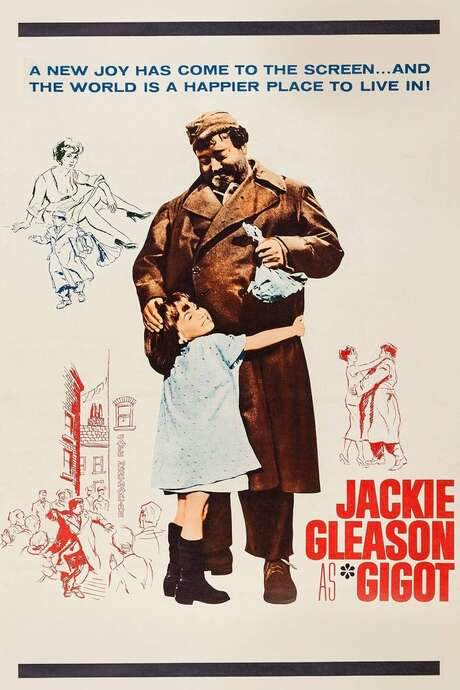
Gigot (1962) movie poster

Timeline

Gigot (1962) Timeline Explained – Every Event in Order

Release, runtime and language
1962 · 104 mins · English
Loading streaming availability…
Directed by
Gene Kelly
Starring
Jackie Gleason, Albert Rémy, Jacques Marin, Jean Lefebvre, Germaine Delbat, Yvonne Constant

A new joy arrives on screen, brightening the world. This poignant comedy follows a mute janitor who befriends Nicole, the young daughter of a prostitute. Jackie Gleason displays his considerable talent without speaking, playing the bumbling, kind‑hearted Gigot. Gleason also wrote the story and its music.

On this page (6)
  1. 1 Where to watch
  2. 2 Events in order (12)
  3. 3 Timeline questions answered
  4. 4 Movie threads
  5. 5 Movies like Gigot
  6. 6 Every angle
Loading streaming availability…

12 events in order · contains spoilers

Gigot Timeline: Events in Chronological Order

Every key event of Gigot (1962) in order, scene by scene, with when and where it takes place. Use it to untangle flashbacks, time jumps and parallel storylines, to refresh your memory before the sequel or to find the exact scene you are thinking of.

  1. Gigot's quiet life in Ménilmontant

    Gigot is a mute janitor living in a squalid Parisian building in the Ménilmontant district. He endures condescension from neighbors but remains kind and protective toward children and animals. His days are punctuated by a fascination with funeral processions he cannot help but cry along with.

    When
    1920s
    Where
    Ménilmontant, Paris
  2. Chance encounter: Colette and Nicole seek shelter

    After being beaten in a pub, Colette and her young daughter Nicole huddle in a doorway seeking shelter. Gigot brings them to his dim basement to offer food, warmth, and a bed. Exhausted yet grateful, Colette accepts his help.

    When
    Evening
    Where
    Doorway, Paris
  3. Shelter and suspicion

    Inside the basement, Gigot grows fond of Nicole and is struck by her ignorance of church and God. He tries to explain faith but struggles, even punching himself to illustrate, leaving Nicole worried and trying to comfort him with a gesture of reassurance.

    When
    Night
    Where
    Gigot's basement, Paris
  4. Gigot's attempt to teach and reassure

    Gigot entertains Nicole with his old gramophone and feeds her, even dressing as a waiter to coax a smile from the girl. He also steps in to protect Colette's dignity when a man pays for her services on a bench near the merry-go-round. The confrontation leaves him battered by the aggressors.

    When
    Night
    Where
    Basement and nearby playground, Paris
  5. A desperate attempt to prove himself

    Colette pressures Gigot to prove he can provide a stable life, giving him only an hour to show his worth. Seizing a moment, he spots an unattended bakery till and takes money to secure a future for them.

    When
    Following morning
    Where
    Bakery, Paris
  6. The spree: new clothes and a feast

    With stolen funds, Gigot buys clothes for Colette and Nicole, a straw hat, and even a shave for himself. He treats them to a grand meal at a restaurant, imagining a life where they are cared for.

    When
    Afternoon
    Where
    Clothing shops and restaurant, Paris
  7. Morning threat from authorities

    The next morning, two bumbling bureaucrats threaten to deport Gigot to a home for the feeble-minded. The bakery discovers the theft, and Colette returns to find Gigot and Nicole missing, suggesting they have vanished into a hidden part of the city.

    When
    Morning
    Where
    Street and bakery, Paris
  8. Hidden basement and a dangerous play

    Gigot and Nicole hide in an abandoned basement chamber beneath the streets, and Gigot entertains her with dancing and song. Their carefree play is interrupted when the roof timbers threaten to collapse and Nicole nearly faints.

    When
    Afternoon
    Where
    Abandoned basement chamber, Paris
  9. The church, the gramophone, and the mob

    After a frantic escape from the startled crowd, Gigot rushes toward the church to fetch a doctor for Nicole. On the way back, he is spotted by the angry mob and flees, clutching the gramophone he saved for Nicole.

    When
    Late afternoon/evening
    Where
    Church and Paris streets
  10. The coal loader tragedy

    In the chase, the gramophone falls onto the conveyor of a coal loader, and Gigot climbs inside to retrieve it despite warning cries. The device dumps him and the gramophone down a chute into the river, while a crowd applauds the failed rescue and his hat floats away.

    When
    Evening
    Where
    Coal loader and river, Paris
  11. Funeral for the presumed dead

    Believing Gigot to be dead, the locals organize a solemn funeral, burying only his hat as a stand-in. Gigot, however, has survived and hides nearby, watching the procession with a mix of sorrow and irony.

    When
    Evening
    Where
    Funeral site, Paris
  12. The reveal and the chase resumes

    From his hiding place, Gigot witnesses the makeshift funeral and realizes the procession is for him. He is spotted by the crowd, and the chase begins anew as they try to accost him once more.

    When
    Night
    Where
    Parish streets, Paris

Last updated: October 07, 2025 at 08:26

Was this helpful?

Timeline questions answered

Gigot Timeline Explained: Your Questions Answered

When does it happen, and why in that order? The questions people ask about the chronology of Gigot (1962): time jumps, flashbacks, cause and effect between scenes and the correct order of events, each answered with spoilers.

Q1

Why does Gigot steal money from the bakery?

Gigot steals from the bakery because Colette pressures him to prove he can provide for her and Nicole. She tells him she needs a "man of means" to give Nicole a better future and gives him only a short time to prove his worth. Desperate to keep the makeshift family together, Gigot takes money from the unattended till to buy them new clothes and a lavish meal, imagining a life where he can care for them properly.

  • bakery theft
  • stolen money
  • Colette's ultimatum
  • Gigot's desperation
Q2

Why is Gigot drawn to funeral processions?

Gigot cannot resist attending funeral processions, often crying alongside strangers even when he didn't know the deceased. This habit reveals his deep sensitivity and empathy, contrasting sharply with the harsh world that regularly dismisses him. His mute existence makes him particularly attuned to grief and loss, and his tears at funerals represent his only outlet for the emotional pain he carries silently.

  • funeral processions
  • Gigot's emotions
  • empathy
  • grief
Q3

Does Gigot die in the ending?

Gigot does not die. After falling into the river with the gramophone, the crowd mistakenly believes he has drowned. The townspeople organize a funeral for him, burying only his hat as a token of mourning. However, Gigot survives and watches his own funeral from hiding, irony and sorrow evident on his face. He is later spotted by the crowd, and the chase begins anew.

  • Gigot's death
  • funeral
  • survival
  • happy ending
  • river rescue
Q4

Why does Colette leave with her ex-boyfriend?

Colette leaves with her ex-boyfriend because he returns eager to reclaim her, and she remains torn between wanting a stable life and the cycle of her past. Although Gigot provided kindness and hope, the pimp persuades her to wait, delaying any real escape to a safer life. Her decision reflects the desperation of her situation and the difficulty of breaking free from her circumstances.

  • Colette's choice
  • ex-boyfriend
  • pimp
  • leaving Gigot
Q5

What happens to Nicole after Gigot falls into the river?

Nicole is left in the care of Colette after Gigot's apparent death. While the movie doesn't explicitly show Nicole's fate, the family unit Gigot tried to create ultimately dissolves. The film suggests that Nicole returns to her mother's uncertain world, losing the brief stability and joy Gigot provided in the basement.

  • Nicole's fate
  • Colette
  • family separation
  • Gigot's loss
Q6

Why does the mob chase Gigot through the streets?

The mob chases Gigot because they believe he has stolen from the bakery and become desperate enough to risk everything. Additionally, Gigot's status as a mute outsider in Ménilmontant makes him an easy target for the community's suspicion and hostility. Their anger escalates as they see him clutching the gramophone, interpreting his actions as those of a thief fleeing with his spoils.

  • mob chase
  • bakery theft
  • crowd hostility
  • Paris streets
Q7

Why does the community hold a funeral for Gigot when they think he's dead?

The community holds a funeral for Gigot because they are overwhelmed by remorse for their earlier cruelty toward him. Despite their mocking and condescension throughout the film, the sudden tragedy of his apparent death triggers collective guilt and a need for redemption. They bury only his hat, symbolizing their recognition of his humanity and their regret for how they treated him.

  • community redemption
  • guilt
  • funeral procession
  • remorse
Q8

What does the gramophone represent in the movie?

The gramophone represents joy, hope, and the transformative power of kindness in an otherwise harsh world. Gigot uses it to entertain Nicole, playing music and dancing to bring light into their dark basement. His desperate attempt to save it from the coal loader, even at great personal risk, shows his commitment to preserving happiness for the child he loves.

  • gramophone
  • joy
  • hope
  • music
  • Nicole
  • Gigot's sacrifice
Q9

Why does Gigot punch himself when trying to explain God to Nicole?

When Nicole points to a crucifix and asks about God, Gigot struggles to explain the mystery of faith without words. Frustrated by his inability to communicate this abstract concept, he lashes out at himself, punching his own chest to illustrate sacrifice and Christ as the savior. Nicole, worried, calms him by imitating his gestures, showing their unique bond through silent understanding.

  • Gigot's frustration
  • explaining God
  • faith
  • Nicole
  • silent communication
Q10

Why are bureaucrats trying to send Gigot to a home for the feeble-minded?

Two bumbling bureaucrats arrive to take Gigot to a home for the feeble-minded, likely due to his status as a mute janitor perceived as simple or vulnerable. This reflects the era's willingness to institutionalize those seen as different or helpless. The timing, right after the bakery theft is discovered, suggests authorities may have also been alerted to the crime, compounding suspicion against him.

  • bureaucrats
  • home for feeble-minded
  • Gigot's vulnerability
  • institutionalization
Q11

Why does Gigot risk his life to save the gramophone?

Gigot risks his life to save the gramophone because it represents the only source of joy he can give Nicole. After she is injured during the basement collapse and the crowd chases them, her only wish is to hear the music again. Determined to preserve this small happiness for her, Gigot climbs into the dangerous coal loader, sacrificing his own safety to retrieve the device.

  • gramophone rescue
  • coal loader
  • Nicole's wish
  • sacrifice
Q12

Why does Colette accept Gigot's help after being beaten at the pub?

Colette accepts Gigot's help because she and Nicole are exhausted, cold, and have nowhere else to turn after being beaten. Although initially wary of the mute stranger, she has no choice but to accept his offer of shelter in his dim basement. This act of desperate trust leads to the pivotal relationship that defines the film.

  • Colette's trust
  • shelter
  • desperation
  • Gigot's kindness

Movie threads

More Movies Like Gigot, by Mood & Story

Curated lists built around what makes Gigot tick: the same mood, the same kind of story or the same emotional payoff. Each list explains why these movies belong together.

Movies about silent guardians like Gigot

Gentle tales where unlikely heroes find purpose through protecting the vulnerable. Discover movies like Gigot that feature gentle, often silent protagonists who become unexpected protectors. If you enjoyed the heartfelt, non-verbal bond between Gigot and the little girl, you'll appreciate these touching stories of quiet heroism and found family.

  • gentle
  • tender
  • heartfelt
  • melancholic
  • lonely
  • poignant
  • Tone: bittersweet, tender
  • Pacing: slow, deliberate
Why these movies?

The story pattern: Stories in this thread follow a character, often an outcast or someone with a communication barrier, who steps into a protective role for a child or another vulnerable person. The narrative explores the growth of this tender, often unspoken relationship and the sacrifices made, typically culminating in a bittersweet realization of love and loss.

Why they belong together: These movies are grouped by their shared focus on a specific, gentle character archetype and the emotional journey of silent guardianship. They share a melancholic yet tender mood, a slow, character-driven pace, and a central theme of kindness flourishing in adversity.

Bittersweet found family movies like Gigot

Heartfelt stories where temporary connections provide solace against hardship. Explore films similar to Gigot that depict the formation and delicate beauty of a found family amidst poverty or hardship. If the poignant, temporary bond in Gigot moved you, these stories of heartfelt connections and bittersweet partings will capture the same mood.

  • bittersweet
  • poignant
  • heartfelt
  • melancholic
  • lonely
  • tender
  • Tone: bittersweet, poignant
  • Pacing: slow, reflective
Why these movies?

The story pattern: The narrative pattern involves two or more characters from difficult circumstances finding comfort and purpose in each other, creating a makeshift family. The central conflict often comes from external pressures that threaten this fragile unit, leading to an ending where the memory of the connection is precious, but its continuation is impossible.

Why they belong together: Movies in this thread share a core emotional experience: the intense joy of a found family juxtaposed with the pain of its inevitable fragility. They are united by a bittersweet tone, a focus on the power of human connection, and themes of poverty, loneliness, and social ostracism.

If you liked this

Movies Like Gigot

Similar movies to Gigot: the same genre, themes or kind of story. Each one comes with its own plot summary, timeline and ending explained.

Browse all movie summaries

Every angle

Gigot (1962) Explained: Plot, Timeline & Characters

Everything about Gigot in one place: what happens in the plot summary, the timeline in chronological order, the characters and meaning and a spoiler-free summary. What's After the Movie adds the cast, box office and post-credit scenes.

Coming soon on iOS and Android

The Plot Explained Movie Summary App

Plot summaries, endings explained and timelines on your phone. Catch up on any movie in minutes, save your favorites and never miss a twist again.

Be the first to know when we launch. Your email stays private, always.

Learn more about the app