Plot Explained Spoilers guaranteed!
Plot Explained

Browse by genre

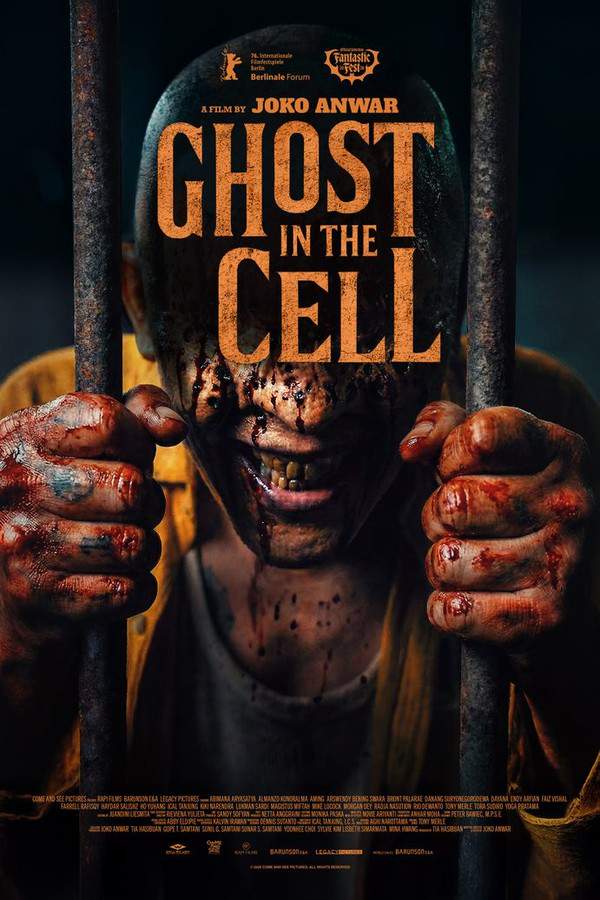
Ghost in the Cell (2026) movie poster

Timeline

Ghost in the Cell (2026) Timeline Explained – Every Event in Order

Release, runtime and language
2026 · 1 h 46 m · Indonesian
Directed by
Joko Anwar
Starring
Rio Dewanto, Lukman Sardi, Abimana Aryasatya, Haydar Salishz, Kiki Narendra, Bront Palarae

In a maximum‑security prison ruled by rival gangs and a ruthless warden, a new inmate’s arrival sparks a series of gruesome murders displayed in macabre tableaux. The prisoners must set aside their feuds to uncover an unseen, otherworldly force stalking the cells, as the killings become increasingly grotesque. No one is safe.

On this page (4)
  1. 1 Events in order (15)
  2. 2 Timeline questions answered
  3. 3 Movie threads
  4. 4 Every angle

15 events in order · contains spoilers

Ghost in the Cell Timeline: Events in Chronological Order

Every key event of Ghost in the Cell (2026) in order, scene by scene, with when and where it takes place. Use it to untangle flashbacks, time jumps and parallel storylines, to refresh your memory before the sequel or to find the exact scene you are thinking of.

  1. Dimas Works Late

    The movie opens with journalist Dimas staying late at the office to finalize his article about an illegal nickel mining operation in Borneo. This operation has led to numerous worker casualties under strange circumstances, setting the tone for the unfolding mystery.

    When
    Night
    Where
    Dimas's Office
  2. Boss Criticizes Article

    Dimas submits his article to his boss, who harshly criticizes it for potentially damaging the newspaper’s economic reputation. He orders Dimas to rewrite the piece, reflecting the financial struggles of the publication and showcasing the pressures journalists face.

    Where
    Dimas's Office
  3. Boss's Mysterious Death

    After the confrontation with Dimas, the boss has a tense phone call with his wife, indicating his deteriorating mood. He is soon killed by an unseen figure who stabs him multiple times with a pen, leaving a horrifying scene behind.

    Where
    Dimas's Office
  4. Shift to Labuhan Angsana Prison

    The perspective changes to Labuhan Angsana prison, depicting the inmates' chaotic life filled with oppression and violence. We are introduced to key characters, including Anggoro, Six, Wildan, Pendi, and Irfan, giving insight into their struggles within the prison.

    Where
    Labuhan Angsana Prison
  5. Dimas Joins the Prison

    Dimas arrives at the prison as a new inmate, falsely accused of murdering his boss. His presence marks a turning point as the other inmates begin to sense an ominous shift in their environment.

    Where
    Labuhan Angsana Prison
  6. First Murder in the Showers

    In a chilling event, a violent prisoner dies in the showers after encountering a doppelgänger with no eyes. This gruesome incident ignites fear among the inmates as they begin to speculate about the presence of a ghostly figure.

    Where
    Prison Showers
  7. Two Deaths Raise Alarm

    Shortly after the first murder, another inmate faces a similar fate after learning about his wife's infidelity. This rapid succession of violent deaths leads the prisoners to theorize that a ghost is targeting those with negative auras.

    Where
    Labuhan Angsana Prison
  8. Discovery of Auras

    Six, one of the main characters, reveals his ability to see auras and specifies that the recent victim had a red aura. The group discusses the significance of maintaining positive auras to avoid becoming the next victims.

    Where
    Labuhan Angsana Prison
  9. Dance and Pray to Survive

    The prisoners resolve to keep their auras positive through prayer and dance in an effort to fend off the ghost. However, when the dance teacher is killed, it becomes clear that this strategy might not be sufficient for survival.

    Where
    Dance Room, Prison
  10. Call to Action

    Anggoro rallies the other prisoners, emphasizing the need to confront the ghost head-on. They theorize that Dimas brought the ghost from Borneo, and it is now targeting those close to him.

    Where
    Labuhan Angsana Prison
  11. Politician's Block Reveal

    One of the guards informs the prisoners about a corrupt politician residing in luxury within the prison. This politician is linked to the illegal mining operation and is seen as a potential target for the ghost's wrath.

    Where
    Politician's Block, Prison
  12. Setting the Trap

    To enable the ghost to attack the politician, the prisoners work together to create a negative aura around him. This is accomplished when the professor reminds the politician of his corrupted past, triggering feelings of shame and guilt.

    Where
    Politician's Block, Prison
  13. Ghost Kills Politician

    Finally, the ghost manifests and kills the politician, marking the climax of the prisoners' struggle against the supernatural. With Dimas and the group believing the ghost is appeased, they feel a sense of relief.

    Where
    Politician's Block, Prison
  14. Dimas's Exoneration

    Six months later, Dimas is exonerated from the charges of murder after CCTV evidence proves his innocence. This newfound freedom comes as a surprise, and he prepares to leave the prison behind for good.

    Where
    Labuhan Angsana Prison
  15. Final Goodbye

    As Dimas bids farewell to his fellow inmates, he shares his intent to return to Borneo. His mission now is to bring the ghost back to its rightful place, providing a glimpse of redemption and purpose beyond the prison walls.

    Where
    Labuhan Angsana Prison

Last updated: October 02, 2026 at 03:21

Was this helpful?

Timeline questions answered

Ghost in the Cell Timeline Explained: Your Questions Answered

When does it happen, and why in that order? The questions people ask about the chronology of Ghost in the Cell (2026): time jumps, flashbacks, cause and effect between scenes and the correct order of events, each answered with spoilers.

Q1

Who actually killed Dimas's editor at the start?

The editor is killed by an unseen assailant who stabs him repeatedly with a pen, a murder that is later linked to the same otherworldly force stalking the prison. The killing happens right after a reflective figure briefly appears in the window behind the editor, implying the ghost had already followed Dimas from his investigation into the Borneo mining deaths. The scene is staged so that Dimas is found standing over the body, which is why he is later charged with the murder.

Foreshadowing: The haunting figure visible in the window's reflection right before the attack is the first hint that the Borneo killings and the prison murders share the same supernatural source.

  • editor murder
  • pen stabbing
  • ghost killing
  • opening scene
Q2

Why was Dimas framed for his editor's murder?

Dimas was convicted because he was the only other person in the office when his editor was found stabbed and hanging from the ceiling fan. Since the actual killer was a supernatural entity that left no traceable evidence, the investigation had no alternative suspect, and Dimas's proximity to the victim made him the obvious target. The CCTV footage that eventually clears him only surfaces six months later, long after he has already been imprisoned.

Foreshadowing: Dimas submitting his article about the mining deaths just before the murder plants the idea that his investigation is what drew the entity to the office in the first place.

  • dimas framed
  • false accusation
  • editor death
  • cctv evidence
Q3

What is the ghost haunting the prison and where did it come from?

The inmates theorize that the ghost is a vengeful spirit born from the illegal nickel mining operation in Borneo, where workers died under mysterious and violent circumstances. Dimas's investigation into those deaths is believed to have followed him back to the prison, carrying the spirit with him. The ghost seems to feed on violent acts of its own, using the killings to rejuvenate itself rather than fading after each attack.

Foreshadowing: Dimas's late-night research into the unexplained mining deaths sets up the idea that the entity was attached to the story long before the prison events began.

  • ghost origin
  • borneo mining
  • vengeful spirit
  • supernatural entity
Q4

How do auras work and why does the ghost target people with red ones?

Six explains that he can perceive auras around people, and a red aura signals anger, guilt, or other negative emotions. The group concludes that the ghost is drawn to inmates radiating that negativity, which is why it attacks those harboring dark feelings. Once they understand the pattern, the prisoners try to neutralize their auras through prayer, art, and dance, hoping that positivity will make them invisible to the entity.

Foreshadowing: Six claiming to see spirits before any killing occurs plants the group's only tool for tracking the ghost's next move.

  • red aura
  • six sees spirits
  • ghost targeting
  • positive energy
Q5

Why was the dance instructor killed if he had a positive aura?

The dance instructor's death reveals that the ghost's targeting is not limited to people with red auras, shattering the group's assumption that positivity alone guarantees safety. He is killed right after harshly scolding his students, suggesting that a momentary flare of anger or negativity was enough to mark him, even if his baseline aura was calm. The killing is a turning point because it forces the inmates to abandon passive defense and seek a way to actively stop the ghost.

Foreshadowing: The strategy of praying and dancing is presented as foolproof, so its immediate failure signals that the ghost's rules are more complex than the group first believed.

  • dance instructor killed
  • positive aura fails
  • ghost rules
Q6

What does the eyeless doppelgänger in the showers represent?

The eyeless doppelgänger is the physical form the ghost takes when it attacks, appearing as an exact copy of its victim but with eyes blocked out by black dots. It is a visual signature of the entity's predatory method, mirroring its targets so the killing feels personal and intimate. The disfigured body left behind reinforces that the ghost does not just kill but consumes or corrupts its victims, fitting the pattern of the mutilated miners in Borneo.

Foreshadowing: The very first shower killing introduces the eyeless look that becomes the ghost's calling card for every subsequent attack in the prison.

  • eyeless doppelganger
  • shower murder
  • ghost appearance
  • first victim
Q7

Why does the ghost only attack people close to Dimas?

Anggoro and the others reason that the spirit attached itself to Dimas during his investigation in Borneo and needs to stay near him in order to act. Because the ghost can only manifest within a limited radius of its host, it hunts whoever happens to be in Dimas's immediate circle, which is why the violence is concentrated in his cellblock and surroundings. This rule is what eventually allows the inmates to bait the ghost toward a specific target by drawing that target close to Dimas.

Foreshadowing: The killings begin only after Dimas is admitted to the prison, hinting that the entity is tethered to his presence rather than to the building itself.

  • ghost tied to dimas
  • proximity attacks
  • spirit attachment
Q8

How did the prisoners trick the ghost into killing the politician?

After learning from a guard that a corrupt politician tied to the Borneo mining operation is being held in the prison's luxury wing, the inmates devise a plan to lure the ghost there. Pendi calls the politician and deliberately stirs up memories of his early, more principled days in politics, filling him with shame and guilt that manifest as a dark, vulnerable aura. Once the politician's negativity is primed and he is in close proximity to Dimas, the ghost strikes, eliminating the man the prisoners want punished.

Foreshadowing: Pendi's status as a former professor makes him the natural choice to manipulate the politician's emotions, a skill that was hinted at in earlier conversations about his past.

  • politician trap
  • pendi phone call
  • corrupt target
  • ghost lured
Q9

Why is a powerful politician being held inside the same prison?

A guard reveals that the politician linked to the illegal nickel mining scheme is being kept in a special luxury section of Labuhan Angsana, presumably because his connections keep him protected even after arrest. His presence is what makes the ghost's rampage useful rather than just tragic, because he is a target the inmates want eliminated for reasons beyond their own survival. The privileged wing also explains how someone so connected could end up in a notoriously violent facility without facing the usual brutality.

Foreshadowing: Earlier hints about corruption and powerful people evading justice set up the reveal that the mining operation has political protection.

  • corrupt politician
  • luxury prison wing
  • political cover-up
Q10

How is Dimas finally proven innocent?

Six months after the ghost's rampage ends, new surveillance footage surfaces showing that Dimas was nowhere near the scene when his editor was killed. The footage had apparently been overlooked or withheld during the original investigation, and once it becomes public, the murder charge against him collapses. His release gives the story closure on the wrongful conviction while also setting up his next move.

Foreshadowing: The opening murder scene deliberately shows Dimas leaving the office in a way that could later be corroborated by cameras, planting the possibility of a recording.

  • dimas exonerated
  • cctv footage
  • wrongful conviction
  • six months later
Q11

Why does Dimas decide to return to Borneo at the end?

Dimas announces that he wants to go back to Borneo to escort the ghost to what he believes is its rightful place, treating the spirit as something that needs to be returned to the site of its original trauma. His decision reframes the whole story, suggesting that the prison killings were never the final chapter but a detour caused by his investigation pulling the entity into the wrong location. By going back, he is accepting responsibility for unleashing it and committing to finishing what his article started.

Foreshadowing: Dimas's stubborn dedication to the Borneo story from the opening scene foreshadows that he will not abandon it even after prison changes him.

  • dimas borneo return
  • ghost origin
  • ending plan
  • unfinished story
Q12

What happens to the other inmates after Dimas is released?

Anggoro, Six, Wildan, Pendi, and Irfan are all still serving their sentences when Dimas walks free, and the film leaves them inside Labuhan Angsana. Their situation is bittersweet because they helped survive the supernatural threat but receive none of the recognition or release that Dimas does. The ending implies that their ordinary legal battles continue while Dimas pursues a far more extraordinary one in Borneo.

Foreshadowing: Anggoro's earlier complaints about being repeatedly given extended sentences for defending other inmates hint that the system will not easily let him go.

  • anggoro
  • six
  • wildan
  • pendi
  • irfan
  • inmates after ending
Q13

How does the ghost use the killings to sustain itself?

The inmates deduce that the ghost feeds on the violence it creates, using each murder to recharge and continue hunting rather than weakening after an attack. This is why the killings escalate in brutality and frequency rather than tapering off, and why it needs a steady supply of emotionally charged victims. The theory also explains why a target with strong negative energy like the politician is so attractive, since the intensity of the kill fuels the spirit more than an ordinary death would.

Foreshadowing: The escalating grotesque nature of the tableaux in which victims are displayed hints early on that each kill is producing more energy for the next one.

  • ghost feeding
  • escalating murders
  • spirit rejuvenation
  • violent energy
Q14

Is the ghost really gone after the politician's death?

The prisoners believe the ghost has departed because Six can suddenly sense Dimas's aura, something he could not do while the spirit was actively hunting. Their sense of relief is genuine, but Dimas's decision to return to Borneo suggests he is not fully convinced the threat is over. The film leaves the ghost's final status ambiguous, hinting that appeasing it in the prison may only have paused the cycle rather than ended it.

Foreshadowing: The fact that the ghost's origin in Borneo is never addressed in the prison implies that the entity's journey is far from complete.

  • ghost departed
  • six senses dimas
  • ghost appeased
  • ending ambiguity

Movie threads

More Movies Like Ghost in the Cell, by Mood & Story

Curated lists built around what makes Ghost in the Cell tick: the same mood, the same kind of story or the same emotional payoff. Each list explains why these movies belong together.

Confined supernatural dread like in Ghost in the Cell

Trapped in one place while something invisible stalks the shadows. Movies like Ghost in the Cell deliver claustrophobic horror set inside inescapable locations where an unseen supernatural force stalks the inmates. If you liked the oppressive prison atmosphere, the escalating macabre violence, and the dread of being trapped with something otherworldly, these films will hit the same nerve. Expect dark, heavy, high-intensity horror with graphic violence and a paranoid mood that never lets up.

  • claustrophobic
  • oppressive
  • paranoid
  • eerie
  • macabre
  • dread-filled
  • Tone: dark, oppressive, paranoid
  • Pacing: variable, tightening dread
Why these movies?

The story pattern: Characters are sealed inside a hostile, often institutional location where rules of the outside world no longer apply. A series of strange, escalating events forces them to realize a hidden, often supernatural, force is targeting them. Trust collapses, alliances form out of necessity, and the narrative builds toward either exposing the threat or escaping with their lives — often at great cost. The confined setting magnifies every scare and forces intimate, desperate character dynamics.

Why they belong together: These films are grouped for their shared sense of physical and psychological confinement, their reliance on an unseen or barely-seen antagonist, and their commitment to grim, graphic horror. They pair institutional or societal pressure (prison, asylum, siege) with supernatural or cosmic dread, producing stories that feel both socially relevant and viscerally terrifying. The pacing tends to tighten as the threat becomes undeniable.

Grotesque murder puzzles like in Ghost in the Cell

A grotesque puzzle where every corpse is a clue no one wants to read. Movies like Ghost in the Cell turn brutal killings into a macabre code that characters must crack before becoming the next victim. If you liked the escalating tableaux, the investigative pressure, and the mix of supernatural dread with systemic corruption, these dark horror films deliver the same unsettling experience. Expect high-intensity, graphic, and heavy stories built around decoding a disturbing killer's signature.

  • macabre
  • investigative
  • grotesque
  • paranoid
  • ritualistic
  • disturbing
  • Tone: dark, grim, investigative
  • Pacing: variable, building investigation
Why these movies?

The story pattern: The story opens with a shocking, stylized killing that sets the rules of the game. As more victims fall in increasingly grotesque or symbolic ways, a small group — often an outsider dropped into a hostile community — realizes the murders form a pattern tied to a deeper injustice, guilt, or supernatural grievance. The narrative alternates between slow investigative deduction and sudden bursts of violent horror, culminating in a confrontation that exposes the rot beneath the community while leaving survival uncertain.

Why they belong together: These films share a focus on ritualized, theatrical violence that functions as a message, and on protagonists who must read that message to stay alive. They blend whodunit structure with horror atmosphere, often layering in social commentary about corruption, guilt, or institutional failure. The emotional register is consistently dark and heavy, with pacing that breathes during clue-gathering and spikes during kill sequences.

Every angle

Ghost in the Cell (2026) Explained: Plot, Timeline & Characters

Everything about Ghost in the Cell in one place: what happens in the plot summary, the timeline in chronological order, the characters and meaning and a spoiler-free summary. What's After the Movie adds the cast, box office and post-credit scenes.

Coming soon on iOS and Android

The Plot Explained Movie Summary App

Plot summaries, endings explained and timelines on your phone. Catch up on any movie in minutes, save your favorites and never miss a twist again.

Be the first to know when we launch. Your email stays private, always.

Learn more about the app