Plot Explained Spoilers guaranteed!
Plot Explained

Browse by genre

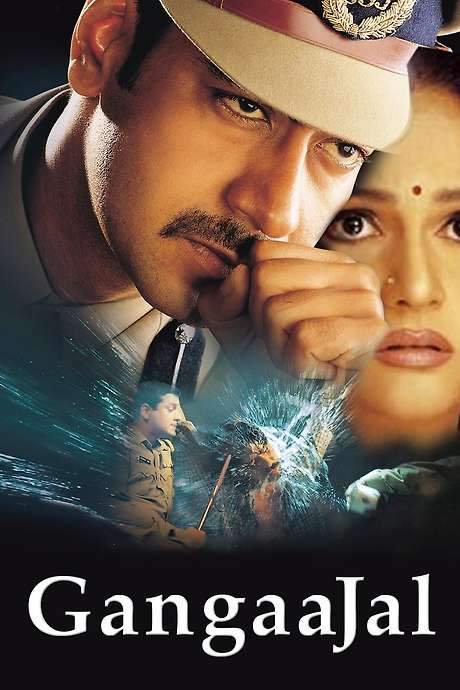
Gangaajal (2003) movie poster

Timeline

Gangaajal (2003) Timeline Explained – Every Event in Order

Release, runtime and language
2003 · 157 mins · Hindi
Directed by
Prakash Jha
Starring
Ajay Devgn, Mohan Agashe, Kranti Redkar, Anup Soni, Yashpal Sharma, Ayub Khan

An upright Superintendent of Police, IPS Amit Kumar, is posted to a town plagued by violent crime and tasked with restoring order. As he works to curb the lawlessness, he discovers that the rot runs deep, forcing him to battle entrenched corruption within both the police force and the local political establishment.

On this page (5)
  1. 1 Events in order (12)
  2. 2 Timeline questions answered
  3. 3 Movie threads
  4. 4 Movies like Gangaajal
  5. 5 Every angle

12 events in order · contains spoilers

Gangaajal Timeline: Events in Chronological Order

Every key event of Gangaajal (2003) in order, scene by scene, with when and where it takes place. Use it to untangle flashbacks, time jumps and parallel storylines, to refresh your memory before the sequel or to find the exact scene you are thinking of.

  1. Amit Kumar arrives in Tejpur to confront a corrupted system

    Inspector Amit Kumar arrives in Tejpur, a district wracked by crime and a police force weighed down by crumbling infrastructure. He immediately sees laxity and a system where fear and influence shape every investigation. The town's stability seems tied to Sadhu Yadav and his son Sunder, whose brutality masks the rot at the core of law and order.

    Where
    Tejpur
  2. Nunwa encounter and Bachcha's suspension

    Bachcha Yadav visits Sadhu's hideout and encounters Nunwa, leading to Nunwa’s death in what is framed as an encounter. The incident triggers a suspension for Bachcha and deepens his loyalty test to Sadhu. He seeks help from Sadhu, only to discover that his patron has abandoned him.

    Where
    Sadhu's hideout
  3. Sunder abducts a missing woman; Amit acts

    Sunder Yadav abducts a missing young woman, triggering a high-stakes pursuit. Amit persuades the woman’s mother to file a formal complaint to press the case forward. Bachcha pressures Amit to intensify the investigation, seeing an opportunity to regain leverage.

    Where
    Tejpur
  4. Factory stakeout and staged arrest

    Sunder is lured into a factory where Amit and his team close in, culminating in a brief clash and Sunder’s capture. The case stalls when the woman’s mother withdraws testimony after threats from DIG Verma, who openly supports Sadhu. The judge later rules without credible evidence, freeing Sunder.

    Where
    Factory; Tejpur court
  5. Judicial setback and miscarriage of justice

    With no credible evidence, the local judge frees Sunder, signaling a miscarriage of justice that inflames public anger. The decision reinforces a perception that the system is under the influence of Sadhu and his allies. Amit vows to expose the truth despite the setback.

    Where
    Tejpur Court
  6. Vandalism attempt and Amit’s intervention

    Sadhu’s men attempt to vandalize the pan vendor’s shop who testified against Sunder. Amit steps in to halt the mob and orders the attackers jailed, asserting that justice must operate within the law. The incident heightens tensions between reform-minded officers and corrupt elements.

    Where
    Pan vendor's shop, Tejpur
  7. Jail violence and the gangaajal moment

    Tensions flare as Sunder's henchmen clash with Bachcha's officers, and acid is thrown into rivals’ eyes inside the jail in a brutal act locally dubbed gangaajal. Anuradha, caught in the crossfire, is wounded. The city spirals as vigilante violence circulates through the institutions.

    Where
    Tejpur Jail
  8. Bachcha’s confession to Amit

    Bachcha writes a letter confessing his complicity in the corrupt system and leaves it at Amit’s desk. The confession exposes the depth of institutional complicity and hints at links to Sadhu’s network. Amit is left to confront the magnitude of the rot within the department.

    Where
    Amit’s desk, Tejpur
  9. Bachcha’s family hostage and murder

    Bachcha returns home to find his wife and child hostage, a grim consequence of the power struggle surrounding Sunder. In the final confrontation, Sunder shoots Bachcha in the eyes, killing him. The violence underscores the reach of vengeance when the system falters.

    Where
    Bachcha's home, Tejpur
  10. Amit detains the culprits but the crowd demands vengeance

    Amit detains Sadhu and Sunder, attempting to keep them from the streets and prevent mob justice. He urges that the law must prevail, but the crowd’s fury proves difficult to quell. Sadhu and Sunder slip away, mounting a final stand elsewhere.

    Where
    Tejpur streets
  11. Final confrontation and death of Sadhu and Sunder

    The final confrontation unfolds at a family's home where Sadhu and Sunder confront Amit’s pursuit. They crash onto a plough and are fatally pierced in the eyes, a brutal, symbolic end that seals the film’s tension between justice and vigilantism. The city watches as the two power brokers die in a shocking moment.

    Where
    Family home, Tejpur
  12. Aftermath and the divided Tejpur

    Gangaajal becomes a grim symbol of extra-judicial punishment and the fault lines within Tejpur’s institutions widen. Most officers deny involvement, but Bachcha’s confession and the public mood reveal deep-seated fractures between reformers and entrenched powers. The story closes with a wary sense of the price paid for attempting to restore order.

    Where
    Tejpur

Last updated: October 09, 2025 at 16:51

Was this helpful?

Timeline questions answered

Gangaajal Timeline Explained: Your Questions Answered

When does it happen, and why in that order? The questions people ask about the chronology of Gangaajal (2003): time jumps, flashbacks, cause and effect between scenes and the correct order of events, each answered with spoilers.

Q1

Why was Inspector Bachcha Yadav suspended after Nunwa's death?

Bachcha Yadav was suspended because the Nunwa encounter was staged as a fake police operation. When Amit Kumar investigated, he discovered that Nunwa's killing was orchestrated by Sadhu's men and that Bachcha had been involved in presenting it as a legitimate encounter. The department took disciplinary action against Bachcha to maintain the appearance of accountability, even though the entire system was compromised.

Foreshadowing: Earlier in the film, Bachcha is shown visiting Sadhu's hideout, establishing his loyalty to the corrupt network.

  • bachcha yadav suspension
  • nunwa encounter
  • police corruption
  • tejpur police
Q2

Why did the mother withdraw her testimony against Sunder Yadav?

The mother of the kidnapped woman withdrew her testimony after receiving direct threats from DIG Verma, who openly supported Sadhu Yadav's criminal empire. DIG Verma made it clear that continuing the case would endanger her family's safety. Fearing for her life, she chose to recant her statement, which led the judge to free Sunder due to lack of credible evidence.

Foreshadowing: The DIG's alignment with Sadhu was hinted at earlier when he openly protected the Yadav family from legal consequences.

  • witness intimidation
  • dig verma
  • sunder yadav
  • kidnapping case
  • tejpur court
Q3

What was the gangaajal incident in Tejpur Jail?

Gangaajal refers to the brutal act of throwing acid into the eyes of rival gang members inside Tejpur Jail. The incident occurred when Sunder Yadav's henchmen clashed with Bachcha Yadav's officers inside the prison. The attack left several rivals blinded, and Anuradha was accidentally caught in the crossfire, getting wounded by acid. The term gangaajal became a grim symbol of extra-judicial violence that had infiltrated the justice system.

Foreshadowing: The jail violence was foreshadowed by the earlier clash between Sunder's men and Bachcha's officers in the streets.

  • gangaajal
  • acid attack
  • jail violence
  • tejpur jail
  • sunder yadav henchmen
Q4

Why did Bachcha Yadav write a confession letter to Amit Kumar?

Bachcha Yadav wrote the confession letter to expose the deep-rooted corruption within the Tejpur police force. In the letter, he admitted his complicity in the corrupt system, including his involvement in the staged encounters and his connections to Sadhu's network. He left the letter on Amit's desk as a way to finally tell the truth, though he later abandoned the idea of facing consequences and returned to his old ways.

Foreshadowing: Bachcha's internal conflict was visible when Sadhu abandoned him after his suspension, showing his precarious position between the law and criminal elements.

  • bachcha confession
  • corruption letter
  • police complicity
  • amit kumar
Q5

How did Bachcha Yadav die?

Bachcha Yadav was killed by Sunder Yadav, who shot him directly in the eyes. After Bachcha returned home, he discovered that Sunder had taken his wife and child hostage. During the violent confrontation, Sunder shot Bachcha in the eyes, killing him in a brutal act of vengeance. This mirrored the gangaajal incident where acid was thrown into people's eyes, creating a tragic symmetry.

Foreshadowing: The eye-for-eye motif was established earlier with the gangaajal acid attacks in jail.

  • bachcha yadav death
  • sunder kills
  • hostage situation
  • eye shooting
Q6

Why did Amit Kumar allow the mob to pursue Sadhu and Sunder?

Amit Kumar detained Sadhu and Sunder to prevent immediate mob justice, insisting that the law must take its course. However, he could not fully control the enraged crowd. The mob's fury was too intense to contain, and while Amit tried to uphold legal procedures, Sadhu and Sunder ultimately escaped and were killed by the mob in the final confrontation. This reflects the film's theme that when the justice system fails, the public takes matters into their own hands.

Foreshadowing: Public anger had been building since the judicial setback that freed Sunder despite clear evidence of kidnapping.

  • mob justice
  • amit kumar crowd
  • vengeance
  • sadhu sunder death
Q7

How did Sadhu and Sunder finally die?

Sadhu and Sunder died during a final confrontation at a family's home. As they tried to escape Amit's pursuit, they crashed onto a plough in the courtyard. The sharp implement pierced their eyes, killing them in a brutal, symbolic end. This death mirrored the film's recurring motif of eye-related violence, starting with the gangaajal acid attacks and ending with the same body part being destroyed.

Foreshadowing: The eye-for-eye symbolism was established through the gangaajal jail incident and Bachcha's murder.

  • sadhu yadav death
  • sunder yadav death
  • plough accident
  • symbolic ending
Q8

Why was Amit Kumar unable to secure justice through the legal system?

Amit Kumar failed to secure justice because the entire judicial system in Tejpur was compromised. DIG Verma openly protected Sadhu and Sunder, witnesses were threatened into silence, and the judge freed Sunder due to lack of credible evidence after the victim's mother withdrew her testimony. Political connections allowed the culprits to obtain bail repeatedly. Even when Amit gathered evidence, the system's corruption ensured that legal avenues were blocked at every turn.

Foreshadowing: The failure was hinted at from the beginning when Amit observed how fear and influence shaped every investigation in Tejpur.

  • justice system failure
  • corruption
  • tejpur court
  • legal setback
  • amit kumar
Q9

What happened to Anuradha during the gangaajal incident?

Anuradha was an innocent bystander who got caught in the crossfire during the jail violence. When Sunder's henchmen threw acid at their rivals inside Tejpur Jail, the acid struck Anuradha, wounding her. She became another victim of the escalating violence that had transformed the jail from an institution of justice into a battlefield of extra-legal revenge.

Foreshadowing: The escalating tensions between Sunder's and Bachcha's factions had been building throughout the film.

  • anuradha injury
  • acid attack
  • jail violence
  • crossfire victim
Q10

What happened to Sunder Yadav's mother?

Sunder Yadav's mother committed suicide after the devastating consequences of her son's actions. When Sunder disrupted a marriage ceremony, it triggered a chain of tragedies that left destruction in its wake. Overwhelmed by grief and shame at the catastrophe caused by her son's brutality, she took her own life. This tragic end highlighted the collateral damage of criminal violence on families.

Foreshadowing: The destructive pattern of Sunder's actions had been escalating throughout the film.

  • sunder mother suicide
  • family tragedy
  • despair
  • collateral damage

Movie threads

More Movies Like Gangaajal, by Mood & Story

Curated lists built around what makes Gangaajal tick: the same mood, the same kind of story or the same emotional payoff. Each list explains why these movies belong together.

Movies about systemic corruption like Gangaajal

Stories of individuals confronting deeply entrenched, overwhelming institutional corruption. If you liked Gangaajal's portrayal of a honest officer fighting a corrupt system, explore these other movies about systemic rot and institutional decay. Find similar stories of moral conflict within powerful, broken establishments and the struggle for justice.

  • grim
  • tense
  • frustrating
  • oppressive
  • cynical
  • brutal
  • Tone: dark, tense, bleak
  • Pacing: fast, relentless
Why these movies?

The story pattern: These stories typically follow a principled protagonist entering a corrupted environment. The plot revolves around their attempts to reform the system from within, facing relentless opposition, betrayal, and ethical dilemmas. The journey often reveals that the problem is not a few 'bad apples' but a deeply rooted institutional sickness.

Why they belong together: They are grouped by their shared focus on the theme of systemic failure. The emotional core is a heavy, often frustrating sense of battling an unbeatable foe, creating a tense, oppressive atmosphere where traditional notions of justice are constantly challenged.

Movies with vigilante justice like Gangaajal

Tales where justice is achieved through morally ambiguous, extra-legal means. For viewers who appreciated the complex, bittersweet ending of Gangaajal, this list features similar movies about vigilante justice and moral compromise. Discover other films where protagonists face the failure of law and order and are pushed toward extreme solutions.

  • brutal
  • tense
  • frustrating
  • vengeful
  • cathartic
  • somber
  • Tone: dark, bitter, harsh
  • Pacing: fast, building to a climax
Why these movies?

The story pattern: The narrative pattern involves a buildup of injustice that the official systems cannot or will not address. This pressure culminates in an explosive, often violent, act of retribution from outside the law. The ending acknowledges the necessity of the action but mourns the loss of principled justice, leaving a somber, contemplative feel.

Why they belong together: They share a specific narrative arc and emotional conclusion. The combination of heavy emotional weight, dark tone, and a victory that feels simultaneously necessary and tragic creates a powerful, coherent viewing experience focused on the cost of justice.

If you liked this

Movies Like Gangaajal

Similar movies to Gangaajal: the same genre, themes or kind of story. Each one comes with its own plot summary, timeline and ending explained.

Browse all movie summaries

Every angle

Gangaajal (2003) Explained: Plot, Timeline & Characters

Everything about Gangaajal in one place: what happens in the plot summary, the timeline in chronological order, the characters and meaning and a spoiler-free summary. What's After the Movie adds the cast, box office and post-credit scenes.

Coming soon on iOS and Android

The Plot Explained Movie Summary App

Plot summaries, endings explained and timelines on your phone. Catch up on any movie in minutes, save your favorites and never miss a twist again.

Be the first to know when we launch. Your email stays private, always.

Learn more about the app