










Plot Explained Spoilers guaranteed!
Plot Explained

Browse by genre

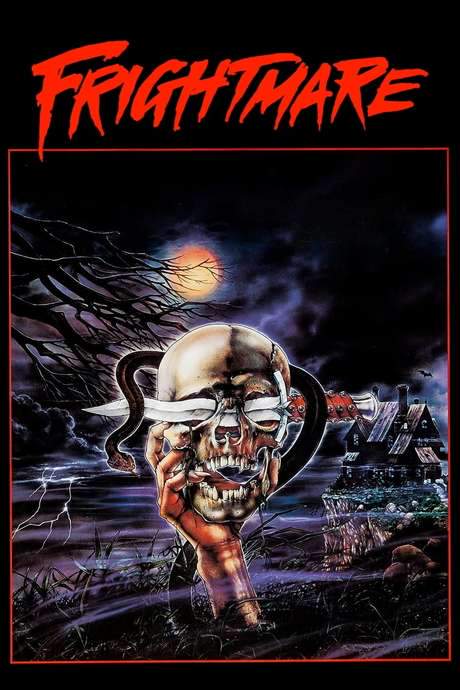
Frightmare (1974) movie poster

Timeline

Frightmare (1974) Timeline Explained – Every Event in Order

Release, runtime and language
1974 · 88 mins · English
JustWatch #28,002 3
Directed by
Pete Walker
Starring
Leo Genn, David McGillivray, Rupert Davies, Trisha Mortimer, John Yule, Fiona Curzon

In 1957 Dorothy Yates was locked away for murders and cannibalism, with husband Edmund jailed for covering them up. Fifteen years later they are declared sane and released, though doctors may have misread her darkness. Edmund and eldest daughter Jackie investigate the extent of Mother’s bloodlust, while youngest Debbie uncovers the family’s dark past.

On this page (6)
  1. 1 Where to watch
  2. 2 Events in order (14)
  3. 3 Timeline questions answered
  4. 4 Movie threads
  5. 5 Movies like Frightmare
  6. 6 Every angle

Where to watch

Where to Watch Frightmare (1974)

Where can you watch Frightmare? Stream, rent or buy it in the US, including on FlixFling, IndieFlix and Troma NOW: current JustWatch availability with up-to-date prices.

Streaming availability powered by JustWatch

14 events in order · contains spoilers

Frightmare Timeline: Events in Chronological Order

Every key event of Frightmare (1974) in order, scene by scene, with when and where it takes place. Use it to untangle flashbacks, time jumps and parallel storylines, to refresh your memory before the sequel or to find the exact scene you are thinking of.

  1. 1957: Cannibalism discovered and commitment

    Dorothy's cannibalistic acts are uncovered, and she and Edmund are committed to a mental institution in 1957. The authorities reveal Dorothy killed and partially ate at least six people. This dark episode explains the long shadow over the couple's lives.

    When
    1957
    Where
    Mental Institution
  2. Edmund convicted for involvement in 1957 murders

    During the 1957 trial, Edmund is convicted for his involvement in the killings. The records emphasize his role in the cover-up rather than direct murder. It is later implied he faked dementia to stay with Dorothy.

    When
    1957
    Where
    Courtroom
  3. Release from asylum and move to Surrey farmhouse

    After years of confinement, Dorothy and Edmund are released and relocate to an isolated Surrey farmhouse. They try to settle into a quiet life, but the old homicidal urges never truly disappear. The farmhouse becomes the breeding ground for the couple's revived deadly acts.

    When
    present-day (post-release)
    Where
    Surrey farmhouse
  4. Dorothy lures women for tea and tarot; killings resume

    Dorothy resumes luring lonely women to her home under the pretense of tea and tarot readings. The sessions end in violent murders and a cannibal feast, signaling a relapse of her trauma-driven compulsion. The present danger settles into the house and its surroundings.

    When
    present-day
    Where
    Surrey farmhouse
  5. Jackie visits from London with animal brains for Dorothy

    Jackie, Edmund's daughter by a previous marriage, secretly visits from London at night, delivering parcels that contain animal brains to Dorothy. Her gifts are a calculated act to feign murders and mollify Dorothy's murderous urges. She also uses the visits to monitor Dorothy's behavior.

    When
    present-day
    Where
    London
  6. Debbie and Alec push for trouble at a nightclub

    Debbie stays with Jackie and becomes involved with Alec Marini, a biker gang leader. Debbie pushes for trouble by persuading Alec to confront a barman at a nightclub after being refused a drink. The altercation escalates, and the bikers ambush him with a chain, though they flee when spotted.

    When
    present-day
    Where
    London
  7. Debbie hides the barman's body and clashes with Jackie

    Debbie hides the barman's body in the boot of a car to cover up the crime, and the police arrive later, none the wiser. Jackie berates Debbie for coming home late and hiding what happened. The incident foreshadows Debbie's growing alignment with her mother's murderous urges.

    When
    present-day
    Where
    London
  8. Jackie uncovers Debbie's involvement in murder

    Jackie finds Debbie's bloodied jacket and learns about Debbie's direct involvement in the murder. Debbie confirms her role to Jackie, escalating the family crisis. The revelation pulls Jackie deeper into the dangerous history surrounding her relatives.

    When
    present-day
    Where
    London
  9. Graham Heller arrives and investigates the past

    Graham Heller, an investigative psychiatrist, arrives to help uncover the family's history and Dorothy's cannibal past. He pieces together evidence linking Jackie's family to the killings and warns of the danger. His presence increases the tension around Dorothy and Debbie.

    When
    present-day
    Where
    London
  10. Police find the boot body; eye missing

    Graham and Jackie lead the police to the boot, where the body is discovered missing an eye, a mark reminiscent of Dorothy's victims. The discovery ties Debbie to the older murders and confirms the family connection to Dorothy's pathology. The case underscores the depth of the cycle of violence.

    When
    present-day
    Where
    Surrey farmhouse
  11. Dorothy and Debbie grow closer in secret

    Dorothy and Debbie begin meeting in secret more often, with Debbie increasingly adopting her mother's murderous impulses. Jackie remains oblivious to the extent of Debbie's involvement for much of this period. The pair's bond tightens around their shared dark heritage.

    When
    present-day
    Where
    Surrey farmhouse
  12. Debbie flees with Alec; Dorothy kills Alec

    Debbie escapes with Alec to the farmhouse, where Dorothy kills Alec. The act cements Dorothy's dangerous control over the household. Debbie's alignment with her mother grows darker and more permanent.

    When
    present-day
    Where
    Surrey farmhouse
  13. Graham confronts Dorothy; Debbie reveals his identity

    Graham arrives to talk to Dorothy, but Debbie reveals his identity to Dorothy, triggering a deadly confrontation. Dorothy kills Graham, leaving Jackie to confront the mounting danger. The confrontation raises the stakes to a boiling point.

    When
    present-day
    Where
    Surrey farmhouse attic
  14. Final standoff: Edmund, Jackie, and the impending tragedy

    Jackie arrives to confront the chaos, while Edmund blocks the door to restrain his own urges. The film ends with a freeze-frame of Edmund looking on in dismay as Dorothy and Debbie circle Jackie. A voice-over of the judge's words from 1957 echoes the tragedy.

    When
    present-day
    Where
    Surrey farmhouse attic

Last updated: October 09, 2025 at 11:24

Was this helpful?

Timeline questions answered

Frightmare Timeline Explained: Your Questions Answered

When does it happen, and why in that order? The questions people ask about the chronology of Frightmare (1974): time jumps, flashbacks, cause and effect between scenes and the correct order of events, each answered with spoilers.

Q1

Why does Jackie bring animal brains to Dorothy?

Jackie brings parcels containing animal brains to her father and stepmother as a calculated ruse to feign murder. By giving Dorothy what appears to be human victim remains, Jackie satisfies Dorothy's cannibalistic urges without actual killings, maintaining a fragile peace in the household while giving Jackie a sense of control over the family danger.

Foreshadowing: Earlier, Dorothy's history of killing and partially eating at least six people establishes why Jackie fears unleashing her stepmother's unchecked hunger.

  • jackie yates
  • animal brains
  • dorothy yates
  • control
  • cannibalism
Q2

Why was Dorothy released if she was still dangerous?

Dorothy and Edmund were declared sane and released from the mental institution after fifteen years, but the film suggests doctors may have misread her darkness. Despite appearing "cured" to the medical establishment, Dorothy secretly continues luring and killing women under the guise of tea and tarot readings, revealing her pathology remained intact.

Foreshadowing: The 1957 trial established Dorothy's cannibalism as a deep-seated compulsion, not something easily cured.

  • dorothy yates
  • release
  • mental institution
  • doctors
  • misread
Q3

How does Dorothy lure her victims?

Dorothy lures lonely young women to her remote Surrey farmhouse under the pretense of tea and a tarot-card reading session. These seemingly harmless meetings end with brutal murders and a ritual feast, using the facade of domestic hospitality to prey on vulnerable women.

Foreshadowing: The family's isolated farmhouse location provides the perfect setting for Dorothy's predatory activities away from scrutiny.

  • dorothy yates
  • victims
  • tea
  • tarot
  • lure
  • farmhouse
Q4

What caused Dorothy's cannibalism?

The film reveals Dorothy's cannibalism originated as a coping mechanism for childhood trauma. She discovered that as a child she had eaten parts of her pet rabbit, a horrifying self-discovery that shaped her later pathological actions and violent compulsions.

Foreshadowing: This childhood revelation connects to the cyclical nature of violence as Debbie begins exhibiting similar urges.

  • dorothy yates
  • childhood trauma
  • rabbit
  • cannibalism
  • origin
Q5

Why was Edmund convicted if he didn't directly kill anyone?

Edmund was convicted for his involvement in the 1957 murders, specifically for covering up Dorothy's crimes rather than directly committing the killings. Later, it emerges that he faked dementia during the trial to remain with Dorothy, a devoted husband who chose to protect his wife rather than distance himself from her crimes.

Foreshadowing: Edmund's devotion to Dorothy despite her nature is established early, explaining his willingness to accept any consequence.

  • edmund yates
  • convicted
  • cover-up
  • dementia
  • trial 1957
Q6

What happened to the barman Debbie killed?

After Alec's biker gang attacked and killed a barman at a London nightclub for refusing to serve underage drinkers, Debbie hid the body in the boot of a car. When Jackie and Graham led police to discover the body, they found it missing an eye, an injury that could not have been caused by a chain, indicating Dorothy's involvement.

Foreshadowing: The discovery of the missing eye connects Debbie's crime to Dorothy's signature brutality.

  • debbie yates
  • barman
  • body
  • car boot
  • missing eye
Q7

Why does Debbie align with her mother Dorothy?

Debbie begins secretly meeting with Dorothy without Jackie's knowledge and appears to have inherited her mother's pathological urges. This dark inheritance becomes evident as Debbie helps dispose of victims and ultimately stands with Dorothy against the others, embracing the family pathology.

Foreshadowing: Debbie's willingness to hide the barman's body and her reckless behavior foreshadow her alignment with Dorothy.

  • debbie yates
  • dorothy yates
  • inheritance
  • pathology
  • alignment
Q8

What happens to Graham Heller?

Graham Heller, the investigative psychiatrist who uncovered the family's dark history and helped Jackie investigate Dorothy, arrives at the farmhouse to confront Dorothy. However, Debbie reveals his identity to Dorothy, who kills him in the attic, eliminating the one person actively working to expose the family.

Foreshadowing: Graham's investigation throughout the film builds toward this fatal confrontation.

  • graham heller
  • dorothy yates
  • killed
  • attic
  • psychiatrist
Q9

Why does Edmund block the door at the end?

At the film's climax, Edmund follows Jackie to the attic where Dorothy and Debbie stand over Graham's body. When Jackie pleads for help, Edmund blocks the door, not to attack Jackie, but to restrain his own murderous urges that he struggles to control. He looks on in dismay as Dorothy and Debbie circle Jackie, frozen by his own internal battle.

Foreshadowing: Throughout the film, Edmund's complex role as both enabler and potential rescuer sets up this final moral paralysis.

  • edmund yates
  • door
  • block
  • restraint
  • urges
  • final scene
Q10

What does the ending imply about the family's future?

The film ends with a freeze-frame of Edmund looking on in dismay as Dorothy and Debbie circle the trapped Jackie. The judge's doubt-filled words from their 1957 sentencing echo over this final image, suggesting the family's cycle of violence will continue unchecked with Jackie now in mortal danger. There is no rescue, no redemption, only the solidification of the monstrous family unit.

Foreshadowing: The recurring motif of the judge's doubts about their release foreshadows this tragic conclusion.

  • ending
  • freeze-frame
  • judge
  • cycle of violence
  • family unit
  • jackie

Movie threads

More Movies Like Frightmare, by Mood & Story

Curated lists built around what makes Frightmare tick: the same mood, the same kind of story or the same emotional payoff. Each list explains why these movies belong together.

Familial horror movies like Frightmare

Stories where the true monster is the bloodline and its dark secrets. If you liked the disturbing family dynamics in Frightmare, explore more movies about inherited madness and dark family secrets. This collection features similar horror and thriller stories where the terror comes from within the home, focusing on psychological frailty and the monstrous potential of kin.

  • disturbing
  • unsettling
  • claustrophobic
  • grim
  • dread-filled
  • psychological
  • Tone: dark, grim, unsettling
  • Pacing: steady, methodical
Why these movies?

The story pattern: Narratives in this thread typically follow a character, often a child or younger relative, who uncovers or is forced to confront a horrifying truth about their family's past or present. The central conflict is internal, pitting the desire for normalcy against the inescapable pull of a grim inheritance, often leading to a bleak conclusion where the cycle of pathology continues.

Why they belong together: Movies are grouped here for their shared thematic focus on the family as a source of horror. They share a dark tone, heavy emotional weight, and a compelling, often tragic, exploration of how trauma and madness can be woven into the very fabric of a bloodline.
Slow burn horror movies with dread like Frightmare

A steady, suffocating build of tension where normalcy cracks under pressure. For fans of the steadily mounting tension in Frightmare, this list features similar slow burn horror films. These movies prioritize a pervasive sense of dread and psychological unease over jump scares, building an oppressive atmosphere that gets under your skin.

  • slow burn
  • dread-filled
  • unsettling
  • oppressive
  • claustrophobic
  • psychological
  • Tone: dark, tense, oppressive
  • Pacing: steady, slow burn
Why these movies?

The story pattern: Stories in this thread unfold at a deliberate pace, layering small revelations and escalating unease rather than relying on frantic action. The plot is often linear but focuses on the gradual deterioration of a situation or a character's sanity. The audience is placed in a state of sustained anticipation, feeling the inevitable tragedy approaching step by step.

Why they belong together: These films are united by their shared pacing and mood. They create a similar viewing experience defined by a steady, relentless build of dread, a claustrophobic atmosphere, and a focus on psychological horror that unsettles the viewer over time.

If you liked this

Movies Like Frightmare

Similar movies to Frightmare: the same genre, themes or kind of story. Each one comes with its own plot summary, timeline and ending explained.

Browse all movie summaries

Every angle

Frightmare (1974) Explained: Plot, Timeline & Characters

Everything about Frightmare in one place: what happens in the plot summary, the timeline in chronological order, the characters and meaning and a spoiler-free summary. What's After the Movie adds the cast, box office and post-credit scenes.

Coming soon on iOS and Android

The Plot Explained Movie Summary App

Plot summaries, endings explained and timelines on your phone. Catch up on any movie in minutes, save your favorites and never miss a twist again.

Be the first to know when we launch. Your email stays private, always.

Learn more about the app