Plot Explained Spoilers guaranteed!
Plot Explained

Browse by genre

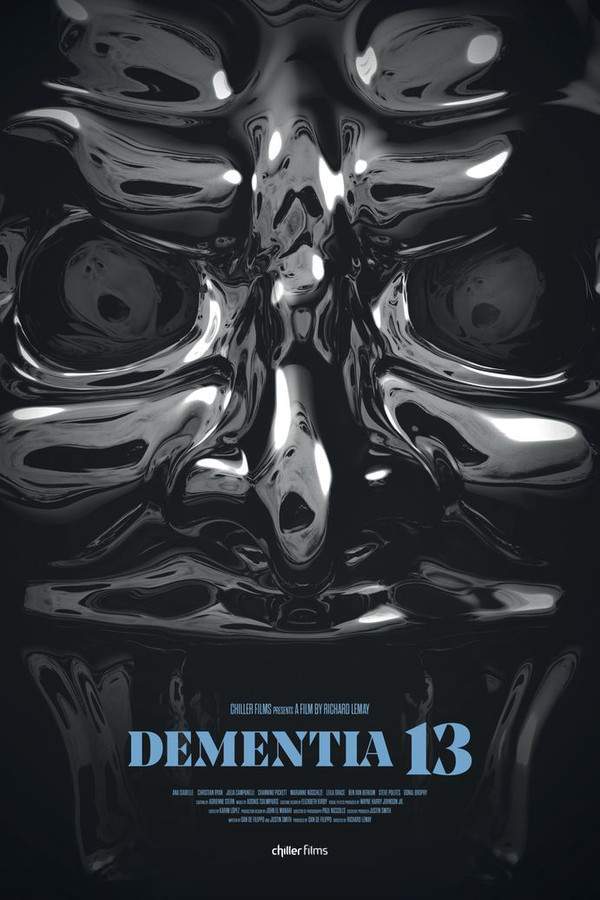
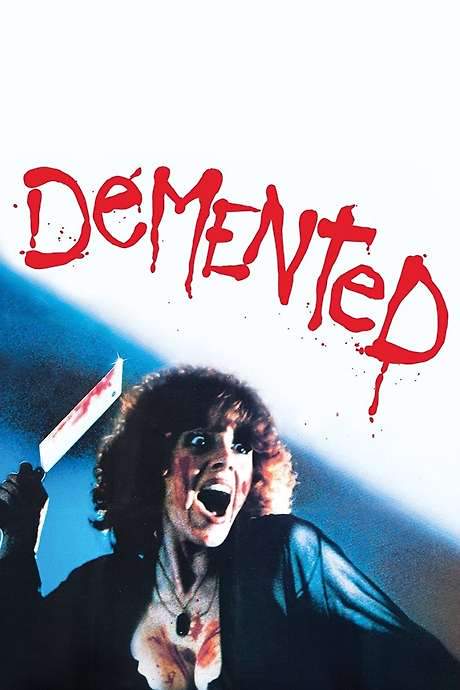
Dementia 13 (1963) movie poster

Plot Summary

Dementia 13 (1963) Plot Summary Explained

Release, runtime and language
1963 · 75 mins · English
Directed by
Francis Ford Coppola
Starring
Patrick Magee, Luana Anders, William Campbell, Karl Schanzer, Mary Mitchel, Peter Read

A widow tricks her late husband’s mother and brothers into believing he is still alive while attending the annual memorial for his drowned sister, hoping to claim the family fortune. Her scheme unravels when a demented, axe‑wielding murderer stalks the grounds of the Irish estate, turning the gathering into a deadly nightmare.

On this page (5)
  1. 1 What happens: full plot
  2. 2 Plot questions answered
  3. 3 Movie threads
  4. 4 Movies like Dementia 13
  5. 5 Every angle

Full plot summary · contains spoilers

What Happens in Dementia 13: Full Plot Summary

The whole story of Dementia 13 (1963) explained, from the opening scene to the final frame: every key event, every twist and what it all adds up to. Read it as a quick recap before the sequel, to check a scene you missed, or to finally understand what really happened.

On a moonlit lake, John Haloran and his young wife Louise Haloran quarrel over a wealthy mother's will that designates most of the inheritance to a charitable cause tied to a mysterious Kathleen. In the heat of the argument, John suffers a heart attack. Before he dies, he reveals a troubling detail: if he passes away before his mother, Louise will receive nothing. Louise wastes no time seaing her plan into motion—she sinks John’s body to the lake’s dark depths and then pretends he might still be alive so she can maneuver herself into the will. She drafts a letter to Lady Haloran, posing as a guest and inviting herself to the family’s castle in Ireland while her husband is “away on business.”

At the castle, the family unfolds in a web of ritual and memory. Billy Haloran and Richard Haloran participate in a peculiar yearly ceremony with their mother, a tribute to Kathleen, their younger sister who drowned years earlier in a freak accident. Lady Haloran remains enveloped in grief, and during the rite she faints—an even more dramatic echo of years past. She explains that her fainting fits come whenever the fresh flower she has laid near Kathleen’s grave dies, a superstition Louise recognizes and begins to exploit.

Seeing how emotionally fragile Lady Haloran is, Louise crafts a chilling ruse to counterfeit contact from the dead. She pilfers Kathleen’s old toys and discreetly deposits them at the bottom of the estate’s pond, hoping they will surface in a ghostly fashion during the day. Then, while swimming, Louise discovers what appears to be Kathleen’s perfectly preserved corpse at the pond’s bottom. Panicked, she surfaces only to be struck by an unknown assailant, and her killer drags away her body.

The family’s physician, Dr. Justin Caleb, arrives to investigate the string of uncanny events. He begins to question the household, looking for truth among the family dynamics and the unsettling nighttime disturbances. In the midst of the inquiry, the killer strikes again, decapitating a man named Simon, who has been poaching on the estate. Dr. Caleb’s meticulous instincts lead him to drain the pond, where a shrine bearing a headstone reads “Forgive Me, Kathleen.” The discovery deepens the mystery and underscores the potential treachery within the family circle.

A shadowy figure attacks Lady Haloran that same night, sending her fleeing into the castle’s courtyard as she collapses in fear. The investigation intensifies as Caleb unravels the psychological threads tying the events together. He uses a nursery rhyme—recited by a distressed Billy—to unlock the killer’s pattern. The rhyme is whispered and then repeated under hypnosis: “Fishy, fishy, in a brook, Daddy caught you on a hook.”

> Fishy, fishy, in a brook, Daddy caught you on a hook

With this clue, Dr. Caleb locates Louise’s frozen corpse hidden in a meat locker, where it lies beside a wax figure of Kathleen. He stages a bold ploy by placing the figure in a public square to draw the killer out of hiding. The plan works in a disturbing way: a now-gibbering Billy, driven by guilt over Kathleen’s death years earlier, appears and makes a violent move toward Richard’s fiancée, Kane. Dr. Caleb intervenes, shooting Billy to stop the attack and prevent further tragedy, bringing the cases to a chilling conclusion.

Throughout the unraveling, the film blends domestic tension, ritualized mourning, and a creeping sense of supernatural threat, all set within the confines of a sprawling Irish estate. The relationships between Louise, the Haloran siblings, and their mother drive the suspense, while Dr. Caleb’s procedural approach balances the eerie atmosphere with careful exposé. The climactic sequence turns a family tragedy into a dangerous confrontation where guilt, deception, and the unresolved sorrow surrounding Kathleen converge in a final, grim resolution.

Last updated: October 09, 2025 at 10:44

Was this helpful?

Plot questions answered

Dementia 13 Plot Explained: Your Questions Answered

The questions people ask most about Dementia 13 (1963): what happens in the confusing scenes, why the characters do what they do, the twists, hidden details and what the ending means. Each answer contains spoilers.

Q1

Why does Louise sink John's body in the lake after he dies?

Louise sinks John's body because he died during an argument and revealed that she would receive nothing from his mother's will if he pre-deceased her. By making it look like John drowned or vanished while swimming, Louise could claim he was still alive and manipulate her way into the inheritance.

Foreshadowing: Earlier, John and Louise argue on the lake about the will, establishing the inheritance dispute as the central motive.

  • louise haloran
  • john haloran
  • inheritance
  • lake
  • murder
Q2

Why does Louise pretend John is still alive after his death?

Louise pretends John is alive to gain access to the Haloran family and insert herself into the will. She writes to Lady Haloran claiming her husband is away on business, allowing her to stay at the castle and position herself for a share of the family fortune.

  • louise haloran
  • inheritance scheme
  • lady haloran
  • deception
Q3

What is the yearly ceremony for Kathleen at the Haloran castle?

The ceremony is a tribute to Kathleen, the youngest Haloran sibling who drowned years earlier. Every year, Billy and Richard participate with their mother in this ritual, during which Lady Haloran performs superstitious acts and faints, claiming she does so whenever a fresh flower placed near Kathleen's grave dies.

  • kathleen haloran
  • ceremony
  • lady haloran
  • drowning
  • grief
Q4

What does the pond shrine reveal about Kathleen's death?

Dr. Caleb drains the pond and discovers a shrine with a headstone reading 'Forgive Me, Kathleen.' This reveals that Kathleen's drowning was not an accident, the family knows guilt surrounds her death, likely connected to the nursery rhyme hinting that her father drowned her, which haunts Billy.

Foreshadowing: The nursery rhyme 'Fishy, fishy, in a brook, Daddy caught you on a hook' foreshadows the nature of Kathleen's death.

  • pond
  • shrine
  • kathleen
  • dr caleb
  • drowning
  • guilt
Q5

Who is killing people at the Haloran estate?

Billy Haloran is the axe-wielding killer. His guilt over Kathleen's death years earlier has driven him insane. He kills anyone who threatens to expose or disturb the family's secrets about Kathleen, including Louise when she discovers the body and later attacks Lady Haloran.

Foreshadowing: Billy's distress during the ceremony and his recitation of the rhyme hint at his psychological instability.

  • billy haloran
  • killer
  • axe
  • murder
  • kathleen
Q6

Why does Billy become the killer in Dementia 13?

Billy is driven to kill by overwhelming guilt over Kathleen's death, which the nursery rhyme reveals was caused by his father. Billy's mental state deteriorates throughout the film as the secrets surface, and he becomes violent toward anyone who threatens the family's dark truth, including Louise when she finds Kathleen's body and attacks when the wax figure is displayed.

Foreshadowing: Billy's distress during the ritual and his whispered recitation of the rhyme plant the seeds of his breakdown.

  • billy haloran
  • guilt
  • kathleen
  • madness
  • psychology
Q7

What does the nursery rhyme 'Fishy, fishy, in a brook' mean in the film?

The rhyme 'Fishy, fishy, in a brook, Daddy caught you on a hook' is a childhood verse that hints at how Kathleen actually died, not an accidental drowning, but murder by her father. This repressed memory haunts Billy and resurfaces when Dr. Caleb hypnotizes him, leading to the discovery of Louise's body in the meat locker.

Foreshadowing: Billy whispers the rhyme during the ceremony, showing it weighs heavily on his mind.

  • nursery rhyme
  • billy haloran
  • kathleen
  • hypnosis
  • memory
Q8

How does Dr. Caleb discover Louise's hidden body?

Dr. Caleb uses Billy's hypnotically-recited nursery rhyme to unlock a buried memory. The rhyme 'Fishy, fishy, in a brook' leads him to search near water-related locations, eventually finding Louise's frozen corpse hidden in a meat locker alongside a wax figure of Kathleen.

Foreshadowing: The rhyme connects to the pond and water, guiding Caleb to search the estate's cold storage.

  • dr justin caleb
  • louise body
  • meat locker
  • wax figure
  • investigation
Q9

Why does Billy attack Kane at the end of the film?

Billy attacks Richard's fiancée Kane because the display of the wax Kathleen figure in the public square triggers a violent breakdown. Overcome with guilt and paranoia about exposing Kathleen's death, Billy lunges at Kane with an axe, mistaking her for a threat to the family secret. Dr. Caleb shoots Billy to stop the attack.

Foreshadowing: Billy's instability escalates throughout the film as secrets surface, culminating in his violent outburst.

  • billy haloran
  • kane
  • axe attack
  • richard haloran
  • climax
Q10

Why does Dr. Caleb place the wax Kathleen figure in the public square?

Dr. Caleb places the wax figure in the square as a trap to draw out the killer. He knows whoever is killing to protect Kathleen's memory would be unable to resist confronting what they perceive as a desecration of her memory. The plan works, provoking Billy's final violent act.

  • wax figure
  • dr caleb
  • trap
  • kathleen
  • public square
Q11

What does Louise find in the pond before being killed?

While diving into the pond to retrieve the toys she planted for her ghostly deception, Louise discovers Kathleen's perfectly preserved corpse at the bottom. This horrifying discovery shocks her, but before she can surface, the killer attacks and drags her away.

  • louise haloran
  • kathleen corpse
  • pond
  • killed
  • discovery
Q12

Why is Lady Haloran attacked by the killer?

Lady Haloran is attacked because she is the keeper of the family's secrets about Kathleen's death. The killer, Billy, cannot allow anyone, even his own mother, to reveal the truth or disturb the memory he is protecting. The attack shows the killer will strike at the family matriarch to maintain silence.

  • lady haloran
  • billy haloran
  • attacked
  • axe
  • family secret

Movie threads

More Movies Like Dementia 13, by Mood & Story

Curated lists built around what makes Dementia 13 tick: the same mood, the same kind of story or the same emotional payoff. Each list explains why these movies belong together.

Gothic family horror movies like Dementia 13

Decaying opulence masks violent legacies and psychological torment. If you liked the gothic atmosphere and family secrets in Dementia 13, this thread features similar movies where decaying estates and unresolved past trauma create a claustrophobic, suspenseful experience. Discover more psychological thrillers and horror films with a dark, melancholic tone, heavy emotional weight, and a focus on inheritance, guilt, and murder.

  • gothic
  • sinister
  • claustrophobic
  • melancholic
  • suspenseful
  • anxious
  • Tone: dark, melancholic, sinister
  • Pacing: steady, deliberate
Why these movies?

The story pattern: The narrative pattern often involves an outsider entering a closed, troubled family system, or a family member confronting a horrific legacy. Secrets are buried deep within the family history, and their revelation is typically violent and destructive. The story unfolds as a slow-burning mystery, where the true monster is often a product of the family's own psychological decay.

Why they belong together: Movies are grouped here for their shared gothic aesthetic, the central theme of toxic family dynamics, and a pervasive mood of dread and decay. They combine psychological thriller elements with horror, creating an experience that is as much about unsettling atmosphere and tragic character studies as it is about scares.

Thrillers where deception turns deadly like Dementia 13

A selfish scheme spirals into a fatal confrontation with a darker truth. For viewers who enjoyed the plot of Dementia 13, where a greedy scheme collides with a murderous threat, this thread collects similar thrillers and mysteries. Find movies with bleak endings, high intensity, and a steady pace, featuring characters whose lies unravel in the face of overwhelming violence and dark truths.

  • suspenseful
  • anxious
  • sinister
  • bleak
  • tense
  • violent
  • Tone: dark, bleak, tense
  • Pacing: steady, methodical
Why these movies?

The story pattern: The narrative follows a dual-threat structure: the internal threat of the protagonist's deception and the external threat of a random or targeted killer. The plot often explores the irony of a clever plan being undone by chaotic violence. The emotional journey is heavy, revolving around guilt, consequences, and the futility of control in a cruel world, leading to a bleak resolution.

Why they belong together: These movies are connected by their core narrative engine: a web of lies that attracts or unleashes deadly consequences. They share a dark tone, high tension, and a thematic focus on the moral and physical cost of deception. The experience is one of suspenseful dread as two destructive forces inevitably collide.

If you liked this

Movies Like Dementia 13

Similar movies to Dementia 13: the same genre, themes or kind of story. Each one comes with its own plot summary, timeline and ending explained.

Browse all movie summaries

Every angle

Dementia 13 (1963) Explained: Plot, Timeline & Characters

Everything about Dementia 13 in one place: what happens in the plot summary, the timeline in chronological order, the characters and meaning and a spoiler-free summary. What's After the Movie adds the cast, box office and post-credit scenes.

Coming soon on iOS and Android

The Plot Explained Movie Summary App

Plot summaries, endings explained and timelines on your phone. Catch up on any movie in minutes, save your favorites and never miss a twist again.

Be the first to know when we launch. Your email stays private, always.

Learn more about the app