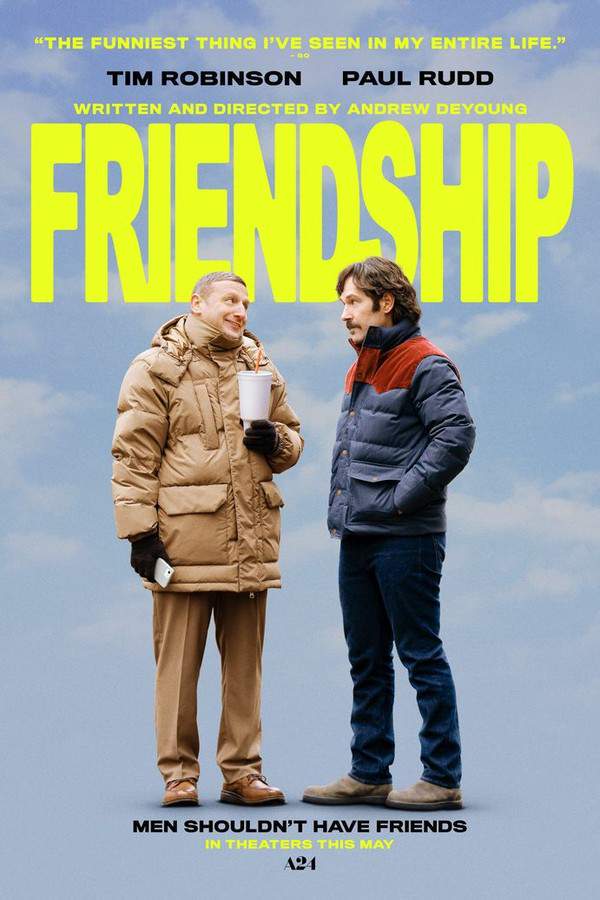
The ending of Friendship is both tense and unexpectedly hopeful. After a series of chaotic events, Craig, who has been struggling with his own insecurities and toxic tendencies, crashes Austin’s party wielding a stolen gun, leading to a dramatic confrontation. During this confrontation, Craig recognizes what he's doing and chooses to distract the crowd by revealing that Austin’s wig is fake, a secret Craig had kept earlier in the film. This act of revealing Austin’s false hair is a symbolic move—Craig is exposing the façade and showing a form of unspoken respect for Austin, even amidst his destructive behavior. As the police arrive and arrest Craig, Austin gives him a friendly wink, a subtle gesture of acknowledgment and perhaps admiration. This moment suggests that Craig has earned a small measure of respect from Austin, hinting that despite everything, there might be hope for Craig to grow and find a better path.
Throughout the film, Craig’s obsession with Austin stems from his own feelings of inadequacy and loneliness. He admires Austin’s ease and confidence, trying to mimic those traits with his own family, but this only pushes them away. Craig's inability to accept fault and his self-sabotaging actions underline his internal struggles. His relationship with his wife Tami is strained, especially after she openly declares she’s leaving him, feeling disconnected and unfulfilled. In an earlier moment, Craig's bizarre hallucinogenic trip in a Subway mirrors his life—focused on the mundane, with the realization that he could connect with others if he simply behaved normally. This subtle insight hints at his potential for change, although his ongoing toxic tendencies threaten to undo this progress.
In the end, Friendship suggests that Craig’s true challenge is not just about friendship, but about confronting himself. The film’s dark humor and emotional depth underline that his toxic behaviors are self-inflicted and that genuine moments of kindness and empathy—like his small act to protect Austin’s secret—are what might lead to genuine change. The final scene, with Austin’s winking gesture, leaves viewers with a quiet sense of hope that even flawed, insecure people like Craig can find a way to grow, or at least earn a moment of respect and understanding, if they are willing to confront their own destructive patterns.