Plot Explained Spoilers guaranteed!
Plot Explained

Browse by genre

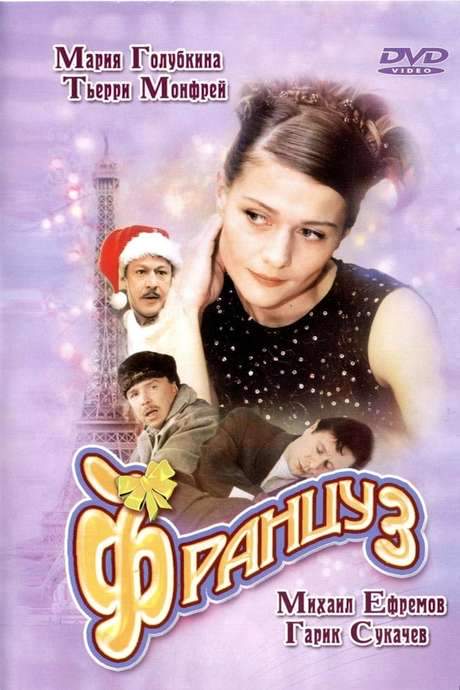
Frenchman (2004) movie poster

Characters & Themes

Frenchman (2004) Characters, Setting & Themes Explained

Release, runtime and language
2004 · 100 mins · Russian
Directed by
Vera Storozheva
Starring
Mikhail Efremov, Nina Ruslanova, Pavel Derevyanko, Mariya Golubkina, Garik Sukachyov, Thierry Monfray

Baron Paul, a French noble, journeys to a remote Russian town seeking the woman he has been exchanging letters with. He discovers that Ania has been assisting his friend Irina in translating the correspondence, which Irina has been sending to him. On New Year’s Day, his heart awakens with love as he strives to win Ania’s hand.

On this page (6)
  1. 1 Characters explained (4)
  2. 2 Where & when it takes place
  3. 3 Themes & meaning (4)
  4. 4 Character & meaning questions
  5. 5 Movie threads
  6. 6 Every angle

4 main characters · contains spoilers

Frenchman Characters Explained: Who Is Who

The main characters of Frenchman (2004), heroes and villains: what drives them, how they change over the course of the story and what each of them reveals about the film's bigger ideas.

  • Pierre (the French student)

    A French-speaking student who travels to Moscow to study Russian literature and conduct his thesis research. He navigates the Khrushchev Thaw’s openness, building a friendship with Kira and a subtle romantic pull, while also searching for his Russian roots.

    • 🌐 Protagonist
    • 👥 Romantic interest
    • 🗺️ Cultural bridge
  • Kira Galkina

    A dancer at the Bolshoi Theatre who becomes a close connection in Pierre’s Moscow experience. Her relationship with Pierre intersects with the city’s vibrant artistic life and the rivalries that arise with his other friend.

    • 🎭 Dancer
    • 💃 Artistic ally
  • Valery Uspensky

    A photography student who acts as a guide to Pierre while also embodying the era’s tension; his friendship with Pierre becomes competitive as paths diverge.

    • 📷 Photographer
    • 🧭 Friend & rival
  • Tatishchev

    Pierre’s biological father, a former White Army officer who endured the Gulag era and shares memories of imprisonment and a later claim about proving God. His revelations shape Pierre’s understanding of history, belief, and fate.

    • 🧭 Father
    • 🕰️ Survivor

Last updated: October 03, 2025 at 14:16

Was this helpful?

Setting

Where and When Does Frenchman Take Place?

The setting of Frenchman (2004): the year and time period, the places and locations, and how they shape the characters, the mood and the tension of the story.

Time period

1957

The events center on August 1957, placing the story within the waning years of Stalin’s era and the opening of the Khrushchev Thaw. It juxtaposes political risk with artistic exploration across the Soviet Union and France. The time period is defined by shifting loyalties, debates, and the gradual liberalization of culture.

Location

Paris, Moscow

The opening scenes unfold at a café on the banks of the Seine in Paris, a place where ideas and loyalties mingle over coffee. The narrative then shifts to Moscow, where Pierre enters the university dorms and the city’s cultural life around the Bolshoi Theatre and the Khrushchev Thaw. The settings contrast Parisian intellectual life with Moscow’s mix of study spaces and underground cultural currents. Together, these cities frame a cross-continental journey of art, politics, and personal discovery.

  • 🏙️ Paris
  • 🌆 Moscow

Last updated: October 03, 2025 at 14:16

Was this helpful?

4 major themes

Frenchman Meaning: Themes & Message Explained

What is Frenchman (2004) really about? The emotional, social and philosophical themes the film keeps returning to, its symbolism and the message beneath the surface.

  • Cultural Exchange

    A French student’s immersion in Moscow’s literature, dance, and everyday life reveals how ideas travel across borders. The Khrushchev Thaw allows more openness, enabling Pierre to encounter a warmer, more nuanced Soviet society. The film highlights how language, art, and friendship cross political and geographic boundaries. It also shows the allure and costs of bridging two very different worlds.

  • Identity & Heritage

    Pierre’s search for his father and his mother’s noble lineage expose a tangled history spanning Civil War, exile, and empire. The father’s revelations force Pierre to reconcile personal belief with historical memory. The narrative probes how lineage and choices shape one’s loyalties and sense of self. The journey becomes as much about self-discovery as about geography.

  • Political Risk

    Valery’s arrest and the looming shadow of repression show how quickly the climate can shift in the Khrushchev era. The story juxtaposes personal quests with the state’s power to suppress dissent and curiosity. It underscores the fragile balance between intellectual freedom and political control. The characters navigate a world where ideas are both a bridge and a risk.

  • Faith & Doubt

    Tatishchev’s claim of having proven the existence of God introduces a strand of belief that survives amid upheaval. The intimate father–son talk carries themes of memory, faith, and the limits of rational explanation. The film juxtaposes spiritual questions with political realities, leaving a lingering sense of mystery. It suggests that belief, like history, outlives eras even when certainty fades.

Last updated: October 03, 2025 at 14:16

Was this helpful?

Character & theme questions

Frenchman Characters & Meaning: Your Questions Answered

The questions people ask about Frenchman (2004): who the characters really are, their relationships, what the symbols mean, where it takes place and what the movie is really about. Each answer contains spoilers.

Q1

Where does the movie take place?

The story unfolds in two distinct settings: a café on the banks of the Seine in Paris, and Moscow with its university dorms and cultural venues around the Bolshoi Theatre. The narrative contrasts Parisian intellectual life with Moscow's mix of academic spaces and underground artistic currents during the 1950s.

  • paris
  • moscow
  • setting
  • locations
  • bolshoi theatre
Q2

What time period is the story set in?

The events take place in August 1957, during the waning years of Stalin's era and the beginning of the Khrushchev Thaw. This period was characterized by shifting political loyalties, gradual cultural liberalization, and a brief window of increased openness in the Soviet Union.

  • 1957
  • khruchev thaw
  • cold war
  • soviet era
  • time period
Q3

What does the Khrushchev Thaw represent in the movie?

The Khrushchev Thaw refers to the period after Stalin's death when Soviet leader Nikita Khrushchev introduced limited de-Stalinization. In the film, this thaw allows more openness, enabling Pierre to encounter a warmer, more nuanced Soviet society where artistic expression and intellectual inquiry become more possible, though political risks remain.

  • khrushchev thaw
  • de-stalinization
  • cultural liberalization
  • soviet politics
Q4

Who is Pierre in the movie?

Pierre is a French student who travels to Moscow to study Russian literature and conduct thesis research. He serves as the audience's lens into Soviet society, navigating the Khrushchev Thaw's openness while building relationships and searching for his Russian roots.

  • pierre
  • french student
  • protagonist
  • main character
Q5

Who is Kira Galkina?

Kira Galkina is a dancer at the Bolshoi Theatre who becomes a close connection in Pierre's Moscow experience. Her relationship with Pierre intersects with the city's vibrant artistic life and the rivalries that arise among his circle of friends.

  • kira galkina
  • bolshoi dancer
  • dancer
  • romantic interest
Q6

Who is Tatishchev?

Tatishchev is Pierre's biological father, a former White Army officer who endured the Gulag era. His revelations about imprisonment and his later claim about proving the existence of God shape Pierre's understanding of history, belief, and personal identity.

  • tatishchev
  • father
  • white army
  • gulag
  • biological father
Q7

What does the Cultural Exchange theme explore?

The Cultural Exchange theme examines how ideas, language, art, and friendship travel across political and geographic borders. The film shows a French student's immersion in Moscow's literature, dance, and everyday life, highlighting both the allure and costs of bridging two very different worlds.

  • cultural exchange
  • language
  • art
  • friendship
  • cross-cultural
Q8

What does the Identity and Heritage theme mean?

The Identity and Heritage theme follows Pierre's search for his father and his mother's noble lineage, exposing a tangled history spanning Civil War, exile, and empire. The narrative explores how lineage and choices shape one's loyalties and sense of self, making the journey about self-discovery as much as geography.

  • identity
  • heritage
  • lineage
  • father search
  • self-discovery
Q9

How does political risk play into the story?

Political risk is embodied in Valery's arrest and the looming shadow of repression that can shift quickly during the Khrushchev era. The story shows how personal quests coexist with the state's power to suppress dissent, underscoring the fragile balance between intellectual freedom and political control.

  • political risk
  • arrest
  • repression
  • intellectual freedom
  • ussr
Q10

What does the Faith and Doubt theme involve?

The Faith and Doubt theme centers on Tatishchev's claim of having proven the existence of God, introducing spiritual questions that survive amid political upheaval. The intimate father-son discussions carry themes of memory, faith, and the limits of rational explanation, suggesting belief outlives eras even when certainty fades.

  • faith
  • doubt
  • god
  • belief
  • spiritual questions
Q11

What is Moscow portrayed as in the movie?

Moscow in the film is depicted as a city of contrasts during the Khrushchev Thaw, combining university dorms, the grandeur of the Bolshoi Theatre, and underground cultural currents. It represents both the openness of the era and the lingering tension between artistic expression and political oversight.

  • moscow city
  • bolshoi
  • university
  • cultural life
  • soviet moscow
Q12

What kind of film is Frenchman?

Frenchman is a Comedy-Romance film with moderate intensity focusing on personal and emotional stakes rather than high-drama action. The tone is melancholic with slow pacing that emphasizes character immersion and contemplative moments, blending historical loss with lighter moments of cultural connection and artistic discovery.

  • comedy
  • romance
  • movie genre
  • melancholic tone
  • character-driven

Movie threads

More Movies Like Frenchman, by Mood & Story

Curated lists built around what makes Frenchman tick: the same mood, the same kind of story or the same emotional payoff. Each list explains why these movies belong together.

Melancholic cross-cultural romance like Frenchman

Quiet stories of love unfolding against a backdrop of political and cultural distance. If you liked the bittersweet romance and cultural exchange in Frenchman, you'll enjoy these movies. They feature quiet, character-driven stories where love blossoms across divides, set against evocative historical or political landscapes. Discover more films about romantic longing and intimate connection.

  • romantic
  • melancholic
  • contemplative
  • nostalgic
  • intimate
  • somber
  • Tone: melancholic, reflective, romantic
  • Pacing: slow, contemplative
Why these movies?

The story pattern: Stories often follow a central character traveling to an unfamiliar place, where a slow-building romance becomes intertwined with a deeper understanding of the local culture, history, or political situation. The journey is as much about personal discovery as it is about love, culminating in a connection that is profound but often complicated by external forces.

Why they belong together: These films are grouped together for their shared focus on the intersection of personal romance and cultural or political context. They combine a reflective, melancholic tone with a slow, immersive pace, creating an intimate experience centered on emotional connection rather than dramatic plot twists.

Slow-burn historical quests like Frenchman

Reflective journeys where uncovering the past leads to profound personal change. For viewers who appreciated Frenchman's reflective search for connection and history, this section features similar movies. These character-driven stories follow protagonists on intimate journeys of discovery, blending personal revelations with wider historical or political narratives. Find more films with a slow pace and medium emotional weight.

  • contemplative
  • nostalgic
  • reflective
  • quiet
  • somber
  • search for identity
  • Tone: somber, reflective, intimate
  • Pacing: slow, deliberate
Why these movies?

The story pattern: The narrative pattern involves a protagonist, driven by letters, memories, or a sense of absence, embarking on a journey to uncover a hidden truth. The plot is less about action and more about the accumulation of small, meaningful encounters and revelations. The climax is often an emotional resolution or a new understanding rather than a dramatic event.

Why they belong together: These movies share a specific combination of a slow, contemplative pacing and a moderate complexity that focuses on character development. The experience is defined by a melancholic, intimate mood and a central theme of searching for meaning within a larger historical or personal context.

Every angle

Frenchman (2004) Explained: Plot, Timeline & Characters

Everything about Frenchman in one place: what happens in the plot summary, the timeline in chronological order, the characters and meaning and a spoiler-free summary. What's After the Movie adds the cast, box office and post-credit scenes.

Coming soon on iOS and Android

The Plot Explained Movie Summary App

Plot summaries, endings explained and timelines on your phone. Catch up on any movie in minutes, save your favorites and never miss a twist again.

Be the first to know when we launch. Your email stays private, always.

Learn more about the app