Plot Explained Spoilers guaranteed!
Plot Explained

Browse by genre

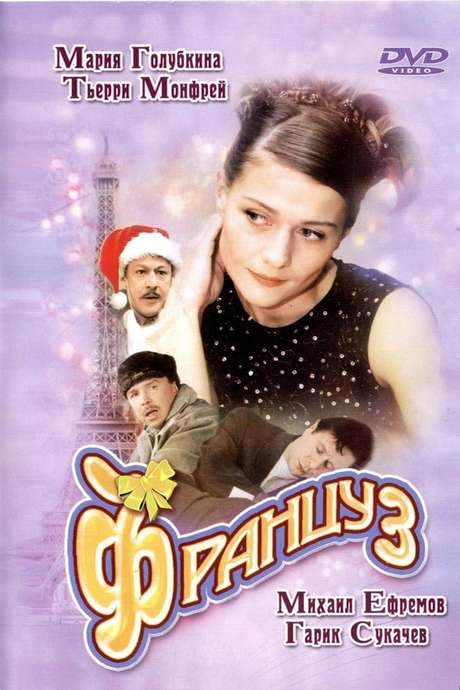
Frenchman (2004) movie poster

Timeline

Frenchman (2004) Timeline Explained – Every Event in Order

Release, runtime and language
2004 · 100 mins · Russian
Loading streaming availability…
Directed by
Vera Storozheva
Starring
Mikhail Efremov, Nina Ruslanova, Pavel Derevyanko, Mariya Golubkina, Garik Sukachyov, Thierry Monfray

Baron Paul, a French noble, journeys to a remote Russian town seeking the woman he has been exchanging letters with. He discovers that Ania has been assisting his friend Irina in translating the correspondence, which Irina has been sending to him. On New Year’s Day, his heart awakens with love as he strives to win Ania’s hand.

On this page (5)
  1. 1 Where to watch
  2. 2 Events in order (12)
  3. 3 Timeline questions answered
  4. 4 Movie threads
  5. 5 Every angle
Loading streaming availability…

12 events in order · contains spoilers

Frenchman Timeline: Events in Chronological Order

Every key event of Frenchman (2004) in order, scene by scene, with when and where it takes place. Use it to untangle flashbacks, time jumps and parallel storylines, to refresh your memory before the sequel or to find the exact scene you are thinking of.

  1. Paris cafe reunion of three left-wing friends

    In August 1957, Nicole, Jean-Marie, and Pierre share one last meeting at a café on the banks of the Seine. Jean-Marie prepares for service in the Algerian War, while Pierre departs on a journey that will take him to the Soviet Union. The scene inaugurates a voyage through ideas, loyalties, and longing that will stretch across continents and decades.

    When
    August 1957
    Where
    Paris, France (Seine bank cafe)
  2. Pierre arrives in Moscow and begins studies at MSU

    Pierre lands in Moscow and takes up residence in the dormitories of Moscow State University. He immerses himself in Russian literature and conducts research for a thesis on the ballet master Marius Petipa. He also meets Valery Uspensky, a photography student who becomes his guide in the city.

    When
    1957-1958
    Where
    Moscow, Russia
  3. Valery introduces Pierre to Moscow's world of culture

    Valery helps Pierre navigate Moscow beyond classrooms, hinting at the country’s layered reality. Pierre senses the Khrushchev Thaw at work, where public culture hints at something more diverse than official narratives. He begins to see an underground life that coexists with the public face of the era.

    When
    1957-1958
    Where
    Moscow, Russia
  4. Kira Galkina enters Pierre's orbit

    Pierre grows closer to Kira Galkina, a dancer at the Bolshoi, and a quiet romantic pull develops. The budding romance runs alongside a subtle rivalry with Valery as their paths cross and diverge. The thawing atmosphere eases personal bonds while challenging loyalties.

    When
    1957-1958
    Where
    Moscow, Russia
  5. Pierre begins the search for his biological father

    Pierre learns about Tatishchev, the former White Army officer his mother concealed in 1931. He enlists the help of former Smolny Institute alumni who had spent years in the Gulag to aid the search. The pursuit becomes a personal journey that merges history with his own identity and politics.

    When
    1957-1958
    Where
    Moscow, Russia
  6. The search leads to a provincial town

    Pierre traces Tatishchev to a provincial town where he now works as a night watchman. The encounter exposes a different pace of life and the enduring scars of the era's upheavals. The meeting forces Pierre to confront a lineage shaped by Civil War and survival.

    When
    Late 1957 - 1958
    Where
    Provincial town in Russia
  7. Tatishchev recounts his past

    Tatishchev tells of his imprisonments during the 1930s and 1940s, the Gulag, and an almost mythical claim of having proven the existence of God. His memories illuminate the costs of the era and the toll it took on individuals. The tale adds a heavy layer of memory to Pierre's mission.

    When
    Late 1957 - 1958
    Where
    Provincial town, Russia
  8. A profound father-son conversation ends in tragedy

    The conversation is intimate and fraught with emotion as father and son grapple with belief, politics, and fate. Tatishchev's life story culminates in his death shortly after sharing his memories. Pierre is left with unfinished history and lingering questions about loyalty and faith.

    When
    Late 1957 - 1958
    Where
    Provincial town, Russia
  9. Return to Moscow and a chilling reminder of repression

    Returning to Moscow, Pierre learns that Valery has been arrested, underscoring how quickly the political climate can shift. The personal is overshadowed by the broader threat to intellectuals and artists. The episode deepens Pierre's understanding of risk in the era.

    When
    Late 1958
    Where
    Moscow, Russia
  10. Memory and culture shape Pierre's view of the world

    The story threads together cultural exchange, family history, faith and doubt, and the cost of political conviction. Pierre reflects on the long reach of history in his life and how a time in the Soviet Union informs his beliefs and loyalties. The experience broadens his perspective beyond Paris.

    When
    Late 1958
    Where
    Moscow, Russia
  11. Pierre prepares to depart for Paris

    Having navigated a time of ideas, art, and human connection under risk, Pierre prepares to depart for Paris. He carries with him the memories of a city that educated and unsettled him, along with a sense of the deeper history that links his life to two continents. The journey ends with a contemplative sense of departure rather than a simple return.

    When
    End of 1958
    Where
    Moscow, Russia
  12. The voyage through ideas continues beyond the frame

    The film closes with the impression that history, culture, and personal loyalties extend beyond borders. Pierre's experiences in Moscow reveal the long reach of memory and the cost of conviction, leaving the viewer with a contemplative sense of how a life connected to different worlds is shaped by love, faith, and doubt.

    When
    After 1958
    Where
    Moscow and Paris (referenced)

Last updated: October 09, 2025 at 16:48

Was this helpful?

Timeline questions answered

Frenchman Timeline Explained: Your Questions Answered

When does it happen, and why in that order? The questions people ask about the chronology of Frenchman (2004): time jumps, flashbacks, cause and effect between scenes and the correct order of events, each answered with spoilers.

Q1

Why does Pierre search for his biological father in the Soviet Union?

Pierre seeks out Tatishchev, his biological father who was a former White Army officer, because his mother concealed her 1931 pregnancy from him and eventually fled to France. The search becomes a personal quest to understand his own identity and family history, especially as someone with communist beliefs discovering a father who survived the opposing side of the Russian Civil War.

  • Pierre
  • Tatishchev
  • biological father
  • White Army
  • identity
Q2

What happens to Valery after Pierre returns to Moscow?

Valery is arrested shortly after Pierre returns to Moscow, serving as a stark reminder of how quickly the political climate can change during the Khrushchev Thaw. The arrest underscores the constant risk faced by intellectuals and artists in Soviet society, even during periods of relative openness.

Foreshadowing: Earlier scenes hint at the precariousness of life in the Soviet Union when Valery introduces Pierre to the underground cultural world.

  • Valery
  • arrest
  • Moscow
  • repression
  • Soviet Union
Q3

What does Tatishchev claim about proving the existence of God?

Tatishchev makes an almost mythical claim that he mathematically proved the existence of God during his years of imprisonment in the 1930s and 1940s. This claim, combined with his survival of the Civil War, Red Terror, and Gulag, represents his unique way of making sense of his suffering and survival.

  • Tatishchev
  • God
  • mathematics
  • imprisonment
  • Gulag
Q4

Why does Pierre feel conflicted about his communist beliefs after meeting his father?

Pierre, a left-wing Frenchman who embraced communism, discovers his father is a former White Army officer who survived the very conflict Pierre's political beliefs oppose. This revelation creates a profound personal and ideological tension, especially as Tatishchev is astonished that his son became a communist.

  • Pierre
  • communism
  • White Army
  • conflict
  • beliefs
Q5

What is the Khrushchev Thaw and how does it affect Pierre's experience in Moscow?

The Khrushchev Thaw was a period of relative cultural openness in the Soviet Union that allowed Pierre, as a Frenchman fluent in Russian, to receive a warmer reception from Muscovites than expected. It enabled him to access both official and underground cultural life, though the underlying political risks remained present.

  • Khrushchev Thaw
  • Moscow
  • cultural openness
  • Soviet Union
Q6

How does Pierre locate his father Tatishchev in the Soviet Union?

Pierre enlists the help of former Smolny Institute alumni who had spent years in the Gulag to help trace Tatishchev. The search leads him to a provincial town where Tatishchev works as a night watchman, revealing how far the former White Army officer had fallen from his former life.

  • Tatishchev
  • search
  • Gulag
  • provincial town
  • night watchman
Q7

What happens to Tatishchev after meeting Pierre?

Tatishchev dies shortly after his intimate conversation with Pierre, passing away in the provincial town where he worked. His death leaves Pierre with unfinished history and lingering questions about belief, politics, and family loyalty.

  • Tatishchev
  • death
  • father
  • conversation
Q8

What develops between Pierre and Kira Galkina?

Pierre grows romantically attracted to Kira Galkina, a dancer at the Bolshoi Theatre, as they spend time together in Moscow. The budding romance develops alongside a subtle rivalry with his friend Valery, who originally introduced them, adding complexity to Pierre's personal life during his stay.

Foreshadowing: Valery's role as Pierre's guide in Moscow sets up the introduction to Kira.

  • Pierre
  • Kira
  • Bolshoi
  • dancer
  • romance
  • Valery
Q9

Why is Jean-Marie heading to the Algerian War?

Jean-Marie, one of the three left-wing friends meeting in Paris, is preparing for military service in the Algerian War. This represents the difficult choices faced by French intellectuals during the late 1950s, as Algeria was then a French colony experiencing a independence struggle.

  • Jean-Marie
  • Algerian War
  • military service
  • France
Q10

Why does Pierre research Marius Petipa for his thesis in Moscow?

Pierre conducts research for his thesis on Marius Petipa, the famous French ballet master who worked extensively in Russia. Studying this French cultural figure who shaped Russian ballet allows Pierre to explore the intersection of French and Russian artistic traditions during his stay.

  • Pierre
  • Petipa
  • ballet
  • thesis
  • research
Q11

What hidden side of Soviet life does Pierre discover beyond official culture?

Through Valery's guidance, Pierre discovers an underground cultural life that coexists with the public face of the Soviet era. This hidden world of art and ideas exists alongside official narratives, revealing a more complex and layered reality than what is taught in classrooms.

Foreshadowing: Valery's introduction to Moscow's cultural scene hints at this underground world.

  • Soviet Union
  • underground
  • culture
  • hidden
  • Moscow

Movie threads

More Movies Like Frenchman, by Mood & Story

Curated lists built around what makes Frenchman tick: the same mood, the same kind of story or the same emotional payoff. Each list explains why these movies belong together.

Melancholic cross-cultural romance like Frenchman

Quiet stories of love unfolding against a backdrop of political and cultural distance. If you liked the bittersweet romance and cultural exchange in Frenchman, you'll enjoy these movies. They feature quiet, character-driven stories where love blossoms across divides, set against evocative historical or political landscapes. Discover more films about romantic longing and intimate connection.

  • romantic
  • melancholic
  • contemplative
  • nostalgic
  • intimate
  • somber
  • Tone: melancholic, reflective, romantic
  • Pacing: slow, contemplative
Why these movies?

The story pattern: Stories often follow a central character traveling to an unfamiliar place, where a slow-building romance becomes intertwined with a deeper understanding of the local culture, history, or political situation. The journey is as much about personal discovery as it is about love, culminating in a connection that is profound but often complicated by external forces.

Why they belong together: These films are grouped together for their shared focus on the intersection of personal romance and cultural or political context. They combine a reflective, melancholic tone with a slow, immersive pace, creating an intimate experience centered on emotional connection rather than dramatic plot twists.

Slow-burn historical quests like Frenchman

Reflective journeys where uncovering the past leads to profound personal change. For viewers who appreciated Frenchman's reflective search for connection and history, this section features similar movies. These character-driven stories follow protagonists on intimate journeys of discovery, blending personal revelations with wider historical or political narratives. Find more films with a slow pace and medium emotional weight.

  • contemplative
  • nostalgic
  • reflective
  • quiet
  • somber
  • search for identity
  • Tone: somber, reflective, intimate
  • Pacing: slow, deliberate
Why these movies?

The story pattern: The narrative pattern involves a protagonist, driven by letters, memories, or a sense of absence, embarking on a journey to uncover a hidden truth. The plot is less about action and more about the accumulation of small, meaningful encounters and revelations. The climax is often an emotional resolution or a new understanding rather than a dramatic event.

Why they belong together: These movies share a specific combination of a slow, contemplative pacing and a moderate complexity that focuses on character development. The experience is defined by a melancholic, intimate mood and a central theme of searching for meaning within a larger historical or personal context.

Every angle

Frenchman (2004) Explained: Plot, Timeline & Characters

Everything about Frenchman in one place: what happens in the plot summary, the timeline in chronological order, the characters and meaning and a spoiler-free summary. What's After the Movie adds the cast, box office and post-credit scenes.

Coming soon on iOS and Android

The Plot Explained Movie Summary App

Plot summaries, endings explained and timelines on your phone. Catch up on any movie in minutes, save your favorites and never miss a twist again.

Be the first to know when we launch. Your email stays private, always.

Learn more about the app