Plot Explained Spoilers guaranteed!
Plot Explained

Browse by genre

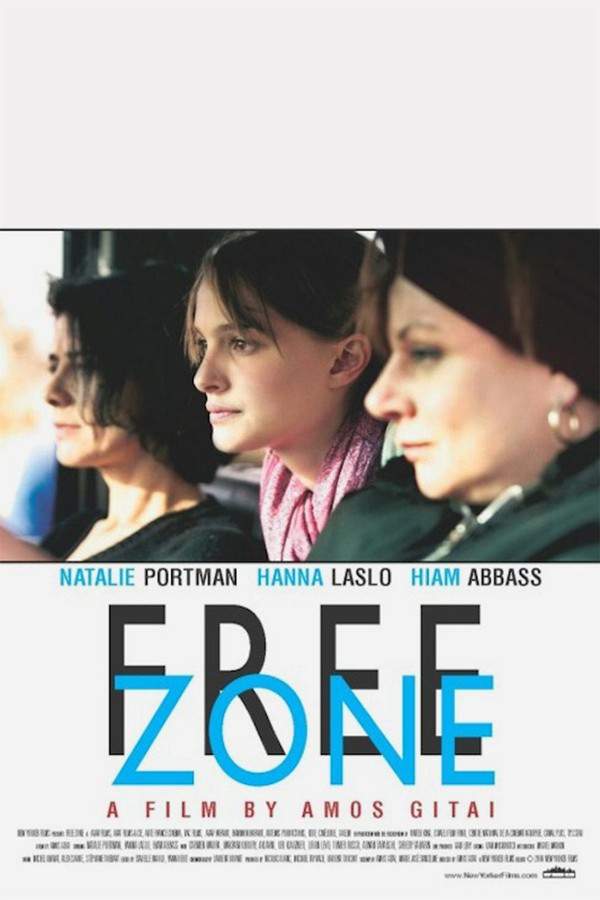
Free Zone (2006) movie poster

Plot Summary

Free Zone (2006) Plot Summary Explained

Release, runtime and language
2006 · 90 min · English
Loading streaming availability…
Directed by
Amos Gitai

Two strangers, Rebecca and Hanna, find themselves sharing a taxi and embarking on an unexpected journey. Rebecca is trying to escape the constraints of her family, while Hanna is seeking refuge from her own personal struggles. As they travel together, these women from different backgrounds experience moments of shared laughter and understanding, discovering a brief but profound sense of freedom on the open road.

On this page (5)
  1. 1 Where to watch
  2. 2 What happens: full plot
  3. 3 Plot questions answered
  4. 4 Movie threads
  5. 5 Every angle
Loading streaming availability…

Full plot summary · contains spoilers

What Happens in Free Zone: Full Plot Summary

The whole story of Free Zone (2006) explained, from the opening scene to the final frame: every key event, every twist and what it all adds up to. Read it as a quick recap before the sequel, to check a scene you missed, or to finally understand what really happened.

Rebecca, portrayed by Natalie Portman, is a young American woman who has spent several months in Jerusalem. Her life takes a drastic turn after she ends her marriage with a Jewish man named Breitberg, who confesses to her his involvement in a disturbing event: he raped a Palestinian woman during his service as a soldier. Despite having a Jewish father, Rebecca feels conflicted about her identity since her mother is a gentile, which, according to religious customs, excludes her from being considered a Jew.

In a moment of emotional turmoil, she enters a tourist cab driven by Hanna, a Jewish Israeli woman played by Hanna Laslo. Hanna, the daughter of Holocaust survivors, is on a quest of her own; she is heading towards a free-trade zone near the borders of Jordan, Syria, Iraq, and Saudi Arabia. There, she intends to collect money that is owed to her husband, who has recently been injured in a rocket attack. Moved by her own sense of loss and uncertainty, Rebecca agrees to accompany Hanna on this journey.

Upon their arrival at the Free Zone, they encounter Laila, a strong and determined Palestinian woman portrayed by Hiam Abbass. Laila acts as the liaison for Hanna's husband’s black market dealings with a man known as "the American." The three women embark on a tense and unpredictable adventure, driven by both desperation and necessity. Their primary goal is to secure the money Hanna needs and to locate the American's son, Walid, who may have run off with the funds.

The film opens and closes with a poignant rendition of the classic Passover song "Had Gadya," performed by Chava Alberstein, which adds depth and resonance to the women's journey. Over the course of the story, the underlying complexities of identity, trust, and cultural conflict are explored against a backdrop of personal struggles and the harsh realities of life in a region fraught with tension. As the story unfolds, it becomes evident that their quest for both money and understanding will demand more of each woman than she ever anticipated. Additionally, the song "Ain Ani" by Shotei Hanevua plays during an emotional moment in the taxi as the narrative comes to a close, leaving viewers with a lasting sense of reflection on the intertwined lives of these women.

Last updated: October 02, 2026 at 03:21

Was this helpful?

Plot questions answered

Free Zone Plot Explained: Your Questions Answered

The questions people ask most about Free Zone (2006): what happens in the confusing scenes, why the characters do what they do, the twists, hidden details and what the ending means. Each answer contains spoilers.

Q1

Why does Rebecca decide to go with Hanna to the Free Zone?

Rebecca is emotionally shattered after ending her marriage with Breitberg, who confessed to raping a Palestinian woman during his military service. When she climbs into Hanna's cab crying, she is in a state of aimless grief and displacement. Hanna's mission to the Free Zone gives her a directionless woman a reason to keep moving, so she accepts the invitation partly out of emotional exhaustion and partly out of a need to escape Jerusalem and the identity crisis Breitberg's confession has triggered.

Foreshadowing: Rebecca is already crying before she enters the cab, signaling that she is searching for something to hold onto beyond her failed marriage.

  • rebecca
  • hanna
  • free zone
  • journey
  • motivation
  • identity crisis
Q2

Why is Hanna traveling to the Free Zone to collect money?

Hanna's husband has recently been injured in a rocket attack, and the money she is trying to collect is owed to him from black market dealings. With her husband incapacitated, Hanna is forced to take on the dangerous cross-border trip herself. The Free Zone near the borders of Jordan, Syria, Iraq, and Saudi Arabia is a hub for these informal transactions, which is why the debt can only be settled in person.

Foreshadowing: Hanna's backstory as the daughter of Holocaust survivors hints at her willingness to endure hardship and risk for the sake of family survival.

  • hanna
  • free zone
  • husband
  • rocket attack
  • money
  • black market
Q3

Who is the American in the Free Zone and what is his role?

The American is an unnamed figure involved in Hanna's husband's black market dealings, and he is the one who holds the money owed to them. His importance grows when the women discover that his son, Walid, may have run off with the funds. As the man on the other end of the transaction, the American is essentially the only person who can confirm whether the money still exists and where it has gone.

  • the american
  • black market
  • money
  • walid
  • free zone
Q4

Why did Walid allegedly take the money?

The film never gives a definitive answer, but Walid is the American's son and the person last believed to have access to the cash owed to Hanna's husband. The suspicion that he has run off with the funds is what sets the women's quest in motion. Whether he is a thief, a desperate son trying to protect his father's assets, or simply someone who disappeared with the money is left ambiguous.

  • walid
  • money
  • american
  • son
  • runaway
  • missing money
Q5

Why does Rebecca struggle with her identity throughout the film?

Rebecca has a Jewish father and a gentile mother, and according to Jewish religious law, this means she is not considered Jewish. She was raised in that world, married into it, and lived in Jerusalem, so the rejection embedded in that rule hits her hard. When her husband reveals that he raped a Palestinian woman, the identity she built her life around collapses, leaving her caught between communities that neither fully claims her.

Foreshadowing: Her marriage to Breitberg already placed her in a fragile position, since her Jewish status was always contested by Orthodox standards.

  • rebecca
  • identity
  • jewish father
  • gentile mother
  • religion
  • belonging
Q6

Who is Laila and why is she involved in the money exchange?

Laila is a Palestinian woman living in the Free Zone who serves as the liaison for Hanna's husband's black market dealings with the American. Her role is critical because she is the only one with the local connections and trust needed to move between the parties involved. Her presence also forces Hanna and Rebecca, both Jewish, into direct cooperation with a Palestinian woman whose people have been shaped by the very violence Breitberg confessed to.

  • laila
  • palestinian
  • liaison
  • black market
  • american
  • free zone
Q7

What is the Free Zone and why is it important to the story?

The Free Zone is a real free-trade area near the borders of Jordan, Syria, Iraq, and Saudi Arabia, where commercial and informal transactions operate outside normal customs. In the film, it functions as a no-man's-land where identities, currencies, and allegiances blur. That setting is essential because the money Hanna is owed can only be retrieved there, and the legal and political grayness of the zone mirrors the moral ambiguity each woman carries into the journey.

Foreshadowing: The choice of a literal free zone hints that the women are also seeking a personal space free from the rigid identities imposed on them back home.

  • free zone
  • jordan
  • syria
  • iraq
  • saudi arabia
  • border
  • trade
Q8

What is the significance of the Passover song 'Had Gadya' in Free Zone?

The film opens and closes with Chava Alberstein's rendition of 'Had Gadya,' a traditional Passover song that recounts a chain of escalating violence and retribution. The song's structure, in which each act of violence triggers another, mirrors the cycles of retaliation that define the Israeli-Palestinian conflict and shape each character's backstory. By bracketing the film with this song, the director suggests that the women's journey is a small, personal iteration of that larger historical pattern.

  • had gadya
  • passover
  • chava alberstein
  • song
  • cycle
  • violence
Q9

How does Hanna's Holocaust survivor background affect her journey?

Hanna is the daughter of Holocaust survivors, which means she carries an inherited trauma of displacement, loss, and the desperate need to secure family survival at any cost. That legacy directly fuels her decision to travel alone into a dangerous border region to collect money for her injured husband. It also creates an unspoken bond with Rebecca, whose own community has been marked by persecution, and gives her interactions with Laila, a Palestinian woman, an extra layer of historical weight.

Foreshadowing: Hanna's calm willingness to cross into hostile territory is easier to understand once her family history of survival is established.

  • hanna
  • holocaust
  • survivors
  • trauma
  • displacement
  • family
Q10

How does Breitberg's confession shape Rebecca's arc?

Breitberg's admission that he raped a Palestinian woman while serving as a soldier is the emotional detonator for the entire film. It destroys Rebecca's marriage and forces her to confront the fact that the community she married into is capable of the kind of violence she had refused to imagine. That realization leaves her untethered, which is why she is crying in the street when she meets Hanna and why she clings to a journey that takes her far from Jerusalem and the life she thought she had.

Foreshadowing: Rebecca's own conflicted identity, already strained by her mixed parentage, makes her particularly vulnerable to a revelation that shatters her trust in the community she chose.

  • breitberg
  • confession
  • rape
  • soldier
  • rebecca
  • marriage
  • trauma
Q11

How do Rebecca, Hanna, and Laila form a bond despite their differences?

The three women begin as near-strangers thrown together by financial necessity, but the road forces them into constant proximity and honesty. As they share their personal stories, Rebecca's discovery of her husband's confession, Hanna's inherited Holocaust trauma, and Laila's life as a Palestinian in a contested zone, each realizes that the others carry burdens as heavy as their own. Those shared confessions gradually replace suspicion with a fragile solidarity that transcends their cultural and political divides.

Foreshadowing: The opening scenes already establish that each woman is alone and weighed down, setting the emotional conditions for that bond to form.

  • rebecca
  • hanna
  • laila
  • bond
  • solidarity
  • shared stories
  • women
Q12

What does the ending of Free Zone mean and is the story resolved?

The ending of Free Zone is deliberately ambiguous. The summary does not confirm whether the money is recovered, what happens to Walid, or whether the women return home changed. What it does offer is the emotional weight of the song 'Ain Ani' during the taxi ride and the closing rendition of 'Had Gadya,' which suggest that the journey mattered more than the transaction. The resolution lies in the inner shifts each woman undergoes rather than in any clean plot conclusion.

Foreshadowing: The 'Had Gadya' motif introduced at the start primes viewers to read the ending as cyclical and reflective rather than as a clear payoff.

  • ending
  • ambiguity
  • resolution
  • had gadya
  • ain ani
  • journey

Movie threads

More Movies Like Free Zone, by Mood & Story

Curated lists built around what makes Free Zone tick: the same mood, the same kind of story or the same emotional payoff. Each list explains why these movies belong together.

Cross border road journeys like Free Zone

Strangers from warring worlds share a fragile ride toward understanding. Discover movies like Free Zone where road trip narratives unfold across contested borders and divided landscapes. These films combine steady character driven pacing with politically charged atmospheres, exploring how strangers from conflicting backgrounds navigate displacement, identity, and fragile human connection. Ideal for viewers who love films about cross cultural understanding on the move.

  • road journey
  • politically charged
  • cross cultural
  • tense
  • reflective
  • displacement
  • Tone: bittersweet, tense, contemplative
  • Pacing: steady, journey driven
Why these movies?

The story pattern: These stories typically begin with a practical reason to travel and quickly transform into something more existential. Characters from opposing sides of a political or cultural divide are thrown together by circumstance. The road acts as a neutral zone where old certainties erode. Key beats include tense border crossings, detours that reveal backstory, moments of unexpected warmth, and an ending that often refuses easy resolution. The quest structure gives the narrative shape while the emotional journey remains the true arc.

Why they belong together: Films are grouped here because they share a road movie spine layered over geopolitical or cultural conflict. They tend to move at a deliberate pace, letting silences and landscapes do narrative work. The emotional register is bittersweet rather than triumphant, with warmth emerging only in glimpses. Heavy themes like war trauma, displacement, and identity are explored through intimate encounters rather than grand statements, creating stories that feel both personal and politically resonant.

Heavy female dramas about trauma and connection like Free Zone

Heavy histories collide as women from different worlds find fleeting kinship. Explore movies like Free Zone that center women navigating the aftermath of war, displacement, and cultural conflict. These dramatic stories blend political awareness with intimate character work, offering bittersweet portrayals of friendship, identity, and freedom. If you liked Free Zone, you will find similar films that tackle Holocaust legacy, sexual assault, and cross cultural understanding with courage and nuance.

  • war trauma
  • female friendship
  • displacement
  • melancholic
  • politically charged
  • identity
  • Tone: bittersweet, melancholic, heavy
  • Pacing: steady, reflective
Why these movies?

The story pattern: The narrative pattern centers on women whose lives have been shaped by forces larger than themselves. They are displaced, trapped in unsatisfying relationships, or simply searching for a version of freedom that seems impossible. When their paths cross with another woman, the encounter becomes a mirror and a release. The plot often involves a practical errand or quest that exposes the protagonists to danger, old wounds, and the possibility of solidarity. Endings tend toward ambiguity, reflecting the unresolved nature of the conflicts both personal and political.

Why they belong together: These films share a commitment to portraying women's inner lives against backdrops of geopolitical trauma. They are heavy but not hopeless, finding humanity in places marked by violence. The tone is bittersweet, with humor surfacing as a survival mechanism. Pacing allows for reflection rather than spectacle, and complexity stays moderate so the emotional through line remains clear. Disturbing themes are handled with gravity but never gratuitously, always serving the larger portrait of resilience and connection.

Every angle

Free Zone (2006) Explained: Plot, Timeline & Characters

Everything about Free Zone in one place: what happens in the plot summary, the timeline in chronological order, the characters and meaning and a spoiler-free summary. What's After the Movie adds the cast, box office and post-credit scenes.

Coming soon on iOS and Android

The Plot Explained Movie Summary App

Plot summaries, endings explained and timelines on your phone. Catch up on any movie in minutes, save your favorites and never miss a twist again.

Be the first to know when we launch. Your email stays private, always.

Learn more about the app