Plot Explained Spoilers guaranteed!
Plot Explained

Browse by genre

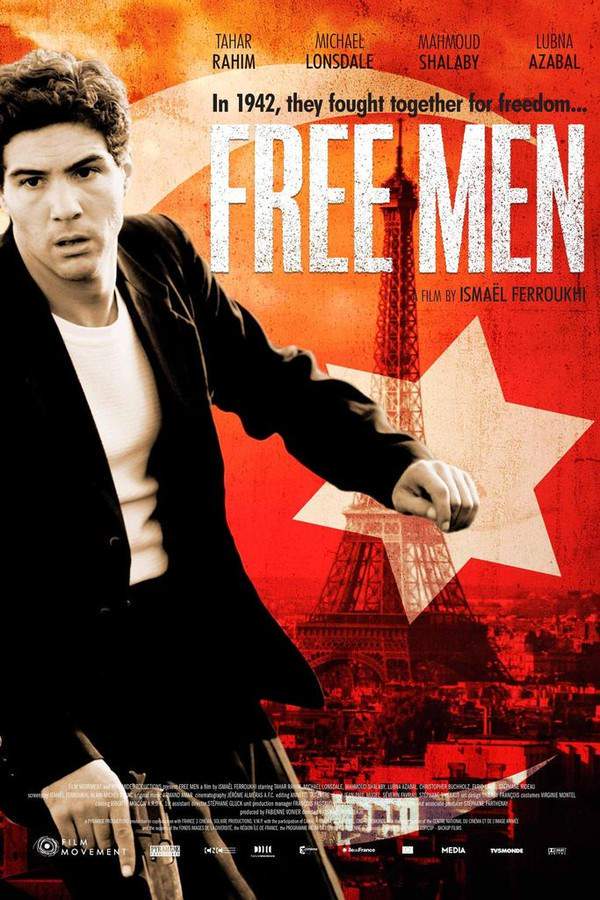
Free Men (2012) movie poster

Timeline

Free Men (2012) Timeline Explained – Every Event in Order

Release, runtime and language
2012 · 99 min · French
Loading streaming availability…
Directed by
Ismaël Ferroukhi

During the Nazi occupation of Paris in 1942, Younes, an unemployed Algerian, works as a black marketeer to survive. Arrested by the authorities, he's given a choice: spy on the Paris Mosque, suspected of being a Muslim Resistance hub, or face imprisonment. While undercover, he encounters Salim Halali, a captivating singer, and becomes entangled in a complex web of faith and danger. Younes discovers that Salim is Jewish, forging an unexpected and powerful connection between them amidst the wartime struggles.

On this page (6)
  1. 1 Where to watch
  2. 2 Events in order (12)
  3. 3 Timeline questions answered
  4. 4 Movie threads
  5. 5 Movies like Free Men
  6. 6 Every angle
Loading streaming availability…

12 events in order · contains spoilers

Free Men Timeline: Events in Chronological Order

Every key event of Free Men (2012) in order, scene by scene, with when and where it takes place. Use it to untangle flashbacks, time jumps and parallel storylines, to refresh your memory before the sequel or to find the exact scene you are thinking of.

  1. Younes enters the shadow economy in occupied Paris

    In occupied Paris, Younes Ben Daoud, an unemployed Algerian, makes a living on the black market. His activities eventually draw police attention, and he is arrested. To avoid prison, he agrees to spy on the Paris Mosque for the authorities.

    When
    Occupied Paris
    Where
    Paris
  2. Undercover assignment begins at the Paris Mosque

    Under orders to surveil the mosque, Younes starts observing its daily operations and people. He gathers information while trying to remain inconspicuous. The assignment exposes him to a hidden world inside the religious sanctuary.

    When
    Early occupation period
    Where
    Paris Mosque
  3. Police suspect the mosque is aiding fighters and protecting Jews

    The police believe the mosque leadership, including its rector Si Kaddour Benghabrit, is helping resistance fighters and protecting North African Jews. They suspect the issuance of Muslim birth certificates to Jewish refugees. This tension makes the mosque a focal point of suspicion and danger.

    When
    During occupation
    Where
    Paris Mosque
  4. Younes befriends Salim Halali at the mosque

    While at the mosque, Younes meets Salim Halali, an Algerian singer who is secretly Jewish. They strike up a friendship that begins to transcend their differences. Salim's presence broadens Younes's view of who the mosque serves and whom it protects.

    When
    During spying period
    Where
    Paris Mosque
  5. Discovery of Salim's Jewish identity and reassessment

    Younes discovers Salim's Jewish identity and witnesses the mosque's humanitarian work firsthand. This revelation challenges his collaboration with the police. He begins to rethink his loyalties and the value of protecting vulnerable people.

    When
    Mid to late occupation
    Where
    Paris Mosque
  6. Mosque shelters European Jews during Nazi roundups

    The mosque opens its doors to shelter European Jews seeking refuge in Paris, providing a safe haven during the Nazi roundups. Its courtyards, rooms, and networks become a living shield for vulnerable people. The acts of protection reveal the mosque's quiet resistance to oppression.

    When
    During Nazi roundups
    Where
    Paris Mosque
  7. Younes joins Algerian resistance circles

    Younes becomes involved with Algerians who are part of the French Resistance, aligning with their cause. He starts contributing to clandestine activities and information sharing. The experience marks a turning point in his political awareness.

    When
    During occupation
    Where
    Paris / Resistance networks
  8. Move toward independence after the war

    Beyond immediate shelter and defense, the Algerian resistance group Younes associates with begins planning for independence after the war. He sees a new horizon where colonial rule might end. The fighting mindset expands from wartime defense to national self-determination.

    When
    Post-war era
    Where
    Paris / North Africa connection
  9. Leadership of Si Kaddour Benghabrit and the mosque

    The mosque leadership, including rector Si Kaddour Benghabrit, plays a central role in sheltering refugees and protecting people. The film portrays their courage and moral resolve under occupation. Their leadership becomes a symbol of principled resistance.

    When
    During occupation
    Where
    Paris Mosque
  10. Birth certificates as a tool of protection

    As part of its protective work, the mosque helps issue Muslim birth certificates to North African Jews, easing their identification under oppressive regimes. This bureaucratic shield allows some to avoid persecution and find refuge. The document network illustrates the quiet ingenuity of resistance.

    When
    During occupation
    Where
    Paris Mosque
  11. Cross-cultural bonds strengthen the resistance

    Younes's growing bond with Salim and his collaboration with resistance members demonstrates how alliances across cultural lines can strengthen a common cause. He learns empathy and strategic restraint through these relationships. The mosque acts as a bridge between oppressed communities.

    When
    During occupation
    Where
    Paris
  12. Younes fully joins the resistance

    Gradually Younes morphs from a politically ignorant immigrant into a fully fledged resistance fighter. He commits to armed and strategic resistance against colonial rule and Nazi oppression. The transformation culminates in a new sense of purpose tied to liberation.

    When
    Late war / immediate post-occupation
    Where
    Paris, France

Last updated: February 24, 2026 at 14:09

Was this helpful?

Timeline questions answered

Free Men Timeline Explained: Your Questions Answered

When does it happen, and why in that order? The questions people ask about the chronology of Free Men (2012): time jumps, flashbacks, cause and effect between scenes and the correct order of events, each answered with spoilers.

Q1

Why does Younes agree to spy on the Paris Mosque?

Younes is arrested by the French police for his black market activities. To avoid imprisonment under Nazi occupation, he accepts the authorities' offer to work as an informant. He is tasked with surveilling the Paris Mosque, which the authorities suspect is helping resistance fighters and protecting North African Jews through the issuance of Muslim birth certificates.

Foreshadowing: Earlier scenes show Younes struggling to survive in occupied Paris, establishing his desperate circumstances.

  • younes
  • paris mosque
  • spy
  • arrest
  • black market
  • occupation
Q2

Why is the Paris Mosque suspected by the Nazis?

The Nazis and their French collaborators suspect that the mosque's leadership, particularly rector Si Kaddour Benghabrit, is aiding resistance fighters and protecting Jews. Specifically, they believe the mosque is issuing Muslim birth certificates to North African Jews, which would help them avoid identification and deportation during Nazi roundups.

Foreshadowing: The timeline notes mention police suspicion of the mosque's humanitarian work from the early occupation period.

  • paris mosque
  • Nazis
  • si kaddour benghabrit
  • suspicion
  • birth certificates
  • resistance
Q3

How does Younes discover Salim is Jewish?

While undercover at the mosque, Younes forms a friendship with Salim Halali, an Algerian singer. Through their growing bond and witnessing the mosque's work protecting vulnerable people, Younes learns that Salim is actually Jewish. This discovery shocks Younes and becomes a turning point in his understanding of the mosque's true mission.

Foreshadowing: The friendship between Younes and Salim develops gradually as they share cultural backgrounds and trust.

  • younes
  • salim halali
  • jewish
  • discovery
  • friendship
  • mosque
Q4

What do the Muslim birth certificates represent in the film?

The Muslim birth certificates are documents issued by the Paris Mosque to North African Jews, officially declaring them as Muslims. These papers served as protection against Nazi identification and deportation, allowing Jewish refugees to blend in and avoid persecution. This represents a quiet but courageous form of resistance through bureaucratic means.

Foreshadowing: The police mention this practice early in Younes's assignment, highlighting why the mosque is under suspicion.

  • birth certificates
  • muslim
  • jews
  • protection
  • documents
  • resistance
  • roundups
Q5

Why does Younes stop feeding information to the police?

After discovering that Salim is Jewish and witnessing the mosque's humanitarian work sheltering Jews during Nazi roundups, Younes experiences a moral awakening. He realizes the police are targeting innocent people seeking refuge, not criminals. This understanding, combined with his growing friendship with Salim, leads him to cease his cooperation with the authorities.

Foreshadowing: Younes's gradual shift is foreshadowed by his deepening involvement with Salim and the mosque community.

  • younes
  • police
  • stop reporting
  • betrayal
  • awakening
  • moral choice
Q6

How does the Paris Mosque protect Jews during the Nazi roundups?

The Paris Mosque opens its doors to shelter European Jews seeking refuge in Paris. Its courtyards, rooms, and secret networks provide safe haven during Nazi roundups. The mosque acts as a physical shield, hiding vulnerable people from deportation while issuing fake Muslim birth certificates to help others escape identification.

Foreshadowing: The timeline shows the mosque's protective role intensifying as Nazi roundups increase across occupied Paris.

  • paris mosque
  • Jews
  • protection
  • roundups
  • shelter
  • refuge
  • Nazi occupation
Q7

What triggers Younes to join the Algerian resistance?

Younes's involvement with the Algerian resistance begins after his moral transformation at the mosque. Through his connections with other Algerians in the French Resistance, he becomes exposed to the broader struggle for freedom. His experiences witnessing the mosque's principled resistance and his friendship with Salim catalyze his political awakening, pushing him toward active resistance against both Nazi occupation and colonial rule.

Foreshadowing: The timeline notes his gradual integration into resistance circles following his decision to stop cooperating with police.

  • younes
  • algerian resistance
  • french resistance
  • join
  • transformation
  • political awakening
Q8

Who is Si Kaddour Benghabrit and what role does he play?

Si Kaddour Benghabrit is the rector of the Paris Mosque during the Nazi occupation. He leads the mosque's secret humanitarian operations, including issuing Muslim birth certificates to Jewish refugees and organizing shelter for those fleeing Nazi roundups. His leadership represents principled moral resistance under occupation, becoming a symbol of courage and compassion.

Foreshadowing: The meta notes emphasize the mosque leadership's role as a symbol of resistance throughout the narrative.

  • si kaddour benghabrit
  • rector
  • paris mosque
  • leader
  • resistance
  • protection
Q9

How does Younes's transformation from black marketeer to resistance fighter happen?

Younes evolves from a politically indifferent immigrant simply trying to survive the occupation into a committed resistance fighter. This transformation occurs gradually: first through his undercover assignment that exposes him to the mosque's humanitarian work, then through his friendship with Salim, and finally through his integration into Algerian resistance networks. Each stage deepens his understanding of solidarity and justice.

Foreshadowing: The narrative begins with Younes as a survival-focused black marketeer with no political consciousness.

  • younes
  • transformation
  • black marketeer
  • resistance
  • evolution
  • character arc
  • political awakening
Q10

What's the connection between the Algerian community and the French Resistance?

The film shows Algerians in Paris as part of a broader resistance network that includes both fighting Nazi occupation and planning for post-war Algerian independence. Younes becomes involved with Algerians who are simultaneously part of the French Resistance, creating connections across oppressed communities. This dual struggle represents the complex political landscape of occupied France.

Foreshadowing: The timeline notes show the resistance work expanding from immediate wartime defense to national self-determination.

  • algerian resistance
  • french resistance
  • connection
  • independence
  • colonial
  • network
Q11

Why does the mosque help Jewish refugees when it's a Muslim institution?

The Paris Mosque under Si Kaddour Benghabrit's leadership operates on principles of humanitarianism and interfaith solidarity. The mosque views protecting vulnerable people, regardless of their faith, as a moral duty. This act of resistance demonstrates how religious institutions can transcend their primary function to become shelters for those facing persecution, bridging Muslim and Jewish communities against shared oppression.

Foreshadowing: The meta notes emphasize the theme of communities standing together in dark times.

  • mosque
  • jewish refugees
  • help
  • muslim
  • interfaith
  • solidarity
  • humanitarian
  • protection

Movie threads

More Movies Like Free Men, by Mood & Story

Curated lists built around what makes Free Men tick: the same mood, the same kind of story or the same emotional payoff. Each list explains why these movies belong together.

Wartime espionage and moral awakening movies like Free Men

Undercover agents facing dangerous choices in oppressive regimes. If you liked the high-stakes undercover work and moral turning point in Free Men, explore these other films about reluctant spies and wartime resistance. These movies feature tense atmospheres, heavy emotional weight, and protagonists forced to choose a side.

  • tense
  • clandestine
  • dangerous
  • transformative
  • urgent
  • morally complex
  • Tone: tense, dangerous, morally complex
  • Pacing: steady, deliberate
Why these movies?

The story pattern: The narrative typically follows a reluctant or coerced protagonist who must infiltrate an enemy organization or community. As they gather intelligence, they form genuine connections with their targets, leading to a crisis of conscience. The story culminates in a difficult choice that defines their morality and allegiance, often at great personal cost.

Why they belong together: These movies share a potent mix of high-intensity tension, a focus on espionage and survival, and a profound character arc centered on moral awakening. The pacing is deliberate, allowing the protagonist's internal struggle to build alongside the external threat, creating a deeply engaging and emotionally resonant experience.

Movies about unexpected wartime bonds like Free Men

Powerful connections formed across divides under extreme pressure. Find more movies like Free Men where a profound friendship defies the divisions of war. These films explore how alliances and human connections can form in the most dangerous circumstances, focusing on themes of loyalty, identity, and shared survival.

  • somber
  • transformative
  • urgent
  • bittersweet
  • friendship
  • survival
  • Tone: somber, transformative, bittersweet
  • Pacing: steady, character-driven
Why these movies?

The story pattern: The plot revolves around an unlikely alliance or friendship that develops between characters who would ordinarily be enemies or strangers. The pressures of war—survival, persecution, or a common goal—force them together, and their relationship becomes a central pillar of the story, challenging prejudices and offering hope.

Why they belong together: They are grouped by their powerful emotional core: the depiction of a fragile but profound human connection that blossoms in a hostile environment. This shared theme creates films with a heavy emotional weight, a bittersweet tone, and a focus on how humanity can persist even in the darkest times.

If you liked this

Movies Like Free Men

Similar movies to Free Men: the same genre, themes or kind of story. Each one comes with its own plot summary, timeline and ending explained.

Browse all movie summaries

Every angle

Free Men (2012) Explained: Plot, Timeline & Characters

Everything about Free Men in one place: what happens in the plot summary, the timeline in chronological order, the characters and meaning and a spoiler-free summary. What's After the Movie adds the cast, box office and post-credit scenes.

Coming soon on iOS and Android

The Plot Explained Movie Summary App

Plot summaries, endings explained and timelines on your phone. Catch up on any movie in minutes, save your favorites and never miss a twist again.

Be the first to know when we launch. Your email stays private, always.

Learn more about the app