Plot Explained Spoilers guaranteed!
Plot Explained

Browse by genre

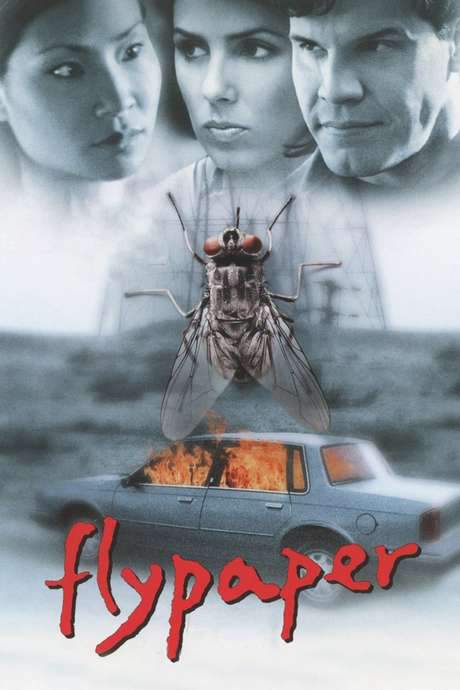
Flypaper (1999) movie poster

Characters & Themes

Flypaper (1999) Characters, Setting & Themes Explained

Release, runtime and language
1999 · 108 mins · English
Loading streaming availability…
Directed by
Klaus Hoch
Starring
John C. McGinley, Robert Loggia, Dane Cook, Lucy Liu, Illeana Douglas, Craig Sheffer

Greed, lust and fate draw a motley crew of oddballs and lowlifes into sticky situations in Hoch’s twisted neo‑noir debut. On a deceptively sunny California day, three interwoven stories revolve around a million dollars in cash, prompting the eccentric characters to commit devious, depraved acts in pursuit of the big score.

On this page (8)
  1. 1 Where to watch
  2. 2 Characters explained (10)
  3. 3 Where & when it takes place
  4. 4 Themes & meaning (4)
  5. 5 Character & meaning questions
  6. 6 Movie threads
  7. 7 Movies like Flypaper
  8. 8 Every angle
Loading streaming availability…

10 main characters · contains spoilers

Flypaper Characters Explained: Who Is Who

The main characters of Flypaper (1999), heroes and villains: what drives them, how they change over the course of the story and what each of them reveals about the film's bigger ideas.

  • Joe (John C. McGinley)

    A fiancé whose fidelity is tested by Laura's manipulative plan. He oscillates between denial and remorse, showing vulnerability and a stubborn desire to repair the relationship. Joe's moral complexity drives him into a tense dynamic with Amanda, highlighting how trust is fragile when jealousy dominates judgement.

    • 💬 Relationship
    • 🧭 Moral conflict
    • 🎭 Drama
  • Laura (Illeana Douglas)

    Joe's jealous fiancée who hires Amanda to test his loyalty. She transitions from ruthless manipulation to regret and reconciliation, revealing a clash between control and trust. Laura's actions catalyze the central drama and expose the costs of insecurity.

    • 💍 Relationship
    • 🧠 Manipulation
    • 🎭 Drama
  • Amanda (Talisa Soto)

    The 'love decoy' hired to entice Joe, playing with desire and power dynamics. Her encounter with Joe ends with him left in his underwear and her leaving, illustrating how performance and risk intersect with real consequences. Amanda's role intertwines with the crime plot as she navigates danger and manipulation.

    • 🎭 Performance
    • 💘 Seduction
    • 🧩 Plot twist
  • Dot (Lucy Liu)

    A kidnapped drug chemist who is chained and escapes, becoming entangled in the story's crime threads. Her resilience and injuries shape how others respond to danger, and her fate intersects with Jerry's impulsive romance. Dot's presence anchors the danger driving the criminals' schemes.

    • 💊 Kidnapping
    • 🐍 Survival
    • 🧭 Resilience
  • Jerry (James Wilder)

    A snake enthusiast who treats Dot's injury and falls in love with her, leading to an impulsive marriage. His reckless nature and physical courage contrast with the film's crime-driven plot, adding a note of odd tenderness amid chaos. Jerry's bond with Dot highlights how connections form in crisis.

    • 🐍 Romance
    • 🗡️ Danger
    • 💞 Unexpected love
  • Marvin (Robert Loggia)

    A home builder who watches over Natalie, later negotiating with criminals while keeping her safe. His possible paternity of Natalie and his retirement plan reveal a humane side in a rough world, offering a path to stability and closure. Marvin's choices reflect a sense of responsibility and hope amid chaos.

    • 🛠️ Guardian
    • 🏡 Family
    • 🧭 Responsibility
  • Natalie (Sadie Frost)

    A recovering addict with a traumatic past, trying to survive and find her mother. Her interactions with Marvin and Jack show vulnerability, resilience, and a longing for belonging. The mystery of her mother’s fate frames the film's emotional stakes and the drive for closure.

    • 💉 Addiction
    • 🧬 Family
    • 🧭 Search
  • Jack (Shane Brolly)

    Marvin's employee who bonds with Natalie and participates in the story's crime-skirting world. He becomes a partner in caring for Natalie and later confronts the criminals, injecting loyalty and courage into the plot. Jack embodies the shift from bystander to active participant in protecting loved ones.

    • 🧑‍🔧 Protector
    • 🗡️ Violence
    • 🤝 Loyalty
  • Bobby Ray (Craig Sheffer)

    One of the crooks who steals from a meth lab and abducts Dot, entangling himself in a web of double-crosses. His journey ends with a drastic betrayal, leaving him wounded and pursued. Bobby Ray's greed drives many of the movie's key confrontations.

    • 💰 Greed
    • 🔫 Crime
    • 🧪 Lab
  • Leon (Sal Lopez)

    A cunning partner to Bobby Ray who plans to double-cross him and use the money to start a strip club. His betrayal escalates the film's violence and shifts the balance of power among criminals. Leon embodies the opportunistic nature of crime and the stakes of trust in illegal ventures.

    • 🕵️ Betrayal
    • 💵 Crime
    • 🎯 Ambition

Last updated: October 04, 2025 at 19:40

Was this helpful?

Setting

Where and When Does Flypaper Take Place?

The setting of Flypaper (1999): the year and time period, the places and locations, and how they shape the characters, the mood and the tension of the story.

Time period

Location

Southern California

In Southern California, the film unfolds across motels, banks, and suburban hideouts, painting a sun-drenched backdrop for a web of romance and crime. The setting alternates between intimate hotel rooms and public venues like a bank parking lot and a snake-filled pool, emphasizing the contrast between private betrayals and public crime. The landscape contributes to a mood of glossy danger characteristic of late-90s thrillers.

  • 🌴 Southern California
  • 🏙️ Urban landscapes
  • 🚗 Crime drama

Last updated: October 04, 2025 at 19:40

Was this helpful?

4 major themes

Flypaper Meaning: Themes & Message Explained

What is Flypaper (1999) really about? The emotional, social and philosophical themes the film keeps returning to, its symbolism and the message beneath the surface.

  • Love & Trust

    Jealousy drives the plot as Laura engineers a test of Joe's fidelity, revealing how fragile trust can be. The love decoy creates tension that forces characters to confront honesty and self-deception. The film uses these relationships to explore how desire and insecurity push people toward extreme actions. The consequences ripple through both intimate partnerships and the wider web of crime surrounding them.

  • Crime & Deceit

    Two separate threads of crime weave through the story: a meth-lab heist and a kidnapping interrupted by personal drama. The criminals' scheming mirrors the emotional games among Joe, Laura, and Amanda, blurring lines between victim and perpetrator. The plot keeps shifting loyalties and reveals that greed and manipulation are as dangerous as jealousy. Settings like motels and parking lots heighten the sense of illicit, high-stakes deception.

  • Abandonment & Closure

    Natalie's backstory of abandonment informs her fragile sense of security and desire for family. Marvin's potential paternity and his decision to help Natalie offer a route to emotional closure for a wounded character. The search for motherly connection threads through the ending, prompting characters to confront what family means. The story suggests closure may come not from revenge, but from care and responsibility.

  • Unlikely Romance

    Dot's perilous situation leads to an unexpected romance with Jerry, who treats her injuries and shares a bond shaped by danger. Their impulsive marriage in a snake-filled pool symbolizes how love can emerge in the most unlikely circumstances. The pairing stands apart from the main thriller plot, offering a counterpoint of tenderness amid chaos. Their relationship illustrates the film's broader theme that affection can survive even in volatile environments.

Last updated: October 04, 2025 at 19:40

Was this helpful?

Character & theme questions

Flypaper Characters & Meaning: Your Questions Answered

The questions people ask about Flypaper (1999): who the characters really are, their relationships, what the symbols mean, where it takes place and what the movie is really about. Each answer contains spoilers.

Q1

Where is Flypaper set?

The movie takes place in Southern California, primarily in and around motels, banks, and suburban hideouts. The sun-drenched setting creates a glossy, deceptive backdrop that contrasts with the dark criminal activities unfolding there, characteristic of late-90s neo-noir thrillers.

  • southern california
  • setting
  • california
  • motel
  • location
Q2

When does the story take place?

The film is set in the late 1990s, reflecting the modern era of 1999 when it was made. There is no specific historical period anchor, the contemporary setting emphasizes the timeless nature of the crimes and relationships depicted.

  • 1990s
  • time period
  • modern
  • late 90s
Q3

What is the Love & Trust theme about in Flypaper?

The film explores how jealousy and insecurity drive characters to extreme actions. Laura orchestrates a test of Joe's fidelity by hiring Amanda as a 'love decoy,' revealing how fragile trust becomes when doubt takes hold. The theme shows that desire and insecurity push people toward manipulations that damage both intimate partnerships and wider relationships.

  • love
  • trust
  • jealousy
  • fidelity
  • relationships
  • manipulation
Q4

What is the Crime & Deceit theme in the movie?

Flypaper weaves together multiple criminal threads, a meth-lab heist and a kidnapping, alongside emotional manipulations among the main characters. The criminals' schemes mirror the emotional games played by Joe, Laura, and Amanda, blurring lines between victim and perpetrator. Greed and manipulation prove as dangerous as jealousy in this web of shifting loyalties.

  • crime
  • deceit
  • heist
  • kidnapping
  • betrayal
  • manipulation
Q5

What is the Unlikely Romance theme in Flypaper?

The film presents an unexpected love story between Dot, a kidnapped drug chemist, and Jerry, a snake enthusiast who treats her injuries. Their impulsive marriage in a snake-filled pool symbolizes how love can emerge in the most chaotic circumstances. This pairing offers tenderness amid violence, suggesting affection can survive even in volatile environments.

  • unlikely romance
  • dot
  • jerry
  • love
  • connection
  • chaos
Q6

What is the Abandonment & Closure theme about?

Natalie's backstory of abandonment drives her fragile sense of security and her desperate search for her mother. Marvin's potential paternity and his decision to protect her offer a path to emotional closure for a wounded character. The theme suggests that resolution may come not from revenge, but from care and responsibility toward family.

  • abandonment
  • closure
  • family
  • natalie
  • marvin
  • mother
  • search
Q7

Who are the key characters in Flypaper?

The main characters include Joe, whose fidelity is tested by his jealous fiancée Laura; Amanda, the 'love decoy' hired to tempt Joe; Dot, a kidnapped drug chemist; Jerry, the snake enthusiast who falls for Dot; and Natalie, a recovering addict searching for her mother. Supporting characters include Marvin, who protects Natalie, and Bobby Ray and Leon, the criminals behind the heist and kidnapping.

  • characters
  • joe
  • laura
  • amanda
  • dot
  • jerry
  • natalie
  • marvin
  • bobby ray
  • leon
Q8

Who is Joe and what motivates him?

Joe is Laura's fiancé whose loyalty is put to the test when Laura hires Amanda to seduce him. He oscillates between denial and remorse, showing vulnerability and a stubborn desire to repair the relationship despite the betrayal. His moral complexity drives the central drama about trust and jealousy.

  • joe
  • fiancé
  • loyalty
  • trust
  • motivation
  • jealousy
Q9

Who is Laura and why does she manipulate Joe?

Laura is Joe's jealous fiancée who orchestrates the fidelity test by hiring Amanda. Her insecurity and need for control lead her to manipulate Joe, but she eventually experiences regret and seeks reconciliation. Her actions expose the destructive costs of insecurity and the conflict between control and trust in relationships.

  • laura
  • jealousy
  • manipulation
  • insecurity
  • control
  • fiancé
Q10

Who is Natalie and what is her backstory?

Natalie is a recovering addict with a traumatic past who is trying to survive and find her mother. Her interactions with Marvin and Jack show vulnerability, resilience, and a deep longing for belonging. The mystery of her mother's fate frames the film's emotional stakes and drives her search for closure.

  • natalie
  • addict
  • mother
  • search
  • closure
  • backstory
  • recovery
Q11

What is the tone and mood of Flypaper?

The film has a predominantly dark, morally ambiguous tone with high intensity and fast pacing. While the ending offers bittersweet reconciliation for some characters, the overall mood is shadowed by violence, addiction, and emotional manipulation. The neo-noir style combines glossy surfaces with dangerous underworld activities characteristic of late-90s thrillers.

  • tone
  • mood
  • dark
  • neo-noir
  • intensity
  • thriller
  • bittersweet
Q12

How are the multiple storylines in Flypaper structured?

Flypaper uses three interwoven narratives that converge at a motel: a revenge plot, a meth-lab scheme, and a paternal guardian story involving Natalie and Marvin. The complex structure keeps shifting loyalties and reveals how greed, manipulation, and jealousy intersect across different character groups, creating a web of crime and emotional drama.

  • storylines
  • structure
  • interwoven narratives
  • plot
  • convergence
  • motel

Movie threads

More Movies Like Flypaper, by Mood & Story

Curated lists built around what makes Flypaper tick: the same mood, the same kind of story or the same emotional payoff. Each list explains why these movies belong together.

Chaotic Neo-Noir Crime Webs like in Flypaper

Intertwined stories of desperate characters colliding in a violent, gritty criminal underworld. If you liked the interlocking criminal stories and gritty chaos of Flypaper, explore more movies like it. This collection features similar neo-noir thrillers with complex narratives, desperate characters, and a fast-paced, high-intensity vibe where fate and greed violently intertwine.

  • gritty
  • chaotic
  • cynical
  • twisted
  • unsettling
  • tense
  • Tone: dark, cynical, twisted
  • Pacing: fast, chaotic
Why these movies?

The story pattern: These narratives typically involve several separate but eventually converging storylines, often centered on a single MacGuffin like stolen money. Characters are driven by base desires—greed, lust, revenge—leading them into a spiral of double-crosses and violent confrontations. The structure is complex, with pacing that rarely lets up, building towards an explosive climax.

Why they belong together: They are grouped by their shared neo-noir aesthetic, chaotic and fast-paced narrative structure, and a dark tone focused on the seedy underbelly of crime. The viewing experience is consistently tense, gritty, and unsettling, propelled by characters whose moral compromises define the story.

Movies about the Bittersweet Aftermath of Crime like Flypaper

Stories where violent pursuits leave characters with emotional scars and a pyrrhic victory. For viewers who appreciated the heavy emotional weight and bittersweet ending of Flypaper, this list features similar thrillers and crime dramas. These films explore the consequences of violence and betrayal, leaving characters—and the audience—with a complex mix of resolution and sorrow.

  • bittersweet
  • heavy
  • gritty
  • tense
  • somber
  • consequential
  • Tone: dark, bittersweet, heavy
  • Pacing: fast, then reflective
Why these movies?

The story pattern: The journey follows characters through a violent, high-tension conflict—often a heist or revenge plot—that culminates in a resolution that is neither fully happy nor tragic. There may be a measure of success or justice, but it is profoundly undercut by loss, trauma, or the irreversible damage done to relationships, resulting in a poignant, contemplative finale.

Why they belong together: They share a specific emotional arc: a fast-paced, high-intensity crime narrative leads to an ending that feels bittersweet or heavy. The tone balances dark, violent events with a concluding emphasis on the emotional cost, creating a uniquely impactful and resonant experience.

If you liked this

Movies Like Flypaper

Similar movies to Flypaper: the same genre, themes or kind of story. Each one comes with its own plot summary, timeline and ending explained.

Browse all movie summaries

Every angle

Flypaper (1999) Explained: Plot, Timeline & Characters

Everything about Flypaper in one place: what happens in the plot summary, the timeline in chronological order, the characters and meaning and a spoiler-free summary. What's After the Movie adds the cast, box office and post-credit scenes.

Coming soon on iOS and Android

The Plot Explained Movie Summary App

Plot summaries, endings explained and timelines on your phone. Catch up on any movie in minutes, save your favorites and never miss a twist again.

Be the first to know when we launch. Your email stays private, always.

Learn more about the app