Plot Explained Spoilers guaranteed!
Plot Explained

Browse by genre

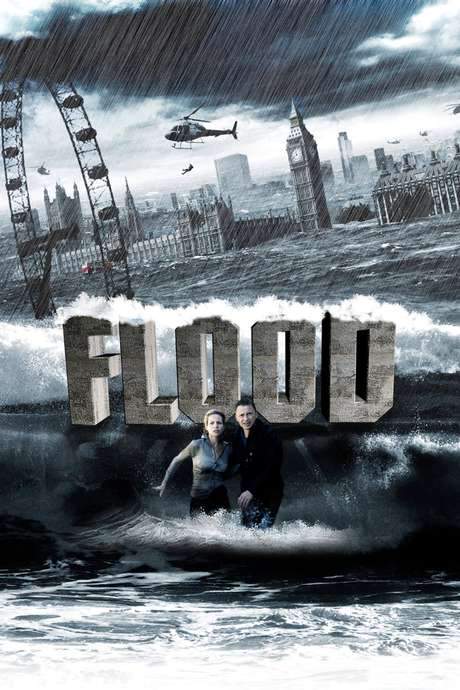
Flood (2007) movie poster

Plot Summary

Flood (2007) Plot Summary Explained

Release, runtime and language
2007 · 110 mins · English
Directed by
Tony Mitchell
Starring
Tom Hardy, Tom Courtenay, Robert Carlyle, Lynita Crofford, David Hayman, Susan Wooldridge

Timely yet terrifying, the film envisions a catastrophic tidal surge triggered when a fierce storm meets high seas. The wave barrels down England’s east coast, surges through the Thames Estuary, overwhelms the Thames Barrier, and floods London, putting the lives of millions of residents at risk.

On this page (8)
  1. 1 Where to watch
  2. 2 What happens: full plot
  3. 3 Plot questions answered
  4. 4 The book behind the movie
  5. 5 Movie threads
  6. 6 Movies like Flood
  7. 7 Categories
  8. 8 Every angle

Where to watch

Where to Watch Flood (2007)

Where can you watch Flood? Stream, rent or buy it in the US, including on Amazon Video: current JustWatch availability with up-to-date prices.

Streaming availability powered by JustWatch

Full plot summary · contains spoilers

What Happens in Flood: Full Plot Summary

The whole story of Flood (2007) explained, from the opening scene to the final frame: every key event, every twist and what it all adds up to. Read it as a quick recap before the sequel, to check a scene you missed, or to finally understand what really happened.

A powerful storm surge strikes the United Kingdom, coinciding dangerously with the spring tide and leading to significant devastation in parts of Scotland, particularly Wick. The head forecaster at the Met Office, Keith Hopkins, miscalculates the storm's trajectory, believing it will head towards the Netherlands. However, marine physics professor Leonard Morrison refutes this theory through his own thorough and advanced computer model. His analysis indicates that the storm and the tide could converge, generating a towering surge of 46 meters.

As panic ensues due to a series of mistaken communications with Deputy Prime Minister Campbell—who grows agitated over the inaccurate forecasts—Hopkins grapples with his guilt for wasting precious time. In a critical meeting at COBRA (Cabinet Office Briefing Rooms) in Whitehall, authorities acknowledge that Central London faces an impending inundation within a mere three hours. With the declaration of a state of emergency, chaos erupts throughout the city as residents scramble to evacuate.

Designated as the emergency coordinator by Campbell, Police Commissioner Patricia Nash collaborates closely with Major General Ashcroft, transport chief Johnson, and the remorseful Hopkins, all tasked with the enormous challenge of evacuating over a million people from the perilous city.

In a desperate turn of events, Leonard confronts his estranged son Rob, an engineer working on the Thames barrier, and Rob's ex-wife Sam, who manages the barrier itself. As Sam exercises her authority over raising the barrier, disaster unfolds when the tsunami arrives, overwhelming their defenses and flooding the city.

Rob and Sam make a harrowing descent into the Thames to flee the flooded barrier while Leonard is airlifted by a military helicopter to Whitehall to provide insights to COBRA. In the London Underground, Rob and Sam encounter two maintenance workers, Bill and Zack, but tragedy strikes when Bill sacrifices himself to save others as the flood engulfs the station.

After a narrow escape to the surface, Rob and Sam find themselves in a submerged Trafalgar Square, where they manage to reach out to Leonard. Upon reuniting, Leonard unveils his belief that reversing the water flow is possible since the tide has shifted and water levels begin to fall. However, General Ashcroft opposes this notion, urging the Prime Minister to greenlight an airstrike meant to destroy the barrier in hopes of creating a surge that could expel the floodwaters from London.

Haunted by his role in the catastrophe, Hopkins succumbs to despair and takes his own life. Meanwhile, Nash and Ashcroft clash over giving the Morrisons a fighting chance to rectify the crisis. In an emotional showdown, Rob, Sam, and Leonard learn that the controls necessary to reverse the water flow are now submerged underwater. As they deliberate on who should attempt the daring activation, Leonard makes the profound choice on their behalf, stepping forward to undertake the perilous task himself.

With stalwart determination, Leonard succeeds in activating the controls but tragically drowns in the process. Just as the airstrike is called off and the water recedes, Rob finds solace in Sam's arms as Leonard's body is recovered from the scene. This disaster has claimed over 200,000 lives, and amidst the profound loss, Campbell addresses the city's survivors via a radio broadcast, reassuring them that London will endure and begin to rebuild.

Last updated: September 30, 2026 at 11:09

Was this helpful?

Plot questions answered

Flood Plot Explained: Your Questions Answered

The questions people ask most about Flood (2007): what happens in the confusing scenes, why the characters do what they do, the twists, hidden details and what the ending means. Each answer contains spoilers.

Q1

Why did Keith Hopkins miscalculate the storm's path?

Keith Hopkins, the head forecaster at the Met Office, believed the storm surge would head toward the Netherlands rather than the UK. His miscalculation was based on incomplete atmospheric modeling, and it caused a dangerous delay in emergency preparations. Marine physics professor Leonard Morrison later proved Hopkins wrong using a more advanced computer model, showing the storm would converge with the spring tide over Britain.

Foreshadowing: Hopkins' confidence in his initial forecast is shown early, setting up the guilt he carries once the devastation begins.

  • hopkins
  • met office
  • forecast
  • storm trajectory
  • netherlands
  • miscalculation
Q2

How did Leonard Morrison predict the 46-meter surge?

Leonard Morrison, a marine physics professor, used a highly advanced computer model that factored in the convergence of the storm with the spring tide. Unlike the Met Office's standard forecast, his model accounted for how the two systems could combine over the North Sea, producing a catastrophic surge of 46 meters. This prediction directly contradicted Hopkins' assessment and triggered the urgent response at COBRA.

Foreshadowing: Leonard's expertise is established before the crisis, hinting that his model will be the key to understanding the real threat.

  • leonard morrison
  • computer model
  • 46-meter surge
  • spring tide
  • storm surge
Q3

Why couldn't the Thames Barrier stop the flood?

The Thames Barrier was designed to protect London from typical storm surges and high tides, but the 46-meter surge generated by the storm and spring tide convergence vastly exceeded its engineering limits. Sam, who managed the barrier, raised the defenses as a last resort, but the volume and force of the water simply overwhelmed the structure, allowing the tsunami to barrel through and flood Central London.

Foreshadowing: Earlier dialogue establishes the barrier as London's main line of defense, making its failure a deliberate narrative turning point.

  • thames barrier
  • overwhelmed
  • surge
  • sam
  • flood
  • engineering limits
Q4

Why were Rob and Sam at the Thames Barrier?

Rob Morrison is an engineer who works on the Thames Barrier, and Sam, his ex-wife, manages the barrier's operations. Both were stationed there as part of their professional roles when Leonard arrived to warn them about the incoming surge. Their presence at the barrier placed them directly in the path of the disaster and forced them to work together despite their strained relationship.

Foreshadowing: Leonard's estrangement from Rob is introduced just before the barrier scene, setting up the family reunion under crisis.

  • rob morrison
  • sam
  • thames barrier
  • engineer
  • estranged
  • family
Q5

Why was Deputy Prime Minister Campbell so angry about the forecasts?

Campbell grew furious because Hopkins' incorrect forecast caused the government to lose critical hours that could have been used for early evacuation and preparation. By the time Leonard's correct model was taken seriously, Central London had only three hours before inundation. Campbell's frustration reflected the realization that hundreds of thousands of lives could have been saved with accurate, timely information.

Foreshadowing: Campbell's impatience during early briefings foreshadows the breakdown in communication that delays the response.

  • campbell
  • deputy prime minister
  • cobra
  • miscommunication
  • forecast delay
Q6

What happened to Bill in the London Underground?

Bill was a maintenance worker who joined Rob and Sam in the flooded Underground station. As water poured into the tunnel, he heroically tried to seal a door to protect the rest of the group from the rising flood. The pressure and volume of water overwhelmed him during the attempt, and he drowned saving the others. His death underscores the human cost of the disaster.

Foreshadowing: Bill is introduced briefly before the flooding escalates, giving his sacrifice greater emotional weight.

  • bill
  • underground
  • sacrifice
  • maintenance worker
  • drowning
  • flooded station
Q7

Why did General Ashcroft want to destroy the Thames Barrier?

General Ashcroft believed the only way to expel floodwaters from London was to bomb the Thames Barrier, creating a controlled breach that would release the water back toward the sea. Leonard Morrison disagreed, arguing that the tide had already shifted and the flood could be reversed by activating the barrier's controls in reverse. The two clashed because Ashcroft prioritized a military solution while Leonard trusted the physics of the receding tide.

Foreshadowing: Ashcroft's preference for decisive military action is hinted at during COBRA meetings before the confrontation.

  • ashcroft
  • airstrike
  • thames barrier
  • leonard
  • military strategy
  • flood reversal
Q8

Why did Hopkins take his own life?

Hopkins was consumed by guilt after realizing that his miscalculated forecast had cost the government critical response time and contributed to the massive loss of life. As the death toll rose and the scale of the catastrophe became clear, the emotional weight became unbearable. He disappeared from the crisis response and later succumbed to his despair, a moment that highlights the psychological toll of the disaster on those who felt responsible.

Foreshadowing: Hopkins' visible distress after the COBRA meetings foreshadows his inability to cope with the consequences.

  • hopkins
  • suicide
  • guilt
  • met office
  • casualties
  • despair
Q9

Why did Leonard drown while activating the controls?

Leonard volunteered to dive underwater to reach the barrier's submerged control systems because reversing the water flow required physical activation that no one else could safely attempt. The controls were located deep beneath the floodwaters, and the act of engaging them in those conditions proved fatal. Leonard chose the mission over his own safety, knowing that his expertise made him the only one who could complete it.

Foreshadowing: Leonard's role as the sole expert on the reversal plan is established during the debate with Ashcroft, setting up his pivotal role.

  • leonard morrison
  • sacrifice
  • drowning
  • controls
  • flood reversal
  • barrier
Q10

How did authorities evacuate over a million people from London?

After the state of emergency was declared, Police Commissioner Patricia Nash coordinated a massive evacuation with the military, transport officials, and emergency services. Roads, public transport routes, and designated escape corridors were activated to move residents out of Central London within the narrow three-hour window. Despite the effort, the speed and scale of the flood meant that not everyone could be saved, contributing to the final death toll of over 200,000.

Foreshadowing: Nash's appointment as emergency coordinator is shown just before the chaos begins, highlighting the scale of the task ahead.

  • evacuation
  • nash
  • london
  • state of emergency
  • one million
  • cobra
Q11

How was the flood reversed at the end?

Leonard realized that as the tide shifted, the water levels around the barrier would begin to drop, and re-engaging the barrier's controls could redirect the floodwaters back out to sea. Once he manually activated the submerged system, the barrier redirected the flow, and the water receded from Central London. The airstrike was called off at the last moment, validating Leonard's approach over Ashcroft's military solution.

Foreshadowing: Leonard's earlier modeling of tidal behavior foreshadows his ability to predict the reversal opportunity.

  • flood reversal
  • tide
  • barrier controls
  • leonard
  • airstrike canceled
Q12

How did Rob, Sam, and Leonard reunite at Trafalgar Square?

After escaping the flooded Underground through a vertical shaft, Rob and Sam surfaced in the submerged Trafalgar Square. Leonard, who had been airlifted to Whitehall by military helicopter to consult with COBRA, eventually made his way back to the barrier area. The family was able to reconnect via radio, allowing them to regroup and plan the final attempt to reverse the flood.

Foreshadowing: The vertical shaft escape hints at a route back to the surface, setting up the reunion scene.

  • trafalgar square
  • reunion
  • rob
  • sam
  • leonard
  • escape
  • shaft
Q13

Why was the death toll so high despite the evacuation?

The three-hour warning window was far too short to evacuate the entire city of millions, and many residents were caught in lower-lying areas, Underground stations, and roadways as the water rose. The barrier's failure meant there was no structural defense left to buy time, and the speed of the surge overwhelmed emergency services. The final count of over 200,000 lives lost reflects both the scale of the natural disaster and the consequences of the delayed forecast.

Foreshadowing: The frantic pace of the evacuation scenes foreshadows that not everyone can be reached in time.

  • death toll
  • 200000
  • evacuation
  • three hours
  • flood
  • london
Q14

What was the significance of Campbell's final radio broadcast?

Campbell's radio address to survivors served as a symbolic moment of national reassurance after the catastrophe. While the death toll exceeded 200,000 and London lay in ruins, his message emphasized resilience and the commitment to rebuild. The broadcast framed the disaster not just as an ending but as the beginning of recovery, balancing the film's devastating losses with a note of hope.

Foreshadowing: Campbell's role as the political authority throughout the crisis sets him up as the voice of reassurance at the end.

  • campbell
  • broadcast
  • survivors
  • london
  • rebuild
  • hope

Movie threads

More Movies Like Flood, by Mood & Story

Curated lists built around what makes Flood tick: the same mood, the same kind of story or the same emotional payoff. Each list explains why these movies belong together.

Disaster movies with family reconciliation like in Flood

Stories where estranged loved ones are forced to face the end together. Looking for movies like Flood where estranged families reunite under catastrophic pressure? These films combine large-scale disaster spectacle with intimate emotional arcs, where divorce, distance, or resentment gives way to sacrifice and reconciliation when survival hangs in the balance.

  • family drama
  • estranged loved ones
  • reconciliation
  • sacrifice
  • tense
  • bittersweet
  • Tone: tense, bittersweet
  • Pacing: fast with emotional pauses
Why these movies?

The story pattern: Estranged family members — typically a divorced couple and their child — are pulled back together by an external catastrophe. Old wounds resurface as they navigate both the immediate danger and their complicated history. The crisis becomes a crucible that forces honesty, forgiveness, and often sacrifice, with the parent-child or romantic relationship tested to its breaking point. The story alternates between frantic external action and quieter interior beats where the family's emotional ledger is finally settled, usually with at least one painful loss.

Why they belong together: They share a narrative engine of crisis-induced family reckoning, combining high-stakes external danger with deeply personal emotional stakes. The pacing alternates between frantic survival sequences and quieter character moments where the family history plays out, and the endings lean bittersweet rather than purely triumphant or purely tragic. Movies cluster around parent-child sacrifice, ex-spouse reconnection, and the sense that only catastrophe could break the silence.

Catastrophic natural disaster thrillers like Flood

Disaster thrillers where the planet itself becomes the unstoppable enemy. Movies like Flood where climate catastrophe and unstoppable natural forces threaten millions. These high-intensity disaster films pit humanity against overwhelming environmental threats, blending frantic evacuation sequences, scientific debate, government response, and devastating mass-casualty stakes with bittersweet endings of national resilience.

  • disaster spectacle
  • ticking clock
  • mass evacuation
  • overwhelming odds
  • devastating
  • climate catastrophe
  • Tone: tense, devastating
  • Pacing: fast and relentless
Why these movies?

The story pattern: An impending or unfolding natural catastrophe — a megastorm, tidal surge, seismic event — is identified by scientists but underestimated, politicized, or delayed by authorities. As the disaster overwhelms critical infrastructure (a barrier, a levee, a coastline), officials and citizens must coordinate impossible evacuations and last-ditch defenses. The narrative builds through converging subplots of scientific disagreement, military versus civilian strategy, evacuation logistics, and personal survival, often ending with mass loss tempered by hard-won resilience rather than clean triumph.

Why they belong together: They share the spectacle of a specific, named natural threat playing out against a recognizable real-world location, with high-intensity survival sequences and a bittersweet rather than purely happy ending. Pacing is relentlessly fast during disaster beats, with moderate narrative complexity across the response-coordination subplots. Emotional weight comes from mass casualties, named-character deaths, and the question of whether any defense could have held.

If you liked this

Movies Like Flood

Similar movies to Flood: the same genre, themes or kind of story. Each one comes with its own plot summary, timeline and ending explained.

Browse all movie summaries

Categories

Movie Lists Featuring Flood

Flood appears in these hand-built movie categories. Each one groups movies by a specific mood, theme or story type, with their plot summaries and endings explained.

View all movie categories

Every angle

Flood (2007) Explained: Plot, Timeline & Characters

Everything about Flood in one place: what happens in the plot summary, the timeline in chronological order, the characters and meaning and a spoiler-free summary. What's After the Movie adds the cast, box office and post-credit scenes.

Coming soon on iOS and Android

The Plot Explained Movie Summary App

Plot summaries, endings explained and timelines on your phone. Catch up on any movie in minutes, save your favorites and never miss a twist again.

Be the first to know when we launch. Your email stays private, always.

Learn more about the app