Plot Explained Spoilers guaranteed!
Plot Explained

Browse by genre

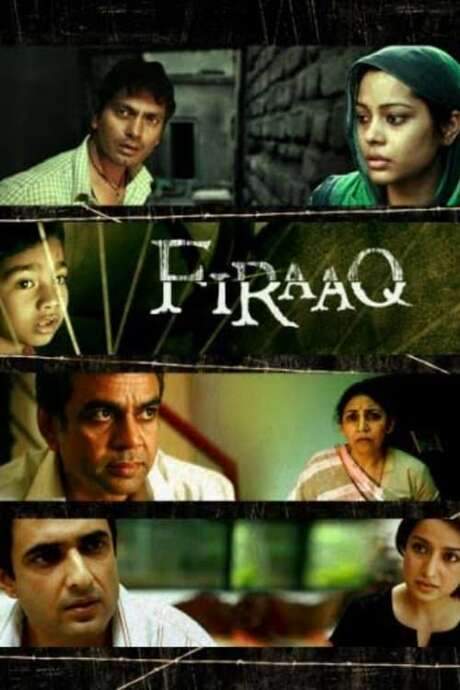
Firaaq (2009) movie poster

Plot Summary

Firaaq (2009) Plot Summary Explained

Release, runtime and language
2009 · 101 mins · Hindi
JustWatch #22,577 1
Directed by
Nandita Das
Starring
Shahana Goswami, Amruta Subhash, Naseeruddin Shah, Madhurjeet Sarghi, Paresh Rawal, Sanjay Suri

Firaaq, an Urdu term meaning both separation and quest, is a fictional film woven from thousands of narratives. Set over a single 24‑hour day, a month after the 2002 Gujarat campaign, it follows the emotional odyssey of ordinary people—victims, perpetrators and silent witnesses—each confronting the aftermath of the violence.

On this page (6)
  1. 1 Where to watch
  2. 2 What happens: full plot
  3. 3 Plot questions answered
  4. 4 Movie threads
  5. 5 Movies like Firaaq
  6. 6 Every angle

Where to watch

Where to Watch Firaaq (2009)

Where can you watch Firaaq? Stream, rent or buy it in the US, including on Brew, Hoopla and Plex: current JustWatch availability with up-to-date prices.

Streaming availability powered by JustWatch

Full plot summary · contains spoilers

What Happens in Firaaq: Full Plot Summary

The whole story of Firaaq (2009) explained, from the opening scene to the final frame: every key event, every twist and what it all adds up to. Read it as a quick recap before the sequel, to check a scene you missed, or to finally understand what really happened.

Khan Saheb is an elderly Muslim classical vocalist who clings to a quiet optimism as the city reels from the aftermath of the 2002 violence in Gujarat. His worldview is gently challenged by the harsh realities surrounding him, and the sight of a shattered shrine to the Sufi saint Wali Gujarati becomes a stark reminder of the trauma that has taken root in the community. Nearby, Karim Mian, his loyal servant, watches the tension rise and tries to warn him, yet the old man’s faith in everyday goodness holds firm even as the world around him falters.

Across the city, a middle-aged Hindu housewife, Aarti, carries the weight of guilt after a moment she perceives as a moral failing: she did not intervene when a Muslim woman was chased by a mob. Her path toward atonement unfolds as she encounters Mohsin, a Muslim orphan wandering in search of his family, crystallizing the personal shadows cast by communal violence. Aarti’s husband, Sanjay, and his brother Deven find themselves entangled in a desperate bid to shield Deven from arrest for a grave crime, attempting to bribe police to avert consequences that could fracture their fragile lives.

In a different thread, Muneera and her husband Hanif confront the aftermath of looting and arson that has left their home vandalized and their sense of safety shattered. The couple’s struggle to reassemble a sense of belonging is complicated by the neighbors’ suspicions, especially when Muneera’s perception of who to trust begins to blur. The tension between communities edges into the personal as Jyoti, a Hindu neighbor, finds it difficult to reconcile her humanity with the fear that drives her society during these days of unrest.

Another thread follows Sameer Shaikh, a wealthy Muslim man, and Anuradha Desai, his interreligious wife, whose store has been ruined by the carnage. Their decision to relocate to Delhi becomes a study in navigating identity, belonging, and safety under the weight of a world suddenly unmoored from its norms. Their story juxtaposes private affection against the public backlash that accompanies upheaval, shedding light on how personal choices can feel perilously political in times of crisis.

Through these intersecting journeys, the film lays bare the wide-reaching consequences of violence: the fractures in trust, the guilt that lingers, the instinct to protect one’s own, and the fragile glimmers of humanity that survive even when communities splinter. The characters’ inner lives—doubts, longings, regrets, and occasional sparks of hope—are laid bare with quiet, unflinching honesty. Violence touches everyone, reshaping routines, relationships, and futures in irrevocable ways, yet the story also honors the small acts of courage, compassion, and resilience that keep alive the possibility of better times.

In the end, Firaaq invites viewers to witness not a simple tale of binary good and evil, but a mosaic of ordinary people making difficult choices under extraordinary pressure. It underscores a universal truth: in a world fractured by fear and revenge, songs of hope can still be found, carried forward by those who refuse to let despair erase their humanity.
Last updated: October 09, 2025 at 09:23

Was this helpful?

Plot questions answered

Firaaq Plot Explained: Your Questions Answered

The questions people ask most about Firaaq (2009): what happens in the confusing scenes, why the characters do what they do, the twists, hidden details and what the ending means. Each answer contains spoilers.

Q1

Why does Khan Saheb change his outlook after seeing the destroyed shrine?

Khan Saheb, an elderly Muslim classical vocalist, had clung to quiet optimism throughout the crisis, believing that art and faith would endure despite the violence around him. When he sees the ruined shrine of Sufi saint Wali Gujarati, the physical proof of communal destruction in his own community, it shatters his complacency. This moment forces him to confront the reality that the violence is not abstract but has directly impacted the spiritual and cultural landmarks he holds sacred, fundamentally challenging his worldview.

Foreshadowing: Earlier, Karim Mian had warned him about rising danger, but Khan Saheb dismissed these concerns until the shrine's destruction made ignoring the reality impossible.

  • Khan Saheb
  • optimism
  • shrine destruction
  • Wali Gujarati
  • Muslim community
Q2

Why does Aarti feel guilty about not helping the Muslim woman?

Aarti, a Hindu housewife, is tormented by her inaction when she witnessed a Muslim woman being chased by a mob and did nothing to intervene. She sees this as a moral failing, a betrayal of basic humanity, by remaining passive while violence unfolded. Her guilt drives her quest for atonement, which leads her to take responsibility for Mohsin, the Muslim orphan she encounters, trying to make amends for her sin of omission.

  • Aarti
  • guilt
  • moral failure
  • mob violence
  • atonement
Q3

Who is Mohsin and why is his encounter with Aarti important?

Mohsin is a Muslim orphan wandering the city in search of his family after the violence displaced him. When Aarti encounters him, she decides to take responsibility for his welfare, initiating a fragile bond across religious divides. This encounter represents her attempt at atonement and crystallizes the personal cost of communal violence, innocent children left wandering without families. It also tests whether humanity can transcend communal boundaries.

  • Mohsin
  • orphan
  • Aarti
  • communal violence
  • atonement
Q4

Why do Sanjay and Deven try to bribe the police?

Sanjay and his brother Deven attempt to bribe police officers to prevent Deven's arrest for alleged gang rape. The film reveals how fear and desperation drive people to desperate measures in the climate of violence, where law enforcement has broken down. Their attempt to buy protection highlights the erosion of legal and moral order, showing how individuals improvise unethical solutions when the system fails them.

  • Sanjay
  • Deven
  • bribe
  • police
  • gang rape
  • desperation
Q5

Why does Hanif want to find a gun after returning home?

When Hanif and Muneera return to find their home looted and burned, Hanif is consumed by anger and a sense of helplessness. Along with other Muslim men, he searches for a gun to retaliate against the violence done to their community. This pursuit reveals the perilous pull of revenge in a fractured society, showing how the desire for vengeance can emerge from profound loss and the failure of justice.
  • Hanif
  • gun
  • retaliation
  • revenge
  • looted home
Q6

What causes the tension between Muneera and Jyoti?

Muneera struggles to trust her Hindu neighbor Jyoti in the aftermath of the riots, suspecting her of complicity in the looting and violence against Muslims. Despite Jyoti's calm demeanor and attempts to bridge the gap, mutual suspicion dominates their interactions. This dynamic illustrates how fear and distrust reshape even long-standing neighborly relationships, making ordinary friendships fraught with allegations of betrayal.

  • Muneera
  • Jyoti
  • neighbor
  • suspicion
  • trust
  • looting
Q7

Why do Sameer and Anuradha decide to leave for Delhi?

Sameer Shaikh, a wealthy Muslim man married to Hindu Anuradha, decides to relocate to Delhi to escape the violence targeting Muslims in Ahmedabad. Their decision exposes the fragility of belonging when identity becomes dangerous. The move represents a painful choice between safety and roots, highlighting how interreligious couples face compounded vulnerabilities during communal unrest, caught between the violence outside and pressure from Anuradha's family regarding Sameer's Muslim identity.

  • Sameer
  • Anuradha
  • Delhi
  • relocation
  • interreligious couple
  • identity
Q8

What does the title Firaaq mean?

Firaaq is an Urdu word meaning both separation and quest. The title reflects the film's themes: the separation between communities torn apart by violence, the quest for safety and belonging, and the individual journeys of characters seeking atonement, justice, and hope. It captures the dual experience of loss and the search for meaning in the aftermath of communal trauma.

  • Firaaq
  • title meaning
  • Urdu
  • separation
  • quest
Q9

Is Firaaq based on the 2002 Gujarat riots?

While Firaaq is a fictional film, it is woven from thousands of narratives and inspired by the 2002 Gujarat campaign, a month-long period of coordinated violence against Muslims in Gujarat, India. The film is set one month after these events and portrays the emotional aftermath experienced by ordinary people across the religious spectrum: victims, perpetrators, and silent witnesses. The film aims to reflect the real trauma and complexity of post-riot society without depicting the violence itself.

  • Gujarat riots
  • 2002
  • inspired by real events
  • communal violence
  • Firaaq
Q10

What does Khan Saheb represent in the film?

Khan Saheb represents the enduring power of art and faith in times of crisis, an elderly Muslim classical vocalist who clings to quiet optimism despite the chaos surrounding him. His character embodies the belief that creativity and spirituality can sustain humanity through tragedy. However, his journey also shows the limits of such idealism when confronted with overwhelming evidence of communal hatred and destruction, forcing him to reconcile his beliefs with harsh reality.
  • Khan Saheb
  • vocalist
  • optimism
  • art
  • faith
  • Sufi
Q11

Does the film offer any hope for reconciliation?

The film ends with an ambiguous but nuanced conclusion, acknowledging the bleak reality of communal violence while leaving space for small acts of resilience and hope. Characters like Aarti who seek atonement, and the quiet singing of hopeful songs about peace, represent glimmers of humanity that persist despite division. The film suggests that while healing is uncertain and trust is broken, the possibility of reconciliation exists through individual acts of compassion and courage.

  • ending
  • hope
  • reconciliation
  • resilience
  • peace
  • songs

Movie threads

More Movies Like Firaaq, by Mood & Story

Curated lists built around what makes Firaaq tick: the same mood, the same kind of story or the same emotional payoff. Each list explains why these movies belong together.

Ensemble dramas about trauma aftermath like Firaaq

Multiple characters navigate the complex emotional fallout of a shared, devastating event. For viewers seeking movies like Firaaq, this collection features powerful ensemble dramas about the aftermath of societal trauma. These complex narratives use multiple perspectives to show how communities fracture and individuals cope in the wake of violence, injustice, or disaster, offering a deep and somber viewing experience.

  • somber
  • reflective
  • anxious
  • grim
  • melancholic
  • oppressive
  • Tone: somber, tense, reflective
  • Pacing: steady, character-driven
Why these movies?

The story pattern: The narrative unfolds through interconnected vignettes or parallel storylines, often set shortly after a catastrophic event. There is no single protagonist; instead, the collective experience is the focus. Character journeys involve confronting moral conflict, survivor's guilt, and the erosion of trust, often culminating in an ambiguous but reflective conclusion that acknowledges both suffering and resilience.

Why they belong together: These films are grouped together because they share a specific structural and thematic approach: using an ensemble cast to create a multifaceted portrait of a society in crisis. The shared mood is somber and reflective, with a steady, character-driven pacing that prioritizes emotional depth over plot mechanics.

Morally complex dramas with a steady pace like Firaaq

Stories where difficult choices reveal the shades of gray in human nature. If you appreciated the steady, thoughtful pace and deep moral questions in Firaaq, this list features similar movies. These films are heavy, complex dramas that unfold without rush, focusing on ethical dilemmas, injustice, and the blurred lines between victim and perpetrator, perfect for viewers who enjoy challenging, thought-provoking cinema.

  • tense
  • gripping
  • thought-provoking
  • somber
  • anxious
  • grim
  • Tone: tense, grim, contemplative
  • Pacing: steady, immersive
Why these movies?

The story pattern: The plot is often secondary to the exploration of character and moral philosophy. Tension arises from internal and interpersonal conflicts rather than external action. The journey forces characters—and the audience—to question their own beliefs and confront uncomfortable truths about complicity, survival, and justice, typically leading to an ambiguous or bittersweet ending that refuses easy resolution.

Why they belong together: This thread unites films based on their shared approach to pacing and thematic depth. They prioritize a steady, immersive rhythm that lets moral complexities breathe, creating a uniquely heavy and tense atmosphere. The similarity lies in the viewing experience: being drawn into a difficult ethical landscape without being offered simple answers.

If you liked this

Movies Like Firaaq

Similar movies to Firaaq: the same genre, themes or kind of story. Each one comes with its own plot summary, timeline and ending explained.

Browse all movie summaries

Every angle

Firaaq (2009) Explained: Plot, Timeline & Characters

Everything about Firaaq in one place: what happens in the plot summary, the timeline in chronological order, the characters and meaning and a spoiler-free summary. What's After the Movie adds the cast, box office and post-credit scenes.

Coming soon on iOS and Android

The Plot Explained Movie Summary App

Plot summaries, endings explained and timelines on your phone. Catch up on any movie in minutes, save your favorites and never miss a twist again.

Be the first to know when we launch. Your email stays private, always.

Learn more about the app