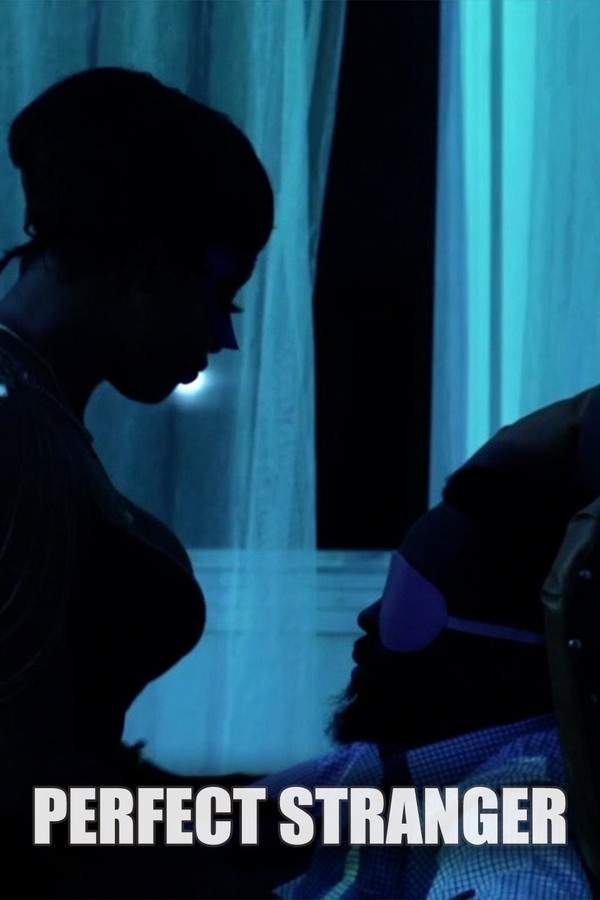
Armin Salem lies in a hospital bed, waking up to a life that feels jarred and unfamiliar after a devastating car crash. The diagnosis is retrograde amnesia, and the world he can trust becomes a mosaic of fragments: his own name, his Parisian roots, and a troubling memory that he might have killed a woman named Rhea Wagner. From the outset, the film threads a quiet tension around what is forgotten and what might still be true, inviting an uneasy curiosity about who Armin really is.
As days pass, the memory gaps begin to spill into the present through vivid flashbacks and disturbing visions. A woman named Kavya keeps appearing in his mind, recurring with Rhea in the same haunting scenes. Kavya is not merely a hallucination; she stalks Armin, drawing closer with an air of danger and a hint of intimacy that he cannot fully place. The relationship between Kavya and Armin is initially hazy, shrouded in uncertainty, but the intensity of these visions suggests there is a deeper connection—one that will force Armin to confront a truth about his past that his amnesia has tried to erase.
The story takes a more personal turn as Armin encounters Rhea in the waking world and begins to piece together a startling revelation: he is not just Armin, but Karan, a writer whose life and fiction seem to mirror each other. The imagery he experiences—clipped scenes and shifting memories—appears to be a reflection of the writer’s own psyche, a literary consciousness grappling with reality. In this twist, the boundaries between author and manuscript blur: the scenes he sees may be the hidden shades of Karan, and the events he is living could be entangled with the memories he once penned.
A crucial memory crash then reframes everything even further. Armin discovers that the writer, Karan, once absorbed Armin’s memories of being a contract killer into his book. When Karan loses his own memory, those very memories migrate into Armin’s mind, complicating their identities and fusing past professions with present perceptions. The film carefully unpacks how memory can be borrowed, rewritten, and used as a weapon, leaving characters to navigate a labyrinth where truth is a moving target and certainty is hard-won.
Amid this maelstrom, Kavya’s origin is reinterpreted through a dramatic, disquieting truth: Kavya is not a separate figure from Armin’s life but the name her wife uses in disguise—Pooja. The revelation flips the cast of characters on its head, exposing a web of deception that was crafted to reclaim a fractured marriage. Pooja, adopting a fake identity to win back a husband she fears she’s losing, steps into a dangerous game of manipulation and fear. Her plan intensifies when she confronts another web of secrets—she kills Grace Soni, who is revealed to be Karan’s girlfriend—and uses that act to bait Armin into believing that he is being trapped by unseen forces, while she positions herself as the only person offering protection and guidance.
In a tense, climactic sequence, Pooja helps Armin dispose of Grace’s body and slip away from the crime scene, signaling a grim alliance born from love turned desperate and dangerous. As the pieces come together, the motive behind Pooja’s ferocious bravery is laid bare: a fevered inner rage that has fueled her longing to love someone who does not fully return that love. Her confession reveals a mind torqued by betrayal and yearning, a realization that her fiercest act—killing the barrier between desire and abandonment—stems from a deeply seated torment rather than a simple impulse.
The film closes on a somber note where memory, identity, and motive collide. Armin/Karan’s life is a study in how truth can be elusive, how memory can protect and destroy in equal measure, and how love can become a catalyst for both protection and peril. The narrative leaves viewers with a lingering sense of ambiguity about where one life ends and another begins, and about who gets to define who they are when the past refuses to stay in its proper place.