Plot Explained Spoilers guaranteed!
Plot Explained

Browse by genre

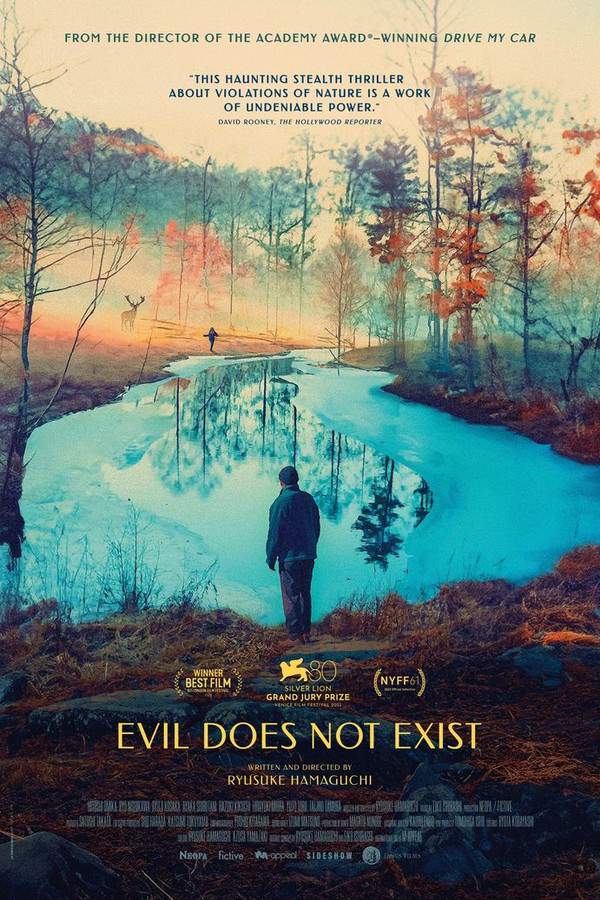
Evil Does Not Exist (2024) movie poster

Characters & Themes

Evil Does Not Exist (2024) Characters, Setting & Themes Explained

Release, runtime and language
2024 · 1 h 46 m · Japanese
Echo score 77
Loading streaming availability…
Directed by
Ryûsuke Hamaguchi
Starring
Hazuki Kikuchi, Hiroyuki Miura, Ayaka Shibutani, Hitoshi Omika, Rei Nishikawa, Ryûji Kosaka

Takumi and his daughter Hana live a peaceful life in the mountain village of Mizubiki, providing Tokyo with water, wood, and wasabi. Their tranquil existence is threatened when a luxurious glamping resort is planned for the area, potentially disrupting the natural beauty and serenity of their home.

On this page (9)
  1. 1 Where to watch
  2. 2 Characters explained (4)
  3. 3 Where & when it takes place
  4. 4 Themes & meaning (2)
  5. 5 Character & meaning questions
  6. 6 Movie threads
  7. 7 Movies like Evil Does Not Exist
  8. 8 Categories
  9. 9 Every angle
Loading streaming availability…

4 main characters · contains spoilers

Evil Does Not Exist Characters Explained: Who Is Who

The main characters of Evil Does Not Exist (2024), heroes and villains: what drives them, how they change over the course of the story and what each of them reveals about the film's bigger ideas.

  • Takumi

    played by Hitoshi Omika

    A widowed father deeply connected to his daughter, Hana. He epitomizes resilience and love, embodying the struggles of a single parent navigating life while protecting his family's well-being. His determination to confront both personal and external challenges showcases his strength in adversity.

    • 👨‍👧 Fatherhood
    • 💪 Resilience
    • 🌌 Grief
  • Hana

    played by Rei Nishikawa

    A spirited eight-year-old girl whose innocent curiosity and bond with her father drive the emotional core of the story. Her disappearance sparks a gripping narrative that reveals the harsh realities of life, leaving a profound impact on the community and her father.

    • 👧 Youth
    • 🌟 Innocence
    • 🦌 Nature
  • Takahashi

    played by Ryûji Kosaka

    A corporate representative who finds himself torn between his job and the genuine concerns of the villagers. His character development reflects a journey from indifference to empathy, as he navigates the complexities of his role and forms an unexpected bond with Takumi.

    • 🏢 Corporate
    • 🤝 Empathy
    • 🌍 Change
  • Mayuzumi

    played by Ayaka Shibutani

    A representative from the glamping development company, initially focused on marketing strategies but gradually learns to appreciate the villagers' fears. Her character illustrates the tension between corporate interests and community values, emphasizing the need for understanding in development projects.

    • 🏖️ Development
    • 📊 Marketing
    • 🌱 Growth

Last updated: October 22, 2024 at 23:33

Was this helpful?

Setting

Where and When Does Evil Does Not Exist Take Place?

The setting of Evil Does Not Exist (2024): the year and time period, the places and locations, and how they shape the characters, the mood and the tension of the story.

Time period

The narrative unfolds in contemporary times, as it reflects modern issues of environmental concern in rural settings. The clash between traditional lifestyles and corporate development highlights the ongoing struggle for sustainability in the face of progress.

Location

Mizubiki, rural Japan

Mizubiki is a tranquil rural village nestled within a vast winter forest, known for its serene atmosphere and close-knit community. The landscape is dominated by natural beauty, where the calmness of everyday life contrasts sharply with the distant echoes of hunting. This setting underscores the villagers' connection to nature and their concerns over preserving their fragile environment.

  • 🏞️ Nature
  • 🏡 Rural
  • 🌲 Forest

Last updated: October 22, 2024 at 23:33

Was this helpful?

2 major themes

Evil Does Not Exist Meaning: Themes & Message Explained

What is Evil Does Not Exist (2024) really about? The emotional, social and philosophical themes the film keeps returning to, its symbolism and the message beneath the surface.

  • Nature vs. Humanity

    The film explores the delicate relationship between humanity and nature, showcasing how external pressures can disrupt rural life. Through Takumi's journey and the community's fight, it highlights the importance of preserving natural environments in the face of modernization. The stark imagery of the forest and the impact of the deer hunting serve as reminders of nature's unpredictable balance.

  • Loss and Grief

    Central to the story is the theme of loss, particularly embodied in Takumi's relationship with his daughter Hana. The emotional journey through grief is palpable, emphasizing the painful realities that can emerge from unforeseen circumstances. Takumi's desperate and frantic search poignantly conveys the depths of parental love and the trauma of losing a child.

Last updated: October 22, 2024 at 23:33

Was this helpful?

Character & theme questions

Evil Does Not Exist Characters & Meaning: Your Questions Answered

The questions people ask about Evil Does Not Exist (2024): who the characters really are, their relationships, what the symbols mean, where it takes place and what the movie is really about. Each answer contains spoilers.

Q1

Where is the movie set?

Evil Does Not Exist takes place in Mizubiki, a tranquil rural village nestled within a vast winter forest in rural Japan. The setting is characterized by its serene atmosphere and close-knit community, where the calmness of everyday life contrasts with the distant echoes of hunting. This environment underscores the villagers' deep connection to nature and their concerns about preserving their fragile environment.

  • mizubiki village
  • rural japan
  • forest setting
  • japanese mountain village
Q2

What time period does the film take place in?

The film unfolds in contemporary times, reflecting modern issues of environmental concern in rural settings. It highlights the ongoing struggle for sustainability in the face of progress, depicting the clash between traditional lifestyles and corporate development that characterizes many present-day communities.

  • contemporary
  • modern era
  • present day
  • environmentalism
Q3

What is the main theme of the movie?

The primary theme is the delicate relationship between humanity and nature, showcasing how external pressures can disrupt rural life. Through the community's fight against development, the film emphasizes the importance of preserving natural environments in the face of modernization. The stark imagery of the forest and the impact of deer hunting serve as reminders of nature's unpredictable balance.

  • nature vs humanity
  • environmental themes
  • nature conservation
  • modernization conflict
Q4

What other major theme does the film explore?

Central to the story is the theme of loss and grief, particularly embodied in Takumi's relationship with his daughter Hana. The emotional journey through grief emphasizes the painful realities that can emerge from unforeseen circumstances. Takumi's desperate search conveys the depths of parental love and the trauma of losing a child.

  • loss
  • grief
  • parental love
  • death of child
  • tragedy
Q5

Who is Takumi in the movie?

Takumi (real name Hitoshi Omika) is a widowed father deeply connected to his daughter Hana. He epitomizes resilience and love, embodying the struggles of a single parent navigating life while protecting his family's well-being. His determination to confront both personal and external challenges showcases his strength in adversity.

  • takumi
  • widowed father
  • single parent
  • hana's father
Q6

Who is Hana in the story?

Hana (real name Rei Nishikawa) is an eight-year-old girl whose innocent curiosity and bond with her father drive the emotional core of the story. Her disappearance becomes a pivotal event that reveals the harsh realities of life, leaving a profound impact on both the community and her father.

  • hana
  • eight year old
  • takumi's daughter
  • missing child
Q7

Who is Takahashi in the film?

Takahashi (real name Ryûji Kosaka) is a corporate representative who finds himself torn between his job and the genuine concerns of the villagers. His character development reflects a journey from indifference to empathy, as he navigates the complexities of his role and forms an unexpected bond with Takumi.

  • takahashi
  • corporate representative
  • developer
  • village conflict
Q8

Who is Mayuzumi in the movie?

Mayuzumi (real name Ayaka Shibutani) represents the glamping development company. Initially focused on marketing strategies, she gradually learns to appreciate the villagers' fears. Her character illustrates the tension between corporate interests and community values, emphasizing the need for understanding in development projects.

  • mayuzumi
  • development company
  • glamping resort
  • corporate interests
Q9

What is the main conflict in the movie?

The central conflict arises when a luxurious glamping resort is planned for the area near Mizubiki village. This development threatens to disrupt the natural beauty and serenity of the villagers' home, pitting corporate development interests against the community's desire to preserve their environment and traditional way of life.

  • glamping resort
  • development conflict
  • environmental threat
  • village protest
Q10

What is the tone and emotional approach of the film?

The film has a bleak tone that moves from a potentially hopeful community struggle to an absolute tragedy. Despite its slow, placid start, tension escalates significantly during the conflict between villagers and developers. The emotional weight is heavy, dominated by the theme of a child's death, which overshadows the earlier ecological concerns.

  • bleak tone
  • emotional weight
  • slow pacing
  • tragedy
  • environmental drama
Q11

How does the setting relate to the movie's themes?

The village of Mizubiki's tranquil winter forest setting directly reinforces the film's themes of nature versus humanity. The landscape's natural beauty and the villagers' connection to their environment illustrate what is at stake in the development conflict. The contrast between the serene everyday life and the threat of industrialization embodies the film's exploration of preservation versus progress.

  • winter forest
  • nature preservation
  • rural environment
  • environmental conflict

Movie threads

More Movies Like Evil Does Not Exist, by Mood & Story

Curated lists built around what makes Evil Does Not Exist tick: the same mood, the same kind of story or the same emotional payoff. Each list explains why these movies belong together.

Slow burn ecological tragedies like Evil Does Not Exist

Stories where encroaching modernity leads to irreversible environmental and personal ruin. If you liked the environmental tension and tragic outcome of Evil Does Not Exist, explore these movies where the fight to protect nature leads to deep personal loss and bleak reflections on human impact.

  • nature-driven
  • somber
  • unsettling
  • grief-stricken
  • tense
  • melancholic
  • Tone: bleak, melancholic, tense
  • Pacing: slow, deliberate, atmospheric
Why these movies?

The story pattern: Narratives in this thread typically follow a linear path from tranquility to crisis. A community or individual living in harmony with nature faces an external threat, often corporate or industrial. The conflict escalates slowly, with the focus on atmospheric dread rather than action, leading to an ending that underscores the fragility of both the environment and human life.

Why they belong together: Movies are grouped here for their shared focus on environmental themes, their slow-burn pacing that builds palpable tension, and their ultimate trajectory toward tragedy. They share a heavy emotional weight and a bleak tone, creating a cohesive experience of loss and ecological warning.

Quiet stories of paternal grief like in Evil Does Not Exist

Intimate portraits of a father's world shattered by profound loss. For viewers moved by the father's heartbreaking journey in Evil Does Not Exist, this collection features similar movies focused on quiet, heavy dramas about fathers coping with profound loss and tragedy.

  • somber
  • grief-stricken
  • melancholic
  • quiet
  • heartbreaking
  • introspective
  • Tone: somber, bleak, grief-stricken
  • Pacing: slow, contemplative, character-driven
Why these movies?

The story pattern: The narrative pattern revolves around a central, traumatic event that redefines a father's existence. The story delves into the aftermath, exploring his internal struggle, isolation, and attempts to cope or find meaning. The pacing is often slow and contemplative, emphasizing emotional depth over plot mechanics, and endings are typically unresolved or bleak, reflecting the permanence of the loss.

Why they belong together: These films are united by their primary focus on the emotional arc of a grieving father. They share a heavy emotional weight, a slow, introspective pacing, and a somber, often bleak tone. The experience is defined by a profound sense of sadness and a deep dive into a character's emotional core.

If you liked this

Movies Like Evil Does Not Exist

Similar movies to Evil Does Not Exist: the same genre, themes or kind of story. Each one comes with its own plot summary, timeline and ending explained.

Browse all movie summaries

Categories

Movie Lists Featuring Evil Does Not Exist

Evil Does Not Exist appears in these hand-built movie categories. Each one groups movies by a specific mood, theme or story type, with their plot summaries and endings explained.

View all movie categories

Every angle

Evil Does Not Exist (2024) Explained: Plot, Ending, Timeline & Characters

Everything about Evil Does Not Exist in one place: what happens in the plot summary, the timeline in chronological order, the characters and meaning, the ending explained and a spoiler-free summary. What's After the Movie adds the cast, box office and post-credit scenes.

Coming soon on iOS and Android

The Plot Explained Movie Summary App

Plot summaries, endings explained and timelines on your phone. Catch up on any movie in minutes, save your favorites and never miss a twist again.

Be the first to know when we launch. Your email stays private, always.

Learn more about the app