Plot Explained Spoilers guaranteed!
Plot Explained

Browse by genre

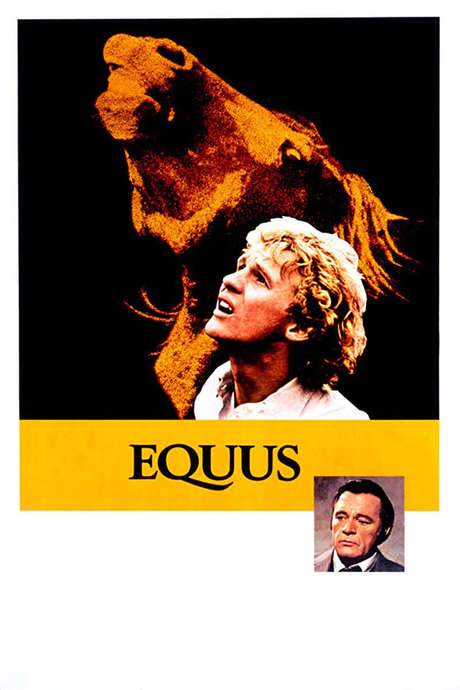
Equus (1977) movie poster

Characters & Themes

Equus (1977) Characters, Setting & Themes Explained

Release, runtime and language
1977 · 137 mins · English
Loading streaming availability…
Directed by
Sidney Lumet
Starring
Colin Blakely, Eileen Atkins, Joan Plowright, Harry Andrews, Kate Reid, Jenny Agutter

A psychiatrist, Martin Dysart, is called to investigate the horrific blinding of six horses with a metal spike in a Hampshire stable. The crime was committed by Alan Strang, an unassuming seventeen‑year‑old stable‑boy, the only son of a domineering yet timid father and a genteel, devout mother. As Dysart delves into Alan’s psyche, he confronts the boy’s deep‑seated demons and, in the process, is forced to examine his own suppressed doubts and the limits of his profession.

On this page (9)
  1. 1 Where to watch
  2. 2 Characters explained (6)
  3. 3 Where & when it takes place
  4. 4 Themes & meaning (4)
  5. 5 Character & meaning questions
  6. 6 The book behind the movie
  7. 7 Movie threads
  8. 8 Movies like Equus
  9. 9 Every angle
Loading streaming availability…

6 main characters · contains spoilers

Equus Characters Explained: Who Is Who

The main characters of Equus (1977), heroes and villains: what drives them, how they change over the course of the story and what each of them reveals about the film's bigger ideas.

  • Alan Strang (Peter Firth)

    A 17-year-old stable boy whose life centers on horses and a personal god named Equus. He is withdrawn and intensely imaginative, capable of deep attachment and ritualized behavior tied to his equine world. His secret devotion spills into actions that shock his family and hospital staff, revealing a conflicted, passionate interior.

    • 🐴 Equestrian
    • 🧠 Complex
    • 🧭 Obsessive
  • Martin Dysart (Richard Burton)

    A disillusioned psychiatrist working with troubled teens at a Hampshire hospital. He is drawn to Alan's fierce passion but fears therapy may strip away the boy's humanity and vitality. His own dreams of ritual haunt him, mirroring his professional detachment and longing.

    • 🧠 Complex
    • 🕊️ Reflective
    • 🎭 Contemplative
  • Frank Strang (Colin Blakely)

    Alan's father, a non-religious man who witnesses troubling events and tries to understand his son. He offers pragmatic support and reveals his own experiences behind the scenes, embodying secular paternal care.

    • 👨‍👦 Father
    • 🧭 Pragmatic
    • 🎭 Observant
  • Dora Strang (Joan Plowright)

    Alan's mother, a Christian fundamentalist who taught him that sex is governed by moral boundaries and that God sees all. She embodies strict religious authority and a rigid worldview that shapes Alan's inner life.

    • 🕊️ Faith
    • 🧭 Morality
    • 🎭 Traditional
  • Jill Mason (Jenny Agutter)

    A stable worker who becomes a catalyst in Alan's life, opening him to adult experiences and new stimuli. She tempts him toward cinema and broader sensations, influencing the course of events.

    • 💋 Catalyst
    • 🐴 Stable
    • 🗝️ Temptation
  • Hesther Salomon (Eileen Atkins)

    A magistrate who asks Dysart to treat Alan, framing the medical intervention within legal and ethical dimensions. Her role underscores the external pressures of responsibility and accountability in the case.

    • ⚖️ Authority
    • 🧭 Inquiry
    • 🏛️ Governance

Last updated: October 04, 2025 at 18:12

Was this helpful?

Setting

Where and When Does Equus Take Place?

The setting of Equus (1977): the year and time period, the places and locations, and how they shape the characters, the mood and the tension of the story.

Time period

Set in a contemporary late 20th-century England, the events reflect a modern medical and social landscape. Television jingles, public cinema, and hospital life ground the drama in recognizable, everyday spaces. The intimate dynamic among doctor, patient, and family unfolds against this modern backdrop.

Location

Hampshire, England, local cinema, stables

Set primarily in Hampshire, England, the narrative centers on a hospital where Dysart works and the nearby rural stables where Alan tends horses. The story moves between the institutional world of care and the intimate environments of the Strang family and the horses’ realm. A local cinema also features in Alan’s experiences, anchoring the drama in a provincial, everyday setting.

  • 🏥 Hospital
  • 🐴 Stables
  • 🎬 Cinema

Last updated: October 04, 2025 at 18:12

Was this helpful?

4 major themes

Equus Meaning: Themes & Message Explained

What is Equus (1977) really about? The emotional, social and philosophical themes the film keeps returning to, its symbolism and the message beneath the surface.

  • Religion

    A central tension comes from Dora's strict Christian upbringing clashing with Alan's personal Equus devotion. The mother’s belief in an all-seeing God shapes Alan’s inner world and sense of morality. The Equus worship emerges as a compelling alternative to conventional faith, highlighting how belief systems can sculpt identity. The theme asks how faith, control, and guilt influence action and alienation.

  • Sexuality

    Alan's sexual awakening is depicted as powerful and destabilizing, driving his secret acts and intense bonds with horses. The story uses clandestine experiences and exposure to adult stimuli as catalysts, raising questions about innocence, desire, and societal boundaries. Dysart questions whether suppressing sexuality in the name of morality protects individuals or merely stifles them. The narrative examines how sexuality can become a source of meaning as well as conflict.

  • Therapy

    Dysart's approach to healing clashes with the fear of eroding Alan's humanity and passion. The use of a truth drug scene underscores the ethical cost of therapy—revealing painful truths while risking a loss of vitality. The psychiatrist contends with his own emptiness and nightmares, blurring the line between healer and observer. The theme explores whether relief from pain is worth the price of emotional sterilization.

  • Family

    Frank's secular pragmatism contrasts with Dora's fundamentalist devotion, shaping Alan's world from home. The parents' dynamic imposes moral boundaries and expectations that influence his behavior and identity. The tension between care, control, and fear fuels Alan's fixation with Equus, showing how family beliefs can nurture or constrain a volatile psyche. The drama reframes personal acts within the broader pressures of family life.

Last updated: October 04, 2025 at 18:12

Was this helpful?

Character & theme questions

Equus Characters & Meaning: Your Questions Answered

The questions people ask about Equus (1977): who the characters really are, their relationships, what the symbols mean, where it takes place and what the movie is really about. Each answer contains spoilers.

Q1

Where is Equus set?

Equus is primarily set in Hampshire, England. The story takes place across three main environments: a hospital where psychiatrist Martin Dysart works, the rural stables where Alan tends horses, and the Strang family home. A local cinema also features in the narrative, anchoring the story in a recognizable provincial English setting.

  • setting
  • hampshire
  • england
  • location
  • stables
  • hospital
Q2

What time period does Equus take place in?

Equus is set in contemporary late 20th-century England, specifically the 1970s. The film grounds itself in everyday modern life through details like television jingles, public cinema visits, and hospital settings, creating a recognizable backdrop that contrasts sharply with the intense psychological drama unfolding within it.

  • time period
  • 1970s
  • contemporary
  • modern england
  • era
Q3

Who is Alan Strang in Equus?

Alan Strang is a 17-year-old stable boy who becomes the central focus of the film after committing a brutal act, blinding six horses with a metal spike. He is a withdrawn but intensely imaginative teenager who has created a personal religion centered on a god named Equus. His secret devotion and ritualized behavior toward horses reveal a conflicted, passionate inner life shaped by strict religious upbringing and suppressed desires.

  • alan strang
  • stable boy
  • character
  • protagonist
  • horses
  • equus worship
Q4

Who is Martin Dysart in Equus?

Martin Dysart is a disillusioned psychiatrist at a Hampshire hospital who is called to treat Alan Strang. Played by Richard Burton, Dysart is a weary professional who becomes emotionally invested in his young patient's case. He grapples with the ethical dilemma of potentially 'curing' Alan, whether healing the boy of his destructive passion would also strip away his unique humanity and vitality.

  • martin dysart
  • psychiatrist
  • doctor
  • richard burton
  • therapist
Q5

What is the relationship between Alan and his parents?

Alan Strang's parents represent opposing forces that shape his psychological turmoil. His father Frank is a non-religious, pragmatic man who struggles to understand his son. His mother Dora is a Christian fundamentalist who taught Alan that God sees all and that sex is sinful. This clash between secular pragmatism and rigid religious devotion creates the emotional tension that fuels Alan's obsession with Equus as an alternative deity.

  • parents
  • family
  • frank strang
  • dora strang
  • father
  • mother
  • dysfunctional family
Q6

What is the religion theme in Equus about?

Religion is a central theme in Equus, exploring the conflict between conventional faith and Alan's own mystical worship of horses. His mother Dora's strict Christian upbringing teaches that God is all-seeing and sex is sinful, which shapes Alan's guilt and inner conflict. He channeled this religious impulse into creating Equus, a personal god represented by horses, showing how belief systems can shape identity and behavior.

  • religion
  • faith
  • god
  • equus worship
  • christianity
  • spirituality
  • worship
Q7

How does sexuality factor into Equus's story?

Sexuality in Equus is depicted as a powerful, destabilizing force driving Alan's secret acts and intense emotional bonds. His sexual awakening is portrayed through clandestine experiences and exposure to adult stimuli, which fuel his guilt and religious conflict. The story questions whether suppressing sexuality in the name of morality protects individuals or merely stifles them, leaving Alan caught between desire and the rigid moral boundaries instilled by his mother.

  • sexuality
  • desire
  • sexual awakening
  • innocence
  • passion
  • guilt
Q8

What is the therapy theme in Equus about?

The therapy theme in Equus explores the ethical cost of psychiatric treatment. Dysart uses a truth drug to probe Alan's psyche, revealing painful truths while risking the loss of the boy's passionate spirit. The psychiatrist confronts his own emptiness and doubts whether 'curing' Alan of his destructive compulsions is worth the price of emotional sterilization, trading the boy's fierce passion for a normalized, less vibrant existence.

  • therapy
  • psychiatry
  • treatment
  • ethics
  • cure
  • mental health
  • healing
Q9

How does family influence Alan's character in Equus?

Family dynamics are crucial to understanding Alan's psychological breakdown in Equus. The tension between his father's secular pragmatism and his mother's fundamentalist Christianity creates conflicting moral pressures. These opposing forces fuel Alan's fixation on Equus, as his family beliefs, both religious and secular, shape his sense of guilt, identity, and the boundaries he perceives between acceptable and forbidden behavior.

  • family
  • parents
  • influence
  • upbringing
  • home environment
  • psychological
Q10

What does Equus symbolize in the film?

Equus represents both a personal deity and a manifestation of Alan's suppressed passion and sexual energy. In the film, horses become the object of Alan's intense religious devotion, a substitute for the conventional God his mother taught him to fear. The name itself comes from the Latin word for horse, and the worship reflects Alan's attempt to channel his religious impulses and sexual desires into a forbidden but deeply meaningful spiritual practice.

  • equus
  • horse symbol
  • horses
  • worship
  • symbolism
  • meaning
  • religion
Q11

What are the main themes in Equus?

Equus explores several interconnected themes: religion versus personal faith, the destructive power of suppressed sexuality, the ethical dilemmas of psychiatric treatment, and the impact of family dynamics on psychological development. The film examines how rigid moral frameworks can warp identity, whether healing must come at the cost of passion, and how individuals create alternative belief systems when mainstream religion fails to satisfy their spiritual needs.

  • themes
  • main themes
  • religion
  • sexuality
  • therapy
  • family
  • meaning
Q12

Why is Equus considered psychologically intense?

Equus is considered psychologically intense due to its disturbing subject matter, a teenager's brutal blinding of horses linked to a pathological sexual-religious ritual. The film maintains a consistently unsettling atmosphere through its dark exploration of severe psychological trauma, religious guilt, and sexual dysfunction. The steady, procedural pacing methodically uncovers traumatic layers, while the dual character study of both patient and psychiatrist adds depth to the psychological examination.

  • psychological
  • intense
  • disturbing
  • trauma
  • dark
  • emotional intensity

Movie threads

More Movies Like Equus, by Mood & Story

Curated lists built around what makes Equus tick: the same mood, the same kind of story or the same emotional payoff. Each list explains why these movies belong together.

Unsettling psychological explorations like Equus

Stories that methodically dissect trauma and reveal disturbing truths. If you liked Equus, explore more movies that delve into severe psychological trauma and disturbing truths. This collection features films with a steady, investigative pace, dark themes, and a heavy emotional weight, perfect for viewers seeking cerebral and unsettling dramas about the human mind.

  • unsettling
  • disturbing
  • cerebral
  • claustrophobic
  • troubled
  • melancholic
  • Tone: dark, unsettling, cerebral
  • Pacing: steady, methodical
Why these movies?

The story pattern: These narratives often follow a procedural structure, such as a therapist's investigation or a character's self-examination, to uncover the roots of a profound psychological disturbance. The journey typically forces both the protagonist and the viewer to confront uncomfortable truths about passion, sanity, and societal norms.

Why they belong together: Movies in this thread are grouped by their shared focus on psychological dissection, a dark and intense tone, and a steady, methodical pacing that amplifies unease. They all deal with heavy themes of mental illness, repressed desires, and the ethical ambiguities of 'normalcy'.

Heavy therapy-room dramas like Equus

Intense character studies where therapy unlocks profound personal crises. Find movies similar to Equus that focus on the intense relationship between a psychiatrist and a patient. These films are character-driven dramas with a steady pace, high emotional weight, and dark tones, exploring how therapy sessions unravel complex psychological traumas.

  • claustrophobic
  • reflective
  • troubled
  • cerebral
  • intense
  • melancholic
  • Tone: dark, reflective, melancholic
  • Pacing: steady, dialogue-driven
Why these movies?

The story pattern: The plot is driven by dialogue and revelation within a therapeutic context. As the patient's history is uncovered, the therapist is often compelled to confront their own existential doubts and professional limitations, creating a dual character arc. The story builds towards a climax that questions the very nature of cure and passion.

Why they belong together: These movies share the specific narrative framework of therapy as a catalyst, a claustrophobic and dialogue-heavy focus, and a bittersweet or bleak emotional resolution. They are united by their exploration of how uncovering one person's pain forces a reckoning with another's.

If you liked this

Movies Like Equus

Similar movies to Equus: the same genre, themes or kind of story. Each one comes with its own plot summary, timeline and ending explained.

Browse all movie summaries

Every angle

Equus (1977) Explained: Plot, Timeline & Characters

Everything about Equus in one place: what happens in the plot summary, the timeline in chronological order, the characters and meaning and a spoiler-free summary. What's After the Movie adds the cast, box office and post-credit scenes.

Coming soon on iOS and Android

The Plot Explained Movie Summary App

Plot summaries, endings explained and timelines on your phone. Catch up on any movie in minutes, save your favorites and never miss a twist again.

Be the first to know when we launch. Your email stays private, always.

Learn more about the app