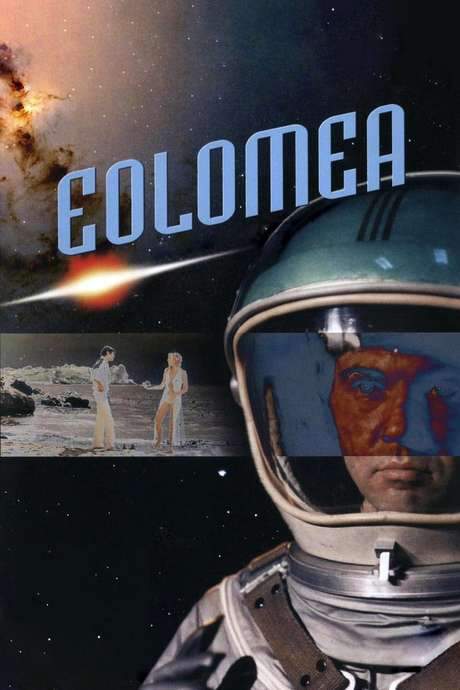
Authorities responsible for Earth's spaceflight safety grow increasingly concerned over unexplained incidents at the Margo space base, where several ships and their crews have disappeared over three days. After a special session, the Institute of Space Research issues a temporary flight ban until the cause is identified. Professor Maria Scholl Cox Habbema suspects that fellow scientist Olo Tal [Rolf Hoppe] is withholding key information. She arranges a private meeting and learns about an unusual phenomenon observed in the late 19th century by British astronomers: a mysterious light in the Cygnus constellation that appears every 24 years. Soviet astronomers, after the first space flights, hypothesized that the light could be an artificial signal, potentially a powerful laser probing the Solar System for signs of life.
Pierre Brodsky, a senior researcher at the Mount Ararat observatory, conducts calculations and concludes that the signal might originate from a symmetrical twin of Earth, devoid of poles and tropics, which he names Eternal Spring or Eolomea after decoding its Morse signal. He lays out a startling possibility that such a world could exist and be reachable in theory, igniting a debate among scientists about humanity’s place in the cosmos.
Eager to reach Eolomea, Tal proposes a mission, but the council deems it unfeasible given the current limitations of rocket speed. The gap between ambition and capability widens, as bureaucratic caution clashes with the irresistible pull of discovery.
Undeterred, a group of 146 young scientists, unwilling to passively wait for alien contact, takes drastic action. They seize rockets necessary for the mission, embarking without formal approval in hopes of realizing humanity’s dream of encountering extraterrestrial intelligence. Their bold move challenges established protocols and raises profound questions about risk, responsibility, and the drive to push the boundaries of exploration.
As the story unfolds, the tension between safeguarding space endeavors and pursuing a potential life-bearing signal underscores a central theme: humanity’s relentless curiosity vs. the limits of present technology and governance. The path these scientists choose could redefine what is possible for humankind, and it invites the audience to weigh the costs and rewards of daring scientific initiative against the prudence of institutional oversight.