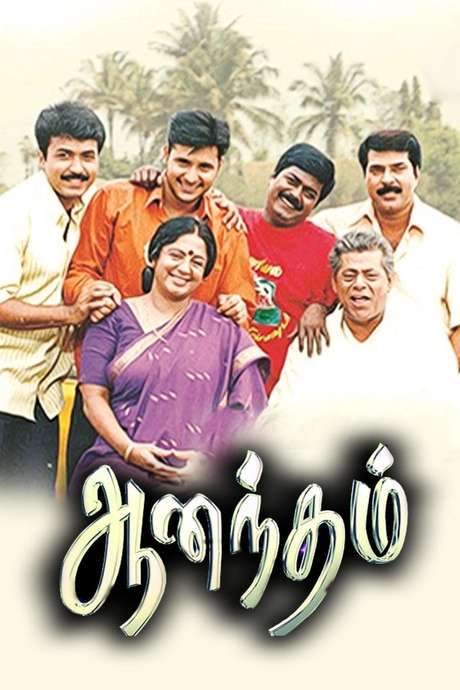
Vijay is the managing director of a large shipping company who lives in a bustling, multigenerational joint family. The household includes his father Sethupathi, his two brothers Krishna and Vasu, their wives and children, and their spinster sister Pooja. The film opens on a note of family loyalty and traditional duties, with Vijay balancing the responsibilities of leadership at work and the expectations of home life. The dynamics within the house are warm but crowded, and every action or decision ripples through the extended clan.
Vijay’s business world takes him abroad to Switzerland, where he goes to negotiate a contract with Nagaraj and Shekher. It is here that he meets Meenu—Meenakshi, Nagaraj’s sister—and a genuine romance blossoms between Vijay and Meenu. The chemistry between them feels effortless, and their growing affection is matched by a sense of hopeful partnership. Although Nagaraj sees a promising match for his sister in Vijay and initially approves, he places a significant condition on the marriage: Vijay should stay with them after the wedding because, in his eyes, India isn’t a favorable place to settle down. This requirement creates the first major hurdle, and Vijay ultimately refuses the offer, choosing to return home rather than accept the arrangement. The decision underscores Vijay’s independence and his willingness to stand by his own sense of what is right for his future.
Despite this rift, the story pushes forward as Shekher and Meenu travel to India to mend fences and smooth over the discord. Their journey brings matters into sharper focus, especially the social webs surrounding Vijay’s sister, Pooja. It isn’t long before a troubling truth emerges: Shekher learns that Nagaraj had dumped Pooja for a “better life,” leaving her heartbroken and shaping Vijay’s protective, if volatile, response to the situation. The revelation crystallizes a dangerous plan in Vijay’s mind—he is ready to defend his sister by any means and begins to plot ways to prevent Nagaraj from attending the marriage.
As tension builds, Vijay overhears a crucial exchange and is suddenly angry at the manipulation and hurt that has touched Pooja. Yet the story pivots toward resolution through a different path. Shekher steps in to address the tangled feelings by deciding to marry Pooja himself, a move that surprisingly brings harmony back to the family. Pooja accepts this development, and the decision alleviates the strain that had threatened to tear the family apart. With the emotional stakes recentered and people finding a path that brings happiness, the air in the home lightens, and the siblings’ hearts begin to heal.
In the final stretch, Vijay, moved by the sight of his sister’s happiness and the new bonds forming within the family, steps back from the bitterness that had clouded him. Nagaraj is effectively left to navigate his own choices, while the emotional landscape shifts toward reconciliation rather than revenge. The last turn of the tale brings a universal note of closure: Meenu and Vijay, whose love endured the trials and misunderstandings, come together in marriage, symbolizing a union that respects family ties while also honoring individual desires and mutual respect.
- The film threads together themes of love, loyalty, and family duty against the backdrop of a bustling business empire. It explores how romantic passion can challenge tradition, how misunderstandings can threaten longstanding kinship, and how honest communication—paired with acts of responsibility—can realign paths toward collective happiness. The relationships are drawn with warmth, and the emotional arc moves from tension and conflict to reconciliation and new beginnings, all while maintaining a grounded, human focus on the people who populate Vijay’s world.
- This narrative emphasizes the resilience of family bonds and the power of forgiveness, as two generations of couples—Vijay and Meenu, and later the couples surrounding Pooja—navigate choices that honor personal happiness without severing the ties that bind them. The ending leaves readers with a sense of hopeful continuation, where love and family endure even in the face of stubborn pride and complex loyalties.