








Plot Explained Spoilers guaranteed!
Plot Explained

Browse by genre

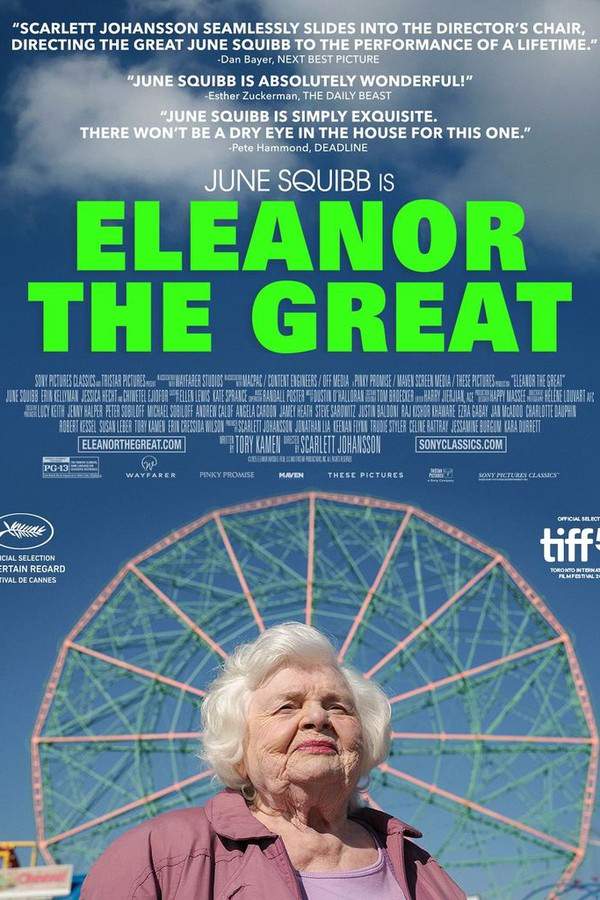
Eleanor the Great (2025) movie poster

Ending Explained

Eleanor the Great (2025) Ending Explained – Final Scene & Meaning

Release, runtime and language
2025 · 1 h 38 m · English
Echo score 75
JustWatch #22,774 3
Directed by
Scarlett Johansson
Starring
Chiwetel Ejiofor, Erin Kellyman, June Squibb, Elaine Bromka, Jessica Hecht, Lia Lando

After seven decades of sharing her life with a longtime companion, Eleanor relocates to New York City in search of a fresh beginning. At ninety, forging new relationships proves challenging, leaving her yearning for connection. She eventually forms an unexpected bond with a 19‑year‑old student, discovering companionship across generations.

On this page (7)
  1. 1 Where to watch
  2. 2 What happens at the end
  3. 3 Final events in order
  4. 4 Ending questions answered
  5. 5 Movie threads
  6. 6 Movies like Eleanor the Great
  7. 7 Every angle

Where to watch

Where to Watch Eleanor the Great (2025)

Where can you watch Eleanor the Great? Stream, rent or buy it in the US, including on Netflix, Netflix Standard and Amazon Video: current JustWatch availability with up-to-date prices.

Streaming availability powered by JustWatch

Ending explained · contains spoilers

What Happens at the End of Eleanor the Great?

How Eleanor the Great (2025) ends, what the final scene means, which earlier moments set it up and how to read the ending if the film leaves it open. The full ending explained, with every spoiler.

In the closing moments Eleanor finally finds a place where she belongs. After the scandal of her fabricated Holocaust testimony erupts, she leaves the Manhattan apartment and moves into senior housing, a setting that mirrors the quiet comfort she once shared with Bessie. Her daughter Lisa arrives with an unexpected guest—Nina, the NYU journalism student who had both championed and later rejected Eleanor’s story. Seeing Nina again, Eleanor offers a tentative apology; Nina, still raw from her mother’s death, listens and, recognizing the genuine grief behind the lie, chooses to forgive. Their reconciliation is simple but powerful: a shared scoop of ice cream and a quiet promise to stay in each other’s lives.

Eleanor then returns to the Holocaust survivors’ group, not to repeat the false narrative, but to own the truth. She publicly acknowledges that the harrowing account she told was Bessie’s, not her own, and thanks the group for keeping that memory alive. In a poignant parallel, the film cuts to a rabbi recounting the biblical tale of Jacob and Esau—Jacob’s deception to gain his father’s blessing—suggesting that not all falsehoods are born of malice. When Eleanor asks whether such deceptions can ever be justified, the rabbi answers that intention matters; a lie told out of love and mourning can become a kind of emotional poultice.

The final scene ties all these threads together: Eleanor, now at peace with herself, sits among her new peers, holding a photo of Bessie, while Lisa watches her mother smile. The film leaves us with the idea that stories, even when stitched from borrowed threads, can bridge the gaps between loss, memory, and connection—turning a personal lie into a shared, healing truth.

Last updated: December 27, 2025 at 21:40

Was this helpful?

The last 4 events

How Eleanor the Great Ends: The Final Events in Order

The last events of Eleanor the Great (2025) in chronological order, the run-up to the ending explained above. The complete timeline has all 13 events, scene by scene.

Open the full timeline
  1. Reconciliation with Nina and Lisa; Roger with Nina

    Following the broadcast, Eleanor reconciles with Nina and Lisa, while Roger begins to rebuild his relationship with Nina by acknowledging their shared grief. The family and friends learn to communicate honestly and forgive past hurts. The bonds tighten as they move forward together.

    When
    After the broadcast
    Where
    New York City home / studio
  2. Eleanor forms new friendships in the care home

    In the care home, Eleanor starts forming new friendships and discovers a sense of belonging she had not felt in years. She enjoys a more connected daily routine and the companionship that the facility provides. The experience marks a shift from hiding her past to engaging with others.

    When
    During the early weeks in care home
    Where
    Care home
  3. Eleanor returns to the support group to tell the truth

    On her way to lunch with Nina and Lisa, Eleanor returns to the support group to apologize and share Bessie's story truthfully. She acknowledges the harm caused by her deception and seeks forgiveness from the survivors. This act of honesty signals a new chapter in her life.

    When
    Near the end
    Where
    Support group
  4. Final flashback of Eleanor and Bessie

    The film ends with a flashback of Eleanor and Bessie, where Bessie speaks about surviving and the meaning she found in sharing her life with Eleanor. She articulates survivor's guilt yet reveals that the purpose was to connect with others, including Eleanor. The scene provides emotional closure and reinforces the themes of memory, belonging, and forgiveness.

    When
    Ending
    Where
    Memory / Flashback

Ending questions answered

Eleanor the Great Ending: Your Questions Answered

The questions people ask most about the ending of Eleanor the Great (2025): what the final scene means, how the twist works, what happens to each character and how to read the ending. Each answer contains spoilers.

Q1

Why did Eleanor fabricate her Holocaust testimony?

Eleanor lied about surviving the Holocaust because the harrowing account she told was actually Bessie's story, not her own. After Bessie died, Eleanor told the survivors' group Bessie's true story as if it were her own, using the borrowed trauma to process her grief and find connection in her new, lonely life in New York.

Foreshadowing: Earlier in the film, Eleanor's vague references to her past and her desperation to find companionship hint at her willingness to adopt someone else's painful history as her own.

  • eleanor
  • holocaust lie
  • bessie
  • testimony
  • fabricated story
  • grief
Q2

Where does Eleanor end up living at the end?

After the scandal of her fabricated Holocaust testimony erupts, Eleanor leaves her Manhattan apartment and moves into senior housing. This new living situation mirrors the quiet comfort she once shared with Bessie, representing a return to a similar sense of domestic stability despite the circumstances that led her there.

  • eleanor
  • senior housing
  • manhattan apartment
  • new york
  • ending
  • resolution
Q3

Why does Nina forgive Eleanor despite the deception?

Nina forgives Eleanor because she recognizes the genuine grief behind the lie. Having just lost her own mother, Nina understands the profound sadness that drove Eleanor to fabricate the testimony. She sees that Eleanor's deception came from a place of mourning rather than malice, allowing her to offer forgiveness despite the personal and professional betrayal.

Foreshadowing: Nina's earlier rejection of Eleanor's story after learning it was fabricated sets up this moment of reconciliation, showing her capacity to distinguish between intent and action.

  • nina
  • forgiveness
  • eleanor
  • mourning
  • grief
  • reconciliation
  • journalism student
Q4

What is the significance of the Jacob and Esau story in the ending?

The rabbi recounts the biblical story of Jacob deceiving his father Isaac to gain his blessing, suggesting that not all falsehoods stem from malice. When Eleanor asks whether such deceptions can ever be justified, the rabbi answers that intention matters, a lie told out of love and mourning can become a kind of emotional poultice. This parallel validates Eleanor's actions within the context of her genuine grief.

  • jacob
  • esau
  • bible
  • rabbi
  • deception
  • justification
  • intention
  • lying
  • mourning
Q5

What is the truth about Eleanor's Holocaust story?

Eleanor publicly acknowledges that the harrowing account she told the Holocaust survivors' group was Bessie's experience, not her own. She thanks the group for keeping Bessie's memory alive, finally owning the truth while honoring the real survivor's story she had previously appropriated.

  • eleanor
  • truth
  • holocaust survivors group
  • bessie
  • acknowledgment
  • public confession
Q6

Why does Eleanor return to the Holocaust survivors' group?

Eleanor returns to the survivors' group not to repeat her false narrative, but to confess the truth. She publicly acknowledges that the story she told belonged to Bessie and thanks the group for preserving that memory. This act represents her attempt at genuine redemption and connection, choosing honesty over the borrowed identity that had initially brought her community.

  • holocaust survivors group
  • return
  • confession
  • truth
  • bessie
  • redemption
Q7

What is the significance of Eleanor and Nina sharing ice cream?

Eleanor and Nina share a scoop of ice cream as a symbol of their reconciliation and new connection across generations. This simple act represents forgiveness in action, moving beyond the professional betrayal and personal hurt to establish a genuine relationship. The ice cream also mirrors the kind of intimate, everyday moment Eleanor once shared with Bessie, suggesting she has found a new form of companionship.

  • ice cream
  • nina
  • eleanor
  • reconciliation
  • forgiveness
  • connection
  • bessie
Q8

What is the film's message about stories and truth at the end?

The film leaves viewers with the idea that stories, even when stitched from borrowed threads, can bridge the gaps between loss, memory, and connection. Eleanor's lie, though harmful, ultimately became a shared, healing truth, transforming personal deception into communal understanding through her confession and the rabbi's parable about intention.

  • stories
  • truth
  • lying
  • healing
  • connection
  • memory
  • bessie
  • borrowed truth
Q9

What is Lisa's role in the ending?

Eleanor's daughter Lisa brings Nina to see her mother, facilitating the reconciliation between them. In the final scene, Lisa watches her mother smile while holding a photo of Bessie, representing her acceptance of Eleanor's past and her gratitude seeing her mother finally at peace after the turmoil of the scandal and its aftermath.

  • lisa
  • daughter
  • nina
  • eleanor
  • bessie photo
  • peace
  • acceptance
Q10

Can Eleanor's lie be morally justified according to the film?

The film, through the rabbi's discussion of Jacob and Esau, suggests that intention matters, a lie told out of love and mourning can become a kind of emotional poultice. However, the ending also shows Eleanor choosing to own the truth rather than continue the deception, implying that while the lie was understandable, honesty remains the path to genuine peace and connection.

  • moral justification
  • lying
  • intention
  • love
  • mourning
  • emotional poultice
  • jacob esau
  • rabbi

Movie threads

More Movies Like Eleanor the Great, by Mood & Story

Curated lists built around what makes Eleanor the Great tick: the same mood, the same kind of story or the same emotional payoff. Each list explains why these movies belong together.

Movies about intergenerational bonds like Eleanor the Great

Unlikely friendships across age gaps that heal old wounds and forge new understanding. If you liked the heartfelt connection between Eleanor and the student, explore more movies about unlikely friendships across generations. These similar dramas explore how bridging the age gap can lead to healing, wisdom, and bittersweet redemption.

  • heartfelt
  • reflective
  • redemptive
  • intimate
  • hopeful
  • melancholic
  • Tone: bittersweet, reflective
  • Pacing: steady, character-driven
Why these movies?

The story pattern: Narratives in this thread typically begin with isolation or a personal crisis for one or both characters. The intergenerational friendship serves as the central catalyst for growth, forcing characters to confront their pasts and reevaluate their lives, leading to an emotionally rich and often bittersweet resolution.

Why they belong together: These films are grouped by their shared focus on the redemptive power of cross-generational relationships. They consistently blend melancholic reflection with hopeful connection, creating a specific, resonant emotional tone that balances the weight of the past with the possibility of a new beginning.

Movies about healing from trauma like Eleanor the Great

Character-driven stories of individuals seeking peace and connection while bearing heavy pasts. For viewers who appreciated Eleanor's journey of coping with a traumatic past, this list features similar dramas. These movies explore characters carrying heavy histories as they search for meaning, connection, and a bittersweet sense of peace in the present.

  • melancholic
  • traumatic
  • redemptive
  • reflective
  • heavy
  • hopeful
  • Tone: melancholic, bittersweet
  • Pacing: steady, deliberate
Why these movies?

The story pattern: The narrative pattern involves a protagonist whose present life is deeply shadowed by a unresolved past trauma. The story unfolds as they take a risk—forming a new bond, moving to a new place—which forces a gradual and often painful reckoning, leading to a complex resolution that acknowledges the scars while offering a measure of peace.

Why they belong together: These movies are united by their serious exploration of legacy and memory, a melancholic yet hopeful tone, and a focus on internal emotional journeys. They share a steady pacing that allows for deep character study and an ending feel that is bittersweet, acknowledging that healing is possible but the past remains.

Movies about elderly protagonists rebuilding life like Eleanor the Great

Stories of older characters finding new purpose and connection late in life. If you enjoyed Eleanor the Great's story of an older woman starting over, you'll appreciate these films. This section features poignant dramas about later-in-life journeys, personal rediscovery, and the quiet strength found in new beginnings, similar to Eleanor's move back to New York.

  • reflective
  • melancholic
  • hopeful
  • solemn
  • redemptive
  • quiet
  • Tone: bittersweet, reflective
  • Pacing: steady, character-driven
Why these movies?

The story pattern: These narratives typically begin with a catalyst—loss, retirement, or a move—that disrupts a long-standing routine. The protagonist, often carrying a lifetime of memories and regrets, must navigate an unfamiliar world. The plot is character-driven, focusing on small, significant moments of connection, reconciliation, or self-acceptance rather than high-stakes action.

Why they belong together: Movies are grouped here for their shared focus on the emotional landscape of aging. They deliver a specific, contemplative experience centered on themes of memory, legacy, loneliness, and the quiet hope that can be found at any age, offering a steady, emotionally resonant pace.

Bittersweet dramas about grief and truth like Eleanor the Great

Emotional journeys where processing profound loss uncovers difficult truths. For viewers who appreciated the heavy emotional journey and moral complexity of Eleanor the Great. This section collects similar dramas where characters grapple with profound grief, the consequences of deception, and the difficult path toward reconciliation and a bittersweet peace.

  • melancholic
  • solemn
  • heavy
  • bittersweet
  • redemptive
  • reflective
  • Tone: bittersweet, melancholic
  • Pacing: steady, contemplative
Why these movies?

The story pattern: The narrative revolves around a central, emotionally heavy loss that forces characters to confront their past. A key element is often a hidden truth or deception that comes to light during the grieving process, complicating relationships and adding moral complexity. The story builds steadily towards a resolution that acknowledges the pain but also offers a measure of redemption or acceptance, rarely providing a purely happy ending.

Why they belong together: These films are grouped by their potent mix of profound sadness and cautious hope. They share a steady, contemplative pace that allows the emotional weight to settle, and they explore how truth and grief are inextricably linked, resulting in a cathartic, bittersweet viewing experience.

If you liked this

Movies Like Eleanor the Great

Similar movies to Eleanor the Great: the same genre, themes or kind of story. Each one comes with its own plot summary, timeline and ending explained.

Browse all movie summaries

Every angle

Eleanor the Great (2025) Explained: Plot, Ending, Timeline & Characters

Everything about Eleanor the Great in one place: what happens in the plot summary, the timeline in chronological order, the characters and meaning, the ending explained and a spoiler-free summary. What's After the Movie adds the cast, box office and post-credit scenes.

Coming soon on iOS and Android

The Plot Explained Movie Summary App

Plot summaries, endings explained and timelines on your phone. Catch up on any movie in minutes, save your favorites and never miss a twist again.

Be the first to know when we launch. Your email stays private, always.

Learn more about the app