Plot Explained Spoilers guaranteed!
Plot Explained

Browse by genre

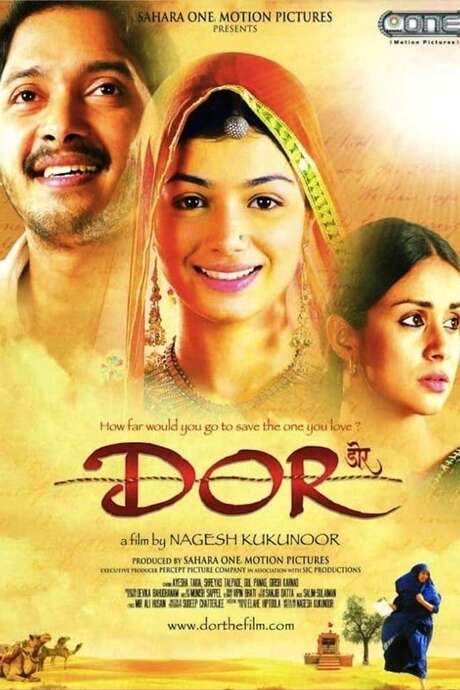
Dor (2006) movie poster

Characters & Themes

Dor (2006) Characters, Setting & Themes Explained

Release, runtime and language
2006 · 124 mins · Hindi
Loading streaming availability…
Directed by
Nagesh Kukunoor
Starring
Gul Panag, Shreyas Talpade, Girish Karnad, Ayesha Takia, Prateeksha Lonkar, Uttara Baokar

Shankar Singh lives in Jodhpur with his wife Meera, grandmother Laxmibai, mother Gowri and father Randhir, feeling blessed by her presence. He goes to work in Saudi Arabia, promises to keep in touch and sends money that clears the family’s debts. When he stops contacting them, Meera learns he was thrown from a tenth‑floor balcony. Her fortunes reverse; jewelry is taken, she is forced to wear dark clothes and pray only at a temple.

On this page (7)
  1. 1 Where to watch
  2. 2 Characters explained (9)
  3. 3 Where & when it takes place
  4. 4 Themes & meaning (4)
  5. 5 Character & meaning questions
  6. 6 Movie threads
  7. 7 Every angle
Loading streaming availability…

9 main characters · contains spoilers

Dor Characters Explained: Who Is Who

The main characters of Dor (2006), heroes and villains: what drives them, how they change over the course of the story and what each of them reveals about the film's bigger ideas.

  • Zeenat Fatima - Gul Panag

    Independent Muslim woman from Himachal Pradesh who travels to find Meera and plead for Amir's forgiveness. She is resourceful, determined, and guided by a strong sense of justice, even when she faces danger and deceit.

    • 💼 Determination
    • 🤝 Kindness
    • 🗺️ Traveler
  • Meera - Ayesha Takia

    A traditional Rajasthani Hindu wife living in a family haveli. Her life is governed by customs, but her friendship with Zeenat awakens her to new possibilities and a desire for agency.

    • 🎭 Drama
    • 💪 Empowerment
    • 🏛️ Tradition
  • Behrupiya - Shreyas Talpade

    A Behrupiya skilled in mimicry, initially a petty conman who robs Zeenat but later helps her using his artistry and empathy when she is in trouble.

    • 🎭 Trickster
    • 🧩 Resourceful
    • 🛡️ Protector
  • Randhir Singh - Girish Karnad

    Meera's father, burdened by debt and pressure to repay his loans. He offers Meera up for debt relief to a local factory owner, showing the grip of financial desperation on family decisions. His actions reveal the harsh compromises families make under economic strain.

    • 💼 Authority
    • 🕊️ Struggle
    • 🧭 Tradition
  • Gowri Singh - Prateeksha Lonkar

    A senior family member who anchors the haveli and embodies traditional expectations. Her presence highlights the weight of ancestral norms on the younger generation.

    • 🏛️ Tradition
    • 👵 Family
    • 🧭 Social norms
  • Meera's Grandmother - Uttara Baokar

    The elder generation in Meera's world, representing the continuity of cultural values within the family. Her attitudes influence the course of events and the emotional climate at home.

    • 👵 Wisdom
    • 🏛️ Tradition
    • 💬 Voice of elders
  • Shankar - (Meera's husband)

    Meera's husband, who is in Saudi Arabia for work and whose death in a freak accident (alleged to be caused by a Muslim roommate) drives the film's central tragedy and the surrounding fallout.

    • 💔 Tragedy
    • 🏚️ Absence
  • Amir Khan - (Zeenat's husband)

    Zeenat's husband who is arrested for the murder of his roommate. The legal system allows his potential release if Zeenat forgives the killer, setting her on a difficult mission.

    • ⚖️ Law
    • 💔 Love
    • 🧭 Cross-border
  • Chopra - Local factory owner

    A factory owner who lends money to Randhir Singh's family, offering debt relief in exchange for Meera. His role showcases the exploitation of vulnerability within debt relations.

    • 🏭 Money
    • 💼 Exploitation

Last updated: October 04, 2025 at 12:14

Was this helpful?

Setting

Where and When Does Dor Take Place?

The setting of Dor (2006): the year and time period, the places and locations, and how they shape the characters, the mood and the tension of the story.

Time period

Early 2000s

The story unfolds in contemporary India of the early 2000s, a period when arranged duties and family honor still shape decisions. Remittances from abroad, such as Saudi Arabia, intersect with rural and urban Indian life, revealing a society in transition. The film uses these settings to explore women's autonomy within traditional structures.

Location

Himachal Pradesh, Jodhpur, Rajasthan

Zeenat's home base is in Himachal Pradesh, from where she embarks on a cross-regional journey to meet Meera and seek forgiveness for Amir. The film also traverses the Rajasthan haveli landscape and Jodhpur's streets, highlighting a blend of alpine-like scenery and desert city life. The settings—temple visits, haveli interiors, and market scenes—underscore traditional social norms clashing with personal desires.

  • 🏔️ Mountain region
  • 🕌 Cultural diversity
  • 🧭 Travel

Last updated: October 04, 2025 at 12:14

Was this helpful?

4 major themes

Dor Meaning: Themes & Message Explained

What is Dor (2006) really about? The emotional, social and philosophical themes the film keeps returning to, its symbolism and the message beneath the surface.

  • Interfaith Bond

    A deep friendship forms between Zeenat and Meera that transcends Hindu-Muslim divides. Their alliance exposes shared pain and resilience, and it challenges rigid identities. Through their connection, both women discover new agency within oppressive norms.

  • Forgiveness

    Forgiveness is framed as a powerful social tool. Zeenat pursues mercy for Amir within a system where a wife can alter a man's fate. Meera's struggle to forgive—or not—forces a confrontation with her own hurt and sense of justice. The plot examines how mercy can both heal and complicate lives.

  • Agency

    Meera's evolving sense of self mirrors Zeenat's determination to intervene in the law and family affairs. The characters navigate patriarchal pressures and financial coercion, revealing how personal choices reshape destinies.

  • Sacrifice

    Both women bear the emotional cost of others' actions and choices. Meera's decision to forgive at the end comes with personal sacrifice, while Zeenat's pursuit of justice exposes the limits of grace in a harsh social system.

Last updated: October 04, 2025 at 12:14

Was this helpful?

Character & theme questions

Dor Characters & Meaning: Your Questions Answered

The questions people ask about Dor (2006): who the characters really are, their relationships, what the symbols mean, where it takes place and what the movie is really about. Each answer contains spoilers.

Q1

Where is Dor set?

The film takes place across two distinct regions of India: Himachal Pradesh in the northern mountain areas, where Zeenat hails from, and Rajasthan around Jodhpur. The visual contrast between alpine-like Himachal and the desert city of Rajasthan underscores the cultural diversity the characters traverse. Key scenes occur in traditional haveli interiors, temples, and markets, emphasizing the tension between inherited customs and individual desires.

  • setting
  • locations
  • Himachal Pradesh
  • Rajasthan
  • Jodhpur
  • haveli
Q2

When does Dor take place?

Dor is set in contemporary India during the early 2000s, a time when arranged duties and family honor still heavily influenced life decisions. The story reflects a society in transition, where remittances from abroad (particularly from Saudi Arabia) intersect with both rural and urban Indian life, revealing economic and social complexities of the period.

  • time period
  • early 2000s
  • contemporary India
  • modern era
Q3

What does Dor say about interfaith friendship?

The film centers on the deep friendship that develops between Zeenat, a Muslim woman from Himachal Pradesh, and Meera, a traditional Hindu wife living in Rajasthan. This cross-religious bond becomes a powerful force that transcends rigid religious identities. Through their connection, both women discover new agency within oppressive social norms, showing how shared pain and resilience can bridge divides that society often treats as insurmountable.

  • interfaith bond
  • friendship
  • Hindu-Muslim
  • Zeenat
  • Meera
  • theme
Q4

How does forgiveness function in Dor?

Forgiveness in Dor operates as a transformative social tool with real legal consequences. Zeenat must decide whether to forgive the man who killed her husband, which would secure his release from death row under Indian law. For Meera, the question of whether to offer forgiveness becomes intertwined with her own journey toward agency. The film examines how mercy can simultaneously heal emotional wounds and complicate lives, presenting forgiveness not as a simple moral choice but as a complex personal and social act.

  • forgiveness
  • mercy
  • legal system
  • justice
  • theme
Q5

What does Dor explore about women's agency?

Both main characters in Dor navigate patriarchal pressures and financial coercion that threaten to define their lives. Meera's evolving sense of self mirrors Zeenat's determined intervention in both legal and family affairs. The film shows how personal choices, whether to seek justice, forgive, or resist, can reshape destinies even when women are trapped by economic desperation and social expectations. The narrative demonstrates that agency emerges through difficult decisions rather than external rescue.

  • women's agency
  • patriarchy
  • independence
  • Meera
  • Zeenat
  • theme
Q6

Who is Zeenat in Dor and what drives her?

Zeenat Fatima is an independent Muslim woman from Himachal Pradesh who embarks on a challenging journey across India to find Meera and plead for her husband's forgiveness. Resourceful and guided by a strong sense of justice, she defies traditional expectations by traveling alone and confronting dangerous situations. Her motivation stems from love for her imprisoned husband and a belief that forgiveness can alter the course of fate, even when she faces deception and danger along the way.

  • Zeenat Fatima
  • character
  • motivation
  • Gul Panag
Q7

Who is Meera in Dor and what is her role?

Meera is a traditional Rajasthani Hindu wife who lives in a family haveli, governed by customs and ancestral expectations. Her life revolves around family duties until Zeenat's arrival disrupts her world. Through her friendship with Zeenat, Meera awakens to new possibilities and gradually claims a sense of agency over her own decisions. She represents the transformation possible when women support each other across social and religious divides.

  • Meera
  • character
  • Rajasthan
  • wife
  • role
  • Ayesha Takia
Q8

What is the role of Behrupiya in Dor?

Behrupiya is a mimicry artist and petty conman who initially robs Zeenat but undergoes significant character development throughout the film. Using his talents for impersonation, he eventually helps Zeenat navigate difficult situations, demonstrating empathy and resourcefulness. His arc shows how individuals caught in moral ambiguity can choose to act heroically when circumstances demand it, adding both comic relief and moral complexity to the narrative.

  • Behrupiya
  • mimicry artist
  • character
  • Shreyas Talpade
  • side character
Q9

How does financial pressure affect families in Dor?

The film illustrates how economic desperation drives difficult family decisions in contemporary India. Meera's father Randhir, burdened by debt to a local factory owner, faces an impossible choice when he offers Meera as collateral for debt relief. This plotline exposes the exploitation inherent in debt relations and the harsh compromises families make under financial strain. The narrative shows how poverty creates vulnerabilities that predatory individuals exploit, particularly affecting women's autonomy and safety.

  • debt
  • financial desperation
  • poverty
  • Randhir
  • Chopra
  • economic pressure
Q10

What does Dor suggest about sacrifice?

Both women in Dor bear significant emotional costs stemming from others' choices and actions. Meera's decision to forgive at the film's climax comes with personal sacrifice, representing both loss and liberation. Zeenat's pursuit of justice exposes the limits of grace within a harsh social and legal system. The film portrays sacrifice not as passive suffering but as an active, difficult choice that can simultaneously wound and transform those who make it.

  • sacrifice
  • loss
  • consequence
  • theme
  • emotional cost
Q11

How do the settings in Dor reflect the story's themes?

The contrasting settings of Himachal Pradesh and Rajasthan serve as visual metaphors for the film's exploration of tradition versus change. The mountain region represents a different kind of freedom and cultural space, while the Rajasthan haveli represents inherited expectations and ancestral norms. Temple visits, market scenes, and domestic interiors all underscore traditional social structures clashing with personal desires, reinforcing how location shapes the characters' choices and constraints.

  • settings contrast
  • haveli
  • tradition
  • culture
  • visual storytelling

Movie threads

More Movies Like Dor, by Mood & Story

Curated lists built around what makes Dor tick: the same mood, the same kind of story or the same emotional payoff. Each list explains why these movies belong together.

Movies about female solidarity like Dor

Women from different worlds unite to overcome oppressive circumstances. If you liked the story of female empowerment in Dor, explore more movies where women support each other through immense hardship. These films focus on resilience, shared struggle, and the transformative power of female bonds against oppressive cultural or societal forces.

  • resilient
  • hopeful
  • oppressive
  • heartbreaking
  • transformative
  • anxious
  • Tone: bittersweet, hopeful
  • Pacing: steady, character-driven
Why these movies?

The story pattern: These narratives often begin with women isolated by loss or societal constraints. Their paths cross, revealing a shared struggle. Through mutual aid and understanding, they find the collective strength to challenge their fate, navigating a system that seeks to keep them apart.

Why they belong together: These films are grouped by their central theme of female connection as a catalyst for change. They share a heavy emotional weight, a focus on character-driven resilience, and a tone that balances despair with the hope found in human connection.

Movies about bittersweet escapes like Dor

Journeys where freedom is achieved, but at a significant personal cost. Find movies similar to Dor, where characters fight for freedom from dire situations. These narratives involve high stakes, emotional hardship, and conclusions that are hopeful yet tempered by the price paid for liberation, perfect for viewers who appreciate earned, complex endings.

  • tense
  • hopeful
  • heartbreaking
  • anxious
  • resilient
  • somber
  • Tone: bittersweet, tense
  • Pacing: steady, tense build
Why these movies?

The story pattern: The narrative follows a protagonist weighed down by systemic or personal tragedy. The plot is a steady build of tension as they seek a way out, often requiring a difficult moral choice or relying on an unexpected ally. The climax brings liberation, but the victory is never pure, always acknowledging the scars of the journey.

Why they belong together: This thread connects films through their shared emotional arc: a progression from deep despair to a hard-fought, imperfect freedom. They consistently blend a high-intensity, heavy mood with a ultimately bittersweet resolution, creating a profoundly moving and thought-provoking experience.

Every angle

Dor (2006) Explained: Plot, Timeline & Characters

Everything about Dor in one place: what happens in the plot summary, the timeline in chronological order, the characters and meaning and a spoiler-free summary. What's After the Movie adds the cast, box office and post-credit scenes.

Coming soon on iOS and Android

The Plot Explained Movie Summary App

Plot summaries, endings explained and timelines on your phone. Catch up on any movie in minutes, save your favorites and never miss a twist again.

Be the first to know when we launch. Your email stays private, always.

Learn more about the app