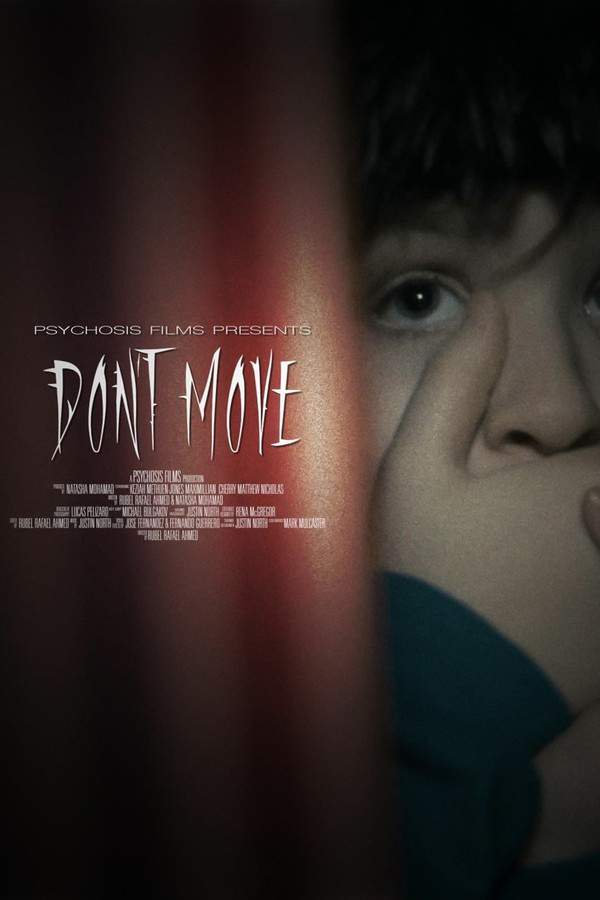
In een afgelegen bos ontmoet een rouwende vrouw een moordenaar die haar injecteert met een verlammende drug. Nu haar lichaam verlamd raakt, begint haar strijd om te overleven.
Find where to stream, rent, or buy Don't Move (2024) in the US with current JustWatch availability, up-to-date pricing, and platform listings for subscription, rental, and digital purchase options.
Warning: spoilers below!
Haven’t seen Don't Move yet? This summary contains major spoilers. Bookmark the page, watch the movie, and come back for the full breakdown. If you're ready, scroll on and relive the story!
Still thinking about how Don't Move (2024) ended? Here’s a full breakdown of the ending, key final moments, major twists, and the deeper meaning behind the film’s conclusion.
The ending of "Don't Move" leaves viewers with a sense of both relief and reflection. After a tense and harrowing ordeal, Iris manages to outsmart Richard, her captor, by using her wits and newfound strength. Throughout the film, Richard’s manipulative and psychotic nature is revealed—his enjoyment from prolonging the killing process and his belief that he’s in control of life and death. Iris, once overwhelmed by her grief and contemplating her own death after losing her son Mateo, begins to see a chance for survival when she fights back. She cleverly tricks Richard with her regained motor skills and a shared emotional connection, convincing him to drop his guard. In a final act of defiance, Iris jams his throat with a knife and shoots him, ultimately ending his reign of terror. The scene closes on her face, showing a mix of exhaustion, relief, and a profound transformation. She’s fought back not only against Richard but also against her own suicidal thoughts, realizing that her life still holds meaning. Her last words to Richard—“thank you”—are bitter and symbolic, signaling her rejection of his god-like control and affirming her resilience. The film’s conclusion emphasizes that even in the darkness, human strength and the will to survive can prevail, leaving Iris as a survivor who has reclaimed her autonomy and found a new sense of hope. Richard’s fate remains ambiguous, as he is shown choking on his injuries and likely to die, but the focus remains on Iris’s powerful journey to reclaim her life from horror and despair.
Last updated: June 25, 2025 at 08:44
Read frequently asked questions about the ending of Don't Move (2024), including final-scene interpretation, twist explanations, character outcomes, and the deeper meaning behind the conclusion. This ending explained FAQ is designed for viewers searching for clear spoiler-heavy answers and ending breakdown insights.
Iris's "thank you" is bitter and symbolic. She thanks Richard not out of gratitude but as a rejection of his god-like control over life and death. By surviving and killing him, she asserts her own agency and affirms her resilience. The phrase also marks her rejection of the suicidal mindset she held after losing her son Mateo, showing she has reclaimed her will to live.
Earlier, Richard tells Iris that he decides who lives and dies, establishing his delusion of divine power that Iris ultimately subverts.
Richard's fate is ambiguous but implied to be fatal. After Iris jams a knife in his throat and shoots him, he is shown choking on his injuries. The film suggests he will likely die from his wounds, though the focus remains on Iris's survival rather than confirming his death outright.
Richard's belief that he controls life and death sets up the reversal where he becomes the one powerless.
Iris regains her motor skills after the paralytic drug wears off, allowing her to move again. She cleverly uses this regained ability alongside a shared emotional connection to trick Richard into dropping his guard. This deception allows her to seize the knife and attack him, turning the tables on her captor.
The film establishes that Richard injects Iris with a paralyzing drug, which logically would wear off over time.
Iris survives and reclaims her life. After killing Richard in an act of defiance, she is shown exhausted but transformed. She has overcome both her captor and her own suicidal thoughts, finding a new sense of hope and meaning. Her final expression shows relief and profound personal change.
Iris's initial grief over her son Mateo and contemplation of death sets up her transformation into a fighter who chooses to survive.
Initially, Iris was prepared to die because she was grieving her son Mateo and felt life held no meaning. However, as Richard's true psychotic nature revealed itself, his enjoyment of prolonging killings and his delusion of controlling life and death, Iris finds the will to survive. Fighting back becomes not just physical survival but a rejection of both Richard's control and her own suicidal thoughts.
The film opens with Iris grieving and contemplating her own death, establishing her initial passive mindset that evolves through the ordeal.
The ending suggests Iris has processed her grief in a transformative way. By fighting to survive and reclaiming her autonomy, she realizes her life still holds meaning despite losing her son. Her survival becomes a conscious choice to continue living, moving from despair to a place of hope and renewed purpose.
Iris's backstory of losing her son Mateo and contemplating suicide provides the emotional foundation for her character arc.
Richard dies from injuries inflicted by Iris in the final confrontation. After tricking Richard into lowering his defenses, Iris jams a knife into his throat and shoots him. He is shown choking on his injuries, and while his death is not explicitly confirmed on screen, he is unlikely to survive.
Richard's overconfidence and belief in his control over Iris leads him to underestimate her, creating the opportunity for her attack.
Iris's transformation represents the reclamation of autonomy and the triumph of human will over despair. She evolves from a grieving woman ready to accept death into a survivor who chooses life. The film themes emphasize that even in darkness, human strength and the will to survive can prevail. Her journey from victim to fighter underscores the power of self-preservation.
Richard's assertion that he controls life and death mirrors Iris's initial surrender to grief, both of which she ultimately rejects.
The film leaves Richard's exact fate ambiguous. While he is severely injured, choking on a knife wound and shot, he is not shown dying explicitly. The focus deliberately stays on Iris's journey rather than confirming Richard's death, suggesting he will likely die from his injuries but leaving some ambiguity.
The film's attention to Iris's emotional state rather than Richard's final moments keeps the focus on her survival narrative.
The final close-up of Iris's face shows a complex mix of emotions: exhaustion from the brutal ordeal, relief at surviving, and profound transformation. Her expression signifies her reclamation of life and hope. She has survived not just a physical attacker but also her own despair, emerging as someone who has found new meaning and the will to continue living.
This final image contrasts sharply with her initial state of grief and acceptance of death, showing her complete arc.
Discover curated groups of movies connected by mood, themes, and story style. Browse collections built around emotion, atmosphere, and narrative focus to easily find films that match what you feel like watching right now.
High-stakes stories where characters are trapped and must escape their physical or psychological prisons.If you liked the high-tension, confined struggle for survival in Don't Move, explore these movies. This thread features similar thrillers where characters are trapped, paralyzed, or hunted in isolated settings, creating a relentless and desperate fight for life against a persistent threat.
The narrative pattern is straightforward: a character is suddenly and violently trapped, their mobility or options severely limited. The story becomes a real-time battle of wits and endurance against a captor or environment, with tension escalating as escape attempts are made and the threat intensifies.
Movies in this thread share a core experience of extreme physical and psychological confinement. They are united by a high-intensity, fast-paced tone, a relentless and claustrophobic mood, and a central theme of survival against a direct and immediate foe in a limited space.
Characters endure extreme violence to confront and overcome profound personal loss.For viewers who appreciated how Don't Move used a survival horror plot to explore themes of grief. This thread collects movies where characters grappling with profound loss are subjected to extreme violence, with their physical struggle becoming a crucible for emotional catharsis and a renewed will to live.
The narrative follows a character already broken by loss who is thrust into a life-or-death situation. The physical battle for survival runs parallel to an internal struggle with grief. The extremity of the new trauma paradoxically provides a brutal form of therapy, culminating in a bittersweet victory where survival means living with both old and new scars.
These films are grouped by their shared heavy emotional weight, rooted in themes of grief and psychological trauma. They blend high-intensity survival plots with deep character drama, resulting in a grim, cathartic tone and a bittersweet ending feel where survival is a hard-won, psychologically complex achievement.
Don't stop at just watching - explore Don't Move in full detail. From the complete plot summary and scene-by-scene timeline to character breakdowns, thematic analysis, and a deep dive into the ending - every page helps you truly understand what Don't Move is all about. Plus, discover what's next after the movie.
Read a complete plot summary of Don't Move, including all key story points, character arcs, and turning points. This in-depth recap is ideal for understanding the narrative structure or reviewing what happened in the movie.
Track the full timeline of Don't Move with every major event arranged chronologically. Perfect for decoding non-linear storytelling, flashbacks, or parallel narratives with a clear scene-by-scene breakdown.
Discover the characters, locations, and core themes that shape Don't Move. Get insights into symbolic elements, setting significance, and deeper narrative meaning - ideal for thematic analysis and movie breakdowns.
Discover movies like Don't Move that share similar genres, themes, and storytelling elements. Whether you’re drawn to the atmosphere, character arcs, or plot structure, these curated recommendations will help you explore more films you’ll love.
Don't Move (2024) Plot Summary & Movie Recap
Don't Move (2024) Scene-by-Scene Movie Timeline
Don't Move (2024) Movie Characters, Themes & Settings
Don't Move (2024) Spoiler-Free Summary & Key Flow
Movies Like Don't Move – Similar Titles You’ll Enjoy
Don't Kill Me (2022) Spoiler-Packed Plot Recap
Dead & Buried (1981) Movie Recap & Themes
In Fear (2014) Complete Plot Breakdown
Don't Go in the Woods (2012) Complete Plot Breakdown
Don't Kill It (2017) Spoiler-Packed Plot Recap
Don't Sleep (2017) Complete Plot Breakdown
You Can't Run Forever (2024) Complete Plot Breakdown
Your Move (2017) Story Summary & Characters
Woensdag (2005) Spoiler-Packed Plot Recap
To Let (2006) Spoiler-Packed Plot Recap
Dead End (2006) Ending Explained & Film Insights
Don’t Go in the Woods (1981) Spoiler-Packed Plot Recap
Don’t Listen (2020) Story Summary & Characters
Moving Violation (1976) Full Movie Breakdown
Hallow Road (2025) Full Movie Breakdown