Plot Explained Spoilers guaranteed!
Plot Explained

Browse by genre

Don’t Deliver Us from Evil (1971) movie poster

Timeline

Don’t Deliver Us from Evil (1971) Timeline Explained – Every Event in Order

Release, runtime and language
1971 · 102 mins · French
Directed by
Joël Séria
Starring
Michel Robin, Bernard Dhéran, Jeanne Goupil, Gérard Darrieu, Marc Dudicourt, Catherine Wagener

The story follows teenage friends Anne and Lore, neighbors who enrol at a convent school and vow to embrace sin and serve Satan. Anne records their deeds in a secret diary; they read a provocative novel, implicate a classmate, spy on the nuns, discard communion wafers, and seal a pact of devotion.

On this page (5)
  1. 1 Events in order (11)
  2. 2 Timeline questions answered
  3. 3 Movie threads
  4. 4 Movies like Don’t Deliver Us from Evil
  5. 5 Every angle

11 events in order · contains spoilers

Don’t Deliver Us from Evil Timeline: Events in Chronological Order

Every key event of Don’t Deliver Us from Evil (1971) in order, scene by scene, with when and where it takes place. Use it to untangle flashbacks, time jumps and parallel storylines, to refresh your memory before the sequel or to find the exact scene you are thinking of.

  1. Forming a deadly bond

    Anne de Boissy and Lore Fournier, two affluent girls at a Catholic boarding school, become exclusive friends. They read poems about the beauty of death and engage in malicious pranks and petty theft, convinced the church is fatuous and that they are untouchable.

    When
    School days
    Where
    Catholic boarding school, countryside
  2. Summer at the château

    During summer vacation, with Anne's parents away, the two girls stay at Anne's château in the countryside. Their closeness deepens as they spend long hours together.

    When
    Summer
    Where
    Anne's château, countryside
  3. Burning the barn

    They set fire to the local farmer's barn and release his cows as punishment after Lore's attempted rape. The act marks a turning point in their escalating cruelty and willingness to defy consequences.

    When
    Summer
    Where
    Local farmer's barn
  4. Cruelty to the groundskeeper

    Anne torments the mentally handicapped groundskeeper, killing his caged bird to make him suffer. The cruelty is depicted as part of their growing detachment from normal morality.

    When
    Summer
    Where
    Groundskeeper's residence
  5. Black Mass though the chapel

    They steal hosts and vestments from the church, preparing an abandoned chapel for a Black Mass. They wed themselves to Satan and seal their bond with blood.

    When
    Summer
    Where
    Abandoned chapel
  6. The motorist encounter

    One night a motorist stops near the château and is invited in. They entice him with alcohol and stripping, but when he tries to rape Lore, Anne bludgeons him to death and they throw the body into the lake.

    When
    One night
    Where
    Near the château, by the lake
  7. Police inquiry begins

    The missing man becomes the subject of police inquiries. The two are questioned alongside others but manage to reveal nothing.

    When
    Following disappearance
    Where
    Police inquiry location
  8. Detective arrives at school

    Back at school, a senior detective arrives to question them; they grow frightened, convinced he knows more than he will admit.

    When
    School term
    Where
    School
  9. Suicide pact

    They plan a suicide pact, convinced they will go to Hell and be rewarded by Satan for their wicked acts. They prepare the act as a final statement of their defiance.

    When
    Evening
    Where
    Their dorm room at school
  10. Baudelaire recital at the concert

    At a school concert attended by all the parents, every performance is met with loud applause. Anne and Lore recite a dark Baudelaire poem, signaling their embrace of darkness.

    When
    Evening
    Where
    School auditorium
  11. Final act of demise

    As the applause continues, they douse themselves with petrol and set themselves alight. The act completes their ritual suicide in a final, shocking tableau.

    When
    During concert
    Where
    School auditorium

Last updated: October 09, 2025 at 11:12

Was this helpful?

Timeline questions answered

Don’t Deliver Us from Evil Timeline Explained: Your Questions Answered

When does it happen, and why in that order? The questions people ask about the chronology of Don’t Deliver Us from Evil (1971): time jumps, flashbacks, cause and effect between scenes and the correct order of events, each answered with spoilers.

Q1

Why do Anne and Lore become close friends and turn to Satan?

Anne and Lore form an exclusive bond because they share a conviction that they are special and untouchable, different from other students at the Catholic boarding school. Their friendship is cemented by their mutual fascination with death, as evidenced by the poems about the beauty of death they read together, and their shared contempt for the church which they view as fatuous. This ideological alignment creates a partnership where each reinforces the other's descent into transgression.

Foreshadowing: Their early readings of death poetry and petty thefts foreshadow their later embrace of actual evil.

  • anne
  • lore
  • satanism
  • rebellion
  • catholic school
  • peer influence
Q2

Why do Anne and Lore burn the farmer's barn?

They burn the barn as retribution for Lore being assaulted by the local farmer, whom they punish by releasing his cows and destroying his property. The act marks a significant escalation in their cruelty, demonstrating their willingness to take violent action against adults they believe have wronged them. It also reveals their growing sense of immunity from consequences, believing their wealth and status protect them.

Foreshadowing: This incident establishes their pattern of taking the law into their own hands, setting the stage for murder.

  • barn fire
  • farmer
  • cows
  • revenge
  • escalation
Q3

Why does Anne kill the groundskeeper's bird?

Anne targets the mentally handicapped groundskeeper Émile simply to frighten him and cause him suffering, demonstrating a calculated cruelty that goes beyond practical mischief. This act reveals the depth of her detachment from normal morality, as she inflicts pain on a vulnerable person without any grievance or motivation beyond entertainment. The killing represents a key moment in their escalation toward more serious violence.

Foreshadowing: This act of cruelty toward a vulnerable person demonstrates their complete moral corruption before the murder.

  • emile
  • groundskeeper
  • bird
  • cruelty
  • victim
Q4

Why do Anne and Lore perform a Black Mass?

They organize the Black Mass in an abandoned chapel as a formal commitment to Satan, sealing their bond through a ritual that explicitly marries them to evil. They steal hosts and vestments from the church to desecrate the Catholic symbols they despise, using the sacred items for their anti-religious ceremony. The blood mingling ritual cements their pact and represents their definitive break from conventional morality.

Foreshadowing: The Black Mass establishes their ideological commitment to evil before the murder occurs.

  • black mass
  • satan
  • chapel
  • blood pact
  • symbolism
Q5

Why do Anne and Lore kill the motorist?

They kill the motorist when he attempts to rape Lore during the encounter they orchestrated at the château. While they deliberately enticed him with alcohol and partial nudity, the killing occurs specifically when the man tries to force himself on Lore, prompting Anne to bludgeon him with a fire iron. The murder represents their first human killing and transforms their transgression from property crimes and cruelty to outright murder.

Foreshadowing: Earlier threats against potential attackers foreshadow this lethal response to sexual violence.

  • motorist
  • murder
  • rape
  • self-defense
  • lake
Q6

What do Anne and Lore do with the motorist's body?

After Anne bludgeons the motorist to death, the two girls dispose of his body in the lake near the château. This act of hiding the evidence demonstrates their attempt to cover up their crime and avoid detection by the authorities. The murder and disposal are treated as part of their escalating series of transgressive acts.

Foreshadowing: The location near the château connects to the earlier summer scenes of their rebellious activities.

  • body
  • lake
  • disposal
  • evidence
  • cover up
Q7

Why do Anne and Lore decide to commit suicide?

They decide to kill themselves because a senior detective arrives at the school to question them, making them believe he suspects their involvement in the motorist's disappearance. Rather than face potential arrest and confession, they choose suicide as a final act of defiance, convinced they will descend into Hell and be rewarded by Satan for their service. Their twisted religious beliefs frame death as a desirable culmination of their pact.

Foreshadowing: Their earlier Black Mass commitment to Satan logically leads them to view suicide as a path to their promised reward.

  • suicide
  • detective
  • fear
  • confession
  • satanic pact
Q8

Why do they commit suicide during the school concert?

They choose the public setting of the school concert, attended by all the parents, as their final act to maximize shock and make a statement. By reciting a dark Baudelaire poem to loud applause before setting themselves alight with petrol, they transform what should be a normal celebration into a macabre performance. The concert setting allows them to die together in a dramatic fashion while the audience is distracted by normalcy.

Foreshadowing: The Baudelaire poem selection reflects their literary fascination with death and darkness established earlier.

  • concert
  • public suicide
  • baudelaire
  • petrol
  • dramatic act
Q9

Why are Anne and Lore convinced they will be rewarded by Satan?

They genuinely believe their Black Mass pact promises them rewards from Satan in exchange for their wicked deeds on Earth. Their ideology frames their crimes not as sins requiring repentance but as service to Satan that merits supernatural reward. This warped belief system transforms what most would view as damnation into an anticipated reward, making suicide seem like a logical next step in their spiritual journey.

Foreshadowing: Their earlier readings about the beauty of death established their romanticized view of damnation.

  • satan
  • reward
  • afterlife
  • belief
  • ideology
Q10

What is the significance of the Baudelaire poem they recite?

The Baudelaire poem they recite at the concert is a dark piece that aligns perfectly with their ideological embrace of death, sin, and rebellion against conventional morality. By choosing this specific poem, they signal their continued commitment to darkness even in their final moments. The fact that the audience claps and cheers, unaware of the impending act, creates a chilling contrast between the normalcy of the concert and the horror about to unfold.

Foreshadowing: Their earlier shared readings of death poetry directly leads to this selection.

  • baudelaire
  • poem
  • recital
  • darkness
  • poetry
Q11

Why do the girls implicate a classmate in their crimes?

While the specific details of the classmate's implicating are not fully detailed in the summary, this act represents another escalation in their willingness to involve innocent others in their transgressive behavior. Their pattern shows increasing recklessness and a desire to spread corruption beyond themselves, treating others as pawns in their game of moral defiance.

Foreshadowing: This earlier act of implicating others demonstrates their willingness to harm people beyond their direct victims.

  • classmate
  • implication
  • false accusation
  • innocent victim
Q12

Why do Anne and Lore discard the communion wafers?

They steal hosts from the church specifically to desecrate them as part of their broader campaign against Catholic symbolism. Discarding the communion wafers represents an act of deliberate sacrilege, treating the most sacred Catholic object as something worthless to be discarded. This act is integral to their Black Mass preparation, demonstrating their contempt for religious authority.

Foreshadowing: This directly connects to their preparation for the Black Mass ceremony.

  • hosts
  • communion wafers
  • sacrilege
  • church theft
  • desecration

Movie threads

More Movies Like Don’t Deliver Us from Evil, by Mood & Story

Curated lists built around what makes Don’t Deliver Us from Evil tick: the same mood, the same kind of story or the same emotional payoff. Each list explains why these movies belong together.

Movies about religious transgression like Don’t Deliver Us from Evil

Stories of calculated blasphemy and rebellion against religious institutions. Explore films similar to Don’t Deliver Us from Evil that feature characters embracing blasphemy and rebelling against faith. If you liked the dark, sacrilegious themes of this movie, you'll find more stories of calculated sin and institutional rebellion here.

  • sacrilegious
  • blasphemous
  • rebellious
  • transgressive
  • oppressive
  • malicious
  • Tone: dark, transgressive, oppressive
  • Pacing: steady, methodical
Why these movies?

The story pattern: Narratives in this thread follow a clear downward trajectory, where characters actively choose a path of sin and sacrilege. The journey is often one of escalating acts against a religious backdrop, moving from minor transgressions to profound acts of desecration, driven by a pact or a shared fervor.

Why they belong together: These films are grouped by their core theme of deliberate religious transgression and the oppressive, darkly atmospheric mood it creates. They share a focus on rebellion against dogma, often through the lens of friendship or a pact, leading to psychological and moral unraveling.
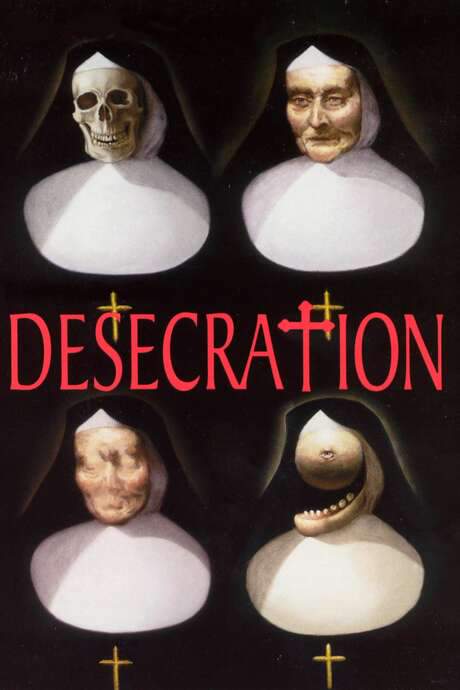
Bleak coming-of-age stories like Don’t Deliver Us from Evil

Coming-of-age stories where youthful rebellion leads to a tragic, inevitable end. Find movies like Don’t Deliver Us from Evil that explore the dark side of adolescence. If you were captivated by its portrayal of a fatalistic teen rebellion leading to tragedy, this collection of grim and transgressive coming-of-age tales is for you.

  • fatalistic
  • bleak
  • transgressive
  • rebellious
  • oppressive
  • tragic
  • Tone: dark, bleak, fatalistic
  • Pacing: steady, ominous
Why these movies?

The story pattern: The narrative pattern follows teenagers, often in pairs or a group, as they reject societal norms in a radical and dangerous way. Their rebellion is not a phase of growth but a catalyst for their own destruction, unfolding with a sense of grim inevitability towards a tragic conclusion.

Why they belong together: These movies are united by their bleak reinterpretation of the coming-of-age genre. They share a dark tone, heavy emotional weight, and a focus on the destructive potential of teenage alienation and rebellion, culminating in endings that are deeply tragic and devoid of hope.

If you liked this

Movies Like Don’t Deliver Us from Evil

Similar movies to Don’t Deliver Us from Evil: the same genre, themes or kind of story. Each one comes with its own plot summary, timeline and ending explained.

Browse all movie summaries

Every angle

Don’t Deliver Us from Evil (1971) Explained: Plot, Timeline & Characters

Everything about Don’t Deliver Us from Evil in one place: what happens in the plot summary, the timeline in chronological order, the characters and meaning and a spoiler-free summary. What's After the Movie adds the cast, box office and post-credit scenes.

Coming soon on iOS and Android

The Plot Explained Movie Summary App

Plot summaries, endings explained and timelines on your phone. Catch up on any movie in minutes, save your favorites and never miss a twist again.

Be the first to know when we launch. Your email stays private, always.

Learn more about the app