Plot Explained Spoilers guaranteed!
Plot Explained

Browse by genre

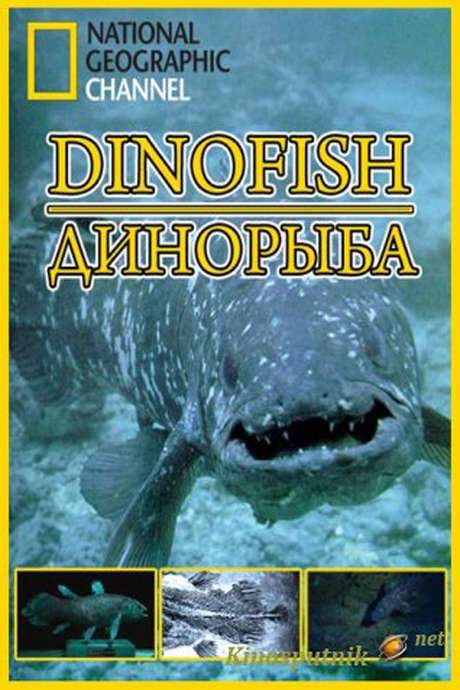
Dinofish (2013) movie poster

Plot Summary

Dinofish (2013) Plot Summary Explained

Release, runtime and language
2013 · 45 mins · English
Loading streaming availability…
Directed by
Graeme Duane
Starring
James D'Arcy

A rare and ancient fish, the coelacanth, is a remarkable living fossil. Thought to have vanished with the dinosaurs during a mass extinction event 70 million years ago, this large fish with unique fins and armored scales has remained hidden in the deep ocean. Its evolutionary history is fascinating, as it's believed to be related to the creatures that eventually developed legs and ventured onto land nearly 400 million years ago.

On this page (6)
  1. 1 Where to watch
  2. 2 What happens: full plot
  3. 3 Plot questions answered
  4. 4 Movie threads
  5. 5 Categories
  6. 6 Every angle
Loading streaming availability…

Full plot summary · contains spoilers

What Happens in Dinofish: Full Plot Summary

The whole story of Dinofish (2013) explained, from the opening scene to the final frame: every key event, every twist and what it all adds up to. Read it as a quick recap before the sequel, to check a scene you missed, or to finally understand what really happened.

In December 1938, the small coastal town of East London, South Africa, is jolted by a discovery: a living fossil surfaces when a trawler pulls up a Coelacanth—a large blue fish with limb-like fins, armored scales, and a tail unlike any modern relative. It is thought to have died out 70 million years ago, and has remained hidden in the deep sea until now. This ancient survivor challenges scientists to reconsider the evolutionary story that connects fish to amphibians, reptiles, and mammals. The story is narrated by James D'Arcy.

A new research team led by Dr Richard Pyle prepares to reestablish contact with these ancient beings, but the mission demands intense training and careful planning due to the technical and dangerous nature of deep-sea exploration.

Using specialized diving equipment, they descend to depths of over 380 feet, into the region known as the Twilight Zone, where hundreds of new fish species have been documented and where the Coelacanth is found.

After a once-in-a-lifetime experience in Sodwana, huge numbers of Coelacanths begin to appear off the coast of Tanzania. Advanced DNA research reveals that these Coelacanths may not be stray individuals but belong to a genetically distinct, reproducing group—a possible new species.

Richard dispatches a reconnaissance team to Tanzania to investigate. Their chances of success are slim, but if they are, it could open a new chapter in the Coelacanth story and bring us closer to understanding this living fossil.

Last updated: October 01, 2025 at 10:22

Was this helpful?

Plot questions answered

Dinofish Plot Explained: Your Questions Answered

The questions people ask most about Dinofish (2013): what happens in the confusing scenes, why the characters do what they do, the twists, hidden details and what the ending means. Each answer contains spoilers.

Q1

Why was the Coelacanth discovery in 1938 so important?

The 1938 discovery was groundbreaking because the Coelacanth was thought to have gone extinct 70 million years ago alongside the dinosaurs. Finding a living specimen meant scientists had directly encountered a creature that represents a critical evolutionary link between fish and land-dwelling vertebrates, challenging previous assumptions about extinction and evolution.

  • coelacanth
  • 1938 discovery
  • living fossil
  • evolution
  • extinction
Q2

What is the Twilight Zone and why does it matter for finding Coelacanths?

The Twilight Zone is the deep ocean layer between 200 and 1,000 meters where sunlight barely penetrates. Coelacanths live at depths exceeding 380 feet in this cold, dark environment. This region had been largely unexplored, making the discovery of hundreds of new fish species possible and explaining why the Coelacanth remained hidden for so long.

  • twilight zone
  • deep sea
  • coelacanth habitat
  • ocean depths
  • diving
Q3

Why did researchers move from South Africa to Tanzania to find Coelacanths?

After the initial discovery and research in Sodwana Bay, South Africa, large numbers of Coelacanths began appearing off Tanzania's coast. This suggested a much larger, established population rather than occasional strays, prompting researchers to investigate whether these represented a different, genetically distinct group.

  • tanzania
  • south africa
  • coelacanth population
  • research expedition
Q4

What did DNA analysis reveal about the Tanzanian Coelacanths?

DNA research showed the Tanzanian Coelacanths were genetically distinct from the South African population. This indicated they belonged to a reproducing group with enough genetic divergence to potentially represent a new species, fundamentally changing how scientists understood this ancient lineage.

  • dna
  • genetics
  • tanzania coelacanth
  • new species
  • research
Q5

What does living fossil mean for the Coelacanth?

A living fossil is a species that has survived virtually unchanged for millions of years. The Coelacanth has remained genetically and structurally similar to its ancient ancestors from 400 million years ago, offering scientists a rare window into evolutionary history without relying solely on fossils.

  • living fossil
  • coelacanth
  • evolution
  • ancient species
Q6

How deep must divers go to find Coelacanths?

Researchers descend to depths exceeding 380 feet into the Twilight Zone, requiring specialized diving equipment and extensive training due to the extreme pressure, darkness, and decompression risks. This technical difficulty explains why the Coelacanth evaded discovery for so long despite being alive.

  • deep diving
  • coelacanth
  • twilight zone
  • submersible
  • exploration
Q7

Why was finding a reproducing Coelacanth population significant?

Finding a healthy, reproducing population meant Coelacanths were not just rare strays but had established themselves successfully in modern oceans. This discovery suggested the species had survived undetected for millions of years and raised hopes of learning how a living fossil adapts and reproduces.

  • coelacanth population
  • reproduction
  • survival
  • marine biology
Q8

What makes Coelacanths different from modern fish?

Coelacanths have unique limb-like fins that move like legs, armored scales, and a tail structure unlike any modern fish relative. These features connect them to the ancient ancestors that eventually developed legs and moved onto land, making them crucial for understanding vertebrate evolution.

  • coelacanth anatomy
  • fins
  • armored scales
  • evolutionary link
Q9

What was Dr. Richard Pyle's contribution to Coelacanth research?

Dr. Richard Pyle led the research team that developed methods to reestablish contact with Coelacanths after the initial discovery. He organized the intensive training, specialized equipment planning, and deep-sea expeditions that allowed scientists to directly observe and study these ancient fish in their natural habitat.

  • richard pyle
  • researcher
  • lead scientist
  • expedition
Q10

What would confirming a new Coelacanth species mean for science?

Confirming a genetically distinct Coelacanth species in Tanzania would represent a major milestone in evolutionary biology. It would show that living fossils can diverge and adapt over time, rewriting part of the Coelacanth story and expanding understanding of biodiversity in deep-sea ecosystems.

  • new species
  • coelacanth
  • evolutionary biology
  • biodiscovery
  • taxonomy

Movie threads

More Movies Like Dinofish, by Mood & Story

Curated lists built around what makes Dinofish tick: the same mood, the same kind of story or the same emotional payoff. Each list explains why these movies belong together.

Patient scientific expeditions like in Dinofish

Methodical explorations into nature's deepest mysteries and real-life scientific breakthroughs. A curated selection of movies like Dinofish that capture the methodical thrill of scientific discovery. If you enjoyed the patient, educational journey to find a living fossil, you'll appreciate these similar documentaries and dramas about real-world exploration and earth sciences.

  • educational
  • curious
  • methodical
  • revelatory
  • patient
  • scientific
  • Tone: neutral, curious, revelatory
  • Pacing: steady, methodical
Why these movies?

The story pattern: The narrative follows a logical, often chronological progression from a scientific question to a planned expedition and its findings. The journey is central, often involving technical challenges and patient observation, leading to a breakthrough that feels earned and awe-inspiring.

Why they belong together: Movies are grouped here for their shared focus on intellectual curiosity, a methodical pace, and a neutral, educational tone. They prioritize the wonder of discovery over emotional drama, creating a coherent experience for viewers fascinated by real-world exploration.

Movies about living fossils and prehistoric survivors like Dinofish

Stories of incredible creatures that defy time, surviving from eras long past. Discover more films like Dinofish that explore the fascinating topic of living fossils. If you were amazed by the coelacanth's story, you'll love these similar movies and documentaries about ancient species surviving into the modern world, blending science with a sense of timeless wonder.

  • ancient
  • wonder
  • discovery
  • prehistoric
  • evolution
  • mystery
  • Tone: awe-inspired, curious, hopeful
  • Pacing: steady, investigative
Why these movies?

The story pattern: The plot typically revolves around an initial skepticism or legend, leading to tangible proof of a 'living fossil's' existence. The emotional core is the awe of confronting a living relic, which often raises questions about evolution, extinction, and our planet's hidden depths.

Why they belong together: These films share a specific thematic focus on ancient life forms that have survived millions of years. The unifying element is the profound sense of wonder and scientific curiosity generated by encountering a tangible link to a distant past, making the grouping feel conceptually tight.

Categories

Movie Lists Featuring Dinofish

Dinofish appears in these hand-built movie categories. Each one groups movies by a specific mood, theme or story type, with their plot summaries and endings explained.

View all movie categories

Every angle

Dinofish (2013) Explained: Plot, Timeline & Characters

Everything about Dinofish in one place: what happens in the plot summary, the timeline in chronological order, the characters and meaning and a spoiler-free summary. What's After the Movie adds the cast, box office and post-credit scenes.

Coming soon on iOS and Android

The Plot Explained Movie Summary App

Plot summaries, endings explained and timelines on your phone. Catch up on any movie in minutes, save your favorites and never miss a twist again.

Be the first to know when we launch. Your email stays private, always.

Learn more about the app