Plot Explained Spoilers guaranteed!
Plot Explained

Browse by genre

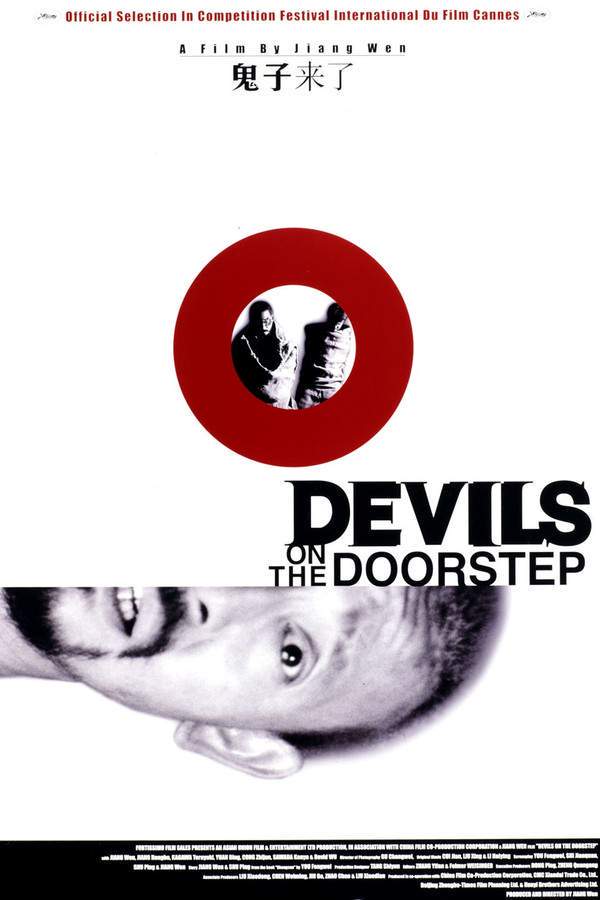
Devils on the Doorstep (2002) movie poster

Plot Summary

Devils on the Doorstep (2002) Plot Summary Explained

Release, runtime and language
2002 · 139 min · Japanese
Starring
Wen Jiang, Kenya Sawada

During World War II, a remote Chinese village finds itself unexpectedly hosting two enemy soldiers from opposing sides. The villagers, initially wary, must grapple with the challenges of wartime hospitality and the complexities of holding prisoners. As tensions escalate, humor and unexpected bonds emerge from the absurd situation, revealing poignant connections between people caught in the crossfire of conflict.

On this page (5)
  1. 1 What happens: full plot
  2. 2 Plot questions answered
  3. 3 Movie threads
  4. 4 Movies like Devils on the Doorstep
  5. 5 Every angle

Full plot summary · contains spoilers

What Happens in Devils on the Doorstep: Full Plot Summary

The whole story of Devils on the Doorstep (2002) explained, from the opening scene to the final frame: every key event, every twist and what it all adds up to. Read it as a quick recap before the sequel, to check a scene you missed, or to finally understand what really happened.

In the quaint village of Rack-Armor Terrace, nestled at the foot of the Great Wall of China, the life of local peasant Ma Dasan takes an unexpected turn when he is confronted by a mysterious man known only as "Me". This stranger breaks into Ma's home in the dead of night, shocking him as he deposits two men wrapped in gunnysacks and orders him, at gunpoint, to keep them alive for interrogation over the next few days. One sack contains Kosaburo Hanaya, a combative Japanese sergeant, while the other holds Dong Hanchen, a sycophantic Chinese interpreter working for the Japanese military. Ma quickly realizes he must rally his fellow villagers to comply with the enigmatic "Me"'s demands, leading to the prisoners being hidden in Ma's cellar, away from the looming threat of their captor's return.

Amidst the tense atmosphere, Hanaya tries to provoke the villagers into killing him, but Dong, fearing for his own safety, cleverly manipulates what Hanaya says to make it sound more agreeable. As the Chinese New Year approaches without the promised return of "Me", the villagers' patience wears thin, and they resolve to execute the prisoners. When the luck of the draw places the task in Ma's hands, he grapples with his conscience and opts not to commit murder. Instead, he secretly relocates them to a watchtower along the Great Wall, visiting them to provide essentials. However, an ill-fated escape attempt by the prisoners exposes Ma's secret, resulting in heated arguments amongst the villagers. A decision is made to hire an assassin, prompting Ma to seek the help of a revered old executioner known as One Stroke Liu. Rumored to deliver deaths as painless as a breeze, Liu's attempts, however, fail spectacularly, leaving Ma in further turmoil.

As days pass, the once defiant Hanaya transforms, filled with gratitude toward the villagers and promising them grain in exchange for his release. Eventually, the villagers relent and return Hanaya to the Japanese forces, but the encounter doesn't unfold as they hoped. The Japanese Army, believing Hanaya to be a fallen war hero, reacts viciously to his return. The commanding officer, Captain Inokichi Sakatsuka, delivers a severe beating to Hanaya yet feels compelled to honor the grain deal. That evening, a festive feast is held in the village, with Captain Sakatsuka demanding the capture of the man responsible for Hanaya’s temporary imprisonment. When Ma, alongside his lover Yu'er, returns from a nearby town, they are devastated to find that the village is engulfed in flames due to Captain Sakatsuka's wrath.

In the aftermath, as the Chinese National Revolutionary Army reclaims the area, Dong finds himself publicly executed for his collaboration with the enemy, igniting a burning desire for revenge in Ma. Disguising himself as a cigarette vendor, Ma lurks outside the now POW camp, seizing an opportunity when Japanese soldiers approach. In a frenzied act of vengeance, he slaughters them and infiltrates the camp, igniting chaos. However, his rampage is short-lived as military guards apprehend him before he can reach Hanaya. Major Gao, overseeing the Chinese forces, condemns Ma's actions and orders a Japanese soldier to execute him before a gathering crowd. In a twisted turn of fate, Hanaya is forced to raise a katana against Ma, completing the cycle of violence as Ma's head rolls to the ground, performing the strange ritual of blinking and smiling, embodying the very fate foretold by One Stroke Liu.

Last updated: November 08, 2024 at 16:13

Was this helpful?

Plot questions answered

Devils on the Doorstep Plot Explained: Your Questions Answered

The questions people ask most about Devils on the Doorstep (2002): what happens in the confusing scenes, why the characters do what they do, the twists, hidden details and what the ending means. Each answer contains spoilers.

Q1

Who is the mysterious stranger called 'Me' who gives Ma Dasan the prisoners?

The mysterious man known only as 'Me' remains ambiguous throughout the film. He appears unexpectedly at Ma's home, forces him at gunpoint to keep two prisoners alive for interrogation, and threatens the villagers with repercussions if they fail. He promises to return in a few days but never does, leaving the villagers to deal with the escalating crisis on their own. His true identity and motives are never revealed, adding to the film\'s exploration of arbitrary power and the chaos of war.

  • me character
  • mysterious man
  • ma dasan
  • interrogation
  • prisoners
Q2

Why does Ma Dasan go to such lengths to protect the Japanese sergeant Hanaya?

Ma Dasan initially hides the prisoners out of fear when 'Me' threatens him at gunpoint. However, his protection becomes more principled as time passes. When the villagers decide to execute the prisoners, Ma cannot bring himself to commit murder and instead relocates them to a watchtower. His compassion grows even toward Hanaya, who eventually shows gratitude and offers grain in exchange for his release. Ma's moral stance against killing, even of an enemy soldier, reflects the film's theme that humanity can persist even in the darkest circumstances.

  • ma dasan protection
  • hanaya
  • compassion
  • moral dilemma
  • prisoners
Q3

Why does Hanaya try to provoke the villagers into killing him?

As a Japanese sergeant, Hanaya is filled with martial pride and prefers an honorable death in battle over captivity. When confined in the cellar, he deliberately provokes the villagers, shouting defiant statements and insults, hoping they will lose patience and kill him. His warrior code sees capture as shameful, and he would rather die than live as a prisoner. This is why Dong Hanchen manipulates Hanaya's words, translating his provocative demands into more palatable statements, to prevent the villagers from carrying out an execution that would only bring more Japanese retaliation.

  • hanaya provocation
  • japanese sergeant
  • honor
  • captivity
  • dong hanchen
Q4

Why does Dong Hanchen manipulate what Hanaya says to the villagers?

Dong Hanchen, as a Chinese interpreter working for the Japanese, understands both languages and acts as a go-between in the cellar. He deliberately twists Hanaya's aggressive, provocative statements into more agreeable translations because he fears that if the villagers kill the prisoners in anger, the Japanese army would exact brutal revenge on the entire village. Dong prioritizes survival through cunning rather than direct confrontation, showing his sycophantic nature while accidentally providing moments of peace during the captivity.

  • dong hanchen
  • interpreter
  • translation
  • manipulation
  • self-preservation
Q5

Why does One Stroke Liu fail to execute the prisoners?

One Stroke Liu is a legendary executioner known for delivering painless, swift deaths. When the villagers hire him to kill the prisoners, his attempts fail spectacularly, not due to lack of skill, but because the situation becomes chaotic. The exact reasons for his failure vary in accounts, but it represents another in a series of failed solutions that trap the villagers in an impossible moral and practical dilemma. His failure adds to the film\'s darkly comic tone and reinforces the impossibility of escaping the cycle of violence through conventional means.

  • one stroke liu
  • executioner
  • failed execution
  • assassin
  • village dilemma
Q6

Why does the Japanese army beat Hanaya when he returns but still honor the grain deal?

When Hanaya is returned to Japanese forces, Captain Inokichi Sakatsuka beats him severely because the army believes Hanaya was captured and held prisoner, a tremendous shame for a Japanese soldier. However, Sakatsuka still feels compelled to honor the grain deal Hanaya had made with the villagers. This contradiction reflects the Japanese military's rigid honor code: they view captivity as disgraceful, yet they take Hanaya's commitments seriously as a matter of military honor. The beating and the grain payment represent the twisted logic of wartime morality.

  • captain sakatsuka
  • hanaya beating
  • grain deal
  • japanese army
  • honor
Q7

Why does Captain Sakatsuka burn the village after Hanaya's release?

Captain Sakatsuka burns Rack-Armor Terrace in a fit of rage when he discovers that Hanaya was held captive by Chinese villagers. His wrath stems from the perceived shame brought upon the Japanese military, not just Hanaya's captivity, but the entire village's audacity to hold a Japanese sergeant prisoner. The burning represents the arbitrary, destructive nature of occupying forces and the villagers' helpless position between the mysterious 'Me', the Japanese army, and their own moral compromises.

Foreshadowing: Earlier in the film, the villagers fear the Japanese army's retaliation if they harm the prisoners, foreshadowing this violent payoff.

  • village burning
  • captain sakatsuka
  • revenge
  • japanese army
  • destruction
Q8

Why is Dong Hanchen executed as a collaborator?

After the Chinese National Revolutionary Army reclaims the area, Dong Hanchen is publicly executed for his collaboration with the Japanese military. Though he was largely acting out of self-preservation and even helped mediate between the villagers and Hanaya, the new Chinese forces view his work as an interpreter for the enemy as unforgivable betrayal. His execution represents the harsh justice of shifting allegiances during war, where survival decisions made under occupation are later judged as treason.

  • dong hanchen execution
  • collaborator
  • chinese army
  • betrayal
  • interpreter
Q9

Why does Ma Dasan infiltrate the POW camp to kill Japanese soldiers?

After witnessing Dong's execution and seeing his village destroyed by Captain Sakatsuka's wrath, Ma is consumed by a desire for vengeance. He disguises himself as a cigarette vendor and ambushes Japanese soldiers outside the POW camp. His goal is to kill as many enemy soldiers as possible, driven by grief and rage over the destruction of his home and the execution of Dong, whom he feels partially responsible for endangering. The attack represents Ma's transformation from a reluctant caretaker of prisoners into an avenger, fully embracing the cycle of violence.

Foreshadowing: The burning of the village and Dong's execution directly trigger Ma's decision to seek violent revenge.

  • ma dasan revenge
  • pow camp attack
  • vengeance
  • japanese soldiers
  • cigarette vendor
Q10

Why is Hanaya forced to execute Ma Dasan?

When Ma is captured after his attack on the POW camp, Major Gao of the Chinese forces orders a Japanese soldier to execute him as punishment. In a cruel twist of fate, the Japanese soldier assigned is Hanaya, the very man Ma once protected and showed compassion toward. Hanaya is forced to raise his katana against his former captor, completing the film's tragic cycle of violence. This moment forces both men into roles dictated by their respective sides, regardless of any personal bond that may have formed.

  • hanaya executes ma
  • major gao
  • cycle of violence
  • katana
  • tragic ending
Q11

What is the significance of Ma Dasan's final moments, blinking and smiling after being executed?

After Hanaya severs Ma's head, the film shows Ma's decapitated body performing a strange ritual of blinking and smiling. This disturbing image fulfills the prophecy of One Stroke Liu, who was known for painless deaths said to be as gentle as a breeze. The ritual suggests Ma achieves a kind of peace or acceptance in death, perhaps relieved from the moral burdens and violence that consumed his life. It also embodies the film's exploration of fate and the absurd, leaving audiences with an unsettling image that lingers long after the credits.

Foreshadowing: One Stroke Liu's reputation for painless, peaceful executions foreshadows this unusual final moment.

  • ma final moments
  • blinking smiling
  • one stroke liu
  • ritual
  • death scene
Q12

Why do the villagers decide to return Hanaya to the Japanese forces?

After months of hiding and caring for the prisoners, the villagers eventually decide to return Hanaya to Japanese forces for several reasons: their patience has worn thin with 'Me' never returning, Hanaya has transformed from a defiant, provocative prisoner into someone showing genuine gratitude, and he promises to provide grain in exchange for his release. The villagers see this as a way to resolve their impossible situation, returning an enemy soldier might earn them goodwill and end the constant danger. Tragically, this decision leads to the village's destruction instead.

  • hanaya release
  • grain deal
  • villagers decision
  • japanese forces
  • return prisoner

Movie threads

More Movies Like Devils on the Doorstep, by Mood & Story

Curated lists built around what makes Devils on the Doorstep tick: the same mood, the same kind of story or the same emotional payoff. Each list explains why these movies belong together.

Movies about the absurd tragedy of war like Devils on the Doorstep

Stories where the insanity of war turns noble intentions into devastating failures. If you liked the dark humor turning to grim reality in Devils on the Doorstep, explore more movies like it. These films use absurd wartime situations to deliver powerful anti-war messages, blending satire with heavy emotional impact and tragic endings.

  • satirical
  • grim
  • unsettling
  • tense
  • melancholic
  • absurd
  • Tone: dark, satirical, tragic
  • Pacing: variable, building to a climax
Why these movies?

The story pattern: The narrative pattern typically involves ordinary people thrust into an illogical wartime dilemma. Their attempts to navigate or solve the problem—often with a mix of pragmatism and humanity—are met with escalating absurdity, leading to a climax that reinforces the cyclical, pointless nature of violence, leaving characters broken and hopes shattered.

Why they belong together: These films are grouped by their unique tonal blend of dark satire and profound tragedy, their focus on the civilian experience of war, and their shared thematic goal of criticizing the inhumanity and futility of conflict through a lens of absurdist narrative.

Movies about villages under pressure like Devils on the Doorstep

Tense dramas where an isolated community fractures under external threats. Find more movies like Devils on the Doorstep where a small, remote community faces an impossible moral dilemma. These films explore how group dynamics strain under pressure, leading to collaboration, conflict, and often devastating consequences for everyone involved.

  • tense
  • oppressive
  • claustrophobic
  • grim
  • unsettling
  • moral dilemma
  • Tone: tense, oppressive, grim
  • Pacing: slow burn, steady build
Why these movies?

The story pattern: The narrative follows a closed community whose normalcy is ruptured by an outside force (soldiers, a criminal, a secret). The story explores the group's reaction: the debates, the power shifts, the moral compromises, and the eventual breakdown of social order, frequently culminating in violence that consumes the very place they sought to protect.

Why they belong together: They share a specific setting and dynamic: the microcosm of a village under duress. The similarity comes from the oppressive atmosphere, the exploration of group psychology, the theme of collaboration versus resistance, and the high-stakes tension that defines the community's fate.

If you liked this

Movies Like Devils on the Doorstep

Similar movies to Devils on the Doorstep: the same genre, themes or kind of story. Each one comes with its own plot summary, timeline and ending explained.

Browse all movie summaries

Every angle

Devils on the Doorstep (2002) Explained: Plot, Timeline & Characters

Everything about Devils on the Doorstep in one place: what happens in the plot summary, the timeline in chronological order, the characters and meaning and a spoiler-free summary. What's After the Movie adds the cast, box office and post-credit scenes.

Coming soon on iOS and Android

The Plot Explained Movie Summary App

Plot summaries, endings explained and timelines on your phone. Catch up on any movie in minutes, save your favorites and never miss a twist again.

Be the first to know when we launch. Your email stays private, always.

Learn more about the app